









- Lazada 11.11 Mega Sale: LazMall Contributes Nearly Two-Thirds of GMVNov 23, 2026View details
- Shein’s European Revenue Falls 16% as Tighter Rules on Low-Value Direct Shipments Take EffectNov 23, 2026View details
- EU Low-Value Parcel Rules Impact Cargo Flows: Air Freight Volume from China to Europe Down 17% in OctoberNov 23, 2026View details
- Indonesia and the EU Sign Comprehensive Economic Partnership Agreement, 90.4% of Tariff Lines to Become Duty-Free ImmediatelyNov 23, 2026View details
- Qingdao Port's Imports and Exports Exceed RMB 23.699 Trillion in the First 10 Months, Drawing Attention to Port IntelligenceNov 22, 2026View details
- Ningbo Cross-Border E-Commerce Export Value Surges 94.87% Year on Year, Opening Up a New Billion-Yuan Growth TrackNov 22, 2026View details
If Your Export Website Has a Low Conversion Rate, First Check the Inquiry Path
Low Conversion Rates on Foreign Trade Websites: Check the Inquiry Path First
A foreign trade website may have traffic but receive few valid inquiries. The problem is often not "insufficient traffic," but a breakdown somewhere along the visitor journey from entering the website to submitting a request. When companies see few inquiries, many rush to increase their Google Ads budget, add keywords, or create social media content. As a result, traffic increases, but no one fills out the forms, and the sales team still receives a large number of invalid emails.
To understand how to improve the conversion rate of a foreign trade website, a more effective approach is not to redesign the homepage visuals first. Instead, put yourself in the position of an overseas buyer encountering the brand for the first time, and go through the complete inquiry journey of "search—click—browse—evaluate—contact." Any step that raises questions, causes impatience, or provides no reason to continue is the step that should be investigated first.
Before Traffic Arrives: First Confirm Whether You Are Attracting the Right Audience
When conversion rates are low, a common misconception is to treat every visit as a potential customer. In fact, visitors searching for "what is CNC machining" and buyers searching for "custom aluminum CNC parts supplier" are at completely different stages from making an inquiry. The former may be researching basic knowledge, while the latter is closer to the supplier selection stage.
Operators should first check whether traffic sources match the landing pages. The content promised by advertising keywords, SEO page titles, and social media posts must be delivered quickly after visitors enter the page. If an ad says "custom packaging solutions," but the landing page first displays company news or a generic company introduction, users will immediately suspect that they clicked the wrong page. B2B buyers usually have limited patience, especially on mobile devices. If they do not see the product range, application industries, or customization capabilities within the first few screens, a bounce is hardly surprising.
It is not advisable to look only at total traffic here. It is more worthwhile to observe separately whether visitors from different countries, channels, and product pages continue to visit specification pages, case study pages, and contact pages. Once traffic quality is clearly understood, you can then decide whether to optimize keywords, adjust ad targeting, or rebuild the landing page information.
During the Few Dozen Seconds Visitors Stay, Does the Website Answer Their Key Questions?
A foreign trade website is not an electronic brochure. When buyers open a page, they usually want to quickly confirm several things: what exactly you offer; whether it suits their project; whether you can manufacture or deliver according to requirements; whether the company is trustworthy; and what response they can expect if they contact you now. If website content only says "high quality," "professional service," or "contact us," it may appear complete, but it does not reduce any of the effort required for purchasing decisions.
Product pages are particularly prone to problems. Many factory websites present an entire product category with one image and a few lines of description, without basic information such as materials, size ranges, or process capabilities, and without explaining whether customization based on drawings is available, how minimum order quantities are discussed, or whether samples are supported. For technical products, it is not necessary to list every parameter all at once, but customers should know what materials they need to provide next, such as drawings, application scenarios, target markets, or estimated purchase volumes.
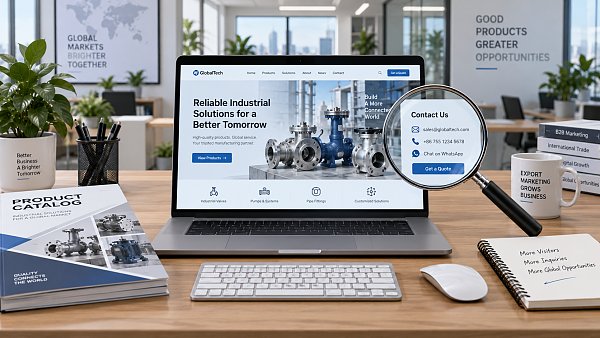
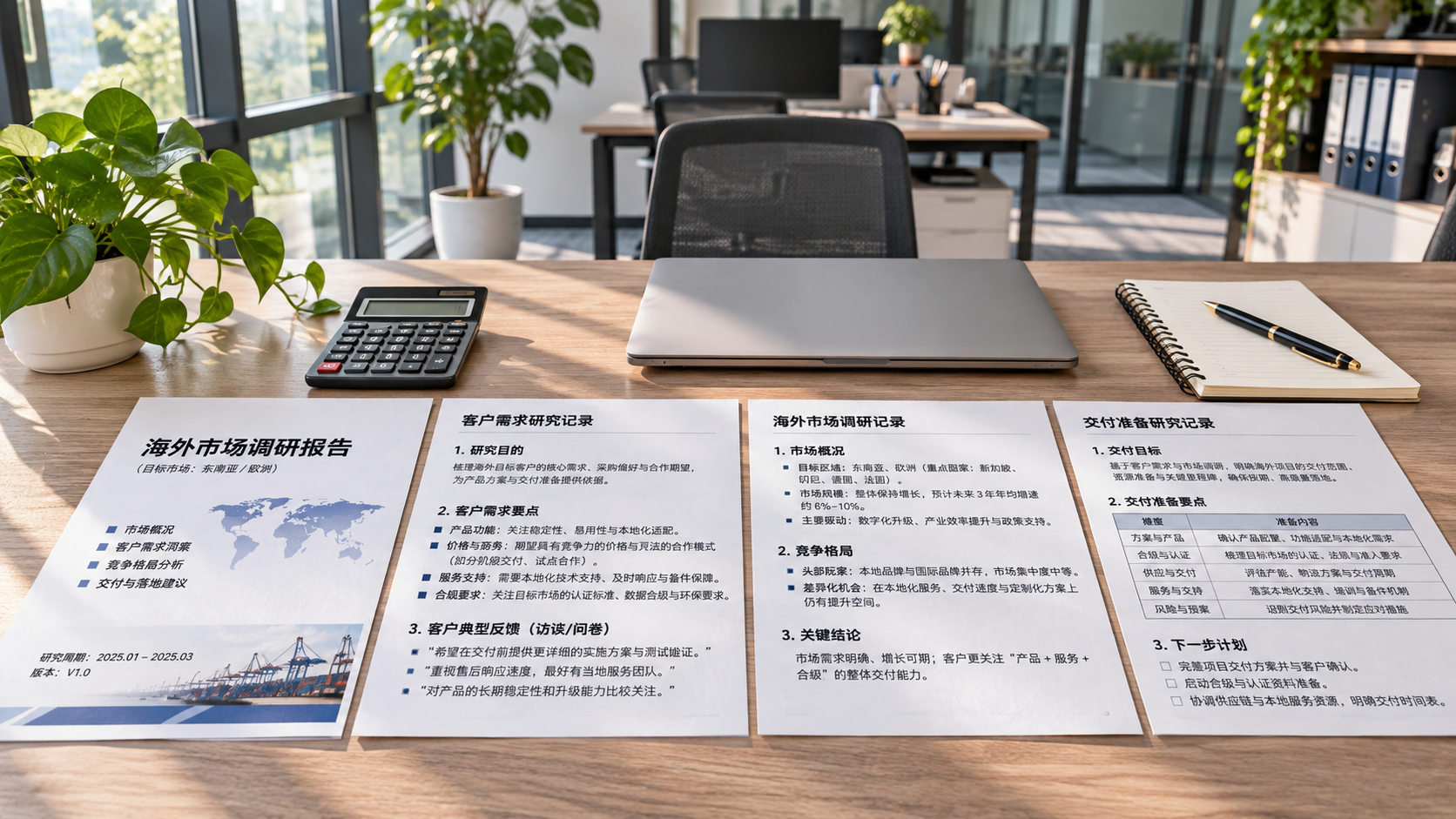
Trustworthiness is not established simply by placing certificate images in the footer. Customers care more about whether this information is relevant to the current product: whether production scenarios are authentic, whether quality control descriptions are specific, whether delivery times and after-sales support are clearly explained, and whether the contact person is clearly identified. For businesses serving multiple markets, multilingual pages cannot rely on direct translation alone. US buyers may care more about response efficiency and application results, while European customers often further verify compliance, materials, and technical documents. Markets such as the Middle East and Latin America also require consideration of commonly used local communication methods and language preferences. Without localized content, even highly targeted traffic may get stuck at the trust stage.
Inquiry Entry Points Must Not Be Hidden, but Customers Must Not Be Pressured Too Soon
Many websites place the contact button only in the navigation bar, requiring visitors to return to the top after viewing product details to find it. Other websites provide only a complicated form that requires more than ten items, such as full company name, address, budget, and purchasing cycle. For overseas visitors making initial contact, this kind of design creates barriers before asking them to establish trust.
A more practical approach is to provide different entry points based on inquiry intent. Those with clear requirements can use forms such as "Get a Quote" or "Submit Drawings"; those still comparing solutions can choose to download a catalog, request specifications, or schedule a consultation; and markets accustomed to instant communication should be provided with clear and usable email addresses, telephone numbers, or commonly used instant messaging methods. Form fields should be determined by what advances sales qualification. Usually, it is enough to retain the name, email address, requirement description, and one or two pieces of information closely related to the business. Attachment uploads, verification codes, and privacy consent notices should also be tested in practice to prevent customers from failing at the final step before submission.
There is another detail that is easily overlooked: what does the customer see after submission? If it is only a blank page or "Submission Successful," they do not know whether anyone will respond. The confirmation page can state the expected response time, the information required for the next step, and other contact channels. It does not directly generate inquiries, but it can reduce customers' uncertainty after submission.
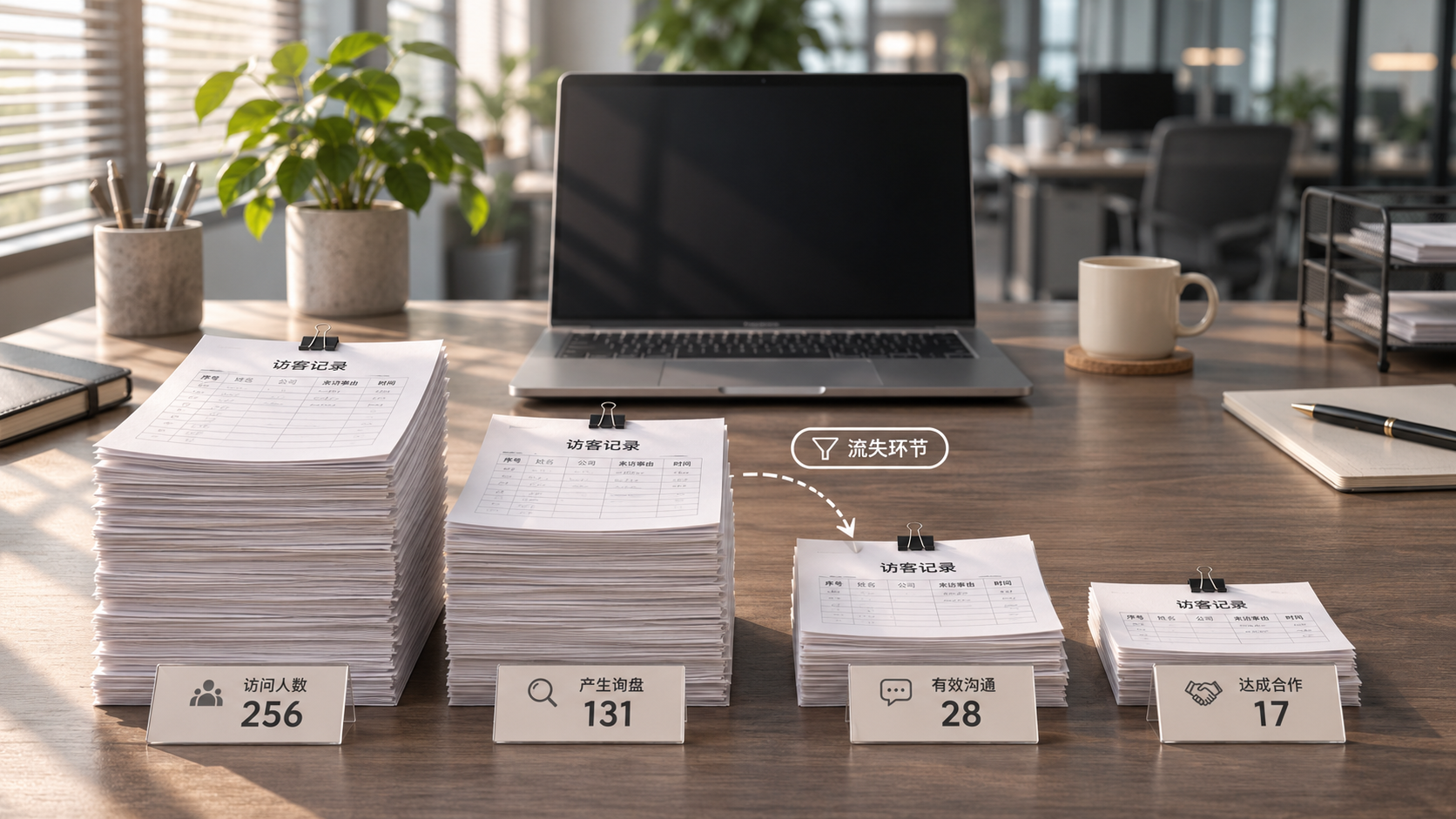
Do Not Focus Only on the Number of Forms; Identify Where the Journey Actually Breaks Down
When investigating, website conversion can be divided into several observable actions: whether visitors enter core product pages, whether they continue to view specifications or application content, whether they click the quote button, whether they begin filling out a form, and whether they submit it successfully. The value of doing this is that it distinguishes between "the page is not appealing" and "the contact process is malfunctioning." For example, if there are many clicks on the quote button but few submissions, first check form length, mobile compatibility, and technical errors. If product page visits are high but quote clicks are low, review the product information, trust-building materials, and calls to action.
Do not change titles, images, copy, and forms all at once. If too many changes are made, even when results improve, it is difficult to determine which factors were actually effective. A more reliable method is to first test one or two pages with relatively high traffic and strong commercial intent, keep records of changes, and assess inquiry quality together with sales feedback. Some pages may not generate many inquiries, but customers submit drawings, specifications, or clear purchasing plans. Such leads are usually more valuable than a large number of general inquiries saying "Please send price."
Website Building, Lead Generation, and Follow-Up Need to Be Viewed as One Chain
Website conversion is not something that can be solved by the design department or advertising personnel alone. Sales teams know what customers ask most frequently during initial communications, technical teams understand product delivery boundaries, and marketing personnel know which channels customers come from. If this information does not flow back into the website, pages can easily remain focused on "showcasing the company" rather than "helping customers make decisions."
For integrated service platforms like Eyingbao, which cover intelligent website building, SEO optimization, advertising, and overseas social media operations, the practical value lies not only in building a website, but also in enabling website pages, promotional channels, and inquiry data to work together. Since 2013, Eyingbao Information Technology (Beijing) Co., Ltd. has served global digital marketing scenarios, providing multilingual websites, B2B inquiry websites, cross-border online stores, and overseas marketing-related services for foreign trade companies, manufacturing factories, and businesses expanding brands overseas. For operators, the key is not having more functions, but whether they can use the same working logic to clearly see where customers come from, which page causes hesitation, what requirements they submit, and whether sales teams respond in time.
If your website has considerable traffic but continues to receive no inquiries, it is advisable to first select the most important product line and go through every stage, from search terms, landing pages, and product information to form submission and email notifications. In many cases, foreign trade website conversion problems are not caused by the lack of an eye-catching module, but because customers' questions have not been answered in advance and there is no sufficiently smooth way to contact you when they want to.
Related Articles
 How to Choose Priority Overseas Markets for Cross-Border Brand Promotion
 How Can Website Data Analytics Services Identify Where Inquiries Are Being Lost?
 Dongguan Opens a New Transit Logistics Route for Cross-Border E-Commerce Exports to Russia

Related Products
 Yiyingbao SaaS Intelligent Website Building and Marketing SystemYiyingbao SaaS Intelligent Website Building and Marketing System, AI-powered no-code website building, rapid creation of multilingual B2B international websites in 10 minutes, global server acceleration, AI-powered SEO optimization, helping businesses connect efficiently with global markets. The perfect integration of technology and operation makes building an international trade website remarkably simple
 AI+SEM Intelligent Advertising Marketing SystemAI+SEM drives intelligent ad creation, empowering full-funnel precision advertising marketing. The system automatically generates weekly/monthly reports, AI recommends keywords and target countries, monitors core metrics in real-time with intelligent alerts, and enables one-click high-conversion ad solutions to help quickly acquire customers and improve ROI.
 AI+SEO Dual-Engine System Optimization ServicesYiyingbao’s AI+SEO dual-engine optimization system helps foreign trade enterprises acquire high-quality organic traffic through AI-powered keyword research, content generation, and comprehensive technical optimization, significantly improving search rankings and conversion rates.
 AI+SNS Social Media Marketing SystemYingbao AI+SNS Social Media Marketing System - Precision social capture for the social media era. Supports one-click content synchronization across major platforms like Facebook and LinkedIn. AI intelligently rewrites posts for enhanced relevance. 24/7 AI customer service and user profiling analysis empower businesses to efficiently expand into global markets.
 AI+SEO营销解决方案易营宝AI+SEO营销解决方案,通过AI批量写作、智能生成TDK、精准关键词扩词等功能,全面优化网站SEO效果,提升流量与转化率。助力企业构建高效智能网站新生态。
 AI+SEM Advertising Marketing SolutionsAI+SEM Advertising Marketing Solution leverages AI technology to deeply empower SEM ad campaigns. It automatically generates weekly/monthly reports using AI, presenting account data across multiple dimensions for comprehensive insights into campaign performance and trends. The system precisely recommends keywords and target countries, intelligently generates high-conversion ad copy, and enables one-click activation of efficient campaign plans to help businesses rapidly acquire customers. Simultaneously, it monitors core metrics in real time, intelligently identifies abnormal fluctuations, and issues timely alerts to ensure stable, high-return advertising results.
 Domain Name ServicesEasyWin provides professional domain name services, including intelligent queries, one-stop registration, brand protection, and full lifecycle management, helping businesses build a digital brand image.
 EasyOperate B2C Cross-Border E-Commerce Platform & Independent WebsiteEasyStore B2C Cross-border E-commerce Independent Store is an intelligent website building and cross-border e-commerce integrated solution independently developed by EasyStore Information Technology (Beijing) Co., Ltd. The system is specially designed for small and medium-sized as well as large export enterprises, integrating 'website building, operation, marketing, advertising, and conversion' into one, helping enterprises quickly establish cross-border e-commerce independent stores to achieve brand globalization and global sales growth.
The platform supports multiple languages, multiple currencies, and multi-channel marketing, with built-in AI intelligent translation and SEO optimization systems, suitable for mainstream markets such as Southeast Asia, Europe and America, Latin America, and the Middle East, assisting Chinese manufacturing enterprises in efficiently deploying international e-commerce strategies. SSL证书易营宝提供专业SSL安全证书服务,包括单域名和泛域名证书,确保网站数据传输加密、身份验证和完整性保护,助力企业建立安全可信的在线业务环境。









