









- Can the average annual growth rate reflect real opportunities in overseas markets?Oct 07, 2026View details
- Which customer acquisition channels will be affected by cross-border marketing trends in 2026?Sep 06, 2026View details
- Which homogenization risks should be considered in an analysis of the AI-powered website building industry?Aug 30, 2026View details
- How Will AI Marketing Trends 2026 Change Advertising Budget AllocationAug 28, 2026View details
- Is the EV SSL certificate market shrinking or upgrading? How should companies assess certificate procurement?Aug 11, 2026View details
- Why the old AMP SEO 2020 practices no longer work and what has changed in current optimization prioritiesAug 02, 2026View details
Can web design references be used as a basis for choosing a service provider?
When procurement personnel screen website development and marketing service providers, they often first look at referenz webdesign, namely the cases and previous projects showcased by the provider. This is indeed a valuable starting point, but it can only show “what has been done” and cannot directly prove “whether your project can be done well now.”
If cases are treated as the only basis, procurement teams can easily be influenced by page style, client names, and visual presentation. A truly reliable approach is to place cases within a complete evaluation framework and assess them together with technical capabilities, conversion strategy, industry experience, delivery processes, and ongoing services.
Why procurement teams look at referenz webdesign first
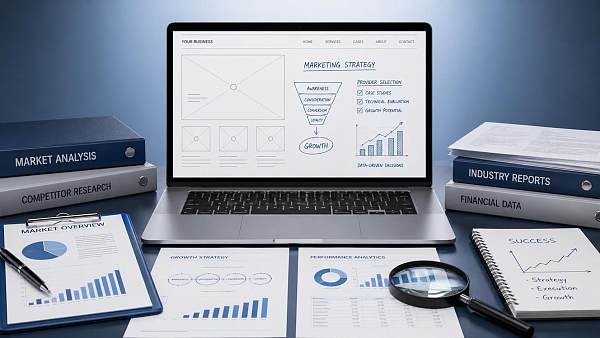
From the perspective of search intent, people searching for referenz webdesign are not simply looking for “website case studies.” At the core, they want to determine whether the provider is credible and experienced, whether its style matches their needs, and whether it is worth further communication and comparison.
For procurement personnel, cases matter because they are more intuitive than promotional copy. Through case studies, you can quickly see whether a provider has experience with multilingual websites, B2B corporate websites, cross-border e-commerce platforms, and landing pages, as well as whether it has a certain level of international communication capability and project experience.
Especially in the integrated website development and marketing industry, procurement teams are often not simply buying a “website page,” but rather lead-generation capabilities, brand communication capabilities, and ongoing operational support. Therefore, cases naturally become an important basis during the initial screening stage.
Referenz webdesign is valuable for reference, but why can it not determine procurement decisions on its own?
The issue is that case studies usually present only a small part of the result, while making it difficult to fully understand the project background, budget constraints, client objectives, post-launch traffic performance, and the actual scope of work undertaken by the provider. An impressive appearance does not necessarily mean that it is suitable for your business.
Some cases are merely visual redesign projects, with the focus on page design; others include website development, SEO, advertising, and multilingual deployment. If procurement personnel do not ask further questions, they can easily mistake “design capability” for “comprehensive growth capability.”
In addition, some referenz webdesign portfolios selectively showcase the most attractive and mature projects while omitting issues such as delayed delivery, technical compatibility, weak SEO foundations, or slow responses to post-launch maintenance requests. These are precisely the areas where procurement teams are most likely to encounter problems later.
More realistically, a website project is not the purchase of a work of art. It ultimately needs to serve business objectives, such as increasing inquiries, expanding a brand overseas, improving independent-site conversions, or acquiring overseas customers. Focusing only on the visual appeal of cases often causes procurement teams to deviate from the actual purpose of the purchase.
What procurement personnel should really care about—not just whether it looks good
For procurement teams, the most critical questions usually fall into four categories: First, does the provider understand your business scenario? Second, does the website have promotion and conversion capabilities? Third, can the project be delivered reliably according to a defined process? Fourth, will someone remain responsible for ongoing operations?
If the company targets overseas markets, procurement teams should also pay close attention to multilingual architecture, page-loading speed, mobile adaptation, search-engine indexing foundations, form conversion paths, and data-tracking configuration. These factors are more closely related to business results than visual style alone.
For example, when a foreign trade company develops a corporate website, the key issue is usually not how impressive the homepage looks, but whether the product-page structure facilitates Google indexing, whether the inquiry form is simple and effective, and whether content for different national markets has been localized. These factors determine the efficiency of subsequent customer acquisition.
This is why more and more companies are prioritizing integrated website development and marketing service providers during selection. Compared with a single-service design company, this type of team is better able to execute website development, SEO optimization, advertising landing pages, and content growth within the same objective framework.
How to use referenz webdesign correctly for initial screening
A more appropriate approach is to treat referenz webdesign as a first-round filter rather than the final decision-maker. Procurement teams can first use case studies to assess whether a provider has basic aesthetic capabilities, industry understanding, and a suitable match with the project type before proceeding to more specific verification.
First, examine whether the case types are close to your needs. Are you developing a B2B foreign trade marketing website, a multilingual corporate website, or a cross-border e-commerce platform? If most of the provider’s showcased cases are local presentation websites or purely brand-focused websites, their reference value will decrease significantly.
Second, determine whether the cases demonstrate business objectives. A good case study should not include only page screenshots; it should also explain the client’s original problems, the solutions provided, the optimization direction after launch, and whether SEO, advertising traffic reception, and conversion-path design were taken into account.
Third, assess whether the cases reflect a stable methodology. Mature providers generally do not “start from scratch” on every project. Instead, they have content structures, technical specifications, page templates, data-tracking configurations, and supporting growth solutions. This means delivery is more controllable and project risks are lower.
Fourth, examine whether there is ongoing service capability behind the cases. For many projects, launch is only the beginning. The real difference lies in subsequent SEO content iteration, advertising landing-page testing, social-media lead generation integration, and data review. All of these determine long-term results.
Besides case studies, what capabilities should procurement teams verify?
The first is technical capability. Procurement teams should confirm whether the provider can handle multilingual deployment, global access speed, mobile performance, page-structure optimization, form and CRM integration, and future expansion requirements. These factors directly affect whether the website can be put into actual business use.
The second is marketing capability. Without support for SEO, advertising, and content strategy, a website development project can easily become a case of “launching and then stopping.” For companies expanding overseas, the website is the hub of the customer-acquisition journey. Whether the provider has the ability to generate traffic continuously must be verified in advance during procurement.
The third is industry experience. Whether a provider has worked on manufacturing, foreign trade B2B, cross-border e-commerce, or overseas brand expansion projects will significantly affect communication efficiency and the practical usability of its solutions. Teams with industry experience generally have a clearer understanding of user concerns and conversion points.
The fourth is the service process. Procurement teams should focus on whether the stages of requirements research, prototype confirmation, content collaboration, development testing, launch acceptance, training and handover, and after-sales response are clearly defined. Projects with ambiguous processes are often also high-risk projects prone to later disputes and delays.
From “presentation websites” to “growth websites,” the evaluation logic has changed
In the past, many companies developed websites simply to “have an official website.” Today, companies—especially those expanding overseas—place greater emphasis on whether a website can generate leads, accumulate content, support advertising, and sustain long-term brand growth. As a result, procurement criteria must also shift from presentation-oriented logic to growth-oriented logic.
Under this shift, referenz webdesign still has a role to play, but the focus is no longer simply on whether the design looks sophisticated. Instead, the question is whether the cases prove that the provider can turn a website into a business asset. A website that generates leads and conversions is a high-value deliverable.
When gathering information, some procurement teams also read materials related to enterprise digitalization, marketing growth, and organizational innovation, such as Practical Challenges and Countermeasures for Fintech to Promote Enterprise Innovation and Development, in order to understand the relationship between technology investment and business results from a broader perspective. The same approach applies to evaluating website development service providers.
For companies seeking overseas growth, a provider that can cover AI-driven website development, multilingual deployment, Google SEO, advertising, social-media operations, and AI search visibility optimization is often more suitable for long-term cooperation than a team offering only individual services.
A service-provider evaluation checklist procurement teams can use directly
During actual comparisons, procurement teams can prepare a concise checklist: Are the cases of the same type? Do they explain business results? Do they have basic SEO capabilities? Do they support multilingual content and overseas access? Can they provide ongoing operational support? Are pricing and delivery boundaries clearly defined?
They should also ask two key questions: First, among the referenz webdesign cases you showcase, which projects are closest to ours, and what were the results? Second, after the project goes live, how will you continue to support traffic acquisition and conversion improvement? These two questions are more effective than simply reviewing a PPT.
If a provider can connect website development, marketing channels, and data optimization, it is generally more worthy of entering the next round of evaluation. Platform-based teams such as Yiyingbao, which combine AI-driven website development, SEO/GEO optimization, advertising marketing, and multi-market localization services, are more suitable for companies with overseas growth objectives.
The reason is simple: what procurement teams ultimately purchase is not a collection of pages, but a digital infrastructure capable of supporting global customer acquisition. Case studies can help you understand the starting point, but the true value of cooperation depends on whether the provider can connect technology, content, traffic, and conversion.
Conclusion: referenz webdesign can be reviewed, but should not be the only consideration
Returning to the original question, can referenz webdesign be used as a basis for selecting a service provider? The answer is yes, but only as a basis for preliminary judgment—not as the sole factor determining the procurement decision. It is suitable for screening, but not for making the final decision.
For procurement personnel, a more reliable decision-making approach is to evaluate case studies together with technical capabilities, growth capabilities, industry experience, delivery processes, and ongoing services. Only in this way can companies avoid the common procurement risk of “looking good at first but producing no results after launch.”
Especially as integrated website development and marketing services become increasingly common, companies selecting a provider should not ask only, “Can you build a website?” They should also ask, “Can you turn the website into a tool for continuous customer acquisition?” This is the true value judgment that should be explored behind referenz webdesign.
Related Articles
 Can a Multi-Platform Social Media Management Tool Preserve Each Platform’s Publishing Format?
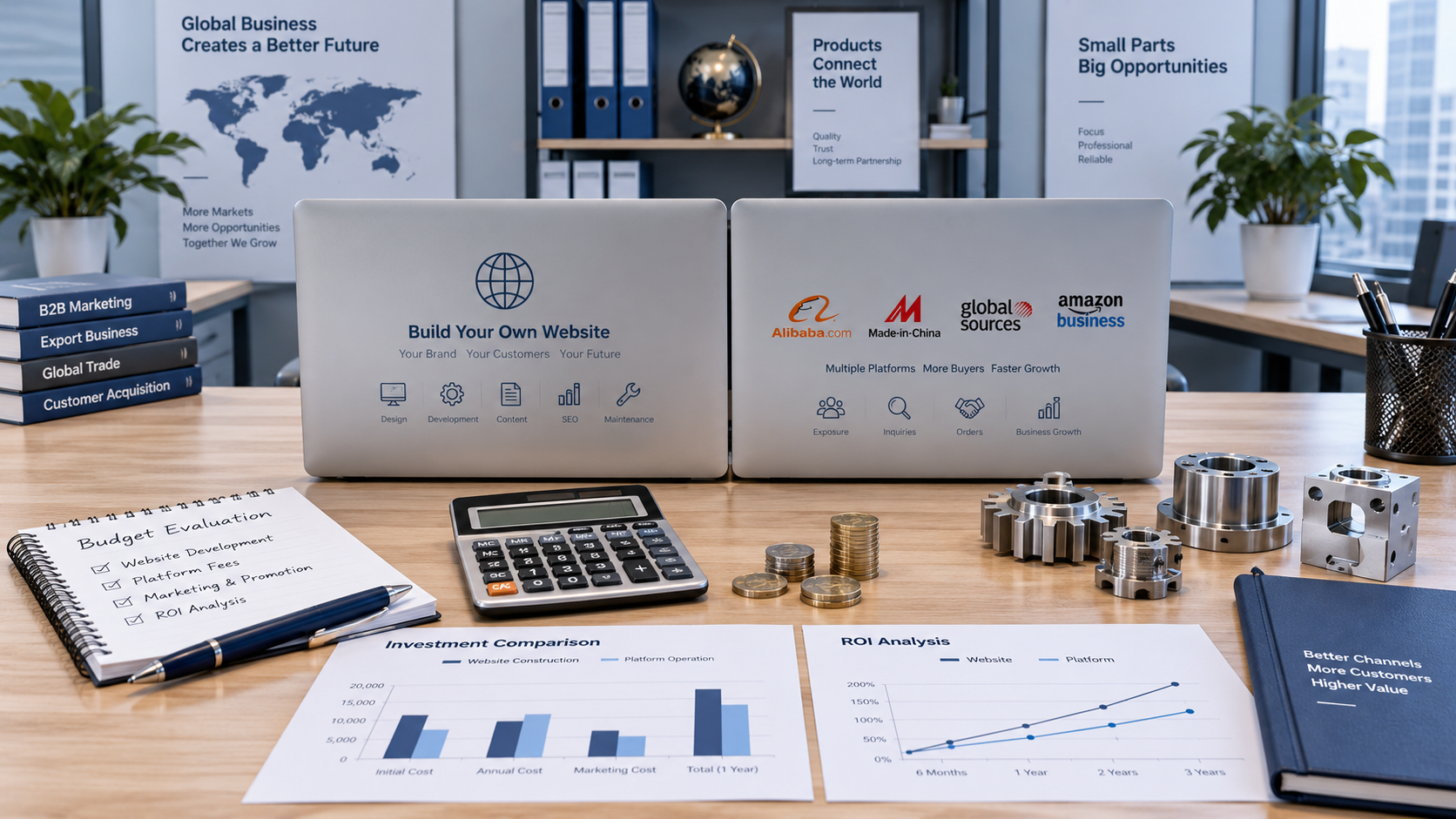
 On a Limited Budget, Which Is Better for Generating Export Leads: an Independent Website or a Third-Party Platform?
 How effective is 易营宝's TikTok lead generation for overseas markets? How can you assess lead quality?

Related Products
 Yiyingbao SaaS Intelligent Website Building and Marketing SystemYiyingbao SaaS Intelligent Website Building and Marketing System, AI-powered no-code website building, rapid creation of multilingual B2B international websites in 10 minutes, global server acceleration, AI-powered SEO optimization, helping businesses connect efficiently with global markets. The perfect integration of technology and operation makes building an international trade website remarkably simple
 AI+SEM Intelligent Advertising Marketing SystemAI+SEM drives intelligent ad creation, empowering full-funnel precision advertising marketing. The system automatically generates weekly/monthly reports, AI recommends keywords and target countries, monitors core metrics in real-time with intelligent alerts, and enables one-click high-conversion ad solutions to help quickly acquire customers and improve ROI.
 AI+SEO Dual-Engine System Optimization ServicesYiyingbao’s AI+SEO dual-engine optimization system helps foreign trade enterprises acquire high-quality organic traffic through AI-powered keyword research, content generation, and comprehensive technical optimization, significantly improving search rankings and conversion rates.
 AI+SNS Social Media Marketing SystemYingbao AI+SNS Social Media Marketing System - Precision social capture for the social media era. Supports one-click content synchronization across major platforms like Facebook and LinkedIn. AI intelligently rewrites posts for enhanced relevance. 24/7 AI customer service and user profiling analysis empower businesses to efficiently expand into global markets.
 AI+SEO营销解决方案易营宝AI+SEO营销解决方案,通过AI批量写作、智能生成TDK、精准关键词扩词等功能,全面优化网站SEO效果,提升流量与转化率。助力企业构建高效智能网站新生态。
 AI+SEM Advertising Marketing SolutionsAI+SEM Advertising Marketing Solution leverages AI technology to deeply empower SEM ad campaigns. It automatically generates weekly/monthly reports using AI, presenting account data across multiple dimensions for comprehensive insights into campaign performance and trends. The system precisely recommends keywords and target countries, intelligently generates high-conversion ad copy, and enables one-click activation of efficient campaign plans to help businesses rapidly acquire customers. Simultaneously, it monitors core metrics in real time, intelligently identifies abnormal fluctuations, and issues timely alerts to ensure stable, high-return advertising results.
 Domain Name ServicesEasyWin provides professional domain name services, including intelligent queries, one-stop registration, brand protection, and full lifecycle management, helping businesses build a digital brand image.
 EasyOperate B2C Cross-Border E-Commerce Platform & Independent WebsiteEasyStore B2C Cross-border E-commerce Independent Store is an intelligent website building and cross-border e-commerce integrated solution independently developed by EasyStore Information Technology (Beijing) Co., Ltd. The system is specially designed for small and medium-sized as well as large export enterprises, integrating 'website building, operation, marketing, advertising, and conversion' into one, helping enterprises quickly establish cross-border e-commerce independent stores to achieve brand globalization and global sales growth.
The platform supports multiple languages, multiple currencies, and multi-channel marketing, with built-in AI intelligent translation and SEO optimization systems, suitable for mainstream markets such as Southeast Asia, Europe and America, Latin America, and the Middle East, assisting Chinese manufacturing enterprises in efficiently deploying international e-commerce strategies. SSL证书易营宝提供专业SSL安全证书服务,包括单域名和泛域名证书,确保网站数据传输加密、身份验证和完整性保护,助力企业建立安全可信的在线业务环境。









