









- Eight Departments, Including the Ministry of Commerce, Issue the 15th Five-Year Plan for the Development of Trade in ServicesNov 27, 2026View details
- General Administration of Customs Issues New Rules on Import and Export Cosmetic Labeling, Effective December 1Nov 26, 2026View details
- U.S. to Announce Section 301 Investigation Findings on 16 Economies, Potentially Proposing New TariffsNov 26, 2026View details
- Hapag-Lloyd’s $4.2 billion acquisition of ZIM faces a closing delay; ZIM reports third-quarter net profit of $830 millionNov 24, 2026View details
- SCFI falls for a third straight week to 3,503.78 points, with blank sailings on trans-Pacific routes rising to 10Nov 24, 2026View details
- Lazada 11.11 Mega Sale: LazMall Contributes Nearly Two-Thirds of GMVNov 23, 2026View details
On a Limited Budget, Which Is Better for Generating Export Leads: an Independent Website or a Third-Party Platform?
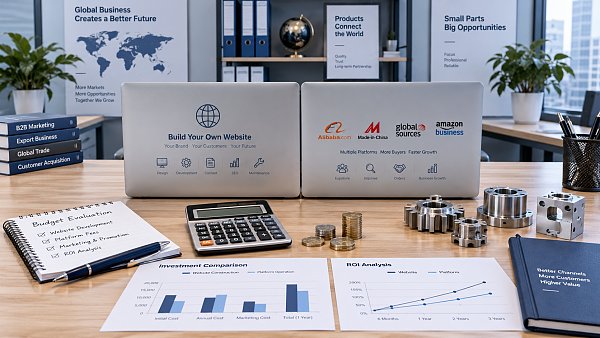
When the budget is limited, a third-party platform is a more suitable starting point if product specifications are clear, the target market has established demand for purchasing through platforms, and you need to validate inquiries quickly. An independent website should take priority if the product requires explanations of its applications, processes, or customization capabilities, you already have sources of customers, and you can invest consistently in content and promotion. The choice should be based on whether your current budget can cover the entire process from attracting traffic to generating qualified inquiries. Having enough only to purchase a platform membership or launch a website is not sufficient to support a steady flow of leads.
Look Beyond “Entry Costs” to the Full Cost of Lead Generation
The cost of a third-party platform cannot be assessed based solely on the membership price. Product listings, image production, keyword research, paid exposure, inquiry responses, and account management all require financial or labor resources. Platforms have existing traffic, but purchasing a membership does not guarantee that target customers will see your products. Where similar suppliers are concentrated, additional investment may be needed to gain exposure and maintain rankings, depending on the platform’s rules and competitive conditions.
For an independent website, calculate domain, website development, content, maintenance, and traffic acquisition costs together. Once the website is live, pages are unlikely to generate inquiries without search visibility, advertising traffic, or referrals from existing channels. Low-cost website packages that lack product categories, inquiry tracking, or editable page structures may also lead to redesign costs when you start promoting the site.
When comparing quotes, use the same evaluation period and distinguish one-time development costs from ongoing expenses. Include launch, content preparation, promotion testing, and daily operations, then assess whether enough budget remains for adjustments. A solution with a low initial price but no budget for driving traffic after launch may have very limited practical value.
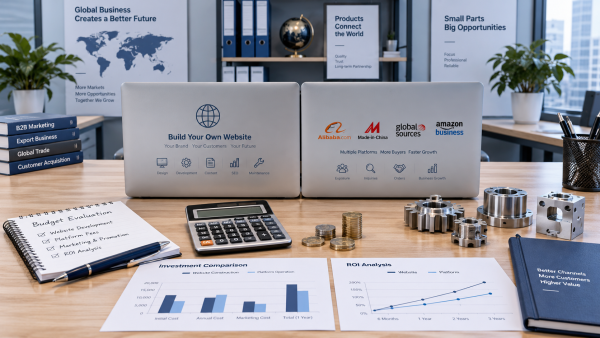
How Your Products Are Sold Affects Channel Priorities
Standardized products are often better suited to validating demand on a platform first. For example, when models, dimensions, materials, and minimum order quantities can be clearly described, and customers mainly compare lead times, prices, and supply capabilities, a platform’s search and filtering functions can readily serve this type of demand. However, consistent specifications also intensify price comparisons, so you need to respond quickly with quotes and keep inventory information and delivery terms up to date.
Non-standard equipment, customized components, or products that require help with selection are better suited to an independent website with detailed content. Customers may first need to confirm machining capabilities, material suitability, dimensional tolerances, or application requirements before submitting drawings for a quote. Organizing pages around application questions and explaining which parameters affect pricing can help reduce back-and-forth communication.
This does not mean complex products can only be sold through an independent website. A platform can generate initial contact, while your website provides technical information and helps customers verify your credibility. If your budget can support only one primary channel, determine whether your biggest need is more opportunities to reach customers or the ability to help existing visitors understand your products and submit inquiries.
More Inquiries Do Not Necessarily Mean a More Cost-Effective Channel
Some platform inquiries are sent to multiple suppliers at the same time. Independent websites also receive spam, irrelevant requests, and forms with contact details that cannot be verified. A channel’s name alone does not indicate lead quality. A qualified inquiry should specify the product requirements, match your target region and supply scope, include verifiable contact details, and show a willingness to provide the information needed for a quote.
For customized products, you can record whether drawings, materials, quantities, and conditions of use have been provided. For standard products, focus on the model, purchase quantity, delivery location, and timing. An inquiry with incomplete information should not automatically be considered invalid; assess it based on subsequent responses. Requiring too much information on a form can discourage submissions, so quote details can be collected in stages.
To compare channels, divide the channel costs, content investment, and operational labor over the same period by the number of qualified inquiries, then consider how those inquiries progress toward quotes. Comparing only the cost per form submission can make low-intent traffic look inexpensive; comparing only orders may lead you to dismiss a channel too soon, given the long sales cycles in international trade.
With a Limited Budget, Focus on Validating One Path
Purchasing platform memberships, building a multilingual website, running ads, and managing several social media accounts at the same time can leave every channel without enough ongoing investment. A more practical approach is to choose one primary lead-generation channel and validate it with one target market and a set of competitive products.
If you prioritize a platform, first ensure that the specifications, images, lead times, and quote response process for your core products are complete. Then decide whether to add paid promotion based on actual exposure and qualified inquiries. The number of features included in a platform package should not be the main reason for upgrading.
If you prioritize an independent website, start with core product pages, application information, company verification materials, contact details, and inquiry tracking. Choose languages based on your target markets, rather than publishing large amounts of translated content that no one can maintain. If you rely on ads to validate demand, prepare landing pages that match search intent. If you rely on organic search, allow time for content development and indexing.
If you already receive platform inquiries, trade show contacts, or social media traffic, a streamlined website with reliable information can first serve as a resource for customer verification and information sharing. You do not need to treat the independent website as a standalone lead-generation channel right away, or judge its entire value by the number of organic inquiries it generates.
Long-Term Returns Depend on Whether Assets Can Be Retained and Reused
The long-term value of an independent website comes from product content that can be maintained over time, search visibility, customer records, and brand recognition—all of which require ongoing operational investment. Before signing a website development service agreement, clarify domain ownership, backend access, data export, content migration, and what happens if the service is discontinued. Without these provisions, your website investment may not be fully retained.
Third-party platforms can help build store reviews and transaction records, but they are also subject to renewal fees, ranking rules, and account permissions. When evaluating renewal, review qualified inquiries, quote progress, and order gross margins to determine whether the channel merits continued investment.
Allocate your next budget to the bottleneck that has become apparent: if exposure is insufficient, test traffic sources; if visitors are not submitting inquiries, improve the pages and product descriptions; if inquiries are coming in but not progressing, strengthen lead qualification and quote response. This is a more specific basis for investment than simply choosing the label “independent website” or “platform.”
Related Articles
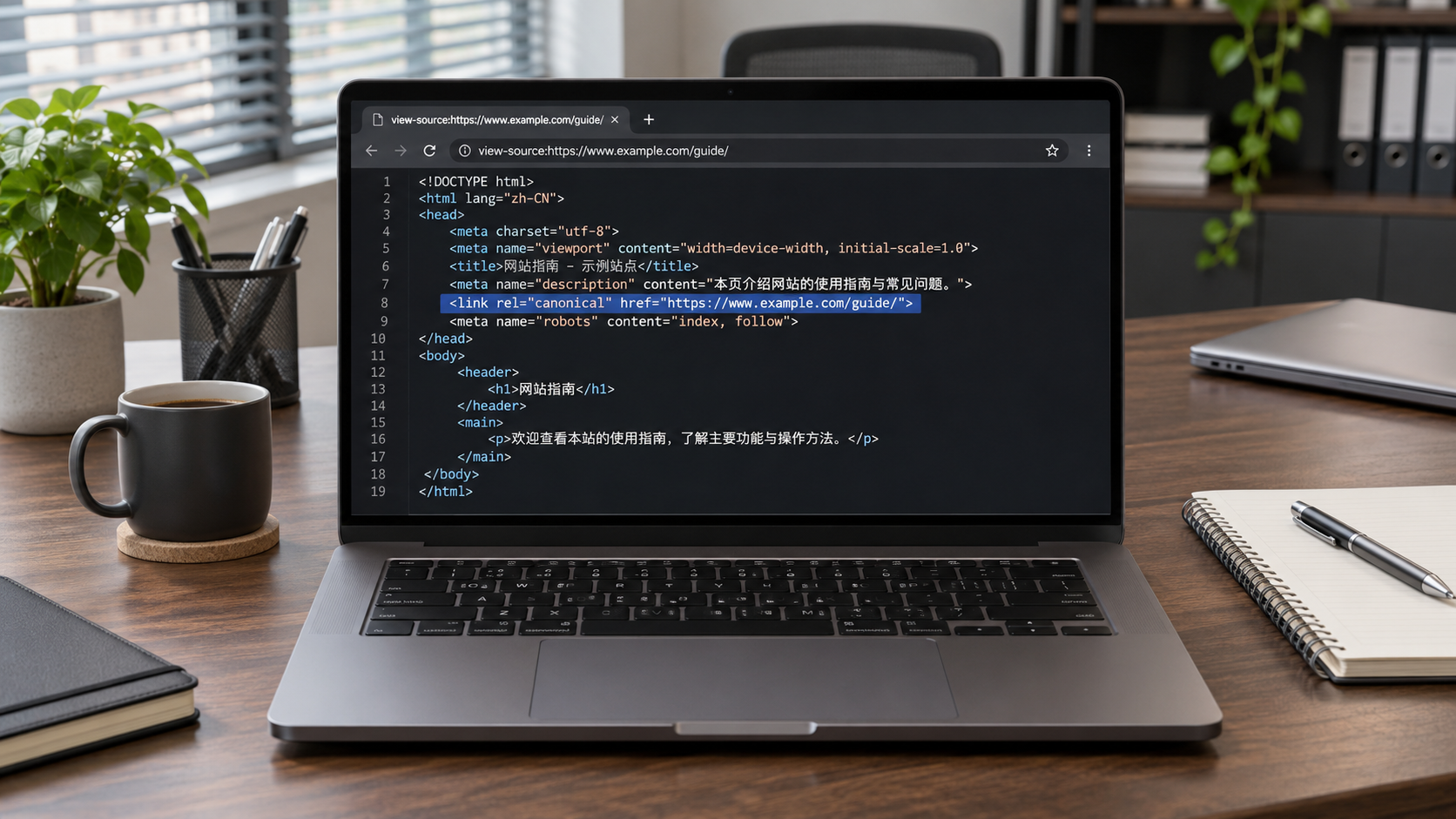
 Does the website building platform’s SEO functionality support custom canonical URLs?
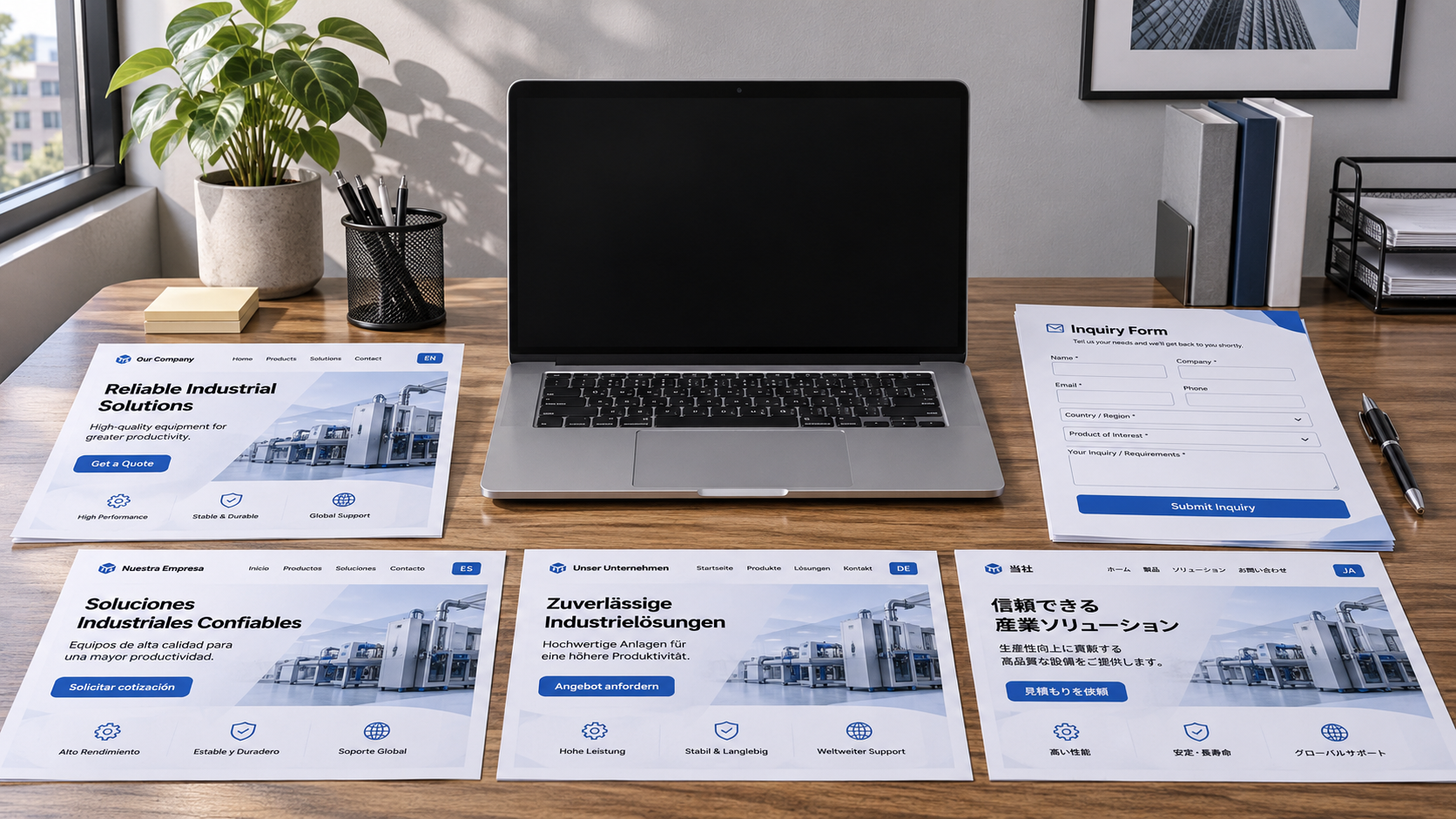
 How to Choose a Website Building Platform for Multilingual Advertising Landing Pages
 How should global enterprises evaluate multi-site management capabilities when choosing a CMS?
Related Products
 Yiyingbao SaaS Intelligent Website Building and Marketing SystemYiyingbao SaaS Intelligent Website Building and Marketing System, AI-powered no-code website building, rapid creation of multilingual B2B international websites in 10 minutes, global server acceleration, AI-powered SEO optimization, helping businesses connect efficiently with global markets. The perfect integration of technology and operation makes building an international trade website remarkably simple
 AI+SEM Intelligent Advertising Marketing SystemAI+SEM drives intelligent ad creation, empowering full-funnel precision advertising marketing. The system automatically generates weekly/monthly reports, AI recommends keywords and target countries, monitors core metrics in real-time with intelligent alerts, and enables one-click high-conversion ad solutions to help quickly acquire customers and improve ROI.
 AI+SEO Dual-Engine System Optimization ServicesYiyingbao’s AI+SEO dual-engine optimization system helps foreign trade enterprises acquire high-quality organic traffic through AI-powered keyword research, content generation, and comprehensive technical optimization, significantly improving search rankings and conversion rates.
 AI+SNS Social Media Marketing SystemYingbao AI+SNS Social Media Marketing System - Precision social capture for the social media era. Supports one-click content synchronization across major platforms like Facebook and LinkedIn. AI intelligently rewrites posts for enhanced relevance. 24/7 AI customer service and user profiling analysis empower businesses to efficiently expand into global markets.
 AI+SEO营销解决方案易营宝AI+SEO营销解决方案,通过AI批量写作、智能生成TDK、精准关键词扩词等功能,全面优化网站SEO效果,提升流量与转化率。助力企业构建高效智能网站新生态。
 AI+SEM Advertising Marketing SolutionsAI+SEM Advertising Marketing Solution leverages AI technology to deeply empower SEM ad campaigns. It automatically generates weekly/monthly reports using AI, presenting account data across multiple dimensions for comprehensive insights into campaign performance and trends. The system precisely recommends keywords and target countries, intelligently generates high-conversion ad copy, and enables one-click activation of efficient campaign plans to help businesses rapidly acquire customers. Simultaneously, it monitors core metrics in real time, intelligently identifies abnormal fluctuations, and issues timely alerts to ensure stable, high-return advertising results.
 Domain Name ServicesEasyWin provides professional domain name services, including intelligent queries, one-stop registration, brand protection, and full lifecycle management, helping businesses build a digital brand image.
 EasyOperate B2C Cross-Border E-Commerce Platform & Independent WebsiteEasyStore B2C Cross-border E-commerce Independent Store is an intelligent website building and cross-border e-commerce integrated solution independently developed by EasyStore Information Technology (Beijing) Co., Ltd. The system is specially designed for small and medium-sized as well as large export enterprises, integrating 'website building, operation, marketing, advertising, and conversion' into one, helping enterprises quickly establish cross-border e-commerce independent stores to achieve brand globalization and global sales growth.
The platform supports multiple languages, multiple currencies, and multi-channel marketing, with built-in AI intelligent translation and SEO optimization systems, suitable for mainstream markets such as Southeast Asia, Europe and America, Latin America, and the Middle East, assisting Chinese manufacturing enterprises in efficiently deploying international e-commerce strategies. SSL证书易营宝提供专业SSL安全证书服务,包括单域名和泛域名证书,确保网站数据传输加密、身份验证和完整性保护,助力企业建立安全可信的在线业务环境。









