









- Lazada 11.11 Mega Sale: LazMall Contributes Nearly Two-Thirds of GMVNov 23, 2026View details
- Shein’s European Revenue Falls 16% as Tighter Rules on Low-Value Direct Shipments Take EffectNov 23, 2026View details
- EU Low-Value Parcel Rules Impact Cargo Flows: Air Freight Volume from China to Europe Down 17% in OctoberNov 23, 2026View details
- Indonesia and the EU Sign Comprehensive Economic Partnership Agreement, 90.4% of Tariff Lines to Become Duty-Free ImmediatelyNov 23, 2026View details
- Qingdao Port's Imports and Exports Exceed RMB 23.699 Trillion in the First 10 Months, Drawing Attention to Port IntelligenceNov 22, 2026View details
- Ningbo Cross-Border E-Commerce Export Value Surges 94.87% Year on Year, Opening Up a New Billion-Yuan Growth TrackNov 22, 2026View details
Are template websites suitable for export businesses in the startup stage?
Are template websites suitable for foreign trade companies? For companies in the startup stage, the answer is not simply “suitable” or “unsuitable.” The key is whether the template can help overseas customers understand the products, build trust, and submit inquiries, and whether it can subsequently support SEO, advertising, and multilingual promotion.
If a company currently has a limited budget, a relatively clear product line, and needs to test overseas markets as soon as possible, choosing a template website optimized for foreign trade scenarios is usually a practical starting point. However, if a template website is treated only as a display page while content, conversion, and marketing capabilities are ignored, it will still be difficult for the website to generate effective business opportunities after launch.
Conclusion first: Template websites can be used in the startup stage, but website-building cost should not be the only consideration
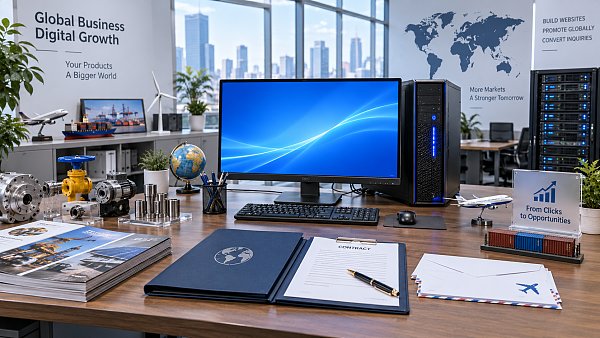
Many business decision-makers who search for “Are template websites suitable for foreign trade companies?” really want to determine whether they can quickly launch an overseas official website at a lower cost while avoiding the need to start over later. For companies that are just developing export business or validating new markets or products, template websites offer high startup efficiency.
They can shorten the design, development, and testing cycle, allowing companies to launch English or multilingual websites faster and obtain initial market feedback through Google Ads, social media traffic generation, and other methods. Compared with custom development from scratch, template website building is more suitable for first validating whether customers will view the site, submit inquiries, and which pages are effective.
However, the value of a template website does not simply mean that the pages look attractive. The core task of a foreign trade website is to help unfamiliar overseas buyers quickly understand a company's capabilities, product advantages, cooperation methods, and contact channels. Without this basic information, even the most attractive template will find it difficult to generate conversions.
Therefore, companies should not limit their decision criteria to “template or custom,” but should assess whether the system has the basic capabilities of a marketing website, including mobile responsiveness, speed optimization, inquiry forms, product management, multilingual support, SEO settings, and room for future expansion.
What business managers should focus on most is whether investment can be converted into verifiable business results
Foreign trade companies in the startup stage usually do not lack a website link; what they lack is digital infrastructure that can support customer acquisition. Decision-makers need to focus on whether the website can support business objectives, such as obtaining B2B inquiries, showcasing factory capabilities, building brand trust, or driving orders for cross-border retail.
From a return-on-investment perspective, the advantage of template websites lies in more controllable upfront costs. Companies can reserve more budget for organizing product materials, professional images and videos, Google Ads testing, and content development, rather than investing too early in complex interaction design or uncertain custom features.
However, low cost should not mean low standards. If the template code is bloated, pages load slowly, title and description settings cannot be configured, independent product pages are unavailable, or form leads cannot be tracked, subsequent promotion costs will increase significantly. So-called low-cost website building may instead result in higher customer acquisition costs.
A qualified foreign trade template website should enable companies to view traffic sources, key pages, and inquiry data. Only by connecting traffic, content, and leads can managers determine whether advertising is effective, whether SEO is growing, and which markets and products should receive greater investment next.
Which foreign trade companies are more suitable for starting with a template website
Manufacturing companies with relatively standardized product structures are usually suitable for adopting a template website first. For example, in industries such as hardware tools, mechanical parts, packaging materials, household products, and electronic components, buyers are more concerned with product specifications, application scenarios, supply capacity, certification documents, and communication efficiency.
The page structure for such companies is relatively mature, with common modules including the homepage, product categories, product details, application industries, about the factory, quality control, case studies, and contact us. Choosing a template that fits these content structures can quickly create a complete website information framework.
Newly established trading companies and brands that have just entered overseas markets are also suitable for using template websites to validate the market. Companies can first conduct promotion around one key region, one language, or several core products, and then decide whether to carry out in-depth customization after obtaining stable inquiries and clarifying customer needs.
For teams that need to quickly create advertising landing pages, template systems also offer greater advantages. Different countries, products, and marketing campaigns often require separate pages. Being able to quickly duplicate, modify, and test page content is more aligned with the pace of overseas promotion than waiting for a development schedule.
However, if a company sells highly complex industrial solutions and needs to present selection logic, customer system integration, project processes, or distributor permission management, ordinary templates may not cover its business requirements. In such cases, the company should choose a platform that supports modular expansion, or gradually move into custom development after validation.
The four types of risks most easily overlooked with template websites
The first risk is content homogenization. Many companies directly use the industry copy and images included in templates, causing their websites to look no different from competitors'. Overseas customers cannot quickly identify the company's positioning, product capabilities, and cooperation value, which affects both time spent on the site and willingness to submit inquiries.
The second risk is insufficient product page information. Foreign trade customers usually will not submit an inquiry based on a single product image alone; they will also review specifications, materials, dimensions, MOQ, packaging, lead time, applications, certifications, and customization capabilities. A template is only a container; whether product information is complete determines whether the page can persuade customers.
The third risk is neglecting search engine fundamentals. If the website lacks a clear URL structure, editable TDK tags, image alt text, a sitemap, and multilingual management capabilities, subsequent Google SEO optimization will be limited. Before launch, companies should confirm whether the platform provides these basic configurations.
The fourth risk is a lack of lead management. Companies often invest in advertising but receive only scattered emails, making it impossible to determine which keyword, ad group, or page generated an inquiry. The website should support form notifications, source tracking, customer information accumulation, and integration with sales processes to prevent leads from being lost internally.
When choosing template website-building services, it is recommended to evaluate them based on these five criteria
First, assess the overseas browsing experience. The website should support global access speed optimization, responsive design, and compatibility with mainstream browsers, especially ensuring that products and inquiry entry points are clearly presented on mobile devices. Many buyers browse first on mobile devices, and a poor mobile experience directly results in lost potential customers.
Second, assess whether multilingual content can truly be managed. When targeting different markets, foreign trade companies cannot simply machine-translate English content and copy it. The system should make it easy to create pages for individual languages, manage keywords and content for different countries, and retain room for human proofreading and localization adjustments.
Third, assess SEO and advertising support capabilities. In addition to enabling basic tag settings, the website should make it easy to create topic pages, industry pages, and advertising landing pages, while supporting the installation of analytics code, conversion events, and remarketing tags. Only then can organic traffic, paid traffic, and sales leads form a closed loop.
Fourth, assess future expansion costs. Companies have fewer functional requirements at the startup stage, but as the business grows, they may need to add product filtering, a download center, an online store, CRM integration, or multi-site management. Whether the platform supports smooth upgrades determines whether today's choice will become tomorrow's technical burden.
Fifth, assess whether the service provider understands foreign trade customer acquisition. Website building is not a one-time delivery, but the starting point of marketing activities. A service system that can also provide intelligent website building, SEO optimization, Google Ads, social media marketing, and data analysis support is more conducive to companies continuously iterating their overseas growth strategies.
How template websites can evolve from “able to launch” to “able to acquire customers”
Before launch, companies should first define one core objective: obtaining wholesale inquiries, finding distributors, showcasing factory capabilities, or selling products directly. Different objectives require different above-the-fold homepage information, product page structures, content priorities, and form fields; one set of pages cannot address all customers.
It is recommended to first identify the twenty to fifty most competitive products and complete their specifications, scenarios, certifications, images, and frequently asked questions. Rather than uploading a large number of products with incomplete information at once, it is better to prioritize building a small number of high-quality product pages as key entry points for advertising and SEO planning.
At the same time, trust-building information should be placed where customers can easily see it, including factory scale, production equipment, markets served, quality systems, cooperation cases, and delivery capabilities. For B2B buyers, this content is often more persuasive than corporate slogans and can better reduce concerns during initial communication.
After the website goes live, continuously monitor at least three types of data: where traffic comes from, which pages visitors view, and which pages generate inquiries. By adjusting titles, content, forms, and advertising direction based on data, a template website can gradually become a sustainable overseas marketing asset for the company.
Summary: Templates are not the limitation; lack of marketing planning is the limitation
Are template websites suitable for foreign trade companies? For most companies in the startup stage, the answer is yes, provided they choose a foreign trade marketing template with multilingual, SEO, conversion tracking, and expansion capabilities, rather than an ordinary corporate website that only provides visual presentation.
Business decision-makers should regard a template website as the first step in an overseas customer acquisition system: launch quickly and validate the market first, then continuously improve conversions through content enhancement, search optimization, advertising, and data analysis. Only when a website can continuously generate trackable visits and inquiries does it truly have commercial value.
Related Articles
 When Should Chinese Companies Use a Headless CMS for Global Websites?
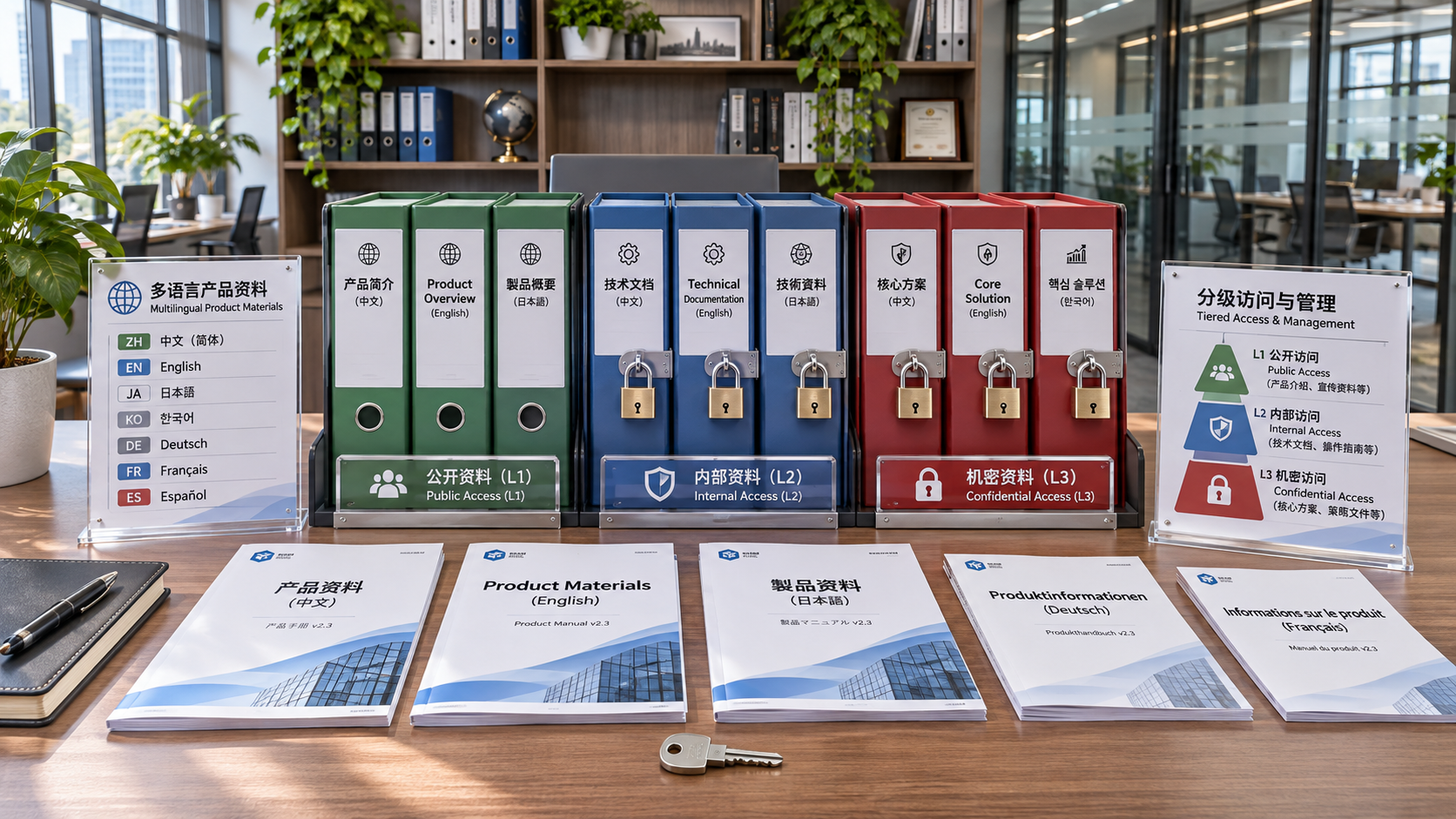
 How Does Permission Management Differ Between Enterprise Multilingual CMS Platforms and Standard Systems?
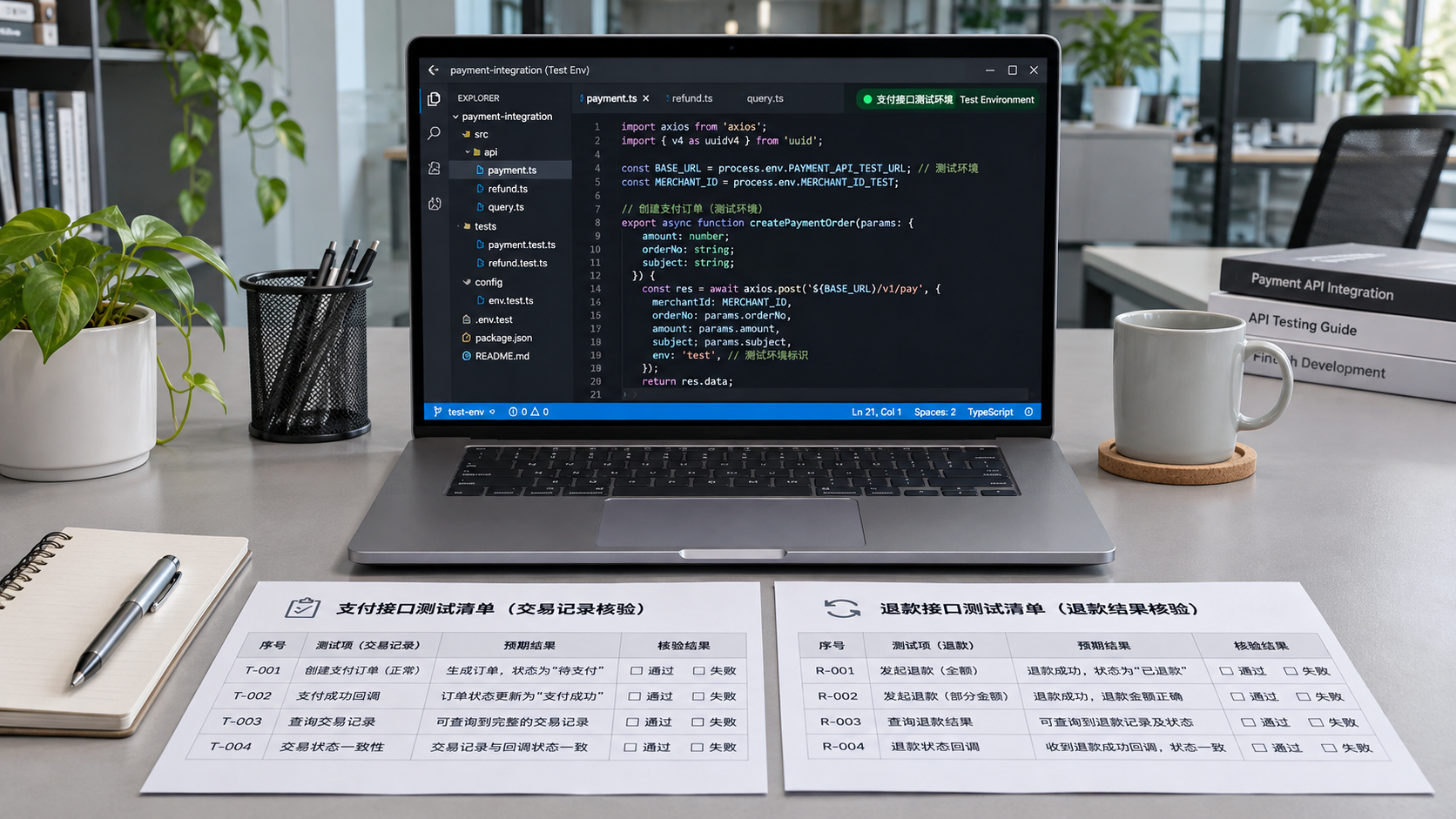
 How to Evaluate Payment Gateway Compatibility for Cross-Border E-commerce Platforms
Related Products
 Yiyingbao SaaS Intelligent Website Building and Marketing SystemYiyingbao SaaS Intelligent Website Building and Marketing System, AI-powered no-code website building, rapid creation of multilingual B2B international websites in 10 minutes, global server acceleration, AI-powered SEO optimization, helping businesses connect efficiently with global markets. The perfect integration of technology and operation makes building an international trade website remarkably simple
 AI+SEM Intelligent Advertising Marketing SystemAI+SEM drives intelligent ad creation, empowering full-funnel precision advertising marketing. The system automatically generates weekly/monthly reports, AI recommends keywords and target countries, monitors core metrics in real-time with intelligent alerts, and enables one-click high-conversion ad solutions to help quickly acquire customers and improve ROI.
 AI+SEO Dual-Engine System Optimization ServicesYiyingbao’s AI+SEO dual-engine optimization system helps foreign trade enterprises acquire high-quality organic traffic through AI-powered keyword research, content generation, and comprehensive technical optimization, significantly improving search rankings and conversion rates.
 AI+SNS Social Media Marketing SystemYingbao AI+SNS Social Media Marketing System - Precision social capture for the social media era. Supports one-click content synchronization across major platforms like Facebook and LinkedIn. AI intelligently rewrites posts for enhanced relevance. 24/7 AI customer service and user profiling analysis empower businesses to efficiently expand into global markets.
 AI+SEO营销解决方案易营宝AI+SEO营销解决方案,通过AI批量写作、智能生成TDK、精准关键词扩词等功能,全面优化网站SEO效果,提升流量与转化率。助力企业构建高效智能网站新生态。
 AI+SEM Advertising Marketing SolutionsAI+SEM Advertising Marketing Solution leverages AI technology to deeply empower SEM ad campaigns. It automatically generates weekly/monthly reports using AI, presenting account data across multiple dimensions for comprehensive insights into campaign performance and trends. The system precisely recommends keywords and target countries, intelligently generates high-conversion ad copy, and enables one-click activation of efficient campaign plans to help businesses rapidly acquire customers. Simultaneously, it monitors core metrics in real time, intelligently identifies abnormal fluctuations, and issues timely alerts to ensure stable, high-return advertising results.
 Domain Name ServicesEasyWin provides professional domain name services, including intelligent queries, one-stop registration, brand protection, and full lifecycle management, helping businesses build a digital brand image.
 EasyOperate B2C Cross-Border E-Commerce Platform & Independent WebsiteEasyStore B2C Cross-border E-commerce Independent Store is an intelligent website building and cross-border e-commerce integrated solution independently developed by EasyStore Information Technology (Beijing) Co., Ltd. The system is specially designed for small and medium-sized as well as large export enterprises, integrating 'website building, operation, marketing, advertising, and conversion' into one, helping enterprises quickly establish cross-border e-commerce independent stores to achieve brand globalization and global sales growth.
The platform supports multiple languages, multiple currencies, and multi-channel marketing, with built-in AI intelligent translation and SEO optimization systems, suitable for mainstream markets such as Southeast Asia, Europe and America, Latin America, and the Middle East, assisting Chinese manufacturing enterprises in efficiently deploying international e-commerce strategies. SSL证书易营宝提供专业SSL安全证书服务,包括单域名和泛域名证书,确保网站数据传输加密、身份验证和完整性保护,助力企业建立安全可信的在线业务环境。









