









- Which customer acquisition channels will be affected by cross-border marketing trends in 2026?Sep 06, 2026View details
- Which homogenization risks should be considered in an analysis of the AI-powered website building industry?Aug 30, 2026View details
- How Will AI Marketing Trends 2026 Change Advertising Budget AllocationAug 28, 2026View details
- Is the EV SSL certificate market shrinking or upgrading? How should companies assess certificate procurement?Aug 11, 2026View details
- Why the old AMP SEO 2020 practices no longer work and what has changed in current optimization prioritiesAug 02, 2026View details
- How to Choose Topics for an Industry News Section to Attract More Organic Search TrafficJul 29, 2026View details
Which Is More Cost-Effective: Managed Google Ads or Running Them Yourself
When doing overseas promotion, many companies struggle with these questions: Is SEO or Google Ads better for foreign trade customer acquisition? Is Google Ads managed service more cost-effective than running ads in-house? This article will help you find a more suitable growth approach from the perspectives of cost, results, team capability, and long-term returns.
Here is the conclusion first: if your company is just getting started, urgently needs inquiries, and does not have a mature in-house advertising team, Google Ads usually delivers results faster than SEO, and outsourced ad management is often more cost-effective than learning while spending. If your company already has a stable website foundation and is willing to build long-term content assets, SEO is more suitable as a long-term asset for reducing customer acquisition costs.
So the real question is not simply whether to choose SEO or Google Ads, nor is it only whether to outsource ad management or run ads yourself. It depends on your current stage, budget, whether your team can execute consistently, and whether you want short-term results or long-term growth.
Why Many Companies Struggle to Decide Whether SEO or Google Ads Is Better for Foreign Trade Customer Acquisition
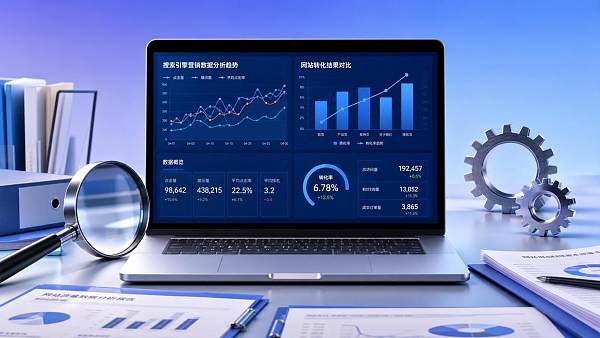
For foreign trade companies, manufacturing factories, and cross-border brands, the two biggest concerns in overseas customer acquisition are: spending money without getting inquiries, and investing in a channel for a long time without being able to scale it. Both SEO and Google Ads can bring overseas traffic, but their underlying logic is completely different. This is the root cause of the decision-making difficulty.
The core of SEO is to continuously acquire organic search traffic through website structure, content layout, keyword optimization, and page experience. Its advantages are lower long-term costs, accumulative traffic, and stronger brand trust. Its disadvantages are slower results and higher requirements for website foundation and content execution.
Google Ads, on the other hand, means directly buying search traffic. Through keyword bidding, creative optimization, and landing page conversion design, it can quickly generate exposure and inquiries. Its advantages are fast results, testability, and measurability. Its disadvantage is continuous dependence on budget. Once spending stops, traffic and leads usually drop significantly.
Therefore, when companies search for whether SEO or Google Ads is better for foreign trade customer acquisition, what they really want to know is not the theoretical difference, but which one is more suitable for their current business, which one can bring more controllable returns, and whether doing it themselves or choosing managed services has a lower cost of trial and error.
Google Ads Managed Service vs Running Ads Yourself: First Look at These Four Key Costs
Many managers only look at the visible costs and believe that opening an account and running ads by themselves can save service fees. But in Google Ads, what truly affects return on investment is often not the account operation fee, but the combined costs hidden in trial and error, learning, optimization, and the conversion journey.
The first is learning cost. Google Ads does not mean that inquiries will come as soon as you top up the account. From keyword match types, negative keyword settings, and geographic targeting to conversion tracking, bidding strategies, and landing page matching, any weak link may cause the budget to be consumed by invalid clicks. For an internal team starting from scratch, the time cost is very high.
The second is the cost of trial and error. Especially in the B2B foreign trade industry, many keywords are not cheap on a per-click basis. If the campaign structure is poorly built, the ad keywords are inaccurate, or the landing page is not persuasive, a budget of several thousand to tens of thousands of yuan may be spent only to obtain invalid forms, low-quality inquiries, or even no conversions at all.
The third is labor cost. Running ads yourself is not as simple as having someone handle it casually. It requires the team to continuously review data, adjust strategies, write copy, run page tests, and understand search habits in different national markets. Without a dedicated person in charge, the account can easily remain in a low-efficiency state.
The fourth is opportunity cost. When a company spends a large amount of time studying the backend and correcting mistakes, it may miss truly important market windows, such as peak-season promotion, new product launches, follow-up campaigns after trade shows, or breakthroughs in key countries. For companies competing for orders, this kind of loss is often greater than the service fee.
When Is It More Cost-Effective to Run Google Ads Yourself?
Running ads yourself is not impossible, but the prerequisite is that the company already has certain capabilities. The companies most suitable for in-house advertising usually have mature internal marketing staff, a relatively focused product line, clear target markets, and a willingness to continuously invest time in building advertising methods and data assets.
If you already have someone familiar with the Google Ads backend who can independently complete keyword research, ad account setup, conversion code configuration, and basic data analysis, then running ads yourself may indeed be more cost-effective. Especially when the budget is not large and the product range is relatively simple, internal execution is more flexible and communication costs are lower.
In addition, if the company already has a relatively mature independent website and landing page system, knows which types of pages are more likely to generate inquiries, and has the ability to revise and test pages in time, then the results of running ads in-house are usually not too poor. This is because advertising success depends not only on the media buyer, but also on the website’s ability to receive and convert traffic.
However, it is important to note that the premise for cost-effective in-house advertising is not saving service fees, but having strong enough internal capabilities. Without professional capability support, the apparent cost savings are often paid back many times over through wasted clicks and low-quality leads.
When Is It More Cost-Effective to Choose Google Ads Managed Services?
For most companies in the stage of overseas growth, the scenarios where managed services are more cost-effective are actually very common. For example, a company may have just started overseas promotion and hopes to quickly obtain inquiries for validation. Or it may have run ads before, but the results were unstable, and it is unclear whether the problem lies in traffic, pages, or data tracking.
The value of professional managed services is not just helping you launch ads, but helping your company find a replicable customer acquisition model faster with a smaller trial-and-error budget. Keyword strategy, campaign structure, audience filtering, conversion tracking setup, landing page recommendations, and continuous follow-up optimization all directly affect ROI.
Especially for foreign trade companies, advertising approaches differ across countries, product keywords, and purchasing intents. If a managed service team has long-term experience serving manufacturing, cross-border e-commerce, and global brand expansion clients, it usually understands more clearly which keywords are suitable for capturing inquiries and which keywords only bring invalid traffic.
In addition, managed services are more suitable for companies where the boss cares about results, but no one internally can monitor the account continuously. Google Ads is not something that can be set up once and then left alone. It requires weekly or even daily optimization. Without a stable operating rhythm, it is difficult for account performance to keep improving.
Before Deciding Who Should Run the Ads, First Evaluate These Three Basic Conditions
Many companies frame the question as whether Google Ads managed service or running ads themselves is more cost-effective, but the more fundamental judgment should be: do you have a website that can receive traffic, do you have clear conversion goals, and do you have enough data to support subsequent optimization?
First, look at the website foundation. If the website loads slowly, the page messaging is unclear, the multilingual experience is poor, or the form design is unreasonable, even if ads bring accurate traffic, it will still be difficult to convert it into valid inquiries. Ads only bring people in. What truly determines the result is whether the website can persuade customers to leave their information.
Second, look at the conversion definition. Is your goal form submission, WhatsApp consultation, phone clicks, sample requests, or quotation requests? If the goal is unclear, account optimization will lose focus. In the end, you may only see clicks and impressions, but be unable to judge the real quality of customer acquisition.
Third, look at data feedback capability. If conversion tracking is not properly installed and GA4, Google Ads, and on-site behavior data are not connected, it is difficult to distinguish which keywords are effective, which countries are valuable, and which pages are losing potential customers. Without data, optimization is basically advertising based on intuition.
This is also why more and more companies choose integrated services covering website development, SEO optimization, and ad management. Customer acquisition has never been a single-point issue. It is the result of coordinated collaboration among the website, traffic, content, tracking, and conversion.
SEO and Google Ads Are Not an Either-or Choice, but a Combination Strategy for Different Stages
From the perspective of the corporate growth cycle, SEO and Google Ads are not necessarily substitutes for each other. In many cases, using them together is more suitable. Google Ads solves short-term customer acquisition and market validation, while SEO solves long-term traffic accumulation and brand search presence. Combining the two is often more stable.
For example, when a company first enters overseas markets, it can use Google Ads to test core product keywords, target countries, and inquiry pages, quickly determining which demands truly exist. After obtaining valid data, high-value keywords can then be incorporated into SEO content and website structure to gradually reduce future customer acquisition costs.
For companies with relatively sufficient budgets, this path of using ads to run data first and then using SEO to build assets is usually more efficient. If SEO decisions about content, page layout, and priority keywords lack advertising validation, it is often easy to go in the wrong direction, resulting in heavy time investment but delayed results.
In turn, once SEO gains traction, it can also support advertising. When the website has higher authority, more complete page content, and stronger user trust, the quality score and conversion rate of ad landing pages often improve as well. As a result, companies can not only obtain more stable inquiries, but may also reduce overall advertising costs.
How Should Companies Choose? The Key Depends on Budget, Timeline, and Organizational Capability
If your most important current goal is to obtain inquiries within three months and verify whether the market is worth continued investment, then Google Ads should be given higher priority. At this stage, if the team lacks experience, working with a professional managed service provider is usually more cost-effective than figuring it out yourself, because the time window itself is a cost.
If you already have a certain customer base and want to reduce long-term customer acquisition costs and increase the share of organic traffic, then SEO should be included in the core strategy as early as possible. Especially for foreign trade official websites, multilingual websites, and product-based websites, SEO is an important part of building long-term overseas customer acquisition capability.
If the budget is limited and there is no dedicated team, the safest approach is usually not to bet entirely on a single channel. Instead, first improve the website foundation and data tracking, then use a moderate ad budget to validate the conversion model while gradually advancing SEO content development. This better fits the practical rhythm of most companies.
For companies that need one-stop overseas marketing support, choosing a service provider that understands intelligent website building, SEO, and Google Ads management will be more effective than only hiring a single media buyer. This is because advertising results ultimately depend on the entire journey, not just a few buttons in the ad backend.
Conclusion: Whether It Is Cost-Effective Depends on Whether You Are Buying Results or Trial and Error
Returning to the original question: which is more cost-effective, Google Ads managed service or running ads yourself? The answer is not fixed. Running ads yourself is suitable for companies with a team, experience, and a solid website foundation. Managed services are more suitable for companies that want to shorten the trial-and-error cycle, get results faster, and reduce ineffective spending.
As for whether SEO or Google Ads is better for foreign trade customer acquisition, the more accurate conclusion is: if you need short-term results, prioritize Google Ads; if you want long-term accumulation, you must do SEO; if you want to make overseas customer acquisition stable, it is best to use the website as the foundation and treat SEO and advertising as collaborative growth tools for different stages.
Truly mature overseas marketing is not about choosing only one channel, but about building a sustainable customer acquisition system. Whoever can connect website reception, traffic acquisition, data tracking, and continuous optimization will have a better chance of turning every dollar of overseas promotion budget into higher value.
Related Articles

Related Products
 Yiyingbao SaaS Intelligent Website Building and Marketing SystemYiyingbao SaaS Intelligent Website Building and Marketing System, AI-powered no-code website building, rapid creation of multilingual B2B international websites in 10 minutes, global server acceleration, AI-powered SEO optimization, helping businesses connect efficiently with global markets. The perfect integration of technology and operation makes building an international trade website remarkably simple
 AI+SEM Intelligent Advertising Marketing SystemAI+SEM drives intelligent ad creation, empowering full-funnel precision advertising marketing. The system automatically generates weekly/monthly reports, AI recommends keywords and target countries, monitors core metrics in real-time with intelligent alerts, and enables one-click high-conversion ad solutions to help quickly acquire customers and improve ROI.
 AI+SEO Dual-Engine System Optimization ServicesYiyingbao’s AI+SEO dual-engine optimization system helps foreign trade enterprises acquire high-quality organic traffic through AI-powered keyword research, content generation, and comprehensive technical optimization, significantly improving search rankings and conversion rates.
 AI+SNS Social Media Marketing SystemYingbao AI+SNS Social Media Marketing System - Precision social capture for the social media era. Supports one-click content synchronization across major platforms like Facebook and LinkedIn. AI intelligently rewrites posts for enhanced relevance. 24/7 AI customer service and user profiling analysis empower businesses to efficiently expand into global markets.
 AI+SEO营销解决方案易营宝AI+SEO营销解决方案,通过AI批量写作、智能生成TDK、精准关键词扩词等功能,全面优化网站SEO效果,提升流量与转化率。助力企业构建高效智能网站新生态。
 AI+SEM Advertising Marketing SolutionsAI+SEM Advertising Marketing Solution leverages AI technology to deeply empower SEM ad campaigns. It automatically generates weekly/monthly reports using AI, presenting account data across multiple dimensions for comprehensive insights into campaign performance and trends. The system precisely recommends keywords and target countries, intelligently generates high-conversion ad copy, and enables one-click activation of efficient campaign plans to help businesses rapidly acquire customers. Simultaneously, it monitors core metrics in real time, intelligently identifies abnormal fluctuations, and issues timely alerts to ensure stable, high-return advertising results.
 Domain Name ServicesEasyWin provides professional domain name services, including intelligent queries, one-stop registration, brand protection, and full lifecycle management, helping businesses build a digital brand image.
 EasyOperate B2C Cross-Border E-Commerce Platform & Independent WebsiteEasyStore B2C Cross-border E-commerce Independent Store is an intelligent website building and cross-border e-commerce integrated solution independently developed by EasyStore Information Technology (Beijing) Co., Ltd. The system is specially designed for small and medium-sized as well as large export enterprises, integrating 'website building, operation, marketing, advertising, and conversion' into one, helping enterprises quickly establish cross-border e-commerce independent stores to achieve brand globalization and global sales growth.
The platform supports multiple languages, multiple currencies, and multi-channel marketing, with built-in AI intelligent translation and SEO optimization systems, suitable for mainstream markets such as Southeast Asia, Europe and America, Latin America, and the Middle East, assisting Chinese manufacturing enterprises in efficiently deploying international e-commerce strategies. SSL证书易营宝提供专业SSL安全证书服务,包括单域名和泛域名证书,确保网站数据传输加密、身份验证和完整性保护,助力企业建立安全可信的在线业务环境。









