



I. What Is Google Ads Management: More Than Advertising, but Complete Lead Acquisition Management
Google Ads management generally refers to an integrated service in which a professional team handles Google Ads account setup, keyword research, ad copywriting, bid adjustments, conversion tracking, reporting and review, and ongoing optimization on behalf of a company. Essentially, it is a digital marketing execution system focused on lead generation and sales growth.
In the B2B foreign trade context, the value of Google Ads management goes beyond generating clicks. The real key is to direct high-purchase-intent traffic to the right pages, complete conversions through forms, WhatsApp, email or inquiry channels, and ultimately build a traceable, analyzable and optimizable inquiry pipeline.
Many companies attribute poor advertising performance to insufficient budgets, but the actual problems often lie in chaotic account structures, overly broad keywords, mismatched landing pages, missing conversion tracking or inadequate multilingual content. The core task of an outsourced management team is to systematically organize and continuously correct these factors that affect results.
Therefore, evaluating whether a Google Ads management provider is professional should not be based only on whether it can open an account. It is more important to assess whether it understands the market, can manage page conversion paths, analyze data and conduct ongoing operations, and whether it can serve real business objectives rather than simply pursue surface-level exposure.
II. Main Google Ads Management Models and Suitable Companies: Different Stages Require Different Strategies
Google Ads management services currently available in the market can generally be divided into three categories: account management, strategic execution and integrated growth. Account management focuses more on basic execution, usually covering account opening, campaign deployment and reporting. It is suitable for companies with mature websites and in-house marketing teams.
Strategic execution goes further by participating in keyword segmentation, country-market separation, ad copy testing, landing page recommendations and conversion optimization. This type of service is more suitable for manufacturers, foreign trade companies and cross-border brands with clear product directions but limited Google advertising experience.
Integrated growth combines Google Ads management with website development, multilingual content, SEO, social media lead generation and data review. For companies that have just built an independent website and need to establish an inquiry loop quickly, this model is generally more stable than advertising alone because traffic acquisition and conversion are designed as an integrated process.
Taking Yiyingbao as an example, its services do not focus solely on advertising accounts. Instead, they combine AI-powered website development, multilingual independent websites, advertising, SEO optimization and website operations, making them suitable for companies seeking long-term overseas expansion. This model is particularly suitable for small and medium-sized export companies with limited budgets but a need for efficiency and sustainable growth.
III. Technical Principles and Execution Process: The Key Path from Traffic Acquisition to Inquiry Conversion
The underlying logic of Google Ads management is to participate in ad auctions and obtain high-intent exposure through factors such as keywords, audiences, locations, devices, time and ad quality. However, the advertising system itself is only a traffic distribution tool. The actual results depend on whether the front-end strategy and back-end conversion path are properly connected.
The standard execution process usually includes market research, competitor analysis, keyword grouping, account structure setup, ad material creation, conversion tracking installation, landing page launch, data monitoring and continuous optimization. If any of these steps is missing, Google Ads management can easily remain at the stage of “clicks without results.”
In foreign trade scenarios, the quality of multilingual pages directly affects advertising conversion rates. For the same keyword, if the German, French or Arabic page copy is unnatural, inquiry rates usually decline significantly. Therefore, an outsourced management team must understand both advertising logic and the page-reading habits of overseas users.
Yiyingbao’s AI marketing algorithms, multilingual website-building capabilities and global acceleration network provide strong synergies at this stage. Responsive page adaptation, content generation efficiency and the overseas access experience directly affect Quality Score, bounce rate and lead submission rate. These are also the foundations for determining whether Google Ads management can truly deliver results.
IV. Who Is Best Suited for Google Ads Management: Typical Industries and Application Scenarios
Google Ads management is particularly suitable for companies with high-value transactions, long decision-making cycles and a need to continuously acquire overseas inquiries. Industries such as manufacturing, machinery and equipment, auto parts, chemicals, new energy, building materials, packaging, agricultural and food products, and industrial components generally have strong advertising needs because procurement customers commonly search for suppliers first.
For newly launched foreign trade independent websites, Google Ads management is often used during the initial market launch. When SEO has not yet established stable rankings, advertising can quickly validate the market, test keywords and identify product directions with higher conversion rates, providing real data for subsequent organic traffic planning.
For companies that already have a website but have received few inquiries over a long period, the problem is often not whether they have a website, but whether the site’s content structure has been built around procurement decisions. If advertising continues to direct traffic to ordinary display pages, the budget will be consumed quickly and lead quality will be difficult to stabilize. The value of outsourced management lies in redesigning the conversion path.
Based on the industries it has served, areas such as laser engraving machines, steel, chemicals, heavy trucks, machinery, new energy, medical products and furniture all have strong overseas customer acquisition needs. The industry experience represented by cases involving Haier, Aucma, Shandong Airlines and China National Heavy Duty Truck Group also demonstrates that Yiyingbao is more suitable for handling complex decision-making chains and information-dense B2B scenarios.
V. How to Choose a Google Ads Management Provider: Evaluate the Process, Pages and Data, Not Just the Price
When choosing a Google Ads management provider, the first consideration should be whether it has a complete methodology rather than merely promising “quick results.” A mature team will usually first assess the industry, product margins, target countries, bidding difficulty and website conversion capabilities before providing budget and pacing recommendations, rather than directly asking the company to fund an advertising account.
Second, evaluate whether it has website and landing page capabilities. Many poor advertising results are not caused by insufficient campaign management skills, but by confusing page information structures, inadequate trust signals and overly long form conversion paths. A team capable of handling website development, content, advertising and data tracking at the same time is generally more likely to deliver stable results.
Third, assess whether the reports are accurate and useful. Professional Google Ads management should not report only clicks, impressions and average cost per click. It should also track inquiry sources, keyword conversions, differences among countries, irrelevant search terms, landing page performance and the quality of sales follow-up, enabling management to make budget decisions based on data.
If a company lacks its own overseas marketing team, prioritizing an integrated “website + marketing services” solution such as Yiyingbao’s is more practical. Advertising is not an isolated action. Especially in multilingual markets, the coordination of website development, SEO, GEO, social media and advertising is often closer to real business growth than single-channel advertising management.
VI. Cost Structure and ROI Evaluation: How Companies Should Assess Total Cost of Ownership
The cost of Google Ads management generally consists of three parts: advertising spend, service fees and conversion infrastructure costs. Advertising spend is the media budget paid directly to the platform. Service fees cover account management, optimization execution, content production and data analysis. Conversion infrastructure costs mainly come from websites, landing pages, multilingual pages and tracking configuration.
From the buyer’s perspective, it is not enough to compare management service quotations. Total cost of ownership should be considered instead. If the service fee is low but the pages are weak, the data is disorganized and the leads are invalid, the final cost per inquiry may be higher. Conversely, if the provider can improve lead quality, shorten the testing cycle and reduce invalid clicks, the overall ROI may be healthier.
When evaluating the performance of Google Ads management, it is recommended to focus on the cost per qualified inquiry, conversion rate, percentage of leads that sales can follow up on, differences among country markets, proportion of duplicate leads and the ability to retain traffic after advertising is paused. If advertising works together with SEO, content and brand building, the company gains not only leads but also long-term digital assets.
For small and medium-sized companies with limited budgets, establishing a conversion-oriented website first and then gradually increasing advertising investment is generally more reasonable than spending a large budget from the outset. Yiyingbao connects intelligent website development, advertising and subsequent operations, helping companies accelerate the transition from campaign testing to stable customer acquisition while controlling the cost of trial and error.
VII. Maintenance Cycles, Performance Evaluation and 2026 Trends: Google Ads Management Is Moving Toward Integration and Intelligence
Google Ads management is not a one-time delivery project, but a process of continuous optimization. The first 1 to 3 months are typically used for keyword testing, account calibration and page coordination, after which the campaign enters a stage of stable scaling and refined optimization. If the industry is highly competitive or the market coverage is broad, the maintenance cycle may be longer.
The trend in 2026 will become even clearer: relying solely on human experience for advertising management will become increasingly inefficient. Keyword expansion, copy generation, bid recommendations, creative combinations, multilingual landing page generation and weekly or monthly report analysis will increasingly be supported by AI, while human judgment will remain responsible for industry understanding, lead quality assessment and budget decisions.
Another clear trend is the further integration of Google Ads management with SEO, GEO, social media content and website operations. Companies are increasingly concerned with the real business opportunities generated by advertising rather than platform metrics themselves. Therefore, service models capable of improving search exposure, AI search visibility and on-site conversion rates at the same time will receive greater attention.
From a practical perspective, when choosing a Google Ads management provider, companies should prioritize teams that understand website conversion paths and multilingual markets and can manage digital assets over the long term. For companies seeking to establish a long-term overseas customer acquisition system, a solution such as Yiyingbao’s, covering website development, advertising, SEO, GEO and operational growth, is more suitable as a foundation for continued investment.
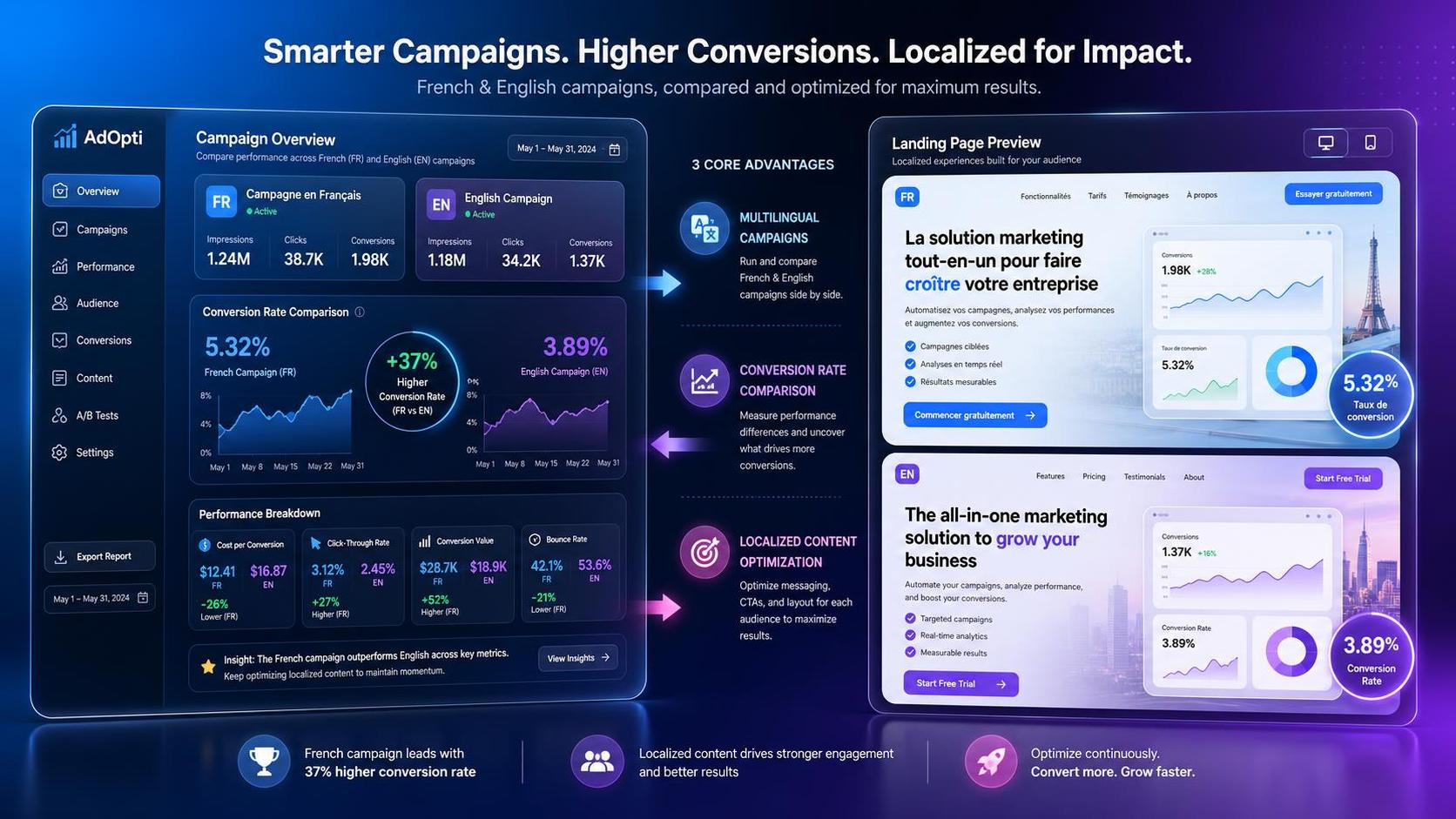
 Is It Normal for French-English Bilingual Ads to Have Significantly Different Conversion Rates?Is it normal for French-English bilingual ads to have significantly different conversion rates? It is usually quite common, but the key is to determine whether the difference is caused by market variations or by issues with translation, localization, landing pages, or campaign strategies. This article shows you how to quickly identify the causes, optimize bilingual ads and website conversion paths, and improve overseas customer acquisition and conversion.
 How are Google AdWords management costs calculated?How are Google AdWords management costs calculated? This article breaks down the full range of costs, including Google Ads management fees, media budgets, and landing pages, and shows you how to evaluate campaign ROI based on qualified inquiries, gross profit from closed deals, service delivery, and data ownership to reduce ineffective spending.
 Can outsourced Google Ads management reduce management costs?Can outsourced Google Ads management reduce management costs? This article examines budget waste, cost per qualified lead, data tracking, and outsourcing evaluation mechanisms to help companies quantify the value of Google Ads outsourcing and optimize customer acquisition ROI.
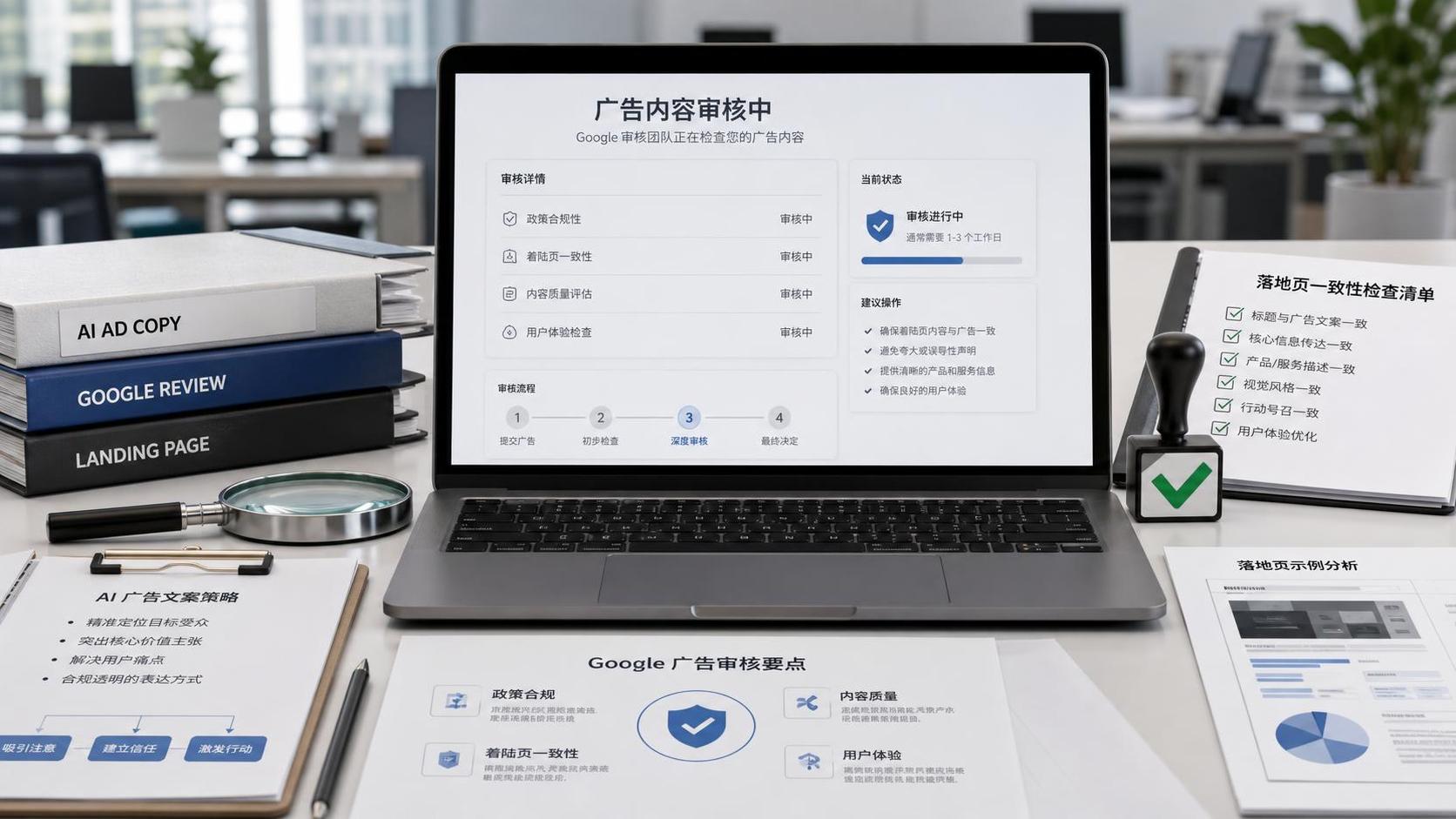
 Will AI-generated ad content be deemed non-compliant by Google?Will AI-generated ad content be deemed non-compliant by Google? The key issue is not whether it was written by AI, but whether the copy is misleading, makes exaggerated promises, or is inconsistent with the landing page. This article explains Google's key review criteria, common compliance risks, and practical self-check methods to help you pass reviews more reliably and improve campaign performance.
 How should you choose between Phrase Match and Exact Match in Google Ads?Phrase Match vs Exact Match in Google Ads: How should you choose? This article analyzes the traffic quality, cost control capabilities, and applicable scenarios of Phrase Match and Exact Match from a practical perspective, helping you develop a more effective Google Ads campaign strategy based on your budget and conversion goals.
 What Factors Account for Differences in Google Advertising Service Fees?Differences in Google advertising service fees are mainly influenced by campaign objectives, industry competition, account fundamentals, pricing models, and team capabilities. This article helps you quickly understand the key factors behind quotations, avoid low-price traps, and improve lead generation and conversion.
 How to Plan Google Ads Keywords to Save More BudgetHow can you plan Google Ads keywords to save more budget? This article explains how to reduce ineffective clicks and improve conversion rates through high-intent keyword selection, match types, negative keyword settings, and landing page alignment, helping you allocate your advertising budget to searches more likely to generate conversions.
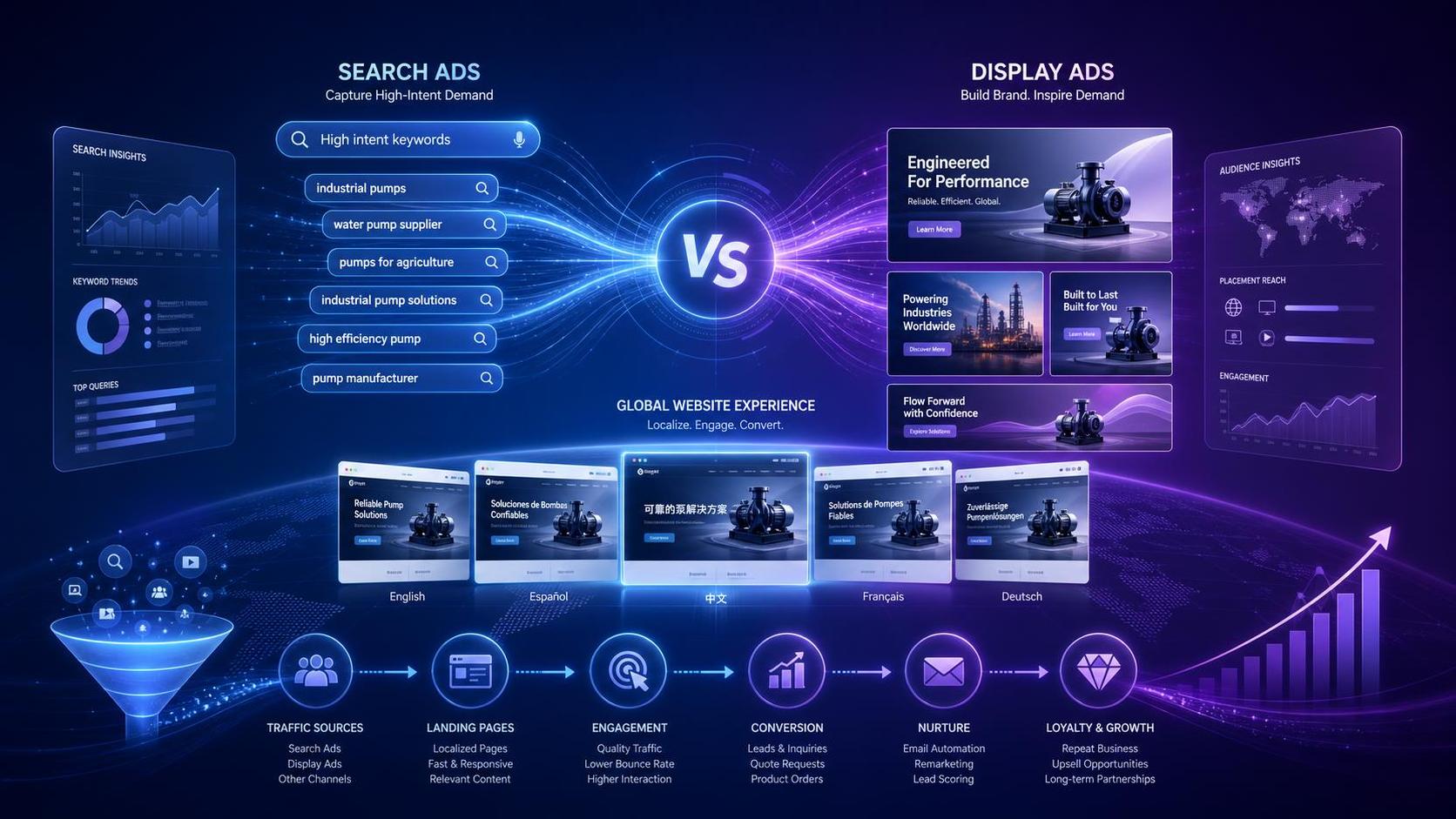
 How to Choose Between Google Ads Search and Display Ads?How to Choose Between Google Ads Search and Display Ads? This article analyzes the differences and applicable scenarios of the two types of ads based on the company’s development stage, budget allocation, website experience, and conversion journey, helping you quickly develop a more efficient overseas customer acquisition advertising strategy.