









- Amazon Raises Fulfillment Fees Twice, Yet the Median Platform Fee Remains Around 40%Oct 22, 2026View details
- AliExpress and YouTube Partner to Expand Marketing Opportunities for Chinese Brands Going GlobalOct 22, 2026View details
- Publicis says AI marketing is developing at two speeds, with agentic AI helping win clientsOct 21, 2026View details
- Salesforce Plans to Acquire Braze for $5.66 Billion to Enhance AI Marketing CapabilitiesOct 21, 2026View details
- Levanta’s Inaugural China Summit Held in Shenzhen, Focusing on AI and Cross-Border Brand GrowthOct 20, 2026View details
- The October Edition of the 2026 GGE Shenzhen Cross-Border E-Commerce Expo OpensOct 20, 2026View details
How should hreflang tags be configured for a heavy machinery export website?
How Should hreflang Tags Be Configured for Heavy Machinery Export Websites?
Heavy machinery export websites typically involve more than a simple “Chinese-English switch.” Products such as excavators, wheel loaders, crushers, lifting equipment, and concrete machinery often serve markets across North America, Europe, the Middle East, Southeast Asia, Russian-speaking regions, and Latin America. These markets differ not only in language but also in buyers’ concerns regarding emission standards, hydraulic configurations, work attachments, measurement units, after-sales parts, and delivery methods.
In this case, the role of hreflang tags is not merely to tell search engines that “this is a translated page.” They help search engines determine that when an English-speaking Canadian buyer searches for a specific crawler excavator model, the English Canadian page should be prioritized; when a Mexican purchaser searches for similar equipment, the Spanish Mexican page is more appropriate. Proper configuration can reduce mismatches between pages in different languages; disorganized configuration, however, may prevent pages with genuine inquiry value from receiving relevant visibility over the long term.
First Clarify: Build by Language, or by Language and Market
Many machinery companies initially have only an English website, so they label all English pages simply as English. This is not necessarily wrong, but if the company has already created separate content for markets such as the United States, the United Kingdom, Australia, and Canada—for example, using different tonnage expressions, certification descriptions, freight terms, or dealer contact details—it can no longer use a single English page to represent all markets.
A practical criterion is whether the page content and commercial actions are genuinely different. If US and UK pages differ only slightly in spelling conventions, retaining one global English page is usually easier to maintain. If North American pages focus on imperial specifications, local inventory, or financing inquiries, while European pages emphasize applicable standards, transportation restrictions, and spare-parts support, it is worthwhile to separate them into corresponding regional versions.
The most common mistake on heavy machinery websites is turning dozens of automatically translated language directories into country versions. If pages lack genuinely localized content and pricing and services cannot support them, even fully implemented hreflang tags offer limited practical value. The more language versions there are, the higher the ongoing maintenance cost for discontinued models, specification revisions, parts updates, and inquiry form fields.
How Should a Set of hreflang Tags Be Written?
A common approach is to add link tags in the head section of every indexable page. Using a wheel loader product page as an example, the Chinese page, global English page, US English page, and Mexican Spanish page belong to the same content group but have different URLs. Each page should list all alternative pages in the group, including its own URL.
<link rel="alternate" hreflang="zh-CN" href="https://www.example.com/cn/wheel-loader-x/" />
<link rel="alternate" hreflang="en" href="https://www.example.com/wheel-loader-x/" />
<link rel="alternate" hreflang="en-US" href="https://www.example.com/us/wheel-loader-x/" />
<link rel="alternate" hreflang="es-MX" href="https://www.example.com/mx/cargador-x/" />
<link rel="alternate" hreflang="x-default" href="https://www.example.com/wheel-loader-x/" />
The language code comes first, followed by the country or region code. A language code may be used on its own, but a country code cannot be used without a language code. x-default is not a page for a specific country; it is the default entry point when there is no clear language or regional match. It can usually point to the global English page, a language selection page, or the page best suited to receive international traffic. It should not be casually directed to the homepage, and the x-default of all product pages should certainly not redirect to the homepage.
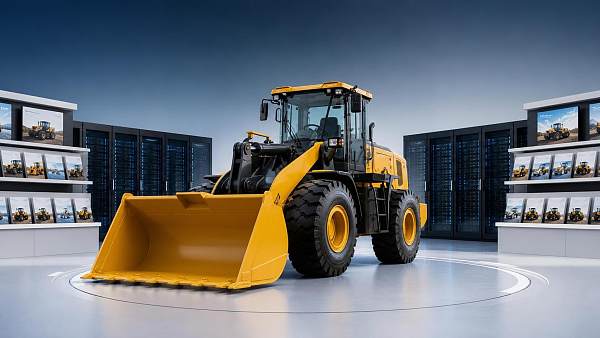
Four Details That Heavy Machinery Websites Should Check Carefully
Pages Must Confirm Each Other, Not Declare Only One Way
If an English page declares a Spanish page but the Spanish page does not declare the English page in return, the relationship may not be fully recognized. In actual projects, this is the most commonly missed item when publishing new language directories in batches. Especially for machinery websites with many products and frequent model iterations, tags should be generated uniformly by templates rather than manually entered page by page by editors.
canonical and hreflang Must Not Conflict with Each Other
Each language or regional page should generally set its canonical URL to itself. For example, if a US English page has independent content, its canonical should not point to the global English page; otherwise, search engines receive conflicting signals: on one hand, the page is presented as an alternative for the US market, while on the other hand, it is said not to be an independent page that should be indexed. Parameter pages and filtered pages that are genuinely duplicate and do not need to be retained should also not be included in an hreflang group.
Do Not Rely on Forced Redirects as a Substitute for Language Targeting
Some websites automatically redirect visitors to a specific country site based on their IP address. For heavy equipment procurement, this experience often has the opposite effect: a purchasing manager may be traveling in Dubai but need to view Russian-language materials; an overseas agent may also need to access English technical pages to download documents. A more reliable approach is to provide clear language and market switching options and, when necessary, display recommendations while allowing users to retain their right to choose.
Product Status Changes Must Be Handled in Sync
When equipment is discontinued, models are upgraded, or supply to a particular market ends, hreflang relationships must also be adjusted accordingly. Do not allow a Spanish page to already return an error status while the English page continues to reference it; nor should discontinued models be redirected directly to the homepage in every language. If a replacement model is available, redirect each language version to the corresponding replacement page; if no corresponding version exists, at least ensure consistency among page status, canonical settings, and internal linking logic.
Defining Rules During Website Development Is Easier Than Fixing Them Later
For manufacturing companies with hundreds of product pages, case study pages, and parts pages, hreflang should not be handled as something to add after launch. A more reasonable approach is to first establish page-mapping rules: which sections must have multilingual counterparts, which technical materials should remain English only, and which market pages may contain independent landing-page content. The website-building system can then automatically generate tags based on language version, page status, and canonical URL.
Yiyingbao has long served the multilingual website development and overseas promotion needs of foreign trade companies. In projects of this kind, it places greater emphasis on whether website architecture and marketing actions are coherent. German product pages, Arabic landing pages, and English advertising pages for heavy machinery websites should not merely be translations of one another; they should also correspond to different markets’ inquiry paths, content priorities, and search terms. Only through a manageable multilingual page structure, combined with subsequent search optimization, advertising, and social media traffic generation, can businesses avoid directing incoming traffic to mismatched pages.
After configuration is complete, it is recommended to periodically spot-check core product pages: whether pages are accessible, whether they include self-references, whether all language versions link to one another completely, whether canonical URLs are consistent, and whether deleted pages still appear in the tags. hreflang is not a one-time technical task. For heavy machinery export companies with long product lines and rapidly changing markets, incorporating it into routine website maintenance is closer to building a sustainable foundation for acquiring overseas customers.
Related Articles
 Building a Website for the Russian-Speaking Market: Is Translating the Website Enough?
 Does the quote for building a website in a less commonly used language include localization and translation?
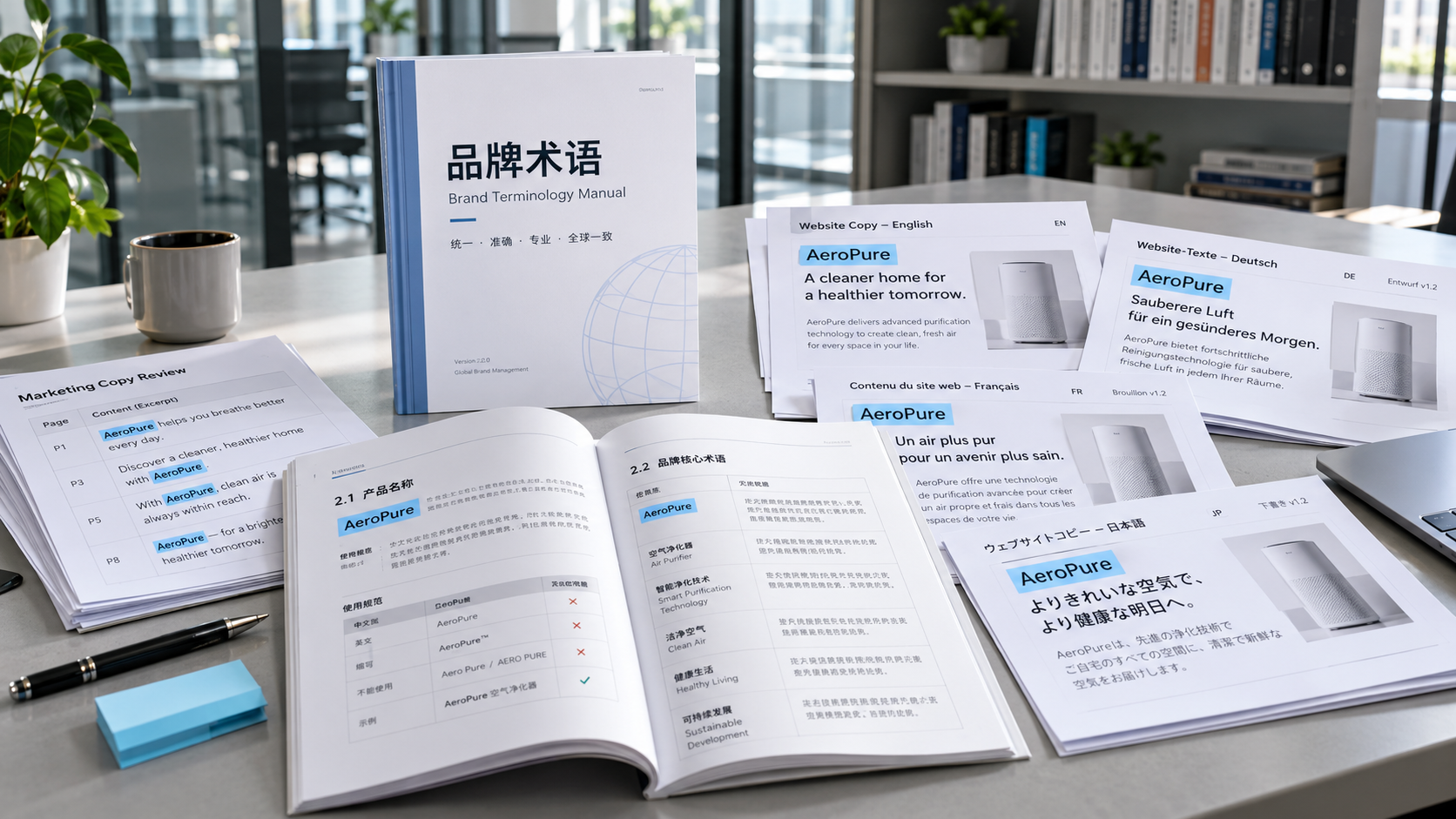
 Can an AI translation platform standardize brand terminology across multilingual websites?


Related Products
 Yiyingbao SaaS Intelligent Website Building and Marketing SystemYiyingbao SaaS Intelligent Website Building and Marketing System, AI-powered no-code website building, rapid creation of multilingual B2B international websites in 10 minutes, global server acceleration, AI-powered SEO optimization, helping businesses connect efficiently with global markets. The perfect integration of technology and operation makes building an international trade website remarkably simple
 AI+SEM Intelligent Advertising Marketing SystemAI+SEM drives intelligent ad creation, empowering full-funnel precision advertising marketing. The system automatically generates weekly/monthly reports, AI recommends keywords and target countries, monitors core metrics in real-time with intelligent alerts, and enables one-click high-conversion ad solutions to help quickly acquire customers and improve ROI.
 AI+SEO Dual-Engine System Optimization ServicesYiyingbao’s AI+SEO dual-engine optimization system helps foreign trade enterprises acquire high-quality organic traffic through AI-powered keyword research, content generation, and comprehensive technical optimization, significantly improving search rankings and conversion rates.
 AI+SNS Social Media Marketing SystemYingbao AI+SNS Social Media Marketing System - Precision social capture for the social media era. Supports one-click content synchronization across major platforms like Facebook and LinkedIn. AI intelligently rewrites posts for enhanced relevance. 24/7 AI customer service and user profiling analysis empower businesses to efficiently expand into global markets.
 AI+SEO营销解决方案易营宝AI+SEO营销解决方案,通过AI批量写作、智能生成TDK、精准关键词扩词等功能,全面优化网站SEO效果,提升流量与转化率。助力企业构建高效智能网站新生态。
 AI+SEM Advertising Marketing SolutionsAI+SEM Advertising Marketing Solution leverages AI technology to deeply empower SEM ad campaigns. It automatically generates weekly/monthly reports using AI, presenting account data across multiple dimensions for comprehensive insights into campaign performance and trends. The system precisely recommends keywords and target countries, intelligently generates high-conversion ad copy, and enables one-click activation of efficient campaign plans to help businesses rapidly acquire customers. Simultaneously, it monitors core metrics in real time, intelligently identifies abnormal fluctuations, and issues timely alerts to ensure stable, high-return advertising results.
 Domain Name ServicesEasyWin provides professional domain name services, including intelligent queries, one-stop registration, brand protection, and full lifecycle management, helping businesses build a digital brand image.
 EasyOperate B2C Cross-Border E-Commerce Platform & Independent WebsiteEasyStore B2C Cross-border E-commerce Independent Store is an intelligent website building and cross-border e-commerce integrated solution independently developed by EasyStore Information Technology (Beijing) Co., Ltd. The system is specially designed for small and medium-sized as well as large export enterprises, integrating 'website building, operation, marketing, advertising, and conversion' into one, helping enterprises quickly establish cross-border e-commerce independent stores to achieve brand globalization and global sales growth.
The platform supports multiple languages, multiple currencies, and multi-channel marketing, with built-in AI intelligent translation and SEO optimization systems, suitable for mainstream markets such as Southeast Asia, Europe and America, Latin America, and the Middle East, assisting Chinese manufacturing enterprises in efficiently deploying international e-commerce strategies. SSL证书易营宝提供专业SSL安全证书服务,包括单域名和泛域名证书,确保网站数据传输加密、身份验证和完整性保护,助力企业建立安全可信的在线业务环境。









