









- Hapag-Lloyd’s $4.2 billion acquisition of ZIM faces a closing delay; ZIM reports third-quarter net profit of $830 millionNov 24, 2026View details
- SCFI falls for a third straight week to 3,503.78 points, with blank sailings on trans-Pacific routes rising to 10Nov 24, 2026View details
- Lazada 11.11 Mega Sale: LazMall Contributes Nearly Two-Thirds of GMVNov 23, 2026View details
- Shein’s European Revenue Falls 16% as Tighter Rules on Low-Value Direct Shipments Take EffectNov 23, 2026View details
- EU Low-Value Parcel Rules Impact Cargo Flows: Air Freight Volume from China to Europe Down 17% in OctoberNov 23, 2026View details
- Indonesia and the EU Sign Comprehensive Economic Partnership Agreement, 90.4% of Tariff Lines to Become Duty-Free ImmediatelyNov 23, 2026View details
How to Evaluate the Localization Capabilities of a Russian Website Development Company
When evaluating a Russian-language website development company, the key is to ask the service provider to demonstrate that Russian content accurately conveys business information, pages match the target market’s usage habits, and search engines can identify and index the relevant language version. Translation quotes reflect only part of the workload. What really affects delivery is terminology review, page adaptation, search deployment, and responsibility for corrections after launch.
Validate Russian content using real pages first
Ask the service provider to select a product description, a set of technical specifications, and an inquiry prompt, then provide Russian sample translations and review records. Correctly translating a product name does not mean the entire page is ready to go live: units, abbreviations, specification ranges, and delivery terms can all become ambiguous depending on how they are expressed. Pages involving models, materials, or installation requirements should be checked by Russian-language reviewers familiar with the industry, rather than receiving only general grammar editing.
When reviewing samples, you can also provide ambiguous wording from the source text and see whether the provider proactively asks questions. For example, does “customization available” refer to dimensions, packaging, or functions? If the source text does not specify, the translation should not add its own promises. The ability to clarify issues before translation and the process for making revisions afterward are better indicators of actual delivery quality than a single piece of fluent promotional copy.
- Check whether the glossary records the source term, its Russian translation, and its scope of use. The same component should be named consistently in headings, specification tables, and downloadable files.
- Confirm how machine translation or human translation is used and who is responsible for final review. For important technical content, preserve the correspondence between the source and translated versions.
- Clarify who can make revisions: after a terminology change, will it be applied to navigation, buttons, form prompts, and older pages, and who will maintain new content?
Do not judge content quality solely by whether a Russian native speaker is involved. A lack of industry knowledge can lead to incorrect terminology; conversely, people who know the product may not notice awkward phrasing or information organization that does not suit local reading habits. Responsibilities for reviewing technical accuracy and natural language should be clearly defined in the delivery plan.
Check whether pages suit Russian-language use cases
Changes in Russian text length can affect navigation, buttons, tables, and mobile layouts. Ask the provider to demonstrate a functional Russian-language page, not just static design mockups, and focus on line breaks in long headings, horizontal scrolling in tables, truncated button text, and form error messages. Even if the page looks tidy, verify that submissions deliver the correct information and that Russian characters display properly in emails and the back end.
Contact details and conversion paths should also be determined based on actual business needs. On a website aimed at business inquiries, form fields should collect the product model, quantity, and contact details, while avoiding requests for information the business cannot currently process. If phone, email, or other contact options are provided, first confirm the support language, response time, and internal follow-up process. A contact option displayed on the page but left unattended will directly cost you inquiries.
Prices, currencies, dates, and units of measurement should be consistent with sales terms. When serving multiple Russian-speaking regions, do not treat a language version as equivalent to a single-country version. If delivery coverage, tax information, or contact details vary by region, make the distinctions clear on the page. Content involving payments, personal data collection, or local regulations should be approved by the relevant business and legal leads before publication.

Verify search optimization deployment details
When assessing search capabilities, ask the provider to explain how target regions and search needs correspond to individual pages, and to provide sample keyword groupings. Russian inflections, technical terms, and common names can all affect search queries, and a single Chinese product term may correspond to different Russian searches depending on the intended use. A large number of keywords does not mean effective coverage; check whether each group matches a specific page and the searcher’s intent.
If the provider promises that the site will rank as soon as it goes live, ask for the basis of that claim and what deliverables are included. More useful indicators are whether pages are accessible, how index status is checked, and who fixes any problems found. Search performance is also affected by competition and website content quality, so results cannot be guaranteed in advance based on technical setup alone.
Use a pilot to distinguish website development from ongoing maintenance capabilities
Before signing a contract, you can agree on a pilot page with a clearly defined scope that covers translation, layout, search fields, and inquiry submission, then evaluate the quality of collaboration based on the issue log. The pilot need not include the entire website, but it should use real materials and the actual publishing environment. Screenshots from a demo environment alone cannot verify deployment, form notifications, or back-end editing.
During acceptance testing, classify issues as content errors, display problems, or functional failures, and record the conditions for reproducing them. For example, an inquiry that was not received could be caused by a failed form submission, a blocked notification email, or an incorrectly configured recipient address. Simply asking the provider to “fix the form” may leave parts of the troubleshooting scope unaddressed. The provider should specify who is responsible for the fix, how it will be verified, and when it will be delivered again.
The contract and scope of work should also clearly define the number of pages, how translation word counts are calculated, the number of terminology review rounds, and whether post-launch revisions are included in the service. Administrative access to the website, domain, content files, and data should be transferable. If the engagement ends, confirm how Russian copy, page files, and inquiry data can be exported. This will make it possible to continue maintaining existing content when adding products or adjusting target markets later.
Related Articles
 How can cross-border e-commerce businesses localize product descriptions for overseas markets?
 How to Evaluate the Localization Capabilities of a Russian Website Development Company
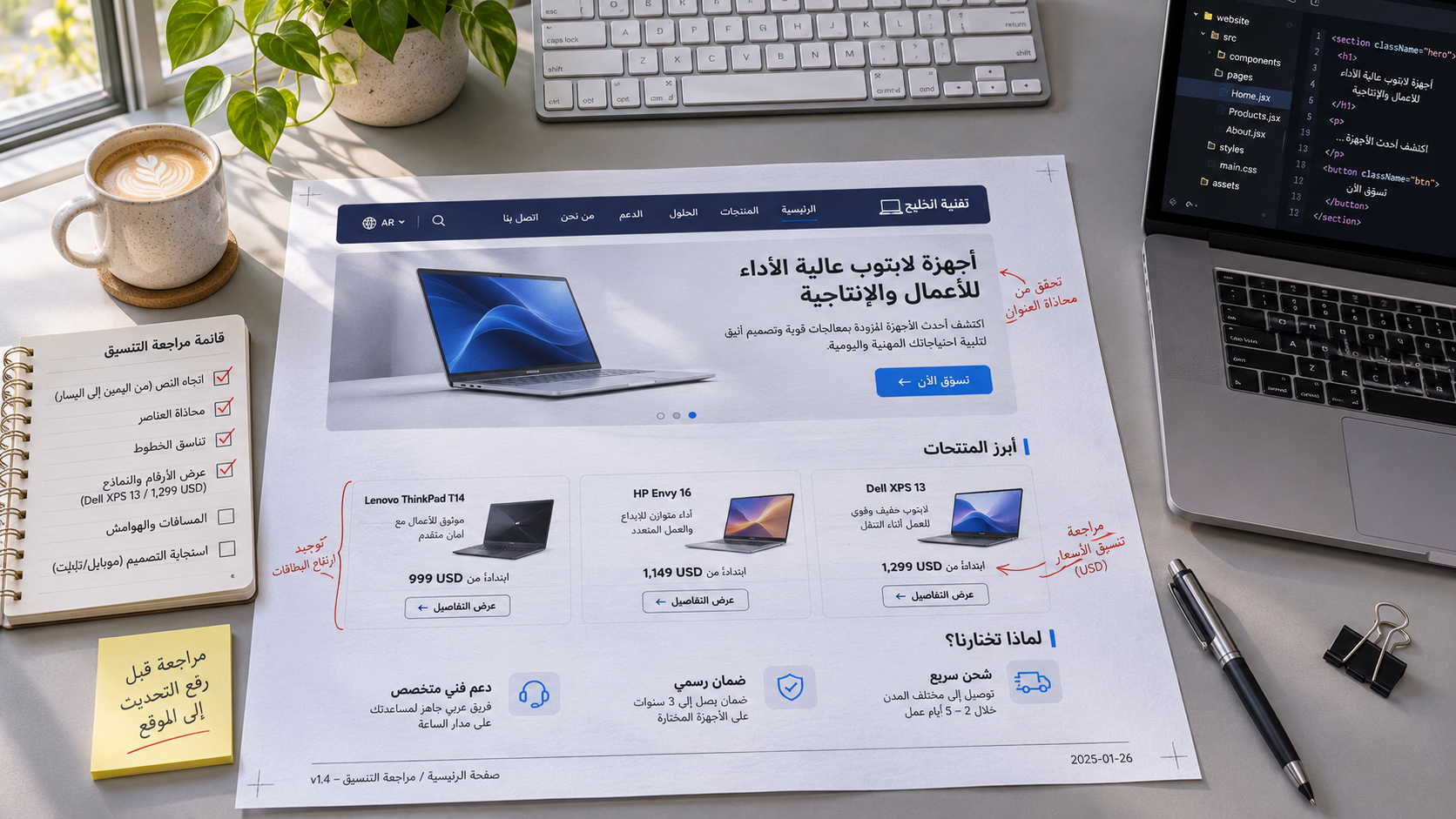
 How should export companies handle right-to-left layouts when developing Arabic websites?


Related Products
 Yiyingbao SaaS Intelligent Website Building and Marketing SystemYiyingbao SaaS Intelligent Website Building and Marketing System, AI-powered no-code website building, rapid creation of multilingual B2B international websites in 10 minutes, global server acceleration, AI-powered SEO optimization, helping businesses connect efficiently with global markets. The perfect integration of technology and operation makes building an international trade website remarkably simple
 AI+SEM Intelligent Advertising Marketing SystemAI+SEM drives intelligent ad creation, empowering full-funnel precision advertising marketing. The system automatically generates weekly/monthly reports, AI recommends keywords and target countries, monitors core metrics in real-time with intelligent alerts, and enables one-click high-conversion ad solutions to help quickly acquire customers and improve ROI.
 AI+SEO Dual-Engine System Optimization ServicesYiyingbao’s AI+SEO dual-engine optimization system helps foreign trade enterprises acquire high-quality organic traffic through AI-powered keyword research, content generation, and comprehensive technical optimization, significantly improving search rankings and conversion rates.
 AI+SNS Social Media Marketing SystemYingbao AI+SNS Social Media Marketing System - Precision social capture for the social media era. Supports one-click content synchronization across major platforms like Facebook and LinkedIn. AI intelligently rewrites posts for enhanced relevance. 24/7 AI customer service and user profiling analysis empower businesses to efficiently expand into global markets.
 AI+SEO营销解决方案易营宝AI+SEO营销解决方案,通过AI批量写作、智能生成TDK、精准关键词扩词等功能,全面优化网站SEO效果,提升流量与转化率。助力企业构建高效智能网站新生态。
 AI+SEM Advertising Marketing SolutionsAI+SEM Advertising Marketing Solution leverages AI technology to deeply empower SEM ad campaigns. It automatically generates weekly/monthly reports using AI, presenting account data across multiple dimensions for comprehensive insights into campaign performance and trends. The system precisely recommends keywords and target countries, intelligently generates high-conversion ad copy, and enables one-click activation of efficient campaign plans to help businesses rapidly acquire customers. Simultaneously, it monitors core metrics in real time, intelligently identifies abnormal fluctuations, and issues timely alerts to ensure stable, high-return advertising results.
 Domain Name ServicesEasyWin provides professional domain name services, including intelligent queries, one-stop registration, brand protection, and full lifecycle management, helping businesses build a digital brand image.
 EasyOperate B2C Cross-Border E-Commerce Platform & Independent WebsiteEasyStore B2C Cross-border E-commerce Independent Store is an intelligent website building and cross-border e-commerce integrated solution independently developed by EasyStore Information Technology (Beijing) Co., Ltd. The system is specially designed for small and medium-sized as well as large export enterprises, integrating 'website building, operation, marketing, advertising, and conversion' into one, helping enterprises quickly establish cross-border e-commerce independent stores to achieve brand globalization and global sales growth.
The platform supports multiple languages, multiple currencies, and multi-channel marketing, with built-in AI intelligent translation and SEO optimization systems, suitable for mainstream markets such as Southeast Asia, Europe and America, Latin America, and the Middle East, assisting Chinese manufacturing enterprises in efficiently deploying international e-commerce strategies. SSL证书易营宝提供专业SSL安全证书服务,包括单域名和泛域名证书,确保网站数据传输加密、身份验证和完整性保护,助力企业建立安全可信的在线业务环境。









