









- Which customer acquisition channels will be affected by cross-border marketing trends in 2026?Sep 06, 2026View details
- Which homogenization risks should be considered in an analysis of the AI-powered website building industry?Aug 30, 2026View details
- How Will AI Marketing Trends 2026 Change Advertising Budget AllocationAug 28, 2026View details
- Is the EV SSL certificate market shrinking or upgrading? How should companies assess certificate procurement?Aug 11, 2026View details
- Why the old AMP SEO 2020 practices no longer work and what has changed in current optimization prioritiesAug 02, 2026View details
- How to Choose Topics for an Industry News Section to Attract More Organic Search TrafficJul 29, 2026View details
How Much Do Website Translation and Localization Services Typically Cost
How much do website translation and localization services generally cost? There is no single standard price list. What really affects the cost is usually not simply “how many languages need to be translated,” but factors such as the volume of source content, the complexity of the page structure, the concentration of terminology, whether SEO elements also need to be handled, and whether technical support is required before and after launch. Although the work may all appear to be translation, the actual deliverables can vary significantly: some clients only need Chinese text replaced with foreign-language content, while others need page titles, URLs, button lengths, form fields, downloadable materials, legal notices, currencies, units, and image copy all adjusted to a directly publishable standard. Naturally, the prices fall into different ranges.
Let us first look at the most common pricing methods. In the industry, services are generally priced by word count, language, page, project package, or calculated as an integrated “translation + localization + launch” service. Per-word pricing is suitable for corporate websites with clear content structures, such as company introductions, product pages, news pages, and FAQs. Per-page pricing is more suitable for websites with unstable content volumes and a high proportion of design work. Project-package pricing is common for multilingual website rebuilds, the batch launch of overseas landing pages, and long-term maintenance of e-commerce websites. Although these methods appear to differ only in how fees are calculated, they actually distinguish the scope of work: whether only the copy is delivered, or whether the copy must also be entered into the website system and adjusted to resolve display issues.
The number of languages is the most obvious cost factor, but costs do not simply multiply. English workflows are usually the most mature, with relatively extensive terminology resources. Languages such as German, French, Spanish, Arabic, Japanese, and Korean may incur additional costs because of differences in character length, layout rules, or proofreading requirements. For example, Arabic requires right-to-left interface adaptation; German compound words tend to be longer, making navigation bars, buttons, and product specification tables prone to overflow; Japanese often requires wording that is closer to local business communication styles. Pricing differences often arise from these subsequent adjustments rather than from the translation process itself.
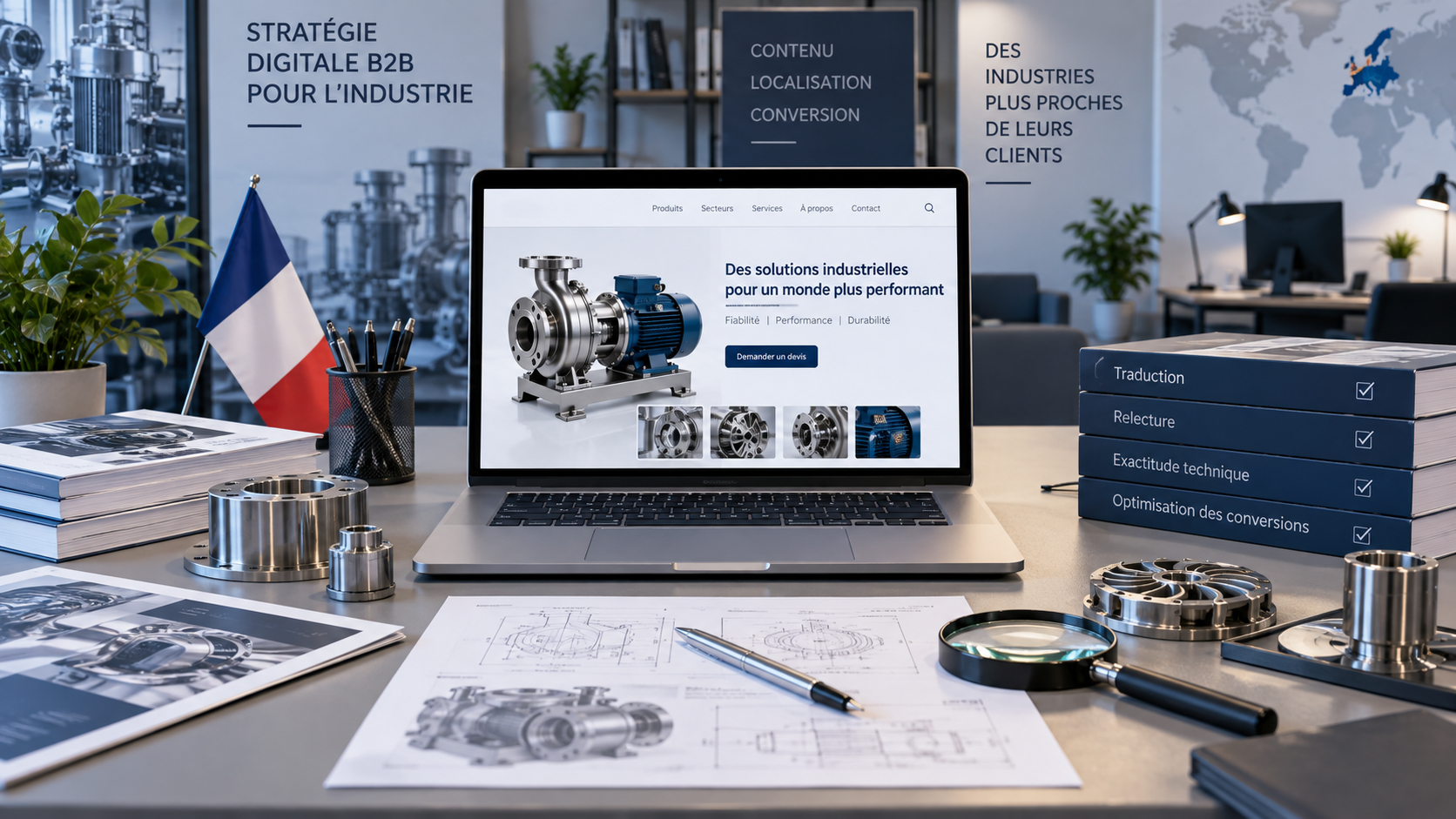
The level of content specialization has a major impact on pricing. General company introductions, team profiles, and basic service descriptions can usually be processed relatively efficiently. When content involves industrial equipment parameters, material performance, certification documents, packaging specifications, installation conditions, transportation restrictions, or after-sales terms, the translation team must first standardize terminology and then confirm unit conversions and contextual logic. Some pages may contain product models, interface descriptions, process flows, application environments, and maintenance warnings at the same time. If such content is handled like ordinary promotional copy, mistranslations are highly likely later. For example, terms such as “tolerance,” “load,” “surface treatment,” “protection rating,” and “operating temperature” may be translated into wording that seems correct but is not actually used in the industry. The more specialized the content, the higher the proofreading cost, and the wider the pricing gap.
Website scale can also change the pricing structure. A website with more pages is not necessarily more expensive; what really takes time is low repetition, numerous modules, and hidden content. For example, a product catalog page may appear to contain only a few screens, but it may actually include filters, hover tips, download pop-ups, inquiry forms, error messages, email templates, and internal search results pages. If this content is not exported in advance, items are easily missed during translation. Another common issue is that the same copy appears repeatedly in different template locations within a CMS. If content is not cleaned up first, the supplier may charge based on the total volume of extracted text, resulting in a higher-than-expected cost.
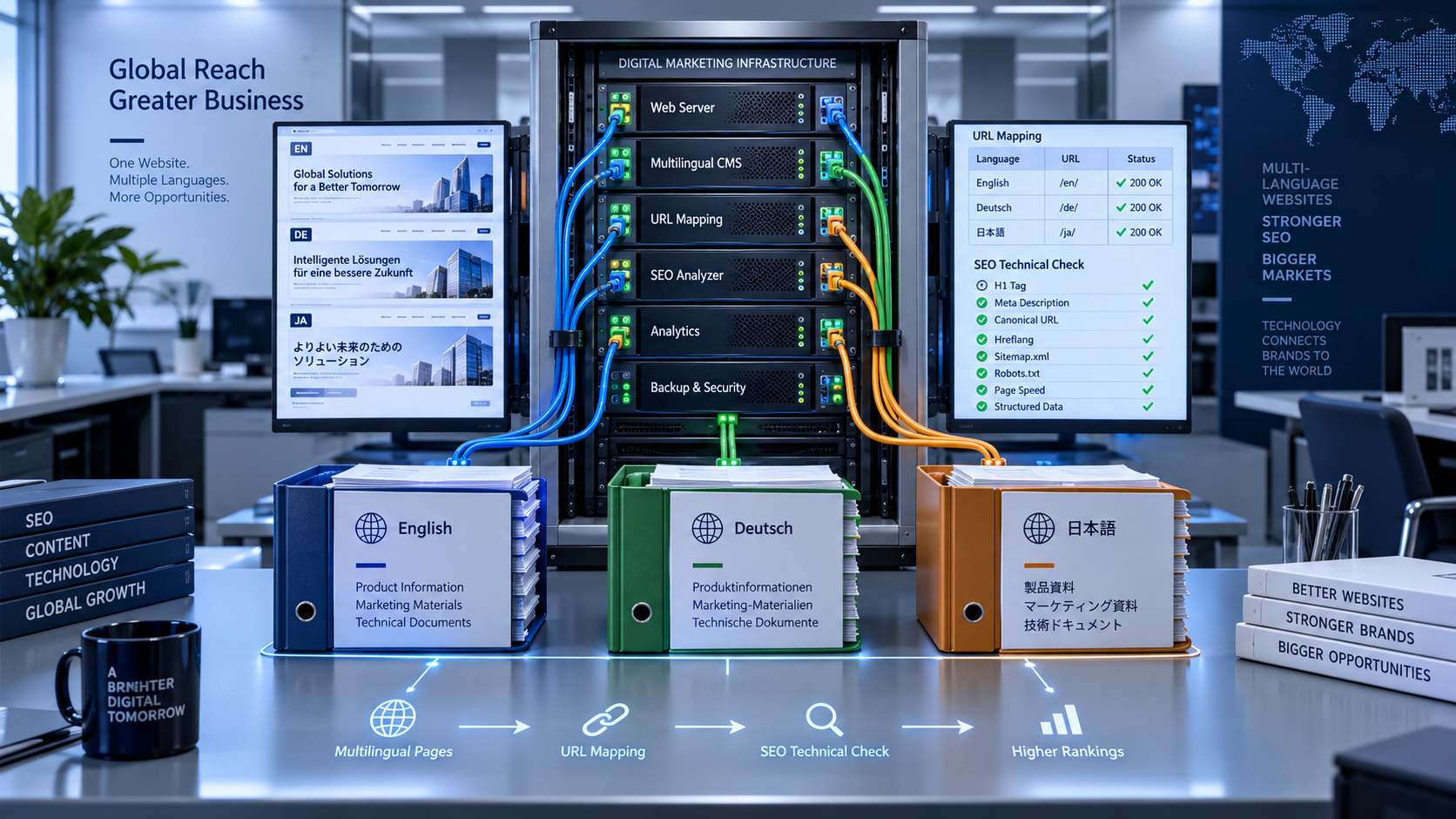
SEO requirements can significantly increase localization costs. Translating only the body text and making a website indexable, searchable, and continuously expandable are two different tasks. If the project requires multilingual title tags, meta description tags, image alt text, product URLs, breadcrumbs, and text fields in structured data to be handled, the cost is usually higher than that of translation alone. In more complex cases, keywords for the target market may also need to be rewritten rather than directly translated from the original keywords. This is because many industry terms are not expressed that way in local searches. A direct translation may be grammatically correct but have low search volume or even convey the wrong search intent. In such cases, the additional cost comes from keyword research, page mapping, and content rewriting—not from “typing a few more lines.”
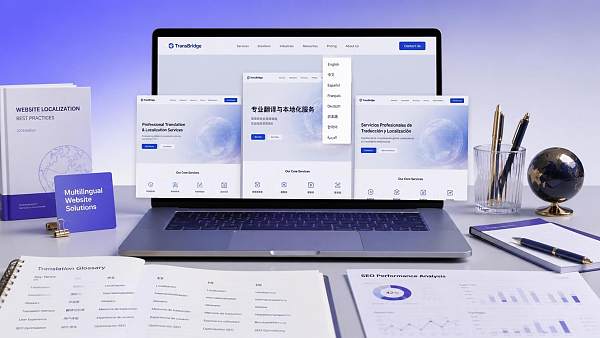
If the website includes marketing functions, pricing needs to be assessed from another angle. Landing pages, inquiry pages, advertising landing pages, and brand presentation pages should not be translated to the same depth. Advertising pages often require shorter sentences, rewritten headlines, and rearranged selling points to avoid sounding like instruction manuals after direct translation. Product and technical pages, by contrast, place greater emphasis on accuracy and consistency, and terminology cannot be replaced casually merely to make the wording smoother. In other words, even for the same 1,000 words, the pricing logic is usually different for conversion-focused copy and technical documentation. The former is closer to rewriting, while the latter is more like controlled translation and verification.
How much website translation and localization services generally cost also depends on whether the delivery chain includes technical work. If only a bilingual comparison table is provided, the cost is usually relatively manageable. If the service requires direct backend entry, multilingual page creation, menu duplication, hreflang configuration, language switcher checks, front-end style adjustments, and mobile line-break corrections, the project is no longer merely a language service. Cross-border e-commerce websites and multilingual corporate websites in particular often encounter issues involving price units, tax explanations, delivery regions, inventory notices, payment copy, and policy-page links becoming unsynchronized. Many project budgets run out of control not because translation becomes more expensive, but because technical adaptation was treated as an assumed free addition at the beginning and later turns out not to be included in the original quotation.
From a procurement perspective, the risks of low-cost solutions are often not grammatical but related to publishability. Receiving copy that is generally fluent in the target language does not mean it can be published directly. Buttons that do not fit, broken table widths, text in images that has not been replaced, PDF materials that remain in the original language, inquiry email templates that have not been synchronized, and omitted 404 pages or privacy terms can all leave a website in a state that “looks complete but cannot actually be officially launched.” If the quotation does not clearly specify the extraction scope, number of proofreading rounds, launch support, and number of revisions, these items are easily treated as additional charges later.
When comparing different service proposals, the most useful approach is not to look only at the unit price but to clarify three boundaries. First, what is included in the translation scope: only the body text, or also navigation, forms, metadata, downloadable files, and image copy? Second, what level of quality control is provided: machine pre-translation followed by human revision, or human translation with a glossary and second-round review? Third, is implementation included: delivery of spreadsheets, backend import, page checks, and search visibility handling each represent different amounts of working time. Once these three layers are separated, the differences between quotations are usually easier to understand, and scope differences will not be mistaken for excessive pricing.
Some projects are better advanced in batches rather than completing the entire website in all languages at once. The reason is straightforward: the first batch of launched pages usually exposes the most realistic problems. For example, titles in some languages may consistently exceed the character limit, certain form fields may wrap incorrectly on mobile devices, and some product parameters may require additional notes after translation. Launching core pages first and then expanding to secondary pages, blogs, case studies, and download centers can make it easier to control total costs. This approach is particularly common when AI-assisted website building or multilingual content management workflows are used, because once templates and terminology are stabilized, subsequent marginal costs are often easier to bring under control.
Another frequently overlooked point is that the quality of the source language directly affects the quotation. If the Chinese source contains many slogan-like expressions, overly long sentences, mixed parameters and selling points, or multiple terms for the same concept, the translation provider must first organize the content; otherwise, consistency becomes increasingly difficult to maintain. Content organization is not an incidental task—it consumes real working hours. By contrast, if the source content is already clearly structured, with product models, materials, applicable environments, transport packaging, installation methods, and maintenance intervals presented in separate sections, and if terminology is governed by internal conventions, translation and localization are generally more efficient and pricing is easier to clarify.
When comparing quotations, you should also clarify how subsequent maintenance is charged. Website translation is not finished once the initial translation is complete. New articles, products, special-topic pages, campaign pages, and even partial redesigns may be added later. If the supplier supports a terminology database, translation memory, and incremental updates, subsequent costs are usually more stable than pricing each task from scratch. Without any retained historical resources, every minor change may require content extraction and comparison all over again, which may not be cost-effective in the long term. The longer a multilingual website operates, the more apparent this difference becomes.
Therefore, the real answer to how much website translation and localization services generally cost is not a single price figure. It depends on whether the project is defined as “text conversion” or “delivery of publishable multilingual pages.” The former is cheaper but more likely to leave hidden problems; the latter requires more detailed communication at the outset, but once the scope is clear, it generally involves less rework. As long as the languages, pages, specialized terminology, SEO fields, technical implementation, and ongoing maintenance are aligned in advance, quotations become easier to compare and budgets become easier to control.
Related Articles

Related Products
 Yiyingbao SaaS Intelligent Website Building and Marketing SystemYiyingbao SaaS Intelligent Website Building and Marketing System, AI-powered no-code website building, rapid creation of multilingual B2B international websites in 10 minutes, global server acceleration, AI-powered SEO optimization, helping businesses connect efficiently with global markets. The perfect integration of technology and operation makes building an international trade website remarkably simple
 AI+SEM Intelligent Advertising Marketing SystemAI+SEM drives intelligent ad creation, empowering full-funnel precision advertising marketing. The system automatically generates weekly/monthly reports, AI recommends keywords and target countries, monitors core metrics in real-time with intelligent alerts, and enables one-click high-conversion ad solutions to help quickly acquire customers and improve ROI.
 AI+SEO Dual-Engine System Optimization ServicesYiyingbao’s AI+SEO dual-engine optimization system helps foreign trade enterprises acquire high-quality organic traffic through AI-powered keyword research, content generation, and comprehensive technical optimization, significantly improving search rankings and conversion rates.
 AI+SNS Social Media Marketing SystemYingbao AI+SNS Social Media Marketing System - Precision social capture for the social media era. Supports one-click content synchronization across major platforms like Facebook and LinkedIn. AI intelligently rewrites posts for enhanced relevance. 24/7 AI customer service and user profiling analysis empower businesses to efficiently expand into global markets.
 AI+SEO营销解决方案易营宝AI+SEO营销解决方案,通过AI批量写作、智能生成TDK、精准关键词扩词等功能,全面优化网站SEO效果,提升流量与转化率。助力企业构建高效智能网站新生态。
 AI+SEM Advertising Marketing SolutionsAI+SEM Advertising Marketing Solution leverages AI technology to deeply empower SEM ad campaigns. It automatically generates weekly/monthly reports using AI, presenting account data across multiple dimensions for comprehensive insights into campaign performance and trends. The system precisely recommends keywords and target countries, intelligently generates high-conversion ad copy, and enables one-click activation of efficient campaign plans to help businesses rapidly acquire customers. Simultaneously, it monitors core metrics in real time, intelligently identifies abnormal fluctuations, and issues timely alerts to ensure stable, high-return advertising results.
 Domain Name ServicesEasyWin provides professional domain name services, including intelligent queries, one-stop registration, brand protection, and full lifecycle management, helping businesses build a digital brand image.
 EasyOperate B2C Cross-Border E-Commerce Platform & Independent WebsiteEasyStore B2C Cross-border E-commerce Independent Store is an intelligent website building and cross-border e-commerce integrated solution independently developed by EasyStore Information Technology (Beijing) Co., Ltd. The system is specially designed for small and medium-sized as well as large export enterprises, integrating 'website building, operation, marketing, advertising, and conversion' into one, helping enterprises quickly establish cross-border e-commerce independent stores to achieve brand globalization and global sales growth.
The platform supports multiple languages, multiple currencies, and multi-channel marketing, with built-in AI intelligent translation and SEO optimization systems, suitable for mainstream markets such as Southeast Asia, Europe and America, Latin America, and the Middle East, assisting Chinese manufacturing enterprises in efficiently deploying international e-commerce strategies. SSL证书易营宝提供专业SSL安全证书服务,包括单域名和泛域名证书,确保网站数据传输加密、身份验证和完整性保护,助力企业建立安全可信的在线业务环境。









