









- AliExpress Global Double 11: Brand Sales Grow Nearly 50% in the First Week, U.S. GMV Rises 70%Nov 21, 2026View details
- Ministry of Commerce Reports E-commerce Development from January to October 2026, with Cross-Border Imports Performing StronglyNov 21, 2026View details
- Amazon Black Friday Orders Sluggish on Day One; NRF Forecasts 4.2 Million Fewer ParticipantsNov 21, 2026View details
- 21st Century Business Herald: AI and CTV Become Core Growth Engines for Digital Marketing in Overseas MarketsNov 18, 2026View details
- China Presents 25 Cooperation Outcomes in Areas Including Cross-Border E-Commerce During APECNov 18, 2026View details
- AI Products Drive Hong Kong Exports Up 64.9% in September, Fastest Growth in Over 40 YearsNov 17, 2026View details
How Do You Evaluate Translation Quality for Multilingual Website Services in Dongguan?
To assess the translation quality of a multilingual website, do not simply check whether the pages have switched to another language. The project manager should first verify terminology, technical specifications, and the meaning of the source text, then review whether the wording suits the target market, and finally test the display and key functions on the live pages. Content involving safety, pricing, or delivery commitments should receive particular attention during review.
A common delivery challenge when choosing a multilingual website service in Dongguan is that translation files and live pages are managed separately: a sentence may be correct in a document but get cut off or misaligned when placed in a button, table, or inquiry form—or may still appear in Chinese. These issues can make it harder for overseas visitors to understand the products and may also make it difficult to assign responsibility for subsequent rework.
First Define the Acceptance Scope and Criteria
At project kickoff, specify the target language, region, and pages to be delivered rather than simply stating “English version” or “multilingual version.” Spelling, date formats, and terminology can vary between regions where the same language is spoken. For versions intended for specific markets, the language and region should be as agreed by both parties.
It is advisable to use the source text, product materials, glossary, and page list as acceptance criteria, and to agree on who will approve them. In addition to the homepage and product pages, the page list should include navigation, footers, pop-ups, form prompts, downloadable files, and automatically generated emails. Product models, units, dimensions, lead times, and other details should be verified against the source by business or technical staff. If the source text is incorrect, even a faithful translation cannot ensure that the final information is accurate.
The scope of delivery should also state whether text in images, video subtitles, and subsequently added content are included in the translation. Identify brand names, models, and proper names that should not be translated in advance to avoid disagreements about the scope of work at acceptance.
Review the Translation: Check Meaning First, Then Wording
Check Technical Terms and Numbers First
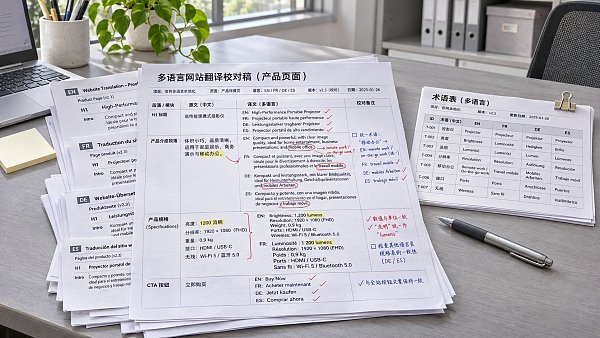
On manufacturing websites, product names, process names, and application conditions are more likely to cause misunderstandings than general promotional copy. During acceptance, compare how the same term is translated in multiple places, such as headings, body text, specification tables, and downloadable materials, and check for consistency. Assess technical terminology against drawings, specification sheets, or an approved glossary rather than relying solely on a general-purpose dictionary.
Numeric content is well suited to item-by-item comparison. Check that decimal points, ranges, plus and minus signs, units, and orders of magnitude have not changed. If units have been converted, also verify the converted values and precision, and confirm whether the original units should still be retained on the page. Models, part numbers, and contact details should be checked character by character against the source materials and should not be rewritten by translation tools.
Localization Is Not Literal Translation
Review product selling points, buttons, and form prompts in the context in which they will be used. For example, on an inquiry page, “Submit your request” should make it clear to visitors what will happen after submission, rather than simply mirror the Chinese wording word for word. Long sentences may be reordered, but performance guarantees, certification status, and delivery commitments must not be added without authorization.
Date formats, currency symbols, address order, and telephone number formats should also match the target market and actual business processes. If a page contains safety instructions, contract terms, or other high-risk statements, it should be reviewed by people familiar with both the relevant business and the target language, rather than relying solely on machine translation.
Check the Translation in the Page Layout
After the review files have been approved, the translation should also be checked again on the website awaiting publication. Use both desktop and mobile views, enter through the language switcher, and follow the path from finding a product to reading its specifications and submitting an inquiry, rather than reviewing only a few static screenshots.
- Check completeness: Confirm that navigation, buttons, filters, form error messages, success messages, and footers all appear in the corresponding language, with no omissions or unintended fallback to another language.
- Check readability: Check whether translations in headings, buttons, and tables are cut off, overlapping, or obscured; whether the font displays special characters correctly; and whether the text remains easy to understand after wrapping.
- Check consistency: After switching languages, confirm that product images, models, specifications, and downloadable materials still match the current page, and that links lead to content in the correct language.
- Check key functions: Submit a test inquiry, verify the language of required-field prompts, success messages, and notification emails, and confirm that the test information enters the agreed receiving workflow.
If the website includes a right-to-left language, also check text direction, icon placement, and form layout. Accurate translation does not mean that the interface layout will automatically adapt. When an issue occurs, determine whether it is caused by overly long translation, style constraints, or incorrect language-direction settings, then assign the appropriate personnel to address it.
How to Plan Spot Checks and Revisions
When there are many pages, acceptance can be organized by priority. Check the homepage, core product pages, inquiry forms, and high-risk content such as safety instructions, specifications, prices, and delivery commitments individually. For standard pages with highly repetitive structures and content, take samples by product category, page template, and language. The sampling ratio and coverage should be agreed by both parties in advance; passing a spot check does not mean that unchecked pages are error-free.
When an issue is found, avoid submitting vague feedback such as “the translation sounds unnatural.” Record the page URL or name, language version, source text, current translation, issue location, and suggested revision, and attach a screenshot. For issues involving technical meaning, include product materials that can be used for verification. After the service provider makes revisions, the original reviewer should check them again and also see whether the same terminology issue appears on other pages.
The project manager can also classify issues by severity in the acceptance record. Issues that change the meaning of a product, involve incorrect key specifications, or prevent an inquiry from being completed should be fixed before publication. Issues such as punctuation or noncritical line breaks that do not affect understanding can be assigned an agreed revision deadline. If pages are missing, terminology errors recur, or spot checks uncover a high number of issues, expand the review scope instead of correcting only the few issues already identified.
How to Prevent Old Issues from Recurring After Launch
At final delivery, retain the approved glossary, page lists for each language, translation versions, and outstanding items. Confirm who will maintain the website backend, whether new products will also be translated, and how updates to the source-language content will be communicated so that other language versions can be updated. If product specifications change, recheck all related pages, tables, and downloadable files rather than updating only the Chinese version.
If the service provider uses machine translation or a human-and-machine workflow, acceptance should still focus on the quality of the final pages. Also agree in advance on whether human review is included, its scope, and the number of revision rounds. For confidential drawings, quotations, or customer materials, confirm the permitted data-processing methods and access permissions before providing the translation materials.
Related Articles
 How Do You Evaluate Translation Quality for Multilingual Website Services in Dongguan?
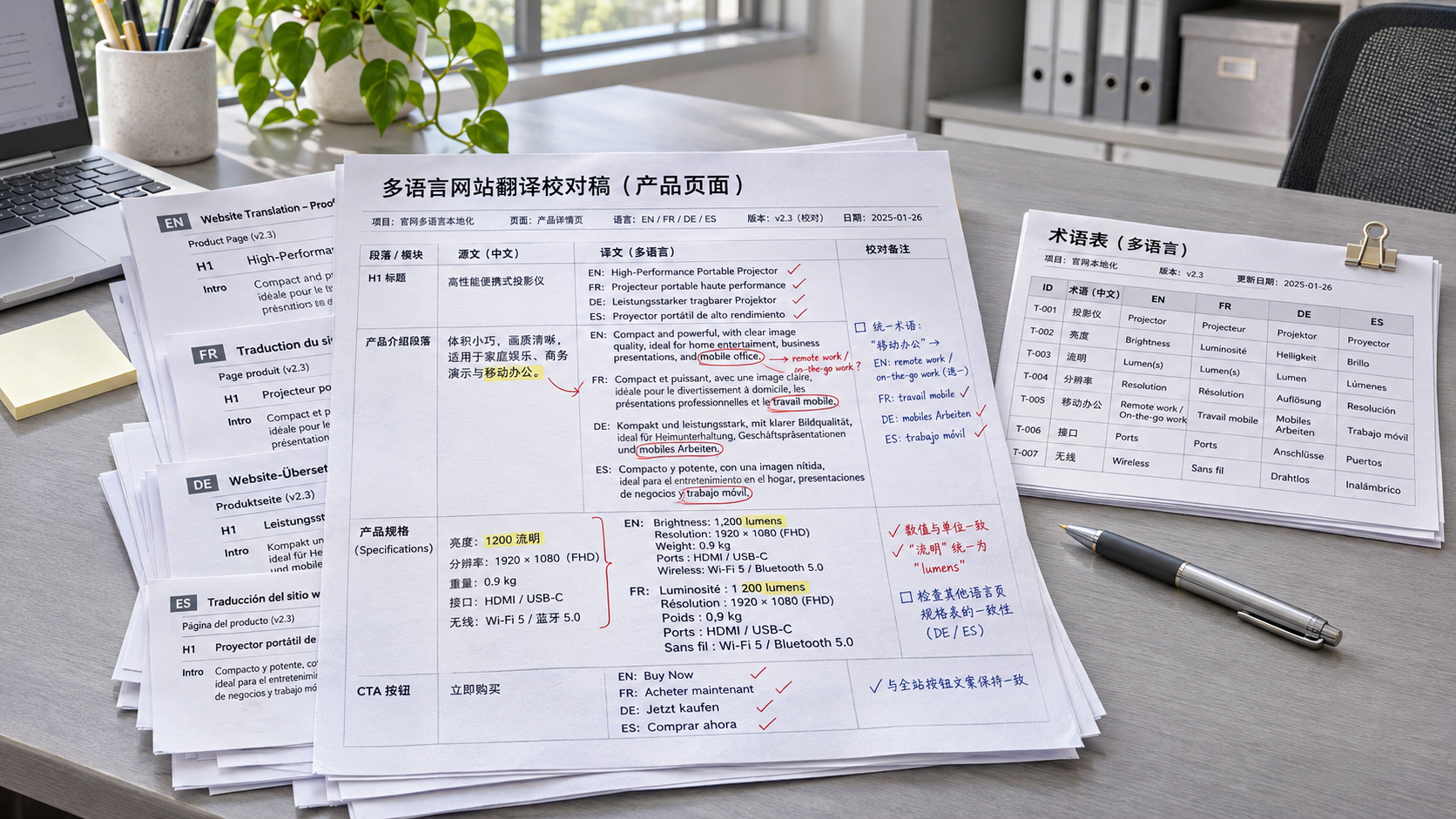
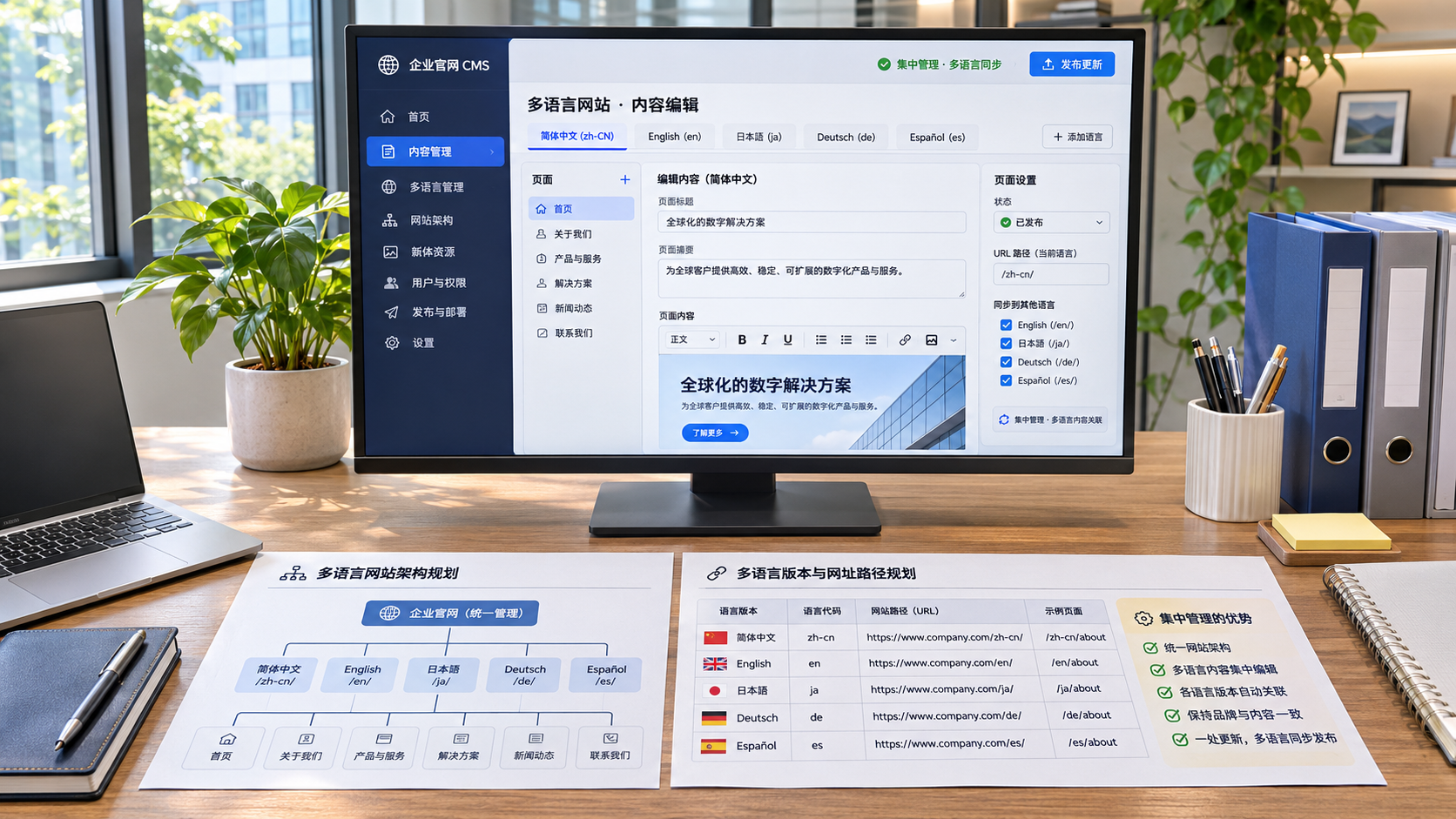
 Should You Use Subdirectories or Subdomains for a Multilingual Website?
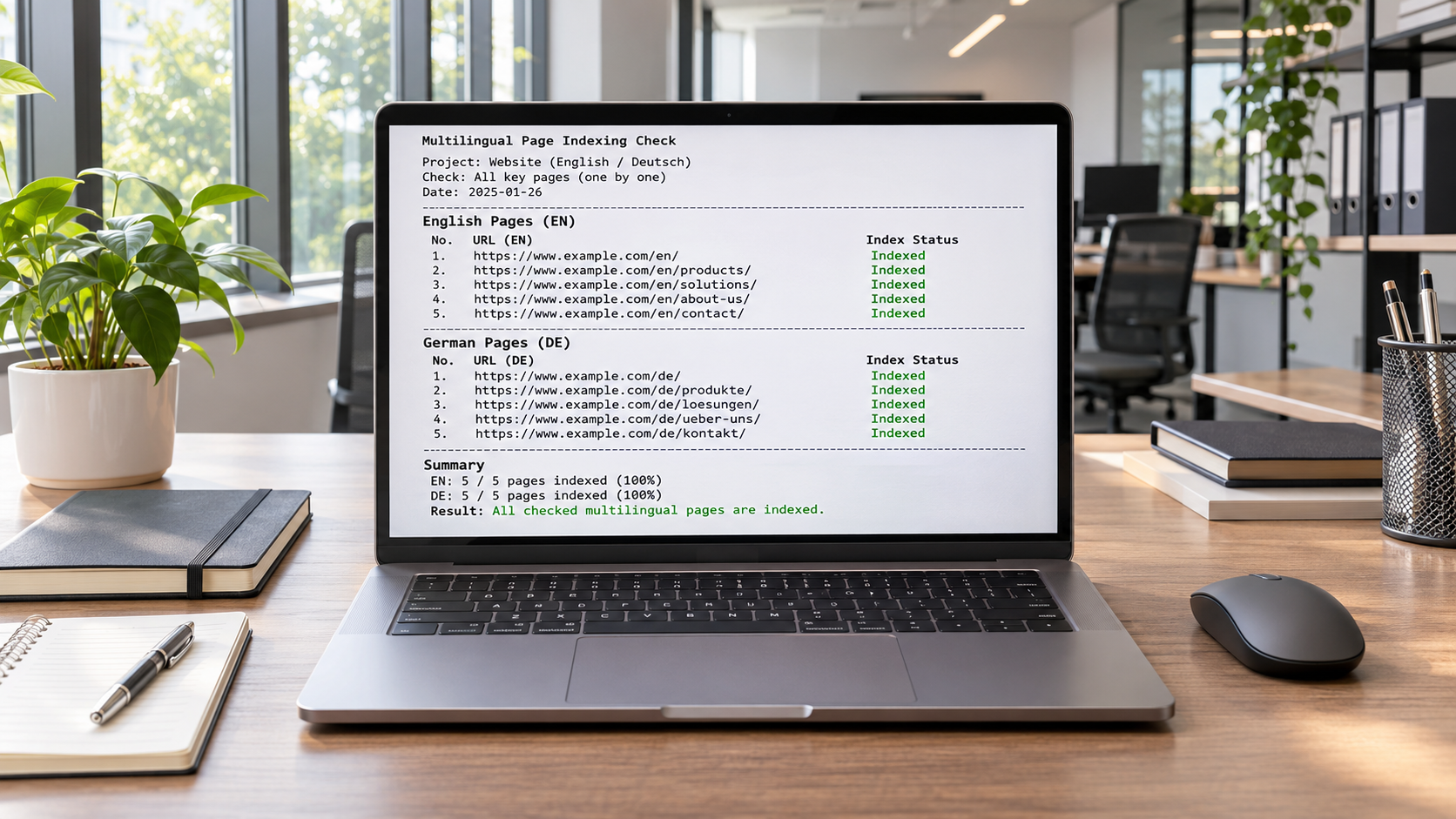
 How can you use webmaster tools to check whether multilingual pages are indexed?
Related Products
 Yiyingbao SaaS Intelligent Website Building and Marketing SystemYiyingbao SaaS Intelligent Website Building and Marketing System, AI-powered no-code website building, rapid creation of multilingual B2B international websites in 10 minutes, global server acceleration, AI-powered SEO optimization, helping businesses connect efficiently with global markets. The perfect integration of technology and operation makes building an international trade website remarkably simple
 AI+SEM Intelligent Advertising Marketing SystemAI+SEM drives intelligent ad creation, empowering full-funnel precision advertising marketing. The system automatically generates weekly/monthly reports, AI recommends keywords and target countries, monitors core metrics in real-time with intelligent alerts, and enables one-click high-conversion ad solutions to help quickly acquire customers and improve ROI.
 AI+SEO Dual-Engine System Optimization ServicesYiyingbao’s AI+SEO dual-engine optimization system helps foreign trade enterprises acquire high-quality organic traffic through AI-powered keyword research, content generation, and comprehensive technical optimization, significantly improving search rankings and conversion rates.
 AI+SNS Social Media Marketing SystemYingbao AI+SNS Social Media Marketing System - Precision social capture for the social media era. Supports one-click content synchronization across major platforms like Facebook and LinkedIn. AI intelligently rewrites posts for enhanced relevance. 24/7 AI customer service and user profiling analysis empower businesses to efficiently expand into global markets.
 AI+SEO营销解决方案易营宝AI+SEO营销解决方案,通过AI批量写作、智能生成TDK、精准关键词扩词等功能,全面优化网站SEO效果,提升流量与转化率。助力企业构建高效智能网站新生态。
 AI+SEM Advertising Marketing SolutionsAI+SEM Advertising Marketing Solution leverages AI technology to deeply empower SEM ad campaigns. It automatically generates weekly/monthly reports using AI, presenting account data across multiple dimensions for comprehensive insights into campaign performance and trends. The system precisely recommends keywords and target countries, intelligently generates high-conversion ad copy, and enables one-click activation of efficient campaign plans to help businesses rapidly acquire customers. Simultaneously, it monitors core metrics in real time, intelligently identifies abnormal fluctuations, and issues timely alerts to ensure stable, high-return advertising results.
 Domain Name ServicesEasyWin provides professional domain name services, including intelligent queries, one-stop registration, brand protection, and full lifecycle management, helping businesses build a digital brand image.
 EasyOperate B2C Cross-Border E-Commerce Platform & Independent WebsiteEasyStore B2C Cross-border E-commerce Independent Store is an intelligent website building and cross-border e-commerce integrated solution independently developed by EasyStore Information Technology (Beijing) Co., Ltd. The system is specially designed for small and medium-sized as well as large export enterprises, integrating 'website building, operation, marketing, advertising, and conversion' into one, helping enterprises quickly establish cross-border e-commerce independent stores to achieve brand globalization and global sales growth.
The platform supports multiple languages, multiple currencies, and multi-channel marketing, with built-in AI intelligent translation and SEO optimization systems, suitable for mainstream markets such as Southeast Asia, Europe and America, Latin America, and the Middle East, assisting Chinese manufacturing enterprises in efficiently deploying international e-commerce strategies. SSL证书易营宝提供专业SSL安全证书服务,包括单域名和泛域名证书,确保网站数据传输加密、身份验证和完整性保护,助力企业建立安全可信的在线业务环境。









