









- Which customer acquisition channels will be affected by cross-border marketing trends in 2026?Sep 06, 2026View details
- Which homogenization risks should be considered in an analysis of the AI-powered website building industry?Aug 30, 2026View details
- How Will AI Marketing Trends 2026 Change Advertising Budget AllocationAug 28, 2026View details
- Is the EV SSL certificate market shrinking or upgrading? How should companies assess certificate procurement?Aug 11, 2026View details
- Why the old AMP SEO 2020 practices no longer work and what has changed in current optimization prioritiesAug 02, 2026View details
- How to Choose Topics for an Industry News Section to Attract More Organic Search TrafficJul 29, 2026View details
Is it necessary for a corporate website to have multilingual versions?
Does a corporate website need a multilingual version? If a company is expanding into overseas markets, the answer is often not simply “necessary”; it is also closely related to traffic acquisition, customer trust, and conversion efficiency. A multilingual website is becoming an important foundation for global marketing growth.
Does a corporate website need a multilingual version? Start with the company’s growth objectives
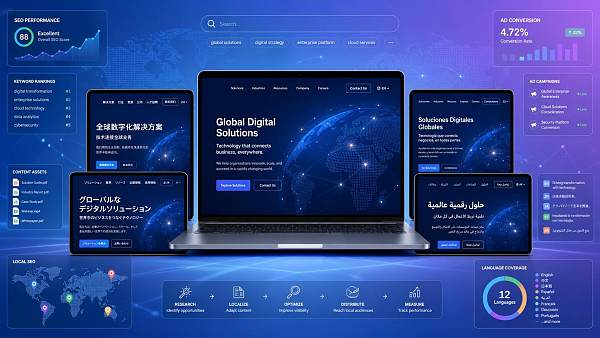
When many companies discuss whether to build a multilingual website, their first reaction is to consider the cost. However, the question that should be asked first is not “Is it expensive?” but “Does the website undertake the task of acquiring overseas customers?” If the website is merely a digital business card, using only one language may have limited impact. If it carries search traffic, receives advertising traffic, converts inquiries, and builds brand trust, a multilingual version is often a basic requirement.
For foreign trade companies, manufacturing factories, cross-border brands, and independent-site sellers, users come from different countries and language environments. If the page language does not match their needs after visitors enter the website, they will usually leave immediately. Even when the product is competitive, companies may still lose inquiries because of high comprehension barriers and insufficient trust.
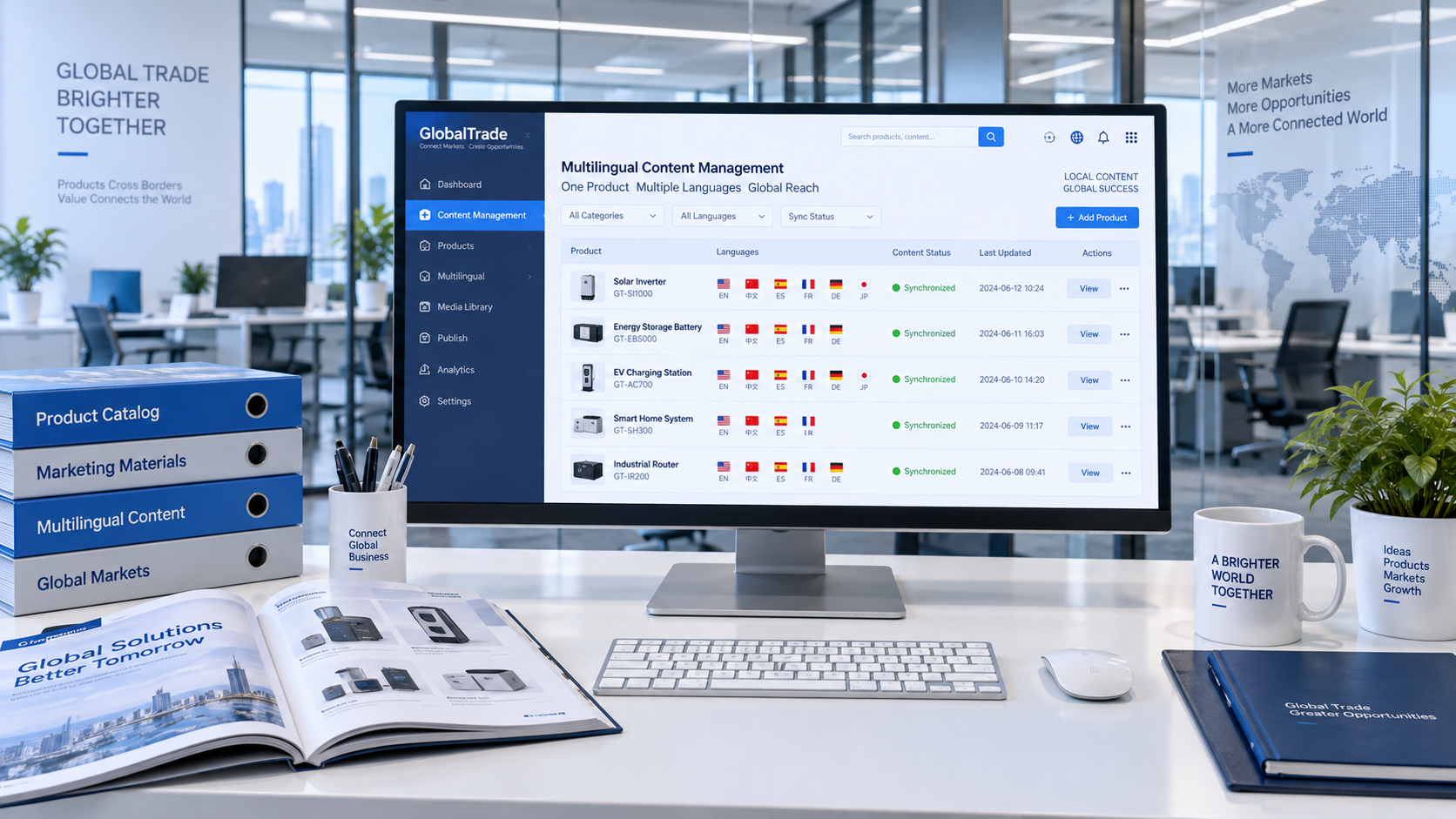
In an integrated website and marketing services scenario, a multilingual website is not simply a matter of translating several pages. It connects website development, search optimization, advertising landing pages, content localization, and ongoing operations. Such a website is easier for search engines to understand and more likely to be accepted by overseas customers.
- Companies seeking organic traffic growth in overseas markets need different language pages to cover local search needs separately.
- Companies relying on Google Ads or social media advertising for customer acquisition need language-consistent landing pages to improve conversion rates.
- Companies hoping to establish an international brand image need to reduce communication costs in unfamiliar markets through a localized website.
In which scenarios is a multilingual website almost essential?
Not every company needs to launch more than ten languages at once. However, in some scenarios, the question of whether a corporate website needs a multilingual version already has a clear answer. The following table can help companies make a quick assessment.
Simply put, the more a company relies on overseas search and conversion, the more it needs a multilingual website. In particular, when the target markets include Europe, Southeast Asia, the Middle East, Latin America, and other regions, offering only an English version often means voluntarily giving up some high-intent customers.
Common applicable businesses
- Manufacturing companies: Their products are highly specialized and their specifications are complex, so customers need information in their native languages to understand the technical details.
- Foreign trade companies: They cover many countries and receive inquiries from diverse sources. Multilingual pages are more conducive to accumulating long-tail traffic.
- Cross-border brands: Brand stories, user reviews, payment details, and delivery information all require localized expression.
The value of a multilingual website goes beyond “looking more international”
Many companies underestimate the practical value of a multilingual website and assume that it is only for display purposes. In fact, it directly affects traffic, trust, conversion, and subsequent marketing campaigns. Ultimately, whether a corporate website needs a multilingual version still depends on the results it delivers.
First, expanding search visibility
Users in different countries do not necessarily share the same search habits. For the same product, users searching in English, German, Spanish, or Arabic may use different keywords, word orders, and even purchasing considerations. Only by creating pages in the corresponding languages can search engines more easily match local needs.
Second, enhancing user trust
When overseas customers assess whether a company is professional, its website is the most direct point of entry. Clear language, a complete structure, and clear contact information make purchasers more willing to continue learning about the company. In contrast, machine-like wording, awkward translations, and disorganized pages can directly reduce credibility.
Third, improving the conversion efficiency of advertising and social media traffic
Advertising clicks are expensive, but what truly wastes the budget is often not the bid—it is a mismatch between the advertisement and the landing page. When users see an advertisement in their local language but enter an English page, the bounce rate often increases. A multilingual website can create a closed loop among advertisements, social media content, and landing pages.
What are the most common pitfalls when building a multilingual website?
Many companies are aware of the importance of a multilingual website but take the wrong approach during implementation. As a result, they spend their budget and launch the website, yet obtain neither traffic nor inquiries. The problems usually focus on the following aspects.
- Only literal translation is provided without localization. Product selling points, application scenarios, delivery methods, and industry terminology are not adjusted for the target market. Users can understand the content but are unwilling to submit their information.
- There is only a language switch, without an independently optimized structure. Different languages share confusing links or lack a clear hierarchy, which is unfavorable for search engine crawling and indexing.
- Website development is disconnected from marketing. The website is completed by a technical team, but there are no subsequent content updates, keyword strategies, or advertising landing pages, leaving the website in a state of “launch and stagnation.”
- Too many languages are launched at once. Without prioritizing key markets, the content in each language version remains too shallow, increasing the maintenance burden while making it difficult to generate effective traffic.
Therefore, whether a corporate website needs a multilingual version should not be judged solely by whether it has a language-switching button. The key is whether it genuinely supports customer acquisition. A good multilingual website should balance website development efficiency, content quality, search fundamentals, and conversion paths.
How should you choose a multilingual website solution? Consider these purchasing criteria
If a company is preparing to build a multilingual website, it should not compare prices alone. It should also compare whether the solution is suitable for long-term operation. The following criteria are more suitable for the purchasing decision stage.
From the perspective of long-term return on investment, an integrated solution is more suitable for companies that genuinely want to achieve overseas growth. This is because a corporate website is not a one-time deliverable; it is the central platform supporting all subsequent digital marketing activities.
Key points to confirm when selecting a solution
- How many languages are supported? Can they be launched in phases according to market priority rather than being added in bulk at once?
- Does it provide a website structure that can be indexed, facilitating subsequent search engine crawling?
- Can it support Google SEO, advertising campaigns, social media traffic acquisition, and the development of AI search visibility?
- Is content maintenance convenient? Can products, case studies, news, and landing pages be expanded quickly?
Why are many companies better suited to choosing an integrated service provider?
Building a multilingual website may appear to be a website project, but it is essentially a marketing infrastructure project. It involves page architecture, content planning, keyword strategy, lead conversion, data tracking, and subsequent promotion. When these tasks are assigned to different suppliers, delivery gaps often arise.
Yiyingbao has long served foreign trade companies, manufacturing factories, cross-border e-commerce sellers, and brands expanding overseas. Its core advantage lies in integrating intelligent website development, multilingual website construction, SEO optimization, advertising campaigns, social media marketing, and GEO generative engine optimization into the same growth chain. This approach enables the website to be built toward the goals of being promotable, indexable, and convertible from the first day it goes live.
This approach is particularly important for companies with limited budgets that nevertheless want to expand overseas quickly. They do not need to first build a showcase website and then start over with a marketing website. Instead, they can build an independent-site foundation suitable for overseas growth from the outset.
FAQ: Does a corporate website need a multilingual version? Several common questions answered at once
Can we start overseas promotion with an English-only version?
Yes, but the target market must be relatively concentrated, and you must accept limited coverage. If your business targets non-English-dominant markets such as Germany, Spain, Japan, or the Middle East, an English-only version will usually reduce search coverage and conversion efficiency. A more prudent approach is to launch the core languages first and expand gradually.
Is a multilingual website better if it has more languages?
No. The number of languages should match the business priorities. First select regions with high conversion opportunities, mature logistics and payment conditions, and clear market feedback. Focusing on developing in-depth content is more effective than creating many shallow pages at once. More and scattered is often less effective than fewer and more refined.
What does the development timeline for a multilingual website generally depend on?
It mainly depends on the number of pages, the number of languages, the readiness of the content, whether e-commerce functionality is required, and whether advertising landing pages and SEO planning need to be implemented at the same time. If the company has complete materials and clear product categories, development efficiency will be significantly higher. If market positioning and content restructuring are also involved, the timeline will increase accordingly.
Can machine translation be used directly?
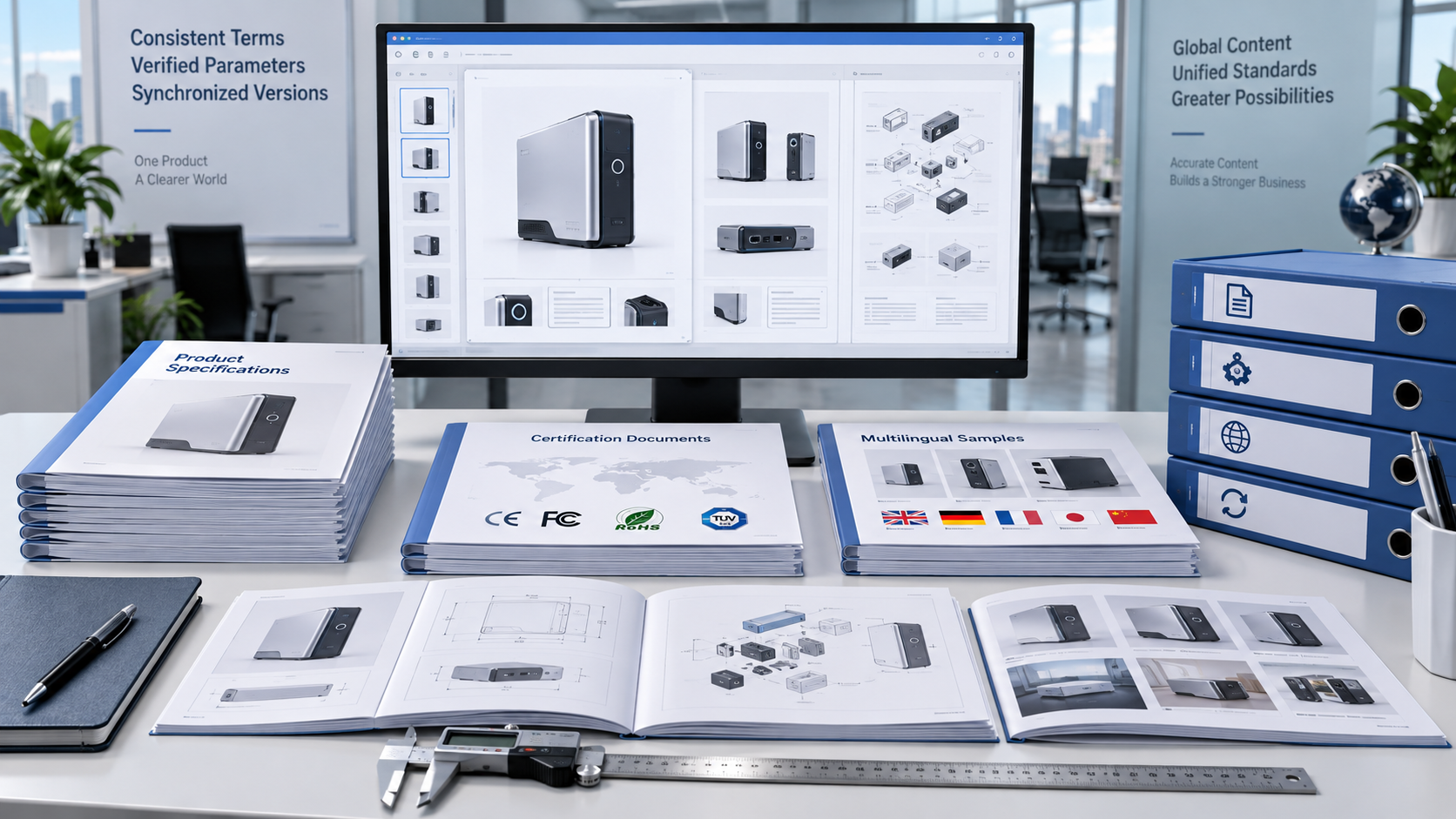
It can be used as an initial efficiency tool, but direct publication is not recommended. In particular, industrial products, specification-based products, certification descriptions, delivery terms, and after-sales content must undergo industry-specific semantic review. Otherwise, the wording may be distorted, potentially affecting the professional image and communication efficiency.
Why choose us: Turning a multilingual website into an overseas growth base that truly generates leads
If you are evaluating whether your corporate website needs a multilingual version, it is also worth considering whether the website will genuinely generate traffic and inquiries after completion. Yiyingbao provides more than page development; it provides an integrated solution centered on overseas customer acquisition goals.
- Multilingual website planning consultation: Determine the priority launch languages and page scope based on target markets such as North America, Europe, Southeast Asia, the Middle East, and Latin America.
- Website solution selection assessment: Including B2B marketing websites, B2C independent sites, cross-border e-commerce stores, multilingual brand websites, and advertising landing page solutions.
- Delivery timeline confirmation: Provide a clearer project schedule based on the number of products, content readiness, language scale, and supporting marketing requirements.
- Promotion mix planning: Coordinate multilingual website development with Google SEO, Google Ads, Facebook advertising, overseas social media operations, and efforts to improve AI search visibility.
- Quotation consultation: Provide budget recommendations that are closer to actual business needs according to functional modules, market scope, and operational objectives.
If your company has already begun expanding overseas or is preparing to upgrade its overseas independent site, now is the right time to evaluate a multilingual website solution. The sooner the website is upgraded from a “display tool” to a “growth gateway,” the easier it will be to establish sustainable customer acquisition capabilities in overseas markets.
Related Articles

Related Products
 Yiyingbao SaaS Intelligent Website Building and Marketing SystemYiyingbao SaaS Intelligent Website Building and Marketing System, AI-powered no-code website building, rapid creation of multilingual B2B international websites in 10 minutes, global server acceleration, AI-powered SEO optimization, helping businesses connect efficiently with global markets. The perfect integration of technology and operation makes building an international trade website remarkably simple
 AI+SEM Intelligent Advertising Marketing SystemAI+SEM drives intelligent ad creation, empowering full-funnel precision advertising marketing. The system automatically generates weekly/monthly reports, AI recommends keywords and target countries, monitors core metrics in real-time with intelligent alerts, and enables one-click high-conversion ad solutions to help quickly acquire customers and improve ROI.
 AI+SEO Dual-Engine System Optimization ServicesYiyingbao’s AI+SEO dual-engine optimization system helps foreign trade enterprises acquire high-quality organic traffic through AI-powered keyword research, content generation, and comprehensive technical optimization, significantly improving search rankings and conversion rates.
 AI+SNS Social Media Marketing SystemYingbao AI+SNS Social Media Marketing System - Precision social capture for the social media era. Supports one-click content synchronization across major platforms like Facebook and LinkedIn. AI intelligently rewrites posts for enhanced relevance. 24/7 AI customer service and user profiling analysis empower businesses to efficiently expand into global markets.
 AI+SEO营销解决方案易营宝AI+SEO营销解决方案,通过AI批量写作、智能生成TDK、精准关键词扩词等功能,全面优化网站SEO效果,提升流量与转化率。助力企业构建高效智能网站新生态。
 AI+SEM Advertising Marketing SolutionsAI+SEM Advertising Marketing Solution leverages AI technology to deeply empower SEM ad campaigns. It automatically generates weekly/monthly reports using AI, presenting account data across multiple dimensions for comprehensive insights into campaign performance and trends. The system precisely recommends keywords and target countries, intelligently generates high-conversion ad copy, and enables one-click activation of efficient campaign plans to help businesses rapidly acquire customers. Simultaneously, it monitors core metrics in real time, intelligently identifies abnormal fluctuations, and issues timely alerts to ensure stable, high-return advertising results.
 Domain Name ServicesEasyWin provides professional domain name services, including intelligent queries, one-stop registration, brand protection, and full lifecycle management, helping businesses build a digital brand image.
 EasyOperate B2C Cross-Border E-Commerce Platform & Independent WebsiteEasyStore B2C Cross-border E-commerce Independent Store is an intelligent website building and cross-border e-commerce integrated solution independently developed by EasyStore Information Technology (Beijing) Co., Ltd. The system is specially designed for small and medium-sized as well as large export enterprises, integrating 'website building, operation, marketing, advertising, and conversion' into one, helping enterprises quickly establish cross-border e-commerce independent stores to achieve brand globalization and global sales growth.
The platform supports multiple languages, multiple currencies, and multi-channel marketing, with built-in AI intelligent translation and SEO optimization systems, suitable for mainstream markets such as Southeast Asia, Europe and America, Latin America, and the Middle East, assisting Chinese manufacturing enterprises in efficiently deploying international e-commerce strategies. SSL证书易营宝提供专业SSL安全证书服务,包括单域名和泛域名证书,确保网站数据传输加密、身份验证和完整性保护,助力企业建立安全可信的在线业务环境。









