









- AI Is Eating SaaS: Three Real-World Cases in One AfternoonOct 25, 2026View details
- Exiger CEO: The SaaS Apocalypse Is Real, but It Means Something DifferentOct 25, 2026View details
- Hengqin Cooperation Zone Shares Cross-Border E-Commerce Developments, Focusing on Macao-Hengqin Collaboration and International MarketsOct 24, 2026View details
- A Shenyang study highlights the development of the “cross-border e-commerce + industrial cluster” modelOct 24, 2026View details
- Three China Advertising Association GEO group standards take effect on October 23Oct 24, 2026View details
- Amazon Raises Fulfillment Fees Twice, Yet the Median Platform Fee Remains Around 40%Oct 22, 2026View details
Should construction and renovation companies have multilingual websites for foreign trade?
For architectural decoration companies building a foreign trade website, it is not inherently necessary to translate the site into a dozen languages, nor should they follow suit simply because competitors have multilingual websites. A more practical assessment is: which countries your customers come from, what languages they use to search, communicate, and evaluate suppliers; whether the website is responsible for generating organic leads; and whether the company has the capacity to continuously maintain content in different languages.
If overseas business is still mainly focused on English-speaking markets and customers can generally communicate in English, a complete and professionally written English website is usually more effective than a multilingual website with obvious machine-translation traces and incomplete pages. Conversely, if the business is clearly targeting non-English markets such as Spanish-, Arabic-, French-, Russian-, or Japanese-speaking markets, a multilingual website is often not merely an added benefit, but an important foundation for lowering comprehension barriers and acquiring local search traffic.
Review customer acquisition channels before deciding whether to add languages
Overseas procurement in the architectural decoration industry does not follow a single model. Contractors, developers, design firms, building materials distributors, and end property owners focus on different information when browsing a website. Companies engaged in commercial space fit-outs, hotel project supporting services, whole-house customization, doors and curtain walls, custom cabinetry, or decorative material exports should first clarify how customers find them.
If inquiries mainly come from referrals by existing customers, trade show business cards, proactive outreach by sales staff, or B2B platforms, the website's primary role is to receive visitors, demonstrate qualifications, and build trust. In this case, prioritize improving the English website: project cases, product specifications, construction capabilities, scope of delivery, inquiry methods, and FAQs should be complete and clear. Expanding into multiple languages too early can easily disperse budget and maintenance resources.
If a company plans to acquire local customers over the long term through Google SEO, Google Ads, or overseas social media, language selection needs to align more closely with the target market. Customers may directly search for “commercial interior fit out” or “custom kitchen cabinet supplier,” and may also search in their native language for construction services, product categories, installation solutions, and project quotations. Providing only English pages may not necessarily prevent transactions, but it can miss part of the local search demand and may make first-time visitors feel that service coverage is limited.

English websites, translated websites, and localized websites differ in more than language
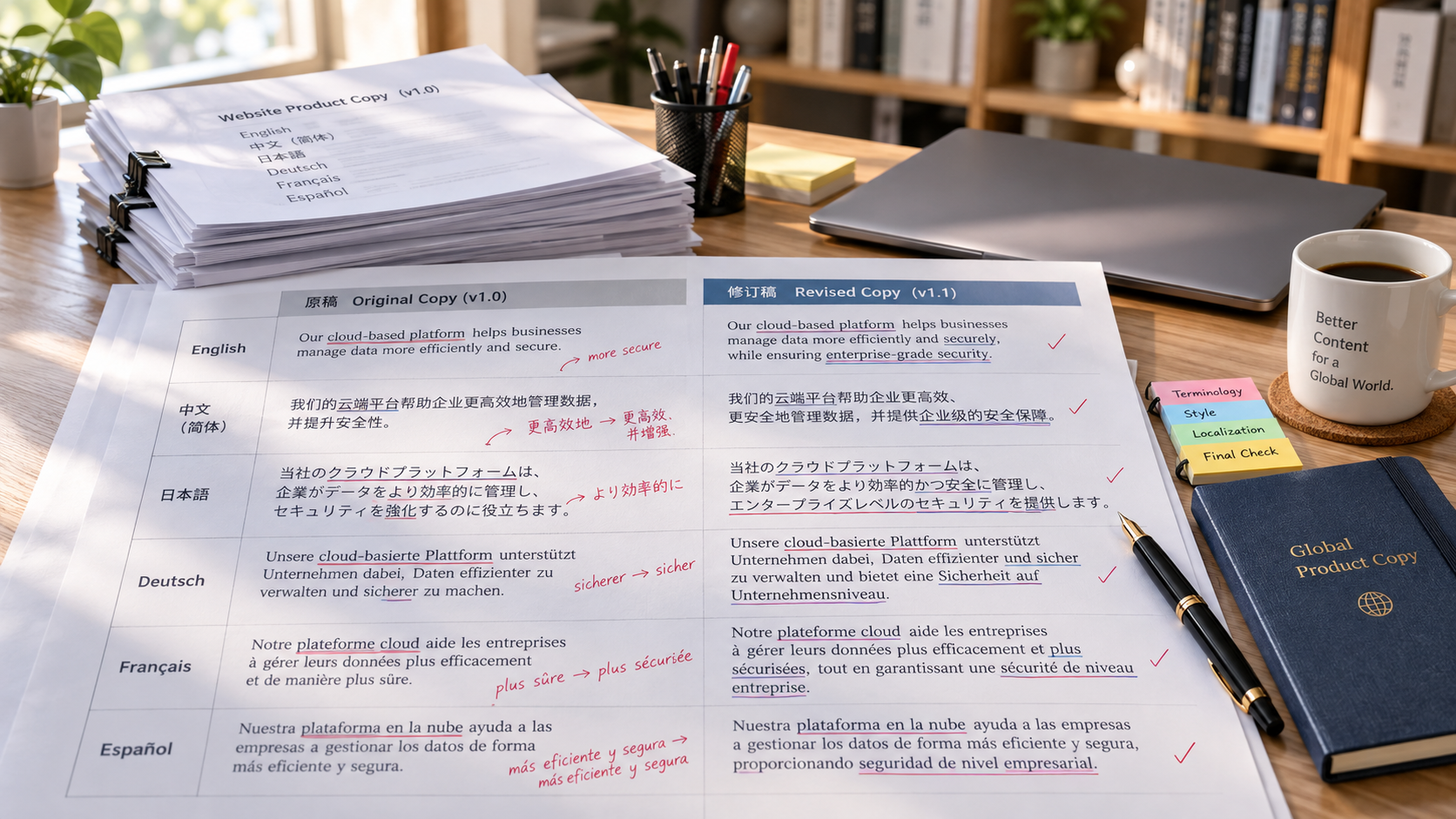
Many companies understand “multilingual” as adding a language switch button to every page. In fact, translation is only the most basic layer. Localization also involves product terminology, units of measurement, project types, usage scenarios shown in images, contact details, lead-time descriptions, and the supporting documentation customers care about most.
For example, what is commonly called “whole-house customization” in China may need to be broken down into more specific product descriptions in different markets, such as kitchen cabinets, wardrobes, bathroom cabinets, and interior doors. “Decoration projects” also need to distinguish between residential renovation, commercial space construction, hotel fit-outs, office renovation, or integrated design-and-build services. Direct word-for-word translation can make a page appear linguistically correct while failing to cover what customers actually search for and compare.
Which architectural decoration companies are more suitable for prioritizing multilingual websites
When the following three signals appear, a multilingual website can be given higher priority.
- Overseas orders are concentrated in non-English-speaking countries or regions, and sales staff often need to explain terminology in English materials.
- Website visits, ad clicks, or social media direct messages are already clearly coming from a particular language market, but page bounce rates are high and inquiry conversion is weak.
- The company is prepared to continuously invest in local SEO, search advertising, or regional agent recruitment, rather than conducting only one-off promotion.
For example, when selling custom furniture, sanitary ware, or decorative materials to the Latin American market, Spanish pages are generally more likely to establish initial communication than English pages. When serving Middle Eastern engineering projects, English may still be the language of business communication, but Arabic content can enhance local customers' understanding and trust. When focusing on expanding into Japan, South Korea, or Russian-speaking regions, local languages often have a more direct impact on product searches and the reading of project materials.
However, “global market coverage” does not mean that the homepage needs to include languages from around the world. If a market lacks stable product positioning, local delivery capabilities, or follow-up personnel, simply adding language versions will not automatically generate effective inquiries and may instead attract traffic that cannot be served.
The most common pitfall is creating many low-quality pages at once
Architectural decoration websites usually contain a substantial amount of content. In addition to company information, they include product series, materials and craftsmanship, case galleries, service processes, design capabilities, production capabilities, packaging and transportation, installation support, and inquiry forms. When the English website has not yet been completed, directly duplicating it into multiple languages often results in only the homepage and a few product pages being translated, while cases and technical materials remain in Chinese; after a product is updated, other language versions are not synchronized; and the same term is translated in multiple ways on different pages.
Such websites are not ideal for either search engines or visitors. Search engines need to understand the regions and languages each language page targets, and there must also be clear corresponding relationships between pages. Visitors, meanwhile, assess whether a company is reliable through images, cases, specifications, and contact details. Translating only headings and a few introductory paragraphs cannot compensate for missing core materials.
Another misconception is publishing automatic translations directly. AI translation can improve first-draft efficiency, especially for organizing product information first, extracting repetitive fields, and supporting maintenance. However, content related to building materials, dimensions, installation methods, weather resistance, and project scope should be manually reviewed. Unnatural language can still be corrected, but ambiguity in technical descriptions may affect customer judgment and even subsequent communication.
A more reliable approach: expand gradually according to market priorities
For most companies, the more reasonable sequence is not to first decide how many languages to select, but to first choose one key market. Complete the core English website first, then add the most valuable language based on actual business and traffic. A new language version does not need to duplicate every page at the outset, but the following content should be complete: core product or service pages, representative project cases, capability descriptions, quality and delivery information, contact pages, and inquiry forms.
After launch, more than just traffic should be monitored. More valuable indicators are whether pages in that language receive relevant search impressions, whether customers stay on product and case pages, whether inquiries come from target regions, and whether the sales team can effectively follow up on these leads. If these stages do not form a closed loop, adding more languages merely expands the size of the website.
A website-building system should solve maintenance issues
The challenge of multilingual websites often lies not in initial construction, but in subsequent updates. Architectural decoration companies add products, update cases, adjust service scopes, and may also create advertising landing pages for different countries. If language versions, page URLs, SEO titles, image descriptions, and form leads are managed separately, operating costs will rise rapidly.
When choosing a website-building solution, confirm whether the system allows pages and SEO information to be edited independently by language, whether it supports navigation, forms, and content management in different languages, and whether new content can be conveniently synchronized or optimized separately. EasyMarketing provides AI-powered website building, multilingual website development, and overseas marketing services for foreign trade scenarios, making it suitable for companies that need to manage website building, Google SEO, advertising landing pages, and subsequent promotion within the same operating workflow. When choosing such services, companies should still first define priority markets and page priorities, rather than treating “multilingual support” as the sole criterion.
The final judgment is simple: if English can cover current customers and the website is primarily for presentation and credibility building, first deepen the English content; if non-English markets have already been identified and the company hopes to acquire customers consistently through local search or promotion, it should build core pages in the corresponding languages. The number of languages is not a competitive advantage. What a foreign trade website truly needs to solve is whether customers can quickly understand what you offer, whether it suits their projects, and how to initiate an inquiry.
Related Articles
 Can I learn to use a multilingual content management system without a technical background?
 How can you evaluate a provider’s translation editing capabilities for AI-powered multilingual website services?
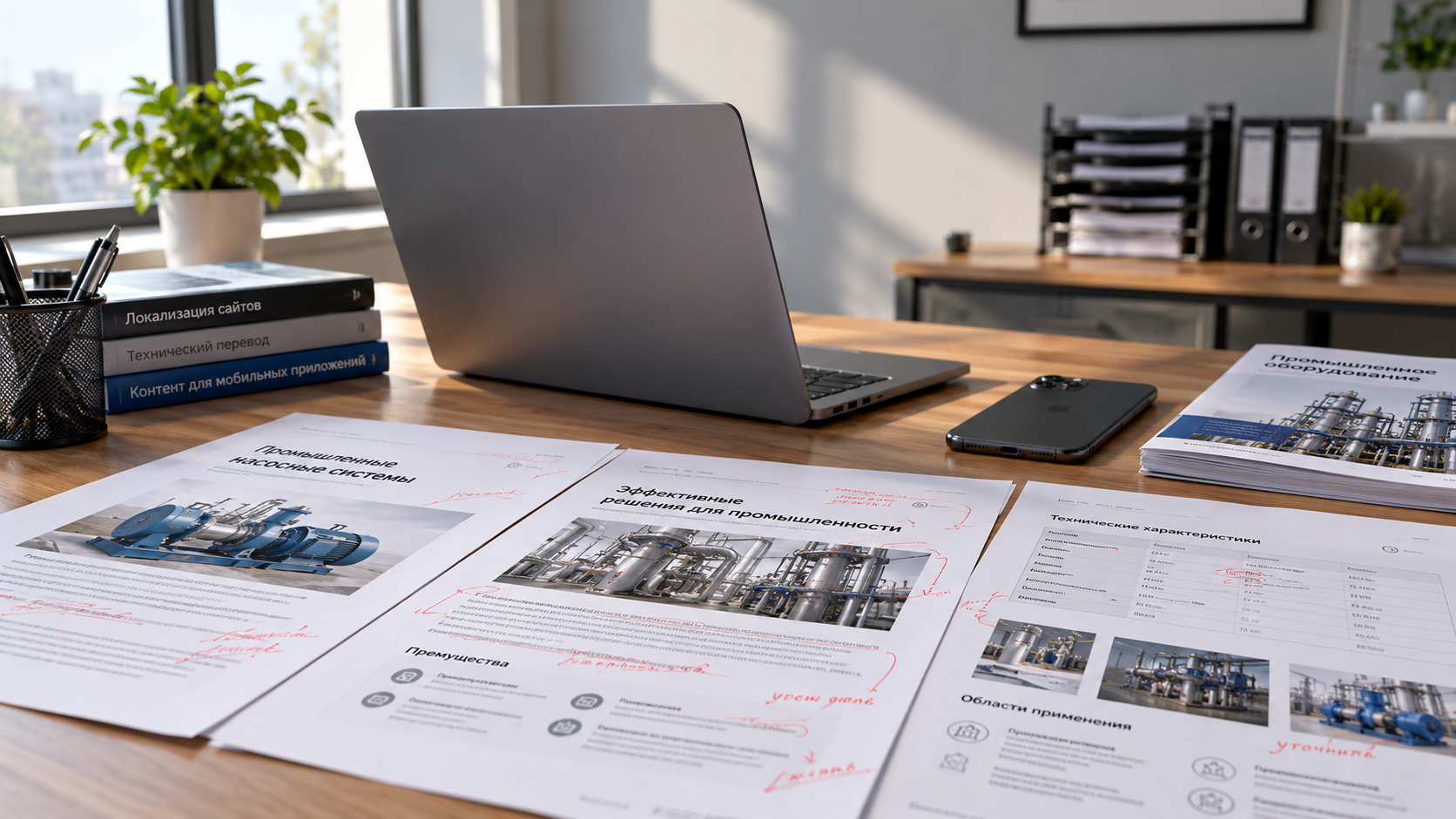
 Building a Website for the Russian-Speaking Market: Is Translating the Website Enough?
Related Products
 Yiyingbao SaaS Intelligent Website Building and Marketing SystemYiyingbao SaaS Intelligent Website Building and Marketing System, AI-powered no-code website building, rapid creation of multilingual B2B international websites in 10 minutes, global server acceleration, AI-powered SEO optimization, helping businesses connect efficiently with global markets. The perfect integration of technology and operation makes building an international trade website remarkably simple
 AI+SEM Intelligent Advertising Marketing SystemAI+SEM drives intelligent ad creation, empowering full-funnel precision advertising marketing. The system automatically generates weekly/monthly reports, AI recommends keywords and target countries, monitors core metrics in real-time with intelligent alerts, and enables one-click high-conversion ad solutions to help quickly acquire customers and improve ROI.
 AI+SEO Dual-Engine System Optimization ServicesYiyingbao’s AI+SEO dual-engine optimization system helps foreign trade enterprises acquire high-quality organic traffic through AI-powered keyword research, content generation, and comprehensive technical optimization, significantly improving search rankings and conversion rates.
 AI+SNS Social Media Marketing SystemYingbao AI+SNS Social Media Marketing System - Precision social capture for the social media era. Supports one-click content synchronization across major platforms like Facebook and LinkedIn. AI intelligently rewrites posts for enhanced relevance. 24/7 AI customer service and user profiling analysis empower businesses to efficiently expand into global markets.
 AI+SEO营销解决方案易营宝AI+SEO营销解决方案,通过AI批量写作、智能生成TDK、精准关键词扩词等功能,全面优化网站SEO效果,提升流量与转化率。助力企业构建高效智能网站新生态。
 AI+SEM Advertising Marketing SolutionsAI+SEM Advertising Marketing Solution leverages AI technology to deeply empower SEM ad campaigns. It automatically generates weekly/monthly reports using AI, presenting account data across multiple dimensions for comprehensive insights into campaign performance and trends. The system precisely recommends keywords and target countries, intelligently generates high-conversion ad copy, and enables one-click activation of efficient campaign plans to help businesses rapidly acquire customers. Simultaneously, it monitors core metrics in real time, intelligently identifies abnormal fluctuations, and issues timely alerts to ensure stable, high-return advertising results.
 Domain Name ServicesEasyWin provides professional domain name services, including intelligent queries, one-stop registration, brand protection, and full lifecycle management, helping businesses build a digital brand image.
 EasyOperate B2C Cross-Border E-Commerce Platform & Independent WebsiteEasyStore B2C Cross-border E-commerce Independent Store is an intelligent website building and cross-border e-commerce integrated solution independently developed by EasyStore Information Technology (Beijing) Co., Ltd. The system is specially designed for small and medium-sized as well as large export enterprises, integrating 'website building, operation, marketing, advertising, and conversion' into one, helping enterprises quickly establish cross-border e-commerce independent stores to achieve brand globalization and global sales growth.
The platform supports multiple languages, multiple currencies, and multi-channel marketing, with built-in AI intelligent translation and SEO optimization systems, suitable for mainstream markets such as Southeast Asia, Europe and America, Latin America, and the Middle East, assisting Chinese manufacturing enterprises in efficiently deploying international e-commerce strategies. SSL证书易营宝提供专业SSL安全证书服务,包括单域名和泛域名证书,确保网站数据传输加密、身份验证和完整性保护,助力企业建立安全可信的在线业务环境。









