









- Four Annual Industry Reports Released at the 14th Digital Marketing Development ForumNov 29, 2026View details
- Sichuan Announces 2026 Provincial Cross-Border E-Commerce Parks; Two Chengdu Industrial Parks SelectedNov 29, 2026View details
- People’s Daily Focuses on Liaoning Cross-Border E-Commerce: Xiaobeihe Hosiery Reaches Overseas Markets Through Digital ChannelsNov 29, 2026View details
- What Are the Ranking Criteria for China's Top 100 SaaS Companies?Nov 28, 2026View details
- Eight Departments, Including the Ministry of Commerce, Issue the 15th Five-Year Plan for the Development of Trade in ServicesNov 27, 2026View details
- General Administration of Customs Issues New Rules on Import and Export Cosmetic Labeling, Effective December 1Nov 26, 2026View details
ODM Website Development for Export Businesses: Showcase Your Design Capabilities Through Processes and Case Studies

The challenge of building an ODM company’s export website is to turn design and delivery capabilities into evidence that overseas buyers can verify. Customers want to know more than what a product looks like; they also want to understand how the company confirms requirements, validates samples, controls changes, and organizes mass production. For project managers, the website should serve as a public overview of project capabilities, helping visitors assess whether a partnership is feasible by reviewing development processes and case studies.
First, determine which project questions the website needs to answer
ODM partnerships typically involve requirements definition, industrial design, structural development, sample validation, and production ramp-up. Buyers have different concerns at each stage: initially, they want to know whether the company can understand the application scenario; during evaluation, they focus on the technical approach and supporting evidence; and once business discussions begin, they ask about lead times, responsibilities, and change-control mechanisms.
Before building the website, project managers can invite colleagues from sales, R&D, quality, and production to identify the questions customers commonly ask, then decide which information is suitable for public disclosure. The site structure should follow the customer’s evaluation journey, not simply mirror the company’s internal departments.
- Capabilities: Describe the design, engineering development, and manufacturing stages the company can handle, as well as the product categories it serves.
- Process: Show the inputs, outputs, and customer involvement at each stage to help customers anticipate how collaboration will work.
- Case studies: Demonstrate relevant experience through project background, design trade-offs, and validation processes that can be disclosed.
- Inquiry: Collect essential information such as application scenario, target market, estimated quantity, and development stage.
If the company handles only part of the development work, it should clearly state which stages are the customer’s or external partners’ responsibility. Clear boundaries help the sales team reduce unsuitable inquiries and prevent the engineering team from repeatedly explaining the same points during early evaluations.
Present the development process as a verifiable delivery pathway
A typical process page may show only a few icons for “design—prototyping—production,” leaving customers unsure what happens at each step. A more effective approach is to explain the decision criteria and deliverables for every stage, while avoiding disclosure of confidential internal information or presenting uncommitted timelines or fixed metrics as conditions that apply to every project.
- Requirements and feasibility assessment: Explain how information about product use, target market, budget range, and expected quantity is collected. Deliverables may include a requirements list, technical questions, and an initial feasibility assessment.
- Solution design and review: Describe how appearance, structure, materials, and process choices are evaluated, and list key items requiring customer confirmation, such as functional priorities and target cost.
- Sample production and validation: Explain which assumptions the sample is intended to validate, how issues are recorded, and how customer feedback informs the next revision. Test items should be determined according to the product’s intended use and the actual agreement.
- Production preparation and delivery: Explain how the parties coordinate drawing-version approval, material preparation, production inspection, and exception handling. Lead times and acceptance criteria are subject to the specific contract and project plan.

For complex projects, consider adding an explanation of change management to the process page: who assesses the impact of customer-requested material or functional changes on costs, testing, and schedules, and when written confirmation is issued. This demonstrates project-management capabilities more effectively than simply emphasizing “fast response.” The page can also include a requirements checklist that customers can use to prepare essential information before the first discussion.
Case studies: demonstrate engineering capabilities through design trade-offs
Case studies do not need to be filled with large numbers of finished-product images. Buyers are more interested in the constraints the project faced, why the team chose a particular solution, and how it verified that the solution met requirements. Each case study can be organized around the following information:
- Project background: Describe the product category, operating environment, and development goals. Obtain authorization before identifying the customer.
- Key constraints: Describe the factors affecting decisions, such as dimensions, assembly, materials, costs, or target-market requirements.
- Design process: Explain the alternatives considered and the trade-offs made—for example, adjusting the structure to simplify assembly—and describe any resulting limitations.
- Validation and delivery: List the sample reviews, tests, or production-preparation work actually completed, along with the results confirmed by both parties.
For example, an equipment enclosure project may face both limited internal space and assembly requirements. A case study could explain how the team rearranged component layouts, produced samples, and checked for assembly interference. Specific dimensions, test results, and delivery performance should be included only when supported by actual records and permitted for disclosure. An illustrative scenario must not be presented as a real customer success story.
Confidential projects can still demonstrate capabilities: use reviewed, generic structural drawings, remove brands, drawing details, and sensitive parameters, and retain the problem, approach, and validation logic. If key evidence cannot be disclosed, state the disclosure limits accurately rather than substituting vague claims such as “internationally renowned customers” for authorization.
Connect content with search traffic and qualified inquiries
After the website goes live, guide visitors with different needs to the appropriate pages. Service pages answer “What can you do?”, process pages answer “How does collaboration work?”, and case studies answer “Have you done similar work?” Link related pages to one another and provide inquiry options where appropriate. For priority markets, plan keywords around product applications and buyers’ questions, rather than repeating the same set of terms across every page.
Engineering and sales teams should review multilingual content together, especially material names, testing terminology, and delivery responsibilities. Machine translation can help prepare a first draft, but for certifications or regulations, distinguish between certificates the company actually holds, requirements that may apply to the product, and matters that need confirmation by the customer or a third party. Do not use certification icons in a way that implies all products have passed the corresponding certification.
When resources for maintaining content are limited, tools such as AI+SEO Marketing Solutions can be considered for expanding keywords and generating initial drafts of content, page titles, descriptions, and other information in batches. Technical statements generated by tools still need to be verified by relevant personnel. Search indexing, traffic, and conversion results should also be evaluated in light of content quality and actual operational performance.
Before launch, check the website as you would a project deliverable
Project managers can treat the website as a cross-departmental deliverable to be accepted, rather than checking only whether the pages look attractive. Start by following a typical customer journey: enter through a search result, visit a service page, review a related case study, learn about the collaboration process, and finally submit a request. During the review, focus on the following:
- Case studies, credentials, and product specifications have traceable sources and reviewers, and their authorizations and validity periods can be verified.
- Forms work on mobile devices, inquiries reach the designated email address or customer management system, and someone is responsible for follow-up.
- Page loading, navigation, language switching, and search-engine indexing settings have been checked, and important pages are accessible.
- The information collected by forms is relevant to business needs, and privacy notices and data management are handled in line with target-market requirements.
- Budgeting covers the domain, system, content updates, multilingual maintenance, and promotion costs, with responsibilities for ongoing work clearly assigned.
After acceptance, continue tracking the sources of qualified inquiries, project fit, and follow-up results, and revise pages based on sales feedback. Complete this cycle first for one core service and one authorized case study, then extend it to other product lines. This enables the website to build up credible, maintainable content about development capabilities over time.
Related Articles
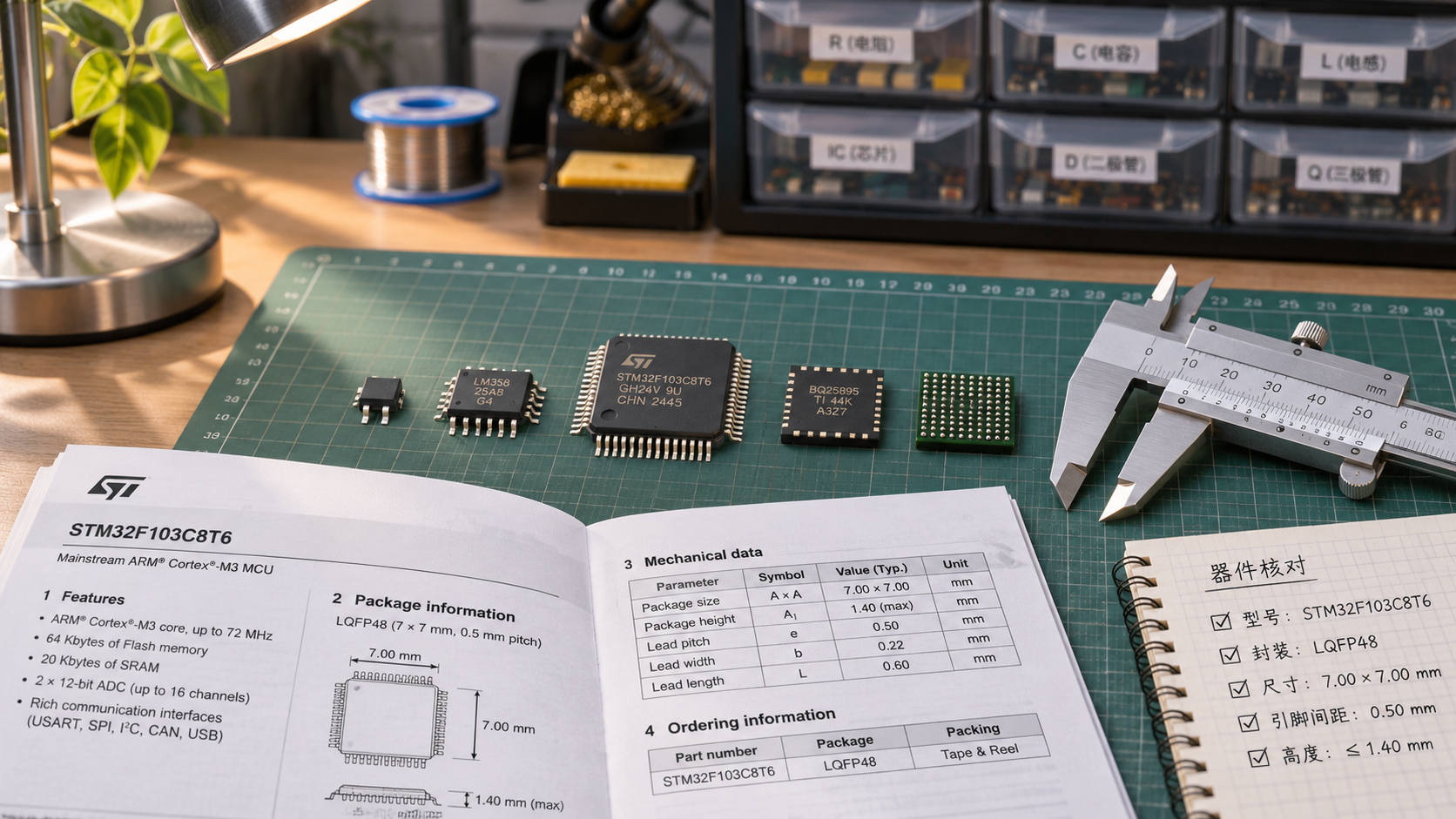
 How Should an Electronics Components B2B Website Present Part Numbers and Specifications?
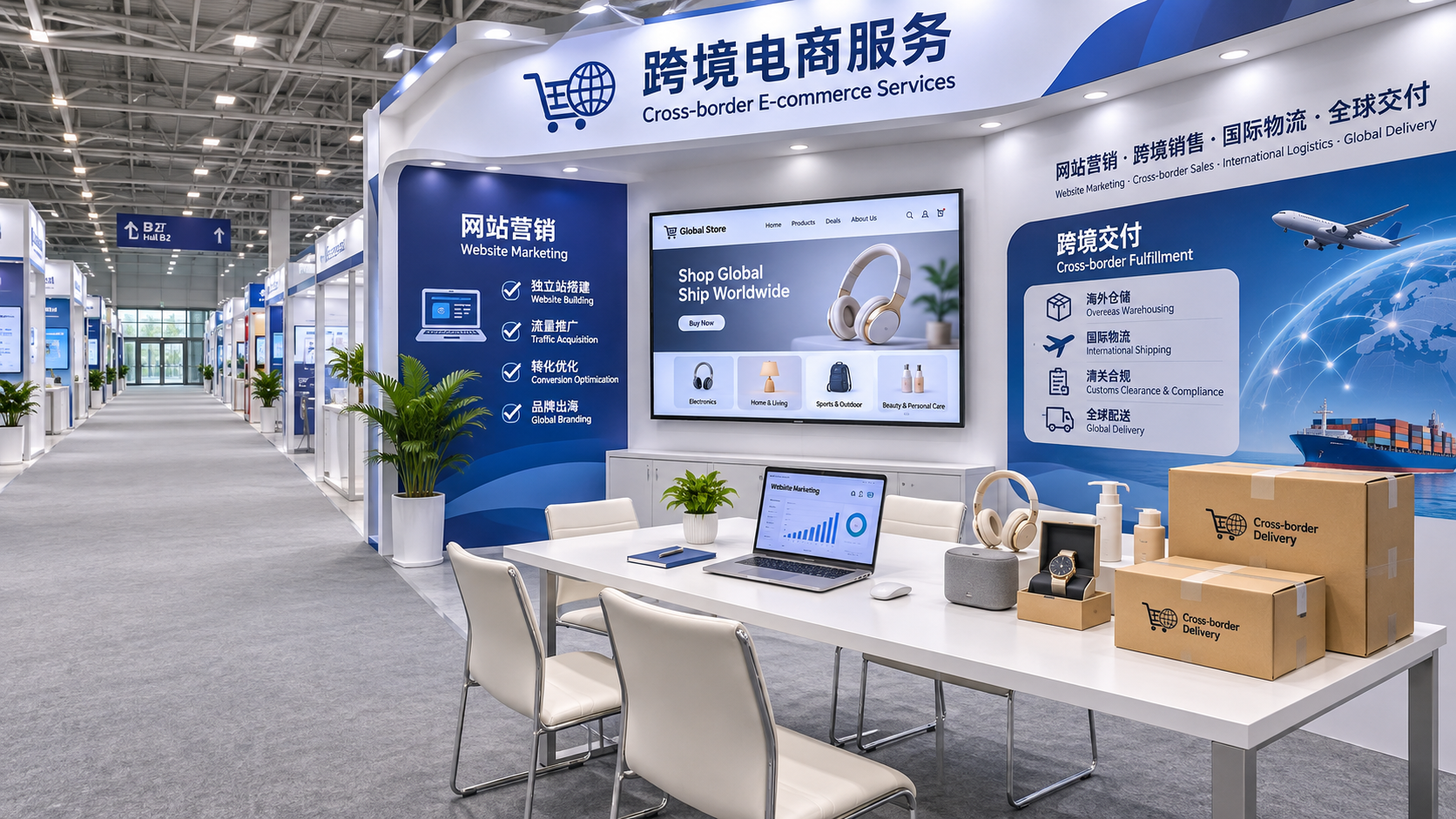
 Cross-Border E-Commerce Import and Export Fair Opens in Yiwu") The 2026 China (Zhejiang) Cross-Border E-Commerce Import and Export Fair Opens in Yiwu
 ODM Website Development for Export Businesses: Showcase Your Design Capabilities Through Processes and Case Studies

Related Products
 Yiyingbao SaaS Intelligent Website Building and Marketing SystemYiyingbao SaaS Intelligent Website Building and Marketing System, AI-powered no-code website building, rapid creation of multilingual B2B international websites in 10 minutes, global server acceleration, AI-powered SEO optimization, helping businesses connect efficiently with global markets. The perfect integration of technology and operation makes building an international trade website remarkably simple
 AI+SEM Intelligent Advertising Marketing SystemAI+SEM drives intelligent ad creation, empowering full-funnel precision advertising marketing. The system automatically generates weekly/monthly reports, AI recommends keywords and target countries, monitors core metrics in real-time with intelligent alerts, and enables one-click high-conversion ad solutions to help quickly acquire customers and improve ROI.
 AI+SEO Dual-Engine System Optimization ServicesYiyingbao’s AI+SEO dual-engine optimization system helps foreign trade enterprises acquire high-quality organic traffic through AI-powered keyword research, content generation, and comprehensive technical optimization, significantly improving search rankings and conversion rates.
 AI+SNS Social Media Marketing SystemYingbao AI+SNS Social Media Marketing System - Precision social capture for the social media era. Supports one-click content synchronization across major platforms like Facebook and LinkedIn. AI intelligently rewrites posts for enhanced relevance. 24/7 AI customer service and user profiling analysis empower businesses to efficiently expand into global markets.
 AI+SEO营销解决方案易营宝AI+SEO营销解决方案,通过AI批量写作、智能生成TDK、精准关键词扩词等功能,全面优化网站SEO效果,提升流量与转化率。助力企业构建高效智能网站新生态。
 AI+SEM Advertising Marketing SolutionsAI+SEM Advertising Marketing Solution leverages AI technology to deeply empower SEM ad campaigns. It automatically generates weekly/monthly reports using AI, presenting account data across multiple dimensions for comprehensive insights into campaign performance and trends. The system precisely recommends keywords and target countries, intelligently generates high-conversion ad copy, and enables one-click activation of efficient campaign plans to help businesses rapidly acquire customers. Simultaneously, it monitors core metrics in real time, intelligently identifies abnormal fluctuations, and issues timely alerts to ensure stable, high-return advertising results.
 Domain Name ServicesEasyWin provides professional domain name services, including intelligent queries, one-stop registration, brand protection, and full lifecycle management, helping businesses build a digital brand image.
 EasyOperate B2C Cross-Border E-Commerce Platform & Independent WebsiteEasyStore B2C Cross-border E-commerce Independent Store is an intelligent website building and cross-border e-commerce integrated solution independently developed by EasyStore Information Technology (Beijing) Co., Ltd. The system is specially designed for small and medium-sized as well as large export enterprises, integrating 'website building, operation, marketing, advertising, and conversion' into one, helping enterprises quickly establish cross-border e-commerce independent stores to achieve brand globalization and global sales growth.
The platform supports multiple languages, multiple currencies, and multi-channel marketing, with built-in AI intelligent translation and SEO optimization systems, suitable for mainstream markets such as Southeast Asia, Europe and America, Latin America, and the Middle East, assisting Chinese manufacturing enterprises in efficiently deploying international e-commerce strategies. SSL证书易营宝提供专业SSL安全证书服务,包括单域名和泛域名证书,确保网站数据传输加密、身份验证和完整性保护,助力企业建立安全可信的在线业务环境。









