









- Four Annual Industry Reports Released at the 14th Digital Marketing Development ForumNov 29, 2026View details
- Sichuan Announces 2026 Provincial Cross-Border E-Commerce Parks; Two Chengdu Industrial Parks SelectedNov 29, 2026View details
- People’s Daily Focuses on Liaoning Cross-Border E-Commerce: Xiaobeihe Hosiery Reaches Overseas Markets Through Digital ChannelsNov 29, 2026View details
- What Are the Ranking Criteria for China's Top 100 SaaS Companies?Nov 28, 2026View details
- Eight Departments, Including the Ministry of Commerce, Issue the 15th Five-Year Plan for the Development of Trade in ServicesNov 27, 2026View details
- General Administration of Customs Issues New Rules on Import and Export Cosmetic Labeling, Effective December 1Nov 26, 2026View details
How Can an OEM Export Website Present Production Capacity, Quality Inspection, and Contract Manufacturing Processes?
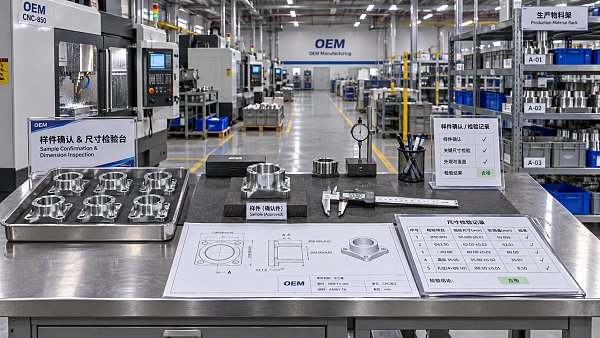
When overseas customers evaluate an OEM supplier’s manufacturing capabilities, the first thing they need to determine is whether the factory can fulfill orders using the specified materials, meeting quality requirements and delivery schedules. An OEM export website should present production capacity, quality inspection evidence, and the contract manufacturing process along a single information path: visitors should be able to move from product pages to process and equipment details, then to inspection checkpoints, sampling requirements, and the information needed for an inquiry, reducing the need for repeated clarification.
Production Capacity Pages: Present Quantities Alongside Applicable Conditions
Listing equipment counts or monthly output alone does little to explain actual order capacity. When the same production line processes different sizes, materials, and surface finish requirements, cycle times and the number of conforming products will vary. Capacity information should specify the product category, unit of measurement, reporting period, and calculation conditions, and distinguish theoretical equipment capacity from output under normal production scheduling. Existing output figures should not be applied directly to products that have not yet been validated.
Equipment descriptions can be organized by component or process. For example, descriptions of equipment for injection-molded parts can cover molding capabilities and mold compatibility, while descriptions of metal parts can cover machining, welding, or surface treatment processes. When specifying tolerances, wall thickness, or material grades, state the applicable products and measurement conditions to avoid presenting parameters from a single sample as a general commitment for all products.
Delivery times also need to be clearly qualified: reusing an existing mold involves different preparation than developing a new one. Material preparation times also differ between stock materials and materials requiring confirmation of batch or color. The page can outline factors that affect scheduling while noting that the specific lead time will be confirmed based on the drawings, quantity, and material details.
Quality Inspection Information: Build an Evidence Trail from Standards, Records, and Corrective Actions
The phrase “strict quality inspection” does not explain what is inspected, when inspections take place, or how deviations are handled. A quality inspection page can organize information by incoming inspection, in-process inspection, and pre-shipment inspection, describing the inspection items, methods, and record formats for each. Where inspections are based on customer drawings, appearance limit samples, or mutually agreed acceptance requirements, identify the applicable criteria rather than implying that the same standard applies to every order.
- For incoming inspection, specify the items checked for materials, components, or packaging, such as specifications, batch numbers, and appearance. If material certifications are required, state which party provides them and how they are verified.
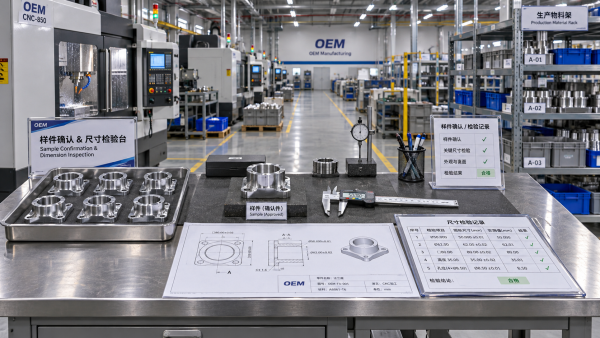
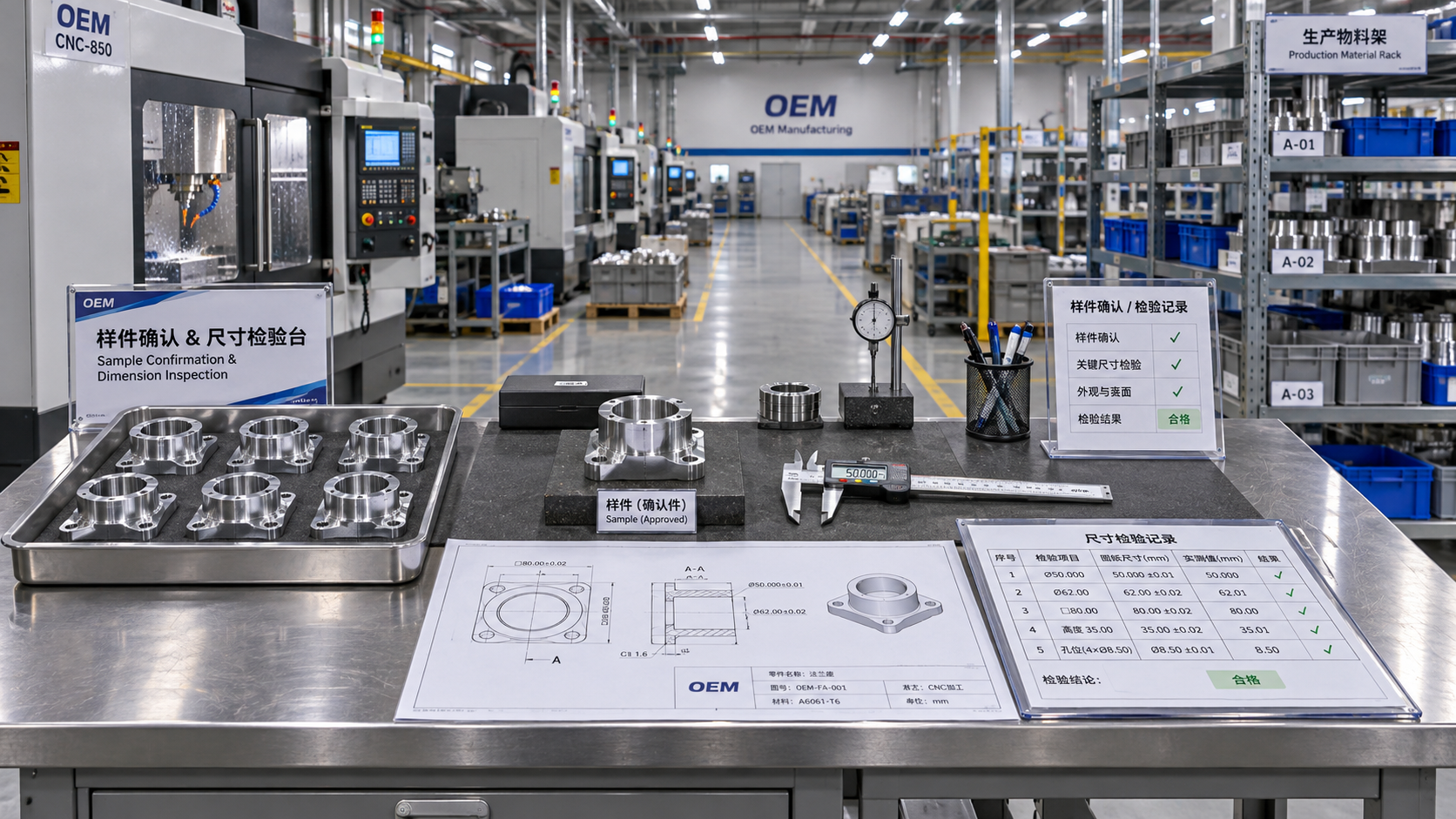
- For in-process inspection, show first-article approval, critical-dimension measurements, and routine inspection checkpoints. You can also explain how records are linked to batches when molds are changed or equipment parameters are adjusted and rechecked.
- For pre-shipment inspection, specify when sampling or 100% inspection applies, along with the applicable checks for dimensions, function, appearance, and packaging. Sampling criteria should match the documents actually used in production.
- For nonconforming products, explain how containment, identification, assessment, and reinspection are coordinated. Whether rework is acceptable should be determined by the agreed requirements.
The same out-of-tolerance dimension may result from mold wear, equipment parameter drift, or inconsistencies in drawing revisions or measurement datums. With authorization and sensitive information removed, the website can show sample records illustrating measurement items, acceptance criteria, and disposition status. Certificates and inspection reports should also identify the applicable products, scope of coverage, and validity status; they should not imply that all products from the factory are covered.
Contract Manufacturing Process: Highlight Confirmation Points and Stages Prone to Rework
A flowchart is useful for showing the sequence from initial requirements to delivery, but each stage should also specify its required inputs and expected outputs. When drawings, samples, or packaging requirements change, clearly identifying who is responsible for confirmation and how revisions are recorded is more useful than simply showing arrows between steps.
- Requirements and manufacturability review: Collect drawings, material specifications, quantities, intended use, and target-market requirements. Check dimensional datums, mating surfaces, and special processes. If only an appearance drawing is available and critical dimensions are missing, request the additional information before discussing pricing and lead time.
- Quotation and sampling: Specify the applicable scope for samples, molds, and mass production separately, and confirm whether samples will use production materials, equipment, and processes. A handmade sample can verify appearance, but is not sufficient on its own to demonstrate stable mass production.
- Sample approval and mass-production preparation: Keep records of the sample approved by both parties, drawing revisions, and changes. For requirements that are difficult to describe in words alone, such as color, surface texture, and assembly clearance, use limit samples approved by both parties.
- Production and inspection: Define critical processes, batch traceability methods, and inspection checkpoints. For outsourced surface treatment or heat treatment, explain how handover, acceptance, and feedback on nonconformities are coordinated.
- Packaging and delivery: Confirm inner and outer packaging, labels, quantities per carton, and transportation requirements. Changes to packaging may affect product protection and the time required for packing and shipment preparation.
Changes to materials, design, or surface treatment after sampling may affect molds, processing parameters, and inspection methods. The process page should explain how changes are reassessed and specify when samples need to be approved again, preventing the use of outdated quotations or inspection records.
Connect Inquiry Form Fields with Capacity and Process Information
Inquiry fields on product pages can focus on the information needed for an actual assessment: product category, estimated quantity, target delivery date, material or performance requirements, and whether drawings and samples are available. Information such as custom packaging and testing requirements can be included as optional fields, avoiding a request in the initial inquiry for details that have not yet been determined. For confidential drawings, provide a secure submission method and explain access permissions and data retention.
Dimensions, material names, and inspection terminology should be consistent across multilingual pages. Tables, file names, and downloadable materials should also be updated together. Product pages can link to the relevant process, quality inspection, and contract manufacturing information, while process pages can link back to applicable product categories, ensuring that visitors arriving through different paths see information from the same revision. For production volumes or records that cannot be disclosed, state the scope of information that can be shared and the types of materials available rather than filling gaps with unverified figures.
Related Articles
 How Can an OEM Export Website Present Production Capacity, Quality Inspection, and Contract Manufacturing Processes?
 Upgrade to Version 3.0 of the China-ASEAN Free Trade Area: The Digital Economy Chapter Opens Up New Opportunities for Going Global
 Hong Kong Moves Second Reading of Electronic Transactions Amendment Bill to Facilitate the Digitization of Business Trade Documents


Related Products
 Yiyingbao SaaS Intelligent Website Building and Marketing SystemYiyingbao SaaS Intelligent Website Building and Marketing System, AI-powered no-code website building, rapid creation of multilingual B2B international websites in 10 minutes, global server acceleration, AI-powered SEO optimization, helping businesses connect efficiently with global markets. The perfect integration of technology and operation makes building an international trade website remarkably simple
 AI+SEM Intelligent Advertising Marketing SystemAI+SEM drives intelligent ad creation, empowering full-funnel precision advertising marketing. The system automatically generates weekly/monthly reports, AI recommends keywords and target countries, monitors core metrics in real-time with intelligent alerts, and enables one-click high-conversion ad solutions to help quickly acquire customers and improve ROI.
 AI+SEO Dual-Engine System Optimization ServicesYiyingbao’s AI+SEO dual-engine optimization system helps foreign trade enterprises acquire high-quality organic traffic through AI-powered keyword research, content generation, and comprehensive technical optimization, significantly improving search rankings and conversion rates.
 AI+SNS Social Media Marketing SystemYingbao AI+SNS Social Media Marketing System - Precision social capture for the social media era. Supports one-click content synchronization across major platforms like Facebook and LinkedIn. AI intelligently rewrites posts for enhanced relevance. 24/7 AI customer service and user profiling analysis empower businesses to efficiently expand into global markets.
 AI+SEO营销解决方案易营宝AI+SEO营销解决方案,通过AI批量写作、智能生成TDK、精准关键词扩词等功能,全面优化网站SEO效果,提升流量与转化率。助力企业构建高效智能网站新生态。
 AI+SEM Advertising Marketing SolutionsAI+SEM Advertising Marketing Solution leverages AI technology to deeply empower SEM ad campaigns. It automatically generates weekly/monthly reports using AI, presenting account data across multiple dimensions for comprehensive insights into campaign performance and trends. The system precisely recommends keywords and target countries, intelligently generates high-conversion ad copy, and enables one-click activation of efficient campaign plans to help businesses rapidly acquire customers. Simultaneously, it monitors core metrics in real time, intelligently identifies abnormal fluctuations, and issues timely alerts to ensure stable, high-return advertising results.
 Domain Name ServicesEasyWin provides professional domain name services, including intelligent queries, one-stop registration, brand protection, and full lifecycle management, helping businesses build a digital brand image.
 EasyOperate B2C Cross-Border E-Commerce Platform & Independent WebsiteEasyStore B2C Cross-border E-commerce Independent Store is an intelligent website building and cross-border e-commerce integrated solution independently developed by EasyStore Information Technology (Beijing) Co., Ltd. The system is specially designed for small and medium-sized as well as large export enterprises, integrating 'website building, operation, marketing, advertising, and conversion' into one, helping enterprises quickly establish cross-border e-commerce independent stores to achieve brand globalization and global sales growth.
The platform supports multiple languages, multiple currencies, and multi-channel marketing, with built-in AI intelligent translation and SEO optimization systems, suitable for mainstream markets such as Southeast Asia, Europe and America, Latin America, and the Middle East, assisting Chinese manufacturing enterprises in efficiently deploying international e-commerce strategies. SSL证书易营宝提供专业SSL安全证书服务,包括单域名和泛域名证书,确保网站数据传输加密、身份验证和完整性保护,助力企业建立安全可信的在线业务环境。









