









- Four Annual Industry Reports Released at the 14th Digital Marketing Development ForumNov 29, 2026View details
- Sichuan Announces 2026 Provincial Cross-Border E-Commerce Parks; Two Chengdu Industrial Parks SelectedNov 29, 2026View details
- People’s Daily Focuses on Liaoning Cross-Border E-Commerce: Xiaobeihe Hosiery Reaches Overseas Markets Through Digital ChannelsNov 29, 2026View details
- What Are the Ranking Criteria for China's Top 100 SaaS Companies?Nov 28, 2026View details
- Eight Departments, Including the Ministry of Commerce, Issue the 15th Five-Year Plan for the Development of Trade in ServicesNov 27, 2026View details
- General Administration of Customs Issues New Rules on Import and Export Cosmetic Labeling, Effective December 1Nov 26, 2026View details
Sichuan Announces 2026 Provincial Cross-Border E-Commerce Parks; Two Chengdu Industrial Parks Selected
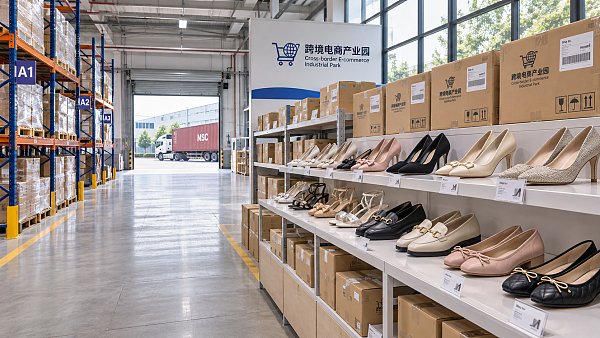
On November 28, 2026, the Sichuan Provincial Department of Commerce website published a notice of the proposed list of provincial-level cross-border e-commerce park projects for 2026. Two industrial parks in Chengdu were included in the proposed list. One builds on the city’s women’s footwear manufacturing strengths, while the other leverages the Qingbaijiang inland port. The manufacturing, export, and supply chain services involved are worth monitoring. The information currently available indicates that the park list has been published for public notice. Specific implementation arrangements and their impact on businesses still need to be assessed in light of further information.
Two Chengdu Industrial Parks Included in the Proposed List
The Chengdu projects named in the notice are the Huidu Fashion Industrial Park in Shuangliu District and the 58 Qifu Qingbaijiang Cross-Border E-Commerce Industrial Park in Qingbaijiang District.
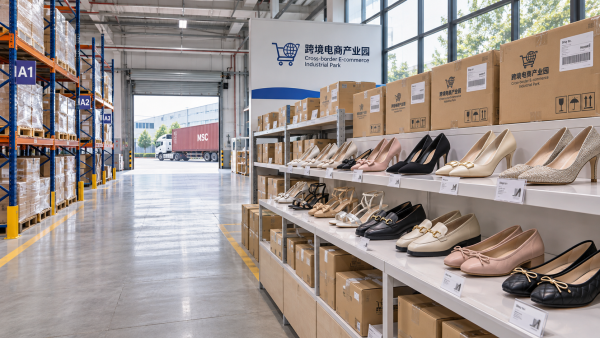
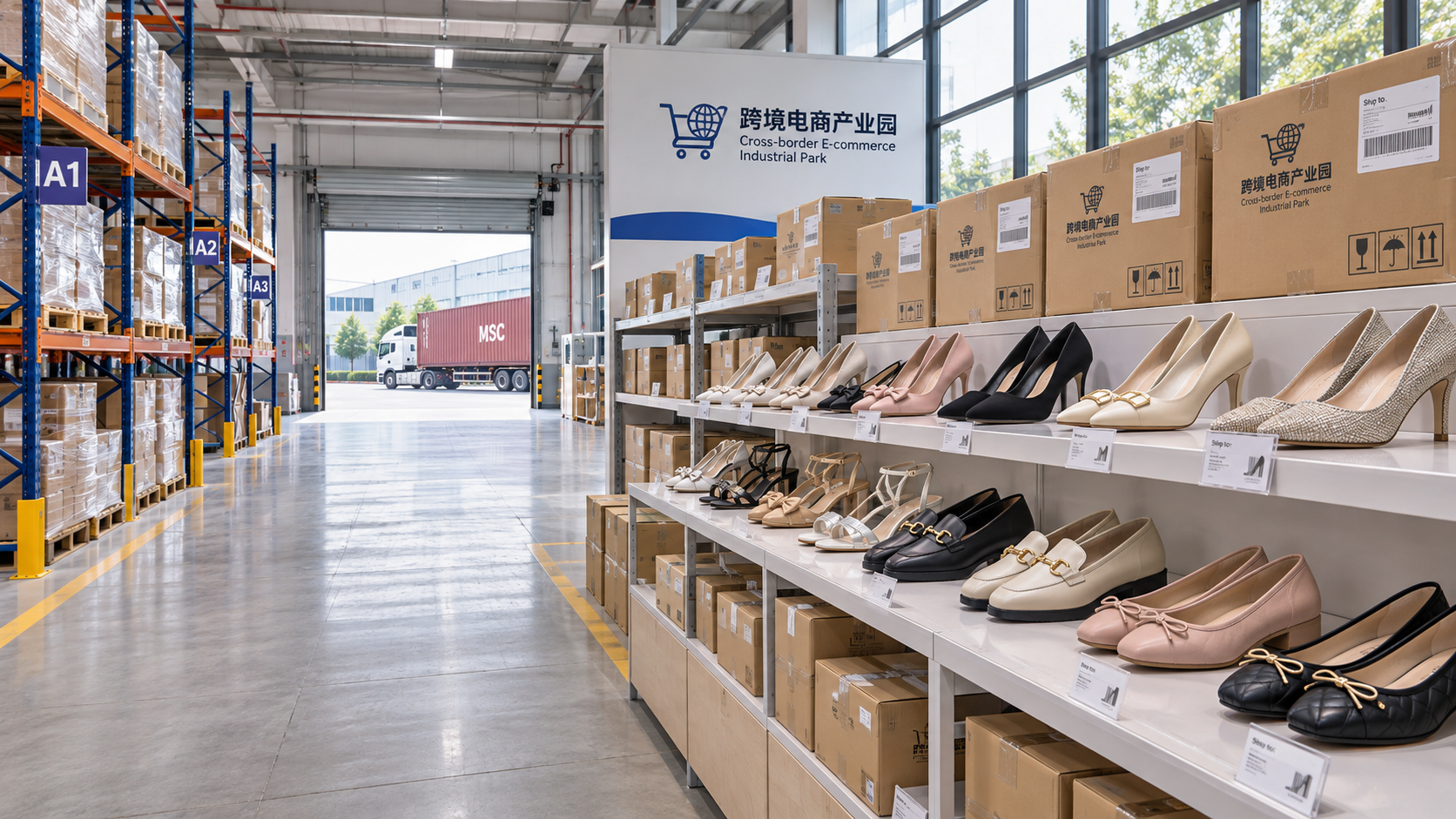
The Huidu Fashion Industrial Park draws on Chengdu’s position as a major women’s footwear production base in China. According to the information provided, annual women’s footwear production nationwide is 700 million pairs, of which 250 million pairs are produced in Chengdu. The 58 Qifu Qingbaijiang Cross-Border E-Commerce Industrial Park, meanwhile, leverages the core strengths of the Qingbaijiang inland port, with foreign trade exports reaching RMB 180 million.
The information above covers the proposed park list, the industrial base, and foreign trade exports. It does not provide details on arrangements following the notice or park admission requirements, nor does it specify any new trade or compliance requirements for businesses.
From Women’s Footwear Supply to Inland Port Exports: Areas to Watch
How Can Women’s Footwear Production Be Matched with Procurement?
Based on the analysis, the women’s footwear manufacturing base supporting the Huidu Fashion Industrial Park makes coordination between manufacturers, buyers, and cross-border e-commerce operators a potential area of interest. If manufacturers consider using the park to connect with cross-border business, they may need to assess whether product specifications, order quantities, lead times, and quality information align with procurement requirements. Buyers, in turn, can review suppliers’ delivery capabilities and whether product documentation is sufficient to support subsequent sales and traceability.
These are business assessments based on the industrial foundation. The available information does not indicate what procurement mechanisms, if any, the park has established. Nor can it be assumed that inclusion in the proposed list will directly lead to increased orders or changes in procurement terms.
Coordinating Export Operations and Supply Chain Services
The Qingbaijiang park’s reliance on its inland port may lead export businesses to pay closer attention to coordination between orders, cargo, documentation, and transportation arrangements. Supply chain service providers may also focus on customers’ needs for delivery timelines, logistics updates, and exception handling. For the businesses involved, it is important to verify the responsibilities of each party in specific transactions and ensure that cargo and documentation preparations align with the delivery schedule.
The park’s foreign trade export value is one data point for understanding its existing foreign trade activity, but the information provided does not specify the statistical basis or composition of this figure. When assessing the impact of the park’s inclusion in the proposed list on export business, the figure alone should not be used to infer future growth, transport efficiency, or service capabilities.
Connecting Channel Sales with Product Compliance
From an industry perspective, if women’s footwear manufacturing becomes more closely connected with cross-border sales, channel operators may need to confirm product information, quality documentation, and applicable sales requirements with suppliers earlier, avoiding situations where documentation is found to be incomplete only after procurement. Whether demand for testing and certification services will change also depends on the specific product, sales arrangements, and applicable rules. The notice does not specify any new certification requirements. Businesses concerned should verify requirements based on their actual operations and should not equate a park’s inclusion in the list with product certification or compliance with all sales requirements.
Practical Issues Businesses Can Check First
Follow Up on the Notice and Clarify the Specific Terms
A prudent approach at this stage is to monitor further updates on the Sichuan Provincial Department of Commerce website and verify the notice results, as well as whether further arrangements are made for park management, services, or business participation. If specific conditions are announced later, businesses can then assess who they apply to, what documents are required, and how to apply. The current summary does not provide these details, so no assumptions should be treated in advance as admission eligibility, policy support, or a mandatory obligation.
Check Women’s Footwear Orders and Supplier Documentation
For buyers and operators interested in women’s footwear business, supplier information, product specifications, quality records, delivery times, and the allocation of responsibilities can be checked against specific orders. If products are intended for cross-border sales, businesses should also confirm the required product documentation, testing, or certification documents based on the actual sales arrangements, and verify with the relevant parties whether those documents are applicable. This preparation is a business due diligence recommendation and does not mean that this notice has introduced a uniform testing or certification threshold.
Review Export Documentation and Delivery Milestones
Businesses considering operations through the Qingbaijiang park can first check the consistency of order information and export-related documents, and confirm cargo preparation, handover, and delivery milestones with carriers and service providers. For orders with time-sensitive delivery requirements, they may also assess communication and adjustment procedures in the event of disruptions. Whether the park has specific operating procedures remains subject to verifiable information released later.
Match Park Selection to Actual Business Needs
The two industrial parks rely on different strengths. Based on the analysis, when assessing cooperation or participation opportunities, businesses can consider whether women’s footwear supply, export organization, and service capabilities meet their needs, and verify specific arrangements such as fees, responsibilities, and service scope. The proposed list can serve as a lead for further inquiry, but it is not a substitute for verifying cooperation terms and performance capabilities.
The Notice Signals Park Development, but Implementation Outcomes Remain to Be Seen
Based on the information currently available, this news is best understood as an update on the publication of the proposed list of provincial-level cross-border e-commerce park projects, indicating that Chengdu parks with different industrial foundations have been included. It does not yet establish that new trade rules, certification systems, or business obligations have been implemented. The notice results, specific service arrangements, and actual business participation will all affect how the market interprets this development.
Further monitoring can focus on two questions: first, whether arrangements related to the parks are clarified and businesses can verify the applicable conditions; second, whether industrial supply, procurement demand, and export services can be effectively coordinated in specific business operations. Only with more complete implementation information and market feedback will it be possible to assess the actual impact on orders, delivery, or compliance costs.
Respond to the Park Notice with Business Due Diligence
The inclusion of two Chengdu industrial parks in the proposed list provides a concrete point of reference for examining how women’s footwear industry resources and inland port capabilities may connect with cross-border e-commerce. At this stage, businesses should treat this as a policy development worth monitoring and conduct due diligence in light of their own products, procurement, and export arrangements. Any assessment of changes to rules, service terms, or actual benefits should await a clear basis.
Sources and Further Verification
This article is based on the news headline, event date, and event summary provided by the user. The information provided mentions a notice on the Sichuan Provincial Department of Commerce website but does not include a direct link to the official source, so further verification is still required. Businesses can monitor official announcements and information from relevant authorities and carefully assess the actual impact in light of subsequent policy details, park implementation arrangements, trade operations, and business feedback.
Related Articles
 Four Annual Industry Reports Released at the 14th Digital Marketing Development Forum
 Sichuan Announces 2026 Provincial Cross-Border E-Commerce Parks; Two Chengdu Industrial Parks Selected
 People’s Daily Focuses on Liaoning Cross-Border E-Commerce: Xiaobeihe Hosiery Reaches Overseas Markets Through Digital Channels
Related Products
 Yiyingbao SaaS Intelligent Website Building and Marketing SystemYiyingbao SaaS Intelligent Website Building and Marketing System, AI-powered no-code website building, rapid creation of multilingual B2B international websites in 10 minutes, global server acceleration, AI-powered SEO optimization, helping businesses connect efficiently with global markets. The perfect integration of technology and operation makes building an international trade website remarkably simple
 AI+SEM Intelligent Advertising Marketing SystemAI+SEM drives intelligent ad creation, empowering full-funnel precision advertising marketing. The system automatically generates weekly/monthly reports, AI recommends keywords and target countries, monitors core metrics in real-time with intelligent alerts, and enables one-click high-conversion ad solutions to help quickly acquire customers and improve ROI.
 AI+SEO Dual-Engine System Optimization ServicesYiyingbao’s AI+SEO dual-engine optimization system helps foreign trade enterprises acquire high-quality organic traffic through AI-powered keyword research, content generation, and comprehensive technical optimization, significantly improving search rankings and conversion rates.
 AI+SNS Social Media Marketing SystemYingbao AI+SNS Social Media Marketing System - Precision social capture for the social media era. Supports one-click content synchronization across major platforms like Facebook and LinkedIn. AI intelligently rewrites posts for enhanced relevance. 24/7 AI customer service and user profiling analysis empower businesses to efficiently expand into global markets.
 AI+SEO营销解决方案易营宝AI+SEO营销解决方案,通过AI批量写作、智能生成TDK、精准关键词扩词等功能,全面优化网站SEO效果,提升流量与转化率。助力企业构建高效智能网站新生态。
 AI+SEM Advertising Marketing SolutionsAI+SEM Advertising Marketing Solution leverages AI technology to deeply empower SEM ad campaigns. It automatically generates weekly/monthly reports using AI, presenting account data across multiple dimensions for comprehensive insights into campaign performance and trends. The system precisely recommends keywords and target countries, intelligently generates high-conversion ad copy, and enables one-click activation of efficient campaign plans to help businesses rapidly acquire customers. Simultaneously, it monitors core metrics in real time, intelligently identifies abnormal fluctuations, and issues timely alerts to ensure stable, high-return advertising results.
 Domain Name ServicesEasyWin provides professional domain name services, including intelligent queries, one-stop registration, brand protection, and full lifecycle management, helping businesses build a digital brand image.
 EasyOperate B2C Cross-Border E-Commerce Platform & Independent WebsiteEasyStore B2C Cross-border E-commerce Independent Store is an intelligent website building and cross-border e-commerce integrated solution independently developed by EasyStore Information Technology (Beijing) Co., Ltd. The system is specially designed for small and medium-sized as well as large export enterprises, integrating 'website building, operation, marketing, advertising, and conversion' into one, helping enterprises quickly establish cross-border e-commerce independent stores to achieve brand globalization and global sales growth.
The platform supports multiple languages, multiple currencies, and multi-channel marketing, with built-in AI intelligent translation and SEO optimization systems, suitable for mainstream markets such as Southeast Asia, Europe and America, Latin America, and the Middle East, assisting Chinese manufacturing enterprises in efficiently deploying international e-commerce strategies. SSL证书易营宝提供专业SSL安全证书服务,包括单域名和泛域名证书,确保网站数据传输加密、身份验证和完整性保护,助力企业建立安全可信的在线业务环境。









