









- Four Annual Industry Reports Released at the 14th Digital Marketing Development ForumNov 29, 2026View details
- Sichuan Announces 2026 Provincial Cross-Border E-Commerce Parks; Two Chengdu Industrial Parks SelectedNov 29, 2026View details
- People’s Daily Focuses on Liaoning Cross-Border E-Commerce: Xiaobeihe Hosiery Reaches Overseas Markets Through Digital ChannelsNov 29, 2026View details
- What Are the Ranking Criteria for China's Top 100 SaaS Companies?Nov 28, 2026View details
- Eight Departments, Including the Ministry of Commerce, Issue the 15th Five-Year Plan for the Development of Trade in ServicesNov 27, 2026View details
- General Administration of Customs Issues New Rules on Import and Export Cosmetic Labeling, Effective December 1Nov 26, 2026View details
People’s Daily Focuses on Liaoning Cross-Border E-Commerce: Xiaobeihe Hosiery Reaches Overseas Markets Through Digital Channels
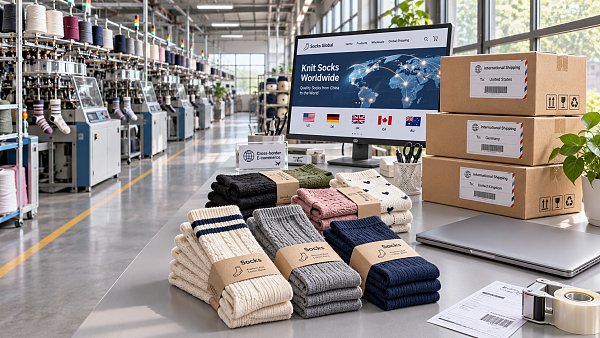
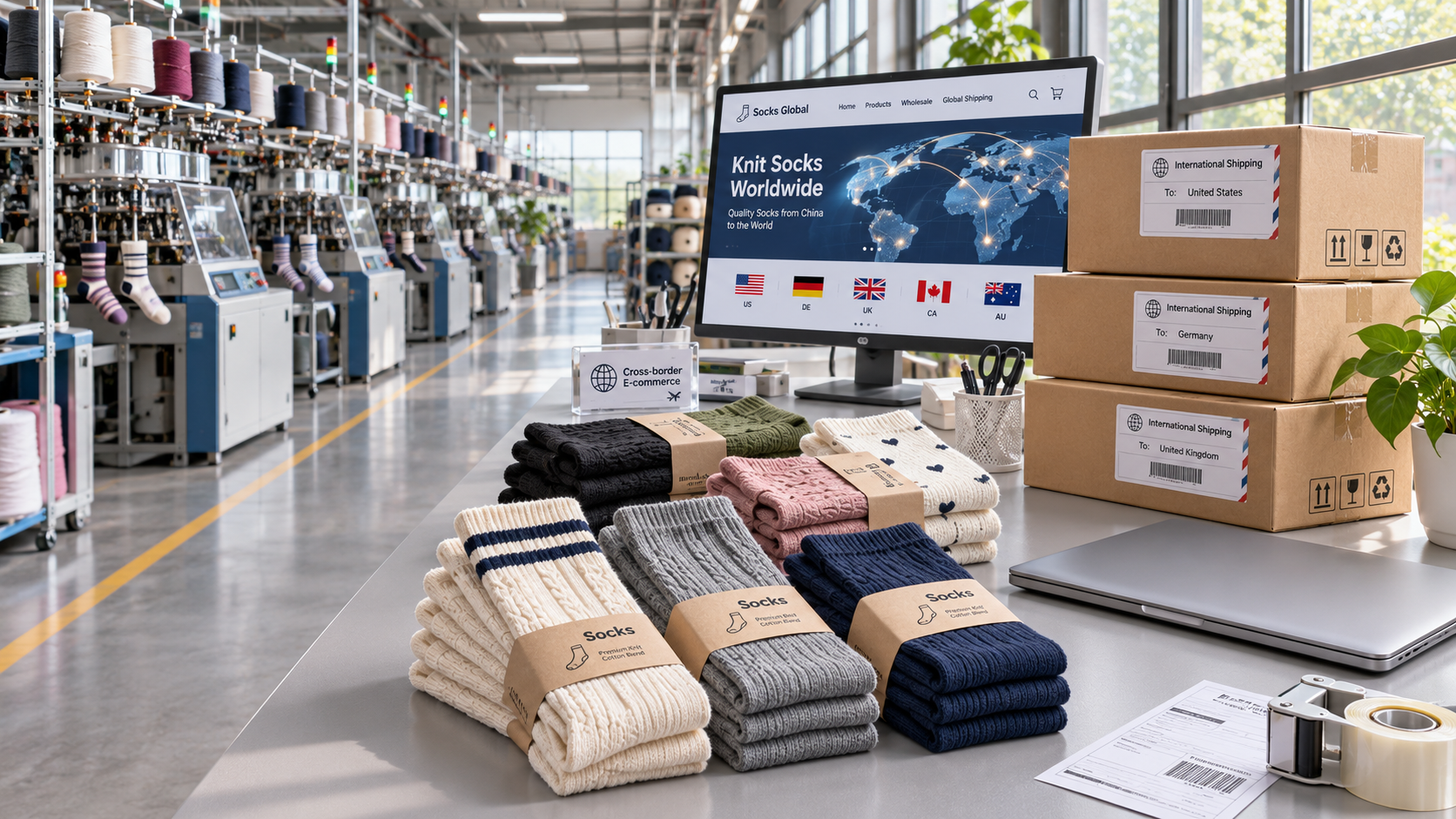
On November 28, 2026, the People’s Daily reported on page 05 that Liaoning Province is taking multiple measures to promote cross-border e-commerce. In Xiaobeihe Town, Liaoyang County, which has a history of sock manufacturing spanning more than 50 years, a growing number of businesses have launched cross-border e-commerce operations, selling their products directly to overseas consumers. According to the report, one business said that six months after launching its operations, its daily orders had stabilized at more than 100. Cross-border e-commerce sales had also increased profits and made business operations more convenient.
This case illustrates one way traditional industry clusters can expand their overseas sales channels. Building on the town’s established sock-manufacturing base, businesses are using digital channels to reach end consumers, extending their sales activities beyond production to include product presentation, order processing, and customer service.
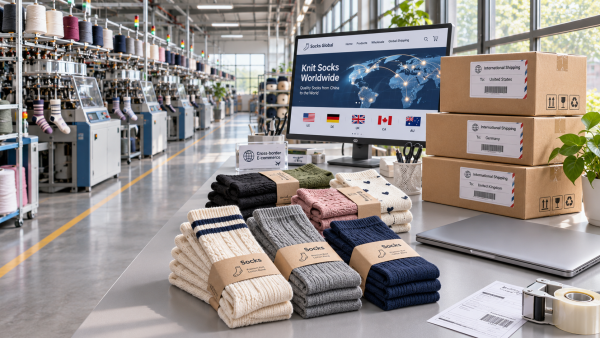
From Industry-Cluster Production to Direct-to-Consumer Sales
Xiaobeihe Town’s history of sock manufacturing and the launch of cross-border e-commerce operations by local businesses are two key points in understanding this case. The former reflects the town’s long-established manufacturing base, while the latter shows that businesses are exploring new sales methods. Together, these factors give industry-cluster businesses the opportunity to bring their existing products directly to overseas consumers.
The shift to direct sales involves more than a change in sales channels. When businesses sell to consumers, their operational needs also change: how product information is presented, how orders are coordinated with production and shipping, and how after-sales needs are handled can all become practical business concerns. For businesses that have traditionally focused mainly on production, whether digital channels can deliver ongoing results also depends on how well these activities align with existing production capabilities.
The more than 100 daily orders mentioned in the report offer a specific point of reference for examining the business’s cross-border e-commerce operations. This figure indicates that the business had reached a certain daily order volume six months after launching its operations. However, it reflects feedback from an individual business and cannot be taken as representative of all businesses in Xiaobeihe Town or used to estimate the overall scale of cross-border e-commerce there.
Beyond Higher Profits: Assessing the Capacity for Sustained Operations
The business reported an increase in profits, indicating that selling directly to overseas consumers has had a positive effect on its operations. For industry-cluster businesses, a change in sales channels may affect the stages between production and sales, as well as how much information businesses have about their orders. However, products, orders, and business arrangements vary from one business to another, so changes in profit should be understood in the context of each business’s circumstances.
Stable order volumes and long-term business growth should also be considered separately. Maintaining a certain level of daily orders can help businesses manage their day-to-day operations. Further business development, however, depends on whether orders can be sustained, production can be coordinated with delivery, and customer service and other activities can keep pace. The report presents the business’s performance at a particular stage after launching its operations, but is not sufficient to infer the scale of its long-term growth.
The report also reflects the progress made in promoting the integration of industry clusters and cross-border e-commerce. The example of Xiaobeihe Town offers a specific perspective: when an established industrial base is combined with online sales channels, manufacturers can explore more direct participation in overseas retail. The results of this approach across different industry clusters and businesses will need to be assessed in light of their respective product characteristics and operating conditions.
Going forward, it will be worth monitoring whether these businesses can sustain their order volumes and how other industry-cluster businesses perform after launching cross-border e-commerce operations. Compared with a one-time increase in orders, stable sales and lasting improvements in profitability may better demonstrate the channel’s long-term value to business operations.
Related Articles
 Four Annual Industry Reports Released at the 14th Digital Marketing Development Forum
 Sichuan Announces 2026 Provincial Cross-Border E-Commerce Parks; Two Chengdu Industrial Parks Selected
 People’s Daily Focuses on Liaoning Cross-Border E-Commerce: Xiaobeihe Hosiery Reaches Overseas Markets Through Digital Channels
Related Products
 Yiyingbao SaaS Intelligent Website Building and Marketing SystemYiyingbao SaaS Intelligent Website Building and Marketing System, AI-powered no-code website building, rapid creation of multilingual B2B international websites in 10 minutes, global server acceleration, AI-powered SEO optimization, helping businesses connect efficiently with global markets. The perfect integration of technology and operation makes building an international trade website remarkably simple
 AI+SEM Intelligent Advertising Marketing SystemAI+SEM drives intelligent ad creation, empowering full-funnel precision advertising marketing. The system automatically generates weekly/monthly reports, AI recommends keywords and target countries, monitors core metrics in real-time with intelligent alerts, and enables one-click high-conversion ad solutions to help quickly acquire customers and improve ROI.
 AI+SEO Dual-Engine System Optimization ServicesYiyingbao’s AI+SEO dual-engine optimization system helps foreign trade enterprises acquire high-quality organic traffic through AI-powered keyword research, content generation, and comprehensive technical optimization, significantly improving search rankings and conversion rates.
 AI+SNS Social Media Marketing SystemYingbao AI+SNS Social Media Marketing System - Precision social capture for the social media era. Supports one-click content synchronization across major platforms like Facebook and LinkedIn. AI intelligently rewrites posts for enhanced relevance. 24/7 AI customer service and user profiling analysis empower businesses to efficiently expand into global markets.
 AI+SEO营销解决方案易营宝AI+SEO营销解决方案,通过AI批量写作、智能生成TDK、精准关键词扩词等功能,全面优化网站SEO效果,提升流量与转化率。助力企业构建高效智能网站新生态。
 AI+SEM Advertising Marketing SolutionsAI+SEM Advertising Marketing Solution leverages AI technology to deeply empower SEM ad campaigns. It automatically generates weekly/monthly reports using AI, presenting account data across multiple dimensions for comprehensive insights into campaign performance and trends. The system precisely recommends keywords and target countries, intelligently generates high-conversion ad copy, and enables one-click activation of efficient campaign plans to help businesses rapidly acquire customers. Simultaneously, it monitors core metrics in real time, intelligently identifies abnormal fluctuations, and issues timely alerts to ensure stable, high-return advertising results.
 Domain Name ServicesEasyWin provides professional domain name services, including intelligent queries, one-stop registration, brand protection, and full lifecycle management, helping businesses build a digital brand image.
 EasyOperate B2C Cross-Border E-Commerce Platform & Independent WebsiteEasyStore B2C Cross-border E-commerce Independent Store is an intelligent website building and cross-border e-commerce integrated solution independently developed by EasyStore Information Technology (Beijing) Co., Ltd. The system is specially designed for small and medium-sized as well as large export enterprises, integrating 'website building, operation, marketing, advertising, and conversion' into one, helping enterprises quickly establish cross-border e-commerce independent stores to achieve brand globalization and global sales growth.
The platform supports multiple languages, multiple currencies, and multi-channel marketing, with built-in AI intelligent translation and SEO optimization systems, suitable for mainstream markets such as Southeast Asia, Europe and America, Latin America, and the Middle East, assisting Chinese manufacturing enterprises in efficiently deploying international e-commerce strategies. SSL证书易营宝提供专业SSL安全证书服务,包括单域名和泛域名证书,确保网站数据传输加密、身份验证和完整性保护,助力企业建立安全可信的在线业务环境。









