









- CBP Finalizes Electronic Rail Export Manifest Rule, Effective October 26, 2026Oct 26, 2026View details
- Amazon’s 2026 peak season surcharge takes effect on October 25Oct 26, 2026View details
- AI Is Eating SaaS: Three Real-World Cases in One AfternoonOct 25, 2026View details
- Exiger CEO: The SaaS Apocalypse Is Real, but It Means Something DifferentOct 25, 2026View details
- Hengqin Cooperation Zone Shares Cross-Border E-Commerce Developments, Focusing on Macao-Hengqin Collaboration and International MarketsOct 24, 2026View details
- A Shenyang study highlights the development of the “cross-border e-commerce + industrial cluster” modelOct 24, 2026View details
How should keyword placement be done for product page SEO optimization? Breakdown of title, specification section, and FAQ placement
Product Page SEO Keyword Layout: Why You Should Not Focus Only on the Title

How should you plan keyword layout for product page SEO optimization? Many people’s first reaction is to revise the title first.
But what truly affects indexing and conversion is often not the title alone, but the semantic distribution across the entire page.
Especially in an integrated website + marketing service scenario, a product page needs to be understandable to search engines while also helping visitors quickly assess its value.
This also means that product page SEO keyword layout must take ranking logic, reading paths, and conversion actions into account at the same time.
Judging from recent changes, search engines now place more emphasis on complete expression of the page topic.
If keywords only appear in the title while the body content provides weak support, page relevance is usually unstable.
A high-quality page often distributes the core terms across the title, specifications section, selling point modules, and FAQ.
The benefit is straightforward: it strengthens topical consistency and covers more long-tail searches.
For corporate websites, marketing-oriented websites, and independent sites that need continuous customer acquisition, this is a more stable approach.
Title Section: Define the Main Keyword First, Then Address Search Intent
The title section is the starting point of product page SEO keyword layout, but it is not the whole picture.
Here, you first need to answer one question: what search intent does the page actually want to match?
If users are looking for “how to do it,” the page should focus more on solutions and methods.
If users are looking for “which provider is better,” the page should strengthen capabilities, case studies, and delivery boundaries.
For the topic of this article, the core term is “product page SEO keyword layout.”
The title can revolve around the main term and add application scenario terms and question-based terms, but it should not be stuffed with repeated synonyms.
A more suitable structure is usually “core question + key area + result orientation.”
- Core question: how to do product page SEO keyword layout
- Key areas: title, specifications section, FAQ
- Result orientation: improve indexing and conversion
In actual business scenarios, the title section should also include a short introduction.
The introduction should not repeat the title, but supplement the specific problems the page aims to solve.
For example, explain that keyword layout should not only focus on the title, but also consider coordination between the specifications section and FAQ.
This allows both search engines and visitors to confirm the page topic more quickly.
Specifications Section: Often Overlooked, Yet Best Suited for Long-Tail Keywords
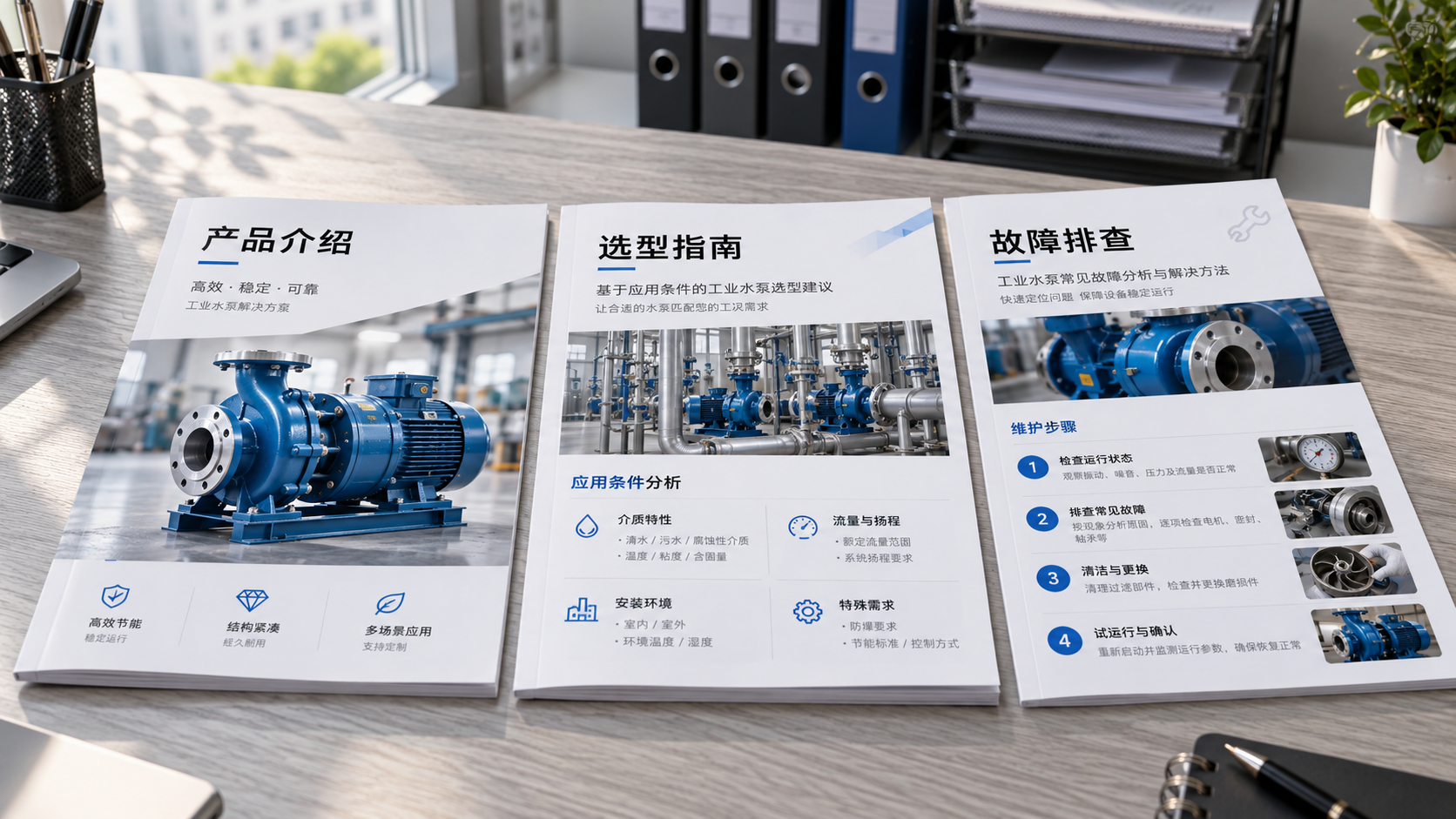
Many product pages have very thin specifications sections, listing only a few fields with insufficient informational value.
But from an SEO perspective, the specifications section is an important position for product page SEO keyword layout.
The reason is simple: this area is naturally suitable for functional terms, specification terms, scenario terms, and decision-making terms.
For example, if you provide intelligent website building services, you should not only write “website building.”
You can further break it down into expressions such as “multilingual website development,” “B2B foreign trade marketing website,” and “Google SEO optimization support.”
These terms are closer to real searches and also closer to the evaluation stage before a purchase decision.
When writing the specifications section, it is recommended to avoid simply listing items.
A more effective approach is to use clear field names and field values that carry search semantics.
This is beneficial for both crawling and readability.
Selling Point Module: Put Keywords into Benefit Statements Instead of Forcing in Nouns
If product page SEO keyword layout only stays at the field level, the page will feel very “stiff.”
At this point, the selling point module becomes the key area for balancing SEO and conversion.
The selling point module should not only describe features, but more importantly explain the results those features deliver.
For example, “AI+SEO/GEO optimization system” is a capability term.
But “help independent sites get indexed faster and improve visibility in AI search” is a result statement that users can understand.
When the two are combined, the keyword layout becomes more natural.
- First write the capability: what the product can do.
- Then write the scenario: who it is suitable for and where it is used.
- Finally write the result: what problem it solves.
For example, when targeting foreign trade companies, you can place “multilingual website development” and “overseas inquiry generation” in the same paragraph.
When targeting cross-border sellers, you can pair “cross-border e-commerce system” with “advertising landing page conversion.”
This way of writing is more likely to create a real context than simply repeating product page SEO keyword layout.
FAQ Section: Add Question-Oriented Terms and Capture More Search Entry Points
FAQ is often treated as after-sales information, but it is also a high-value area for product page SEO keyword layout.
This is because in real searches, a large number of queries are questions themselves.
For example, “how to arrange keywords on a product page,” “should SEO terms be included in the specifications section,” and “does FAQ affect indexing.”
If these questions are written into the FAQ in advance, the page can cover more long-tail entry points.
At the same time, FAQ can also reduce bounce rate.
The most common concerns users have before making a decision are often concentrated here.
- Must the core keyword appear in full?
- How many keywords are appropriate in the specifications section?
- Will the selling point module and FAQ overlap?
- How long does product page SEO keyword layout take to show results?
Answers should be short, but not empty.
It is best to use a question-and-answer format, including scenario terms and judgment criteria.
This helps understanding and also makes it easier to form crawlable structured content.
An Immediately Actionable Layout Method Suitable for Most Product Pages
If you want to put this into practice, you can proceed in the following order.
- First define 1 core term, such as product page SEO keyword layout.
- Then expand 5 to 8 long-tail terms covering the title, specifications, FAQ, and result terms.
- Organize 3 types of scenario terms, such as foreign trade customer acquisition, brand globalization, and cross-border e-commerce.
- Assign a task to each module to avoid having one area carry all the keywords.
- After publishing, observe indexed terms, dwell time, and conversion actions, then iterate.
There are three common risks here.
The first is an overloaded title that reads like a pile of tags.
The second is an empty specifications section that cannot support the page topic.
The third is an FAQ that only covers after-sales content and lacks search orientation.
As long as these three issues are corrected, the overall relevance of the page usually improves significantly.
Conclusion: Turn Keyword Layout into Page Structure, Not a Localized Action
Returning to the initial question: how should product page SEO keyword layout be done?
The answer is not to stuff keywords into a few prominent positions, but to make the entire page expand around the same topic.
The title defines the topic, the specifications section captures long-tail intent, the selling point module explains value, and the FAQ covers question-based searches.
Only when these areas work together can the page more easily achieve stable indexing and effective conversions.
For companies that need long-term overseas customer acquisition and digital marketing growth, this layout method has greater reusable value.
Start by breaking down one product page, then add keywords, scenarios, and questions by module. After reviewing data feedback, optimization will become more focused.
Related Articles
 How Can an SEO Content Strategy Prevent Keyword Cannibalization?
 Website Rankings Stuck on Page Two? How to Find Opportunities for Improvement
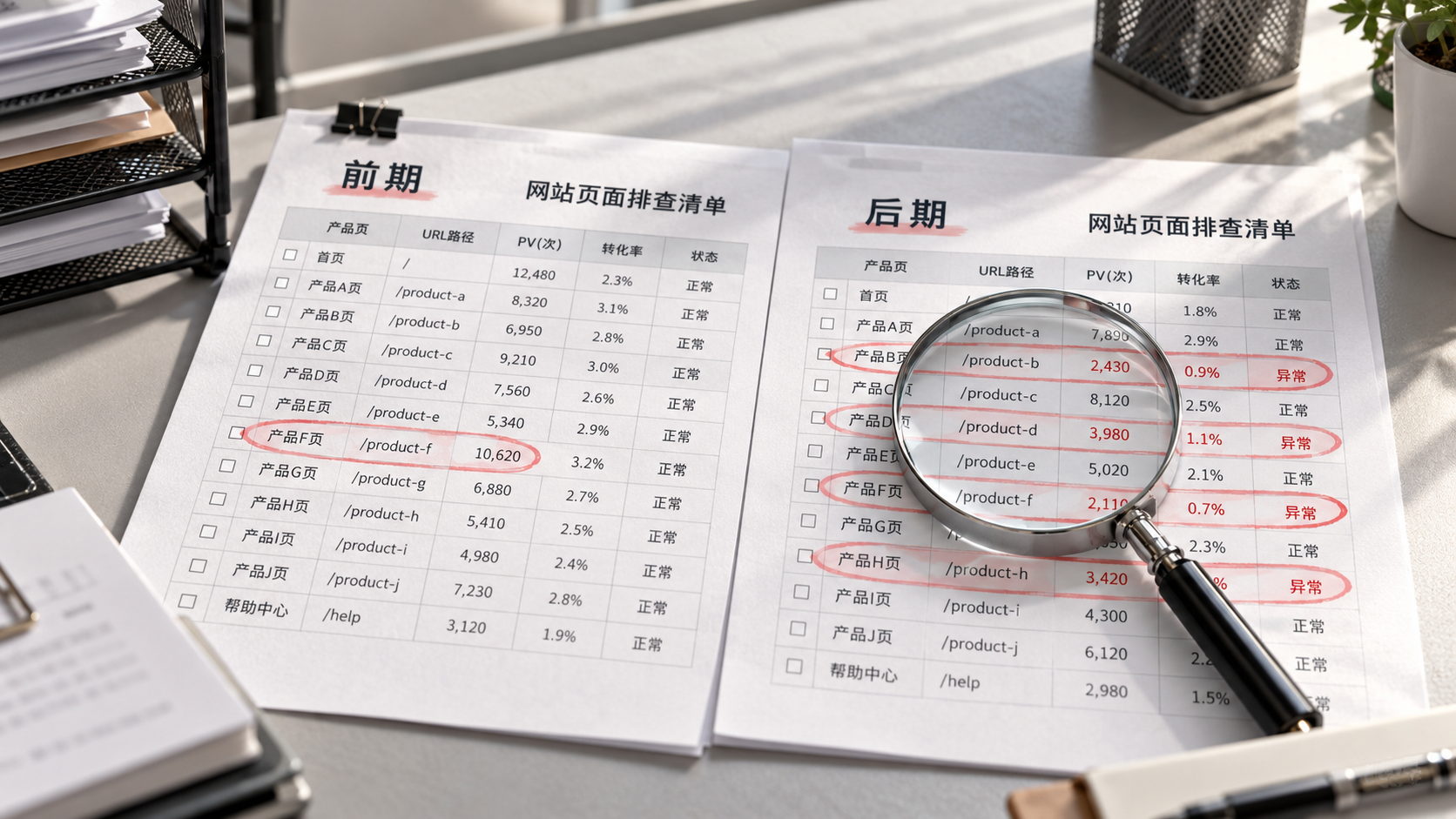
 SEO traffic suddenly dropped. How can you identify the affected pages?

Related Products
 Yiyingbao SaaS Intelligent Website Building and Marketing SystemYiyingbao SaaS Intelligent Website Building and Marketing System, AI-powered no-code website building, rapid creation of multilingual B2B international websites in 10 minutes, global server acceleration, AI-powered SEO optimization, helping businesses connect efficiently with global markets. The perfect integration of technology and operation makes building an international trade website remarkably simple
 AI+SEM Intelligent Advertising Marketing SystemAI+SEM drives intelligent ad creation, empowering full-funnel precision advertising marketing. The system automatically generates weekly/monthly reports, AI recommends keywords and target countries, monitors core metrics in real-time with intelligent alerts, and enables one-click high-conversion ad solutions to help quickly acquire customers and improve ROI.
 AI+SEO Dual-Engine System Optimization ServicesYiyingbao’s AI+SEO dual-engine optimization system helps foreign trade enterprises acquire high-quality organic traffic through AI-powered keyword research, content generation, and comprehensive technical optimization, significantly improving search rankings and conversion rates.
 AI+SNS Social Media Marketing SystemYingbao AI+SNS Social Media Marketing System - Precision social capture for the social media era. Supports one-click content synchronization across major platforms like Facebook and LinkedIn. AI intelligently rewrites posts for enhanced relevance. 24/7 AI customer service and user profiling analysis empower businesses to efficiently expand into global markets.
 AI+SEO营销解决方案易营宝AI+SEO营销解决方案,通过AI批量写作、智能生成TDK、精准关键词扩词等功能,全面优化网站SEO效果,提升流量与转化率。助力企业构建高效智能网站新生态。
 AI+SEM Advertising Marketing SolutionsAI+SEM Advertising Marketing Solution leverages AI technology to deeply empower SEM ad campaigns. It automatically generates weekly/monthly reports using AI, presenting account data across multiple dimensions for comprehensive insights into campaign performance and trends. The system precisely recommends keywords and target countries, intelligently generates high-conversion ad copy, and enables one-click activation of efficient campaign plans to help businesses rapidly acquire customers. Simultaneously, it monitors core metrics in real time, intelligently identifies abnormal fluctuations, and issues timely alerts to ensure stable, high-return advertising results.
 Domain Name ServicesEasyWin provides professional domain name services, including intelligent queries, one-stop registration, brand protection, and full lifecycle management, helping businesses build a digital brand image.
 EasyOperate B2C Cross-Border E-Commerce Platform & Independent WebsiteEasyStore B2C Cross-border E-commerce Independent Store is an intelligent website building and cross-border e-commerce integrated solution independently developed by EasyStore Information Technology (Beijing) Co., Ltd. The system is specially designed for small and medium-sized as well as large export enterprises, integrating 'website building, operation, marketing, advertising, and conversion' into one, helping enterprises quickly establish cross-border e-commerce independent stores to achieve brand globalization and global sales growth.
The platform supports multiple languages, multiple currencies, and multi-channel marketing, with built-in AI intelligent translation and SEO optimization systems, suitable for mainstream markets such as Southeast Asia, Europe and America, Latin America, and the Middle East, assisting Chinese manufacturing enterprises in efficiently deploying international e-commerce strategies. SSL证书易营宝提供专业SSL安全证书服务,包括单域名和泛域名证书,确保网站数据传输加密、身份验证和完整性保护,助力企业建立安全可信的在线业务环境。









