


I. Definition and Core Value of Cross-Border E-Commerce Stores
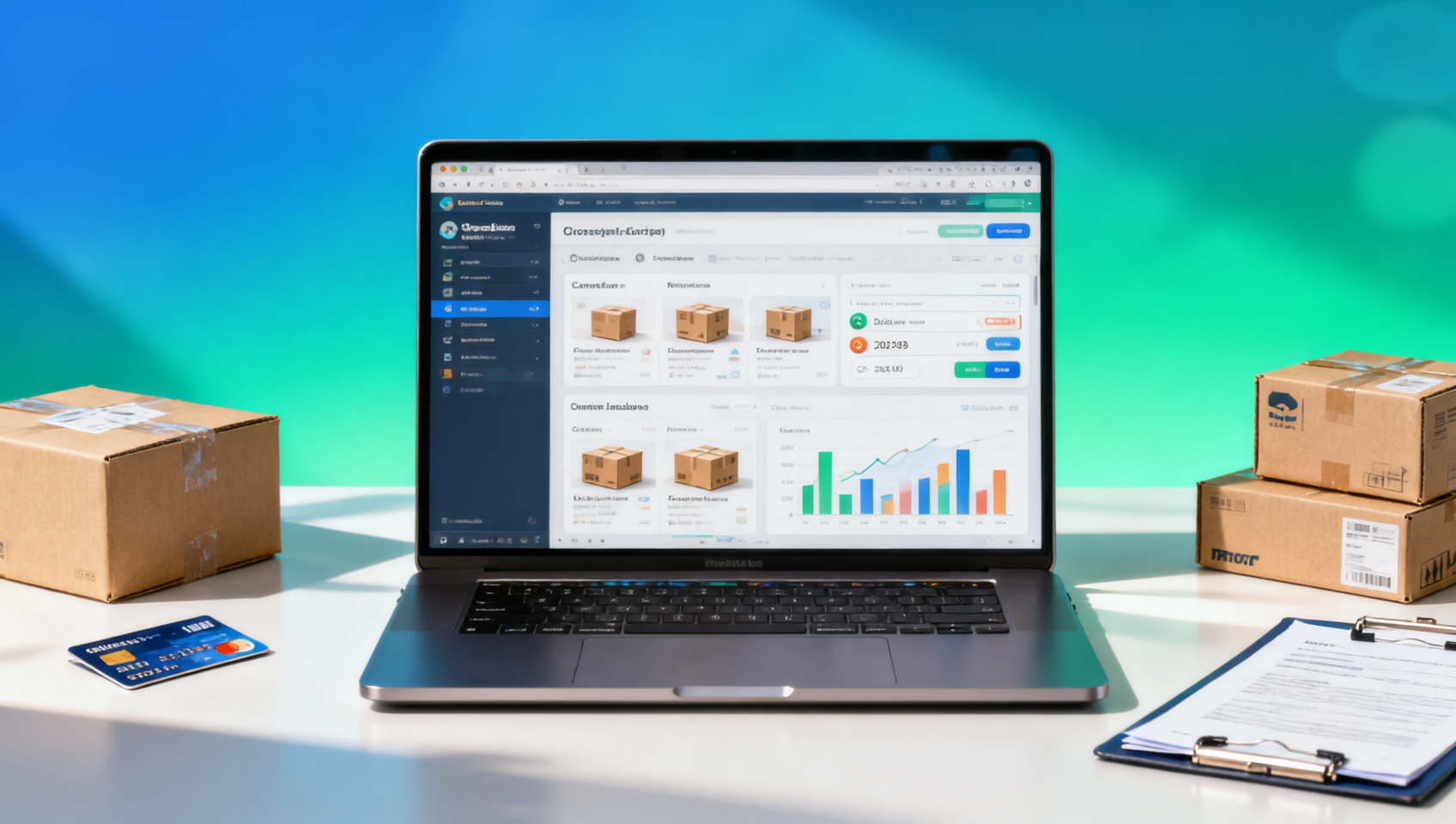
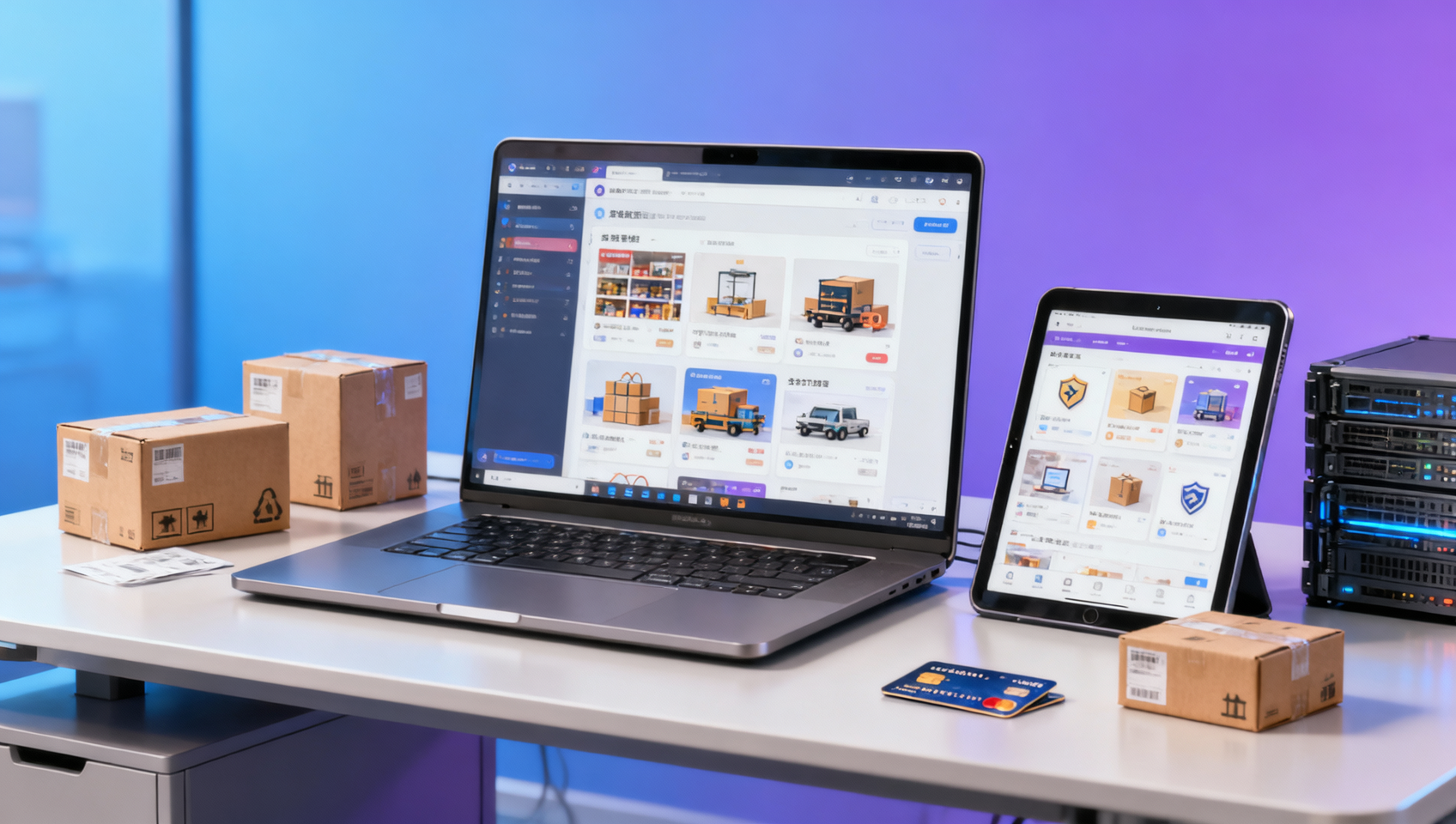
A cross-border e-commerce store is essentially an online transaction and brand operations platform for overseas markets. It not only displays products, but also receives traffic from search engines, advertising, social media, and repeat customers, while facilitating inquiries, orders, payments, or quote conversions.
Compared with traditional foreign trade websites, cross-border e-commerce stores place greater emphasis on product structure, shopping processes, pricing systems, multilingual content, and marketing coordination. For businesses, they are not merely websites, but long-term gateways for accumulating overseas customer assets, content assets, and data assets.
In 2026, the importance of cross-border e-commerce stores will continue to grow. As platform traffic costs rise and rules change frequently, more businesses hope to establish their own channels to reduce dependence on a single platform while enhancing brand bargaining power and sustainable customer management capabilities.
For B2B companies, cross-border e-commerce stores can also accommodate inquiry and quotation processes. For B2C companies, greater emphasis is placed on the shopping cart, order, and payment experience. The common goal of both models is to bring overseas traffic into a controllable conversion loop.
II. Main Models of Cross-Border E-Commerce Stores and Applicable Businesses
From a business model perspective, cross-border e-commerce stores are mainly divided into B2C retail stores, B2B catalog and inquiry stores, DTC brand stores, and hybrid stores. Before initiating a project, businesses should first determine who their target customers are, how long the transaction process is, whether online payment is required, and whether regional pricing strategies are needed.
B2C retail stores are suitable for cross-border e-commerce sellers, consumer brands, and businesses with relatively standardized SKUs. These stores typically require complete product details, promotional mechanisms, shopping carts, order management, and ordering experiences across multiple devices, with a focus on conversion efficiency and repeat purchases.
B2B catalog and inquiry stores are more common among manufacturing factories, equipment companies, industrial product suppliers, and OEM/ODM companies. Online payment is not necessarily the core of this type of cross-border e-commerce store. Instead, it supports overseas purchasing decisions through product categories, parameter descriptions, qualification pages, and inquiry forms.
DTC brand stores emphasize brand stories, user reviews, content marketing, and social media coordination, making them suitable for brands seeking to break free from the constraints of third-party platforms. Hybrid stores combine product presentation, quotation requests, and online transactions, making them more suitable for businesses expanding overseas with complex product lines and diverse market segments.
III. Technical Structure and Development Process of Cross-Border E-Commerce Stores
A cross-border e-commerce store designed for sustainable operations generally consists of a front-end presentation layer, content management layer, product management layer, marketing conversion layer, and data analysis layer. The front end is responsible for the user experience, the back end handles content maintenance, and the marketing layer determines whether traffic can be converted efficiently after it arrives.
A standard development process generally includes market positioning, keyword research, website architecture planning, page prototype design, product and content entry, multilingual deployment, basic optimization, testing and launch, and subsequent operations. The clearer the process, the lower the cost of rework later.
At the technical level, responsive architecture, compatibility across multiple devices, page loading speed, URL structure, on-site search, SSL security, and global access stability are all fundamental capabilities. If a cross-border e-commerce store has a slow above-the-fold area or a disorganized structure, it will be difficult to achieve an ideal return even with advertising.
For example, Yiyingbao’s AI-powered website-building system supports the coordinated development of multilingual independent websites, B2C cross-border e-commerce stores, and B2B marketing websites, making it suitable for businesses without technical teams to launch quickly. For companies that need to integrate website development, content generation, and marketing execution, this type of integrated solution makes it easier to create a closed loop.
IV. Selection Criteria: How Should Businesses Determine the Right Cross-Border E-Commerce Store?
When selecting a solution, the first criterion is not having as many functions as possible, but whether it matches the business at its current stage. Businesses should first clarify their target markets, number of website languages, SKU scale, promotion channels, and conversion methods, and then determine whether they need SaaS website development, custom development, or semi-customized deployment.
The second key criterion is the foundation for content and SEO. If a cross-border e-commerce store cannot flexibly manage sections, product pages, article pages, title descriptions, and internal linking structures, the growth of organic traffic will be constrained. For multilingual websites in particular, businesses should also check whether the system supports language paths and localized page management.
The third criterion is marketing coordination capability. Businesses should not view a cross-border e-commerce store merely as a website development project. Instead, they should consider whether it can receive traffic from Google Search, advertising, Facebook, and TikTok, and whether it can connect inquiries, customer service, and data analysis.
The fourth criterion is the service team’s industry knowledge. Yiyingbao has long served industries including manufacturing, machinery, new energy, chemicals, agriculture, healthcare, and furniture, covering not only website development but also SEO, SEM, social media, and operational growth. For B2B companies expanding overseas, this type of industry experience is more important than template functions alone.
V. Who Needs Cross-Border E-Commerce Stores More: Typical Application Scenarios and Decision-Making Groups
The first type of business with the greatest need for a cross-border e-commerce store is a cross-border seller seeking to move from platform-based sales to brand operations. These businesses often already have a certain order base, but are constrained by platform commissions, changing rules, and the inability to retain customer data. They urgently need to establish an independent traffic channel.
The second type is manufacturing factories and foreign trade companies. They typically have advantages in products, supply chains, and delivery, but lack the digital presentation and inquiry management capabilities needed to serve overseas buyers. A cross-border e-commerce store can organize factory capabilities, product systems, and case materials into a structure that is more conducive to closing deals.
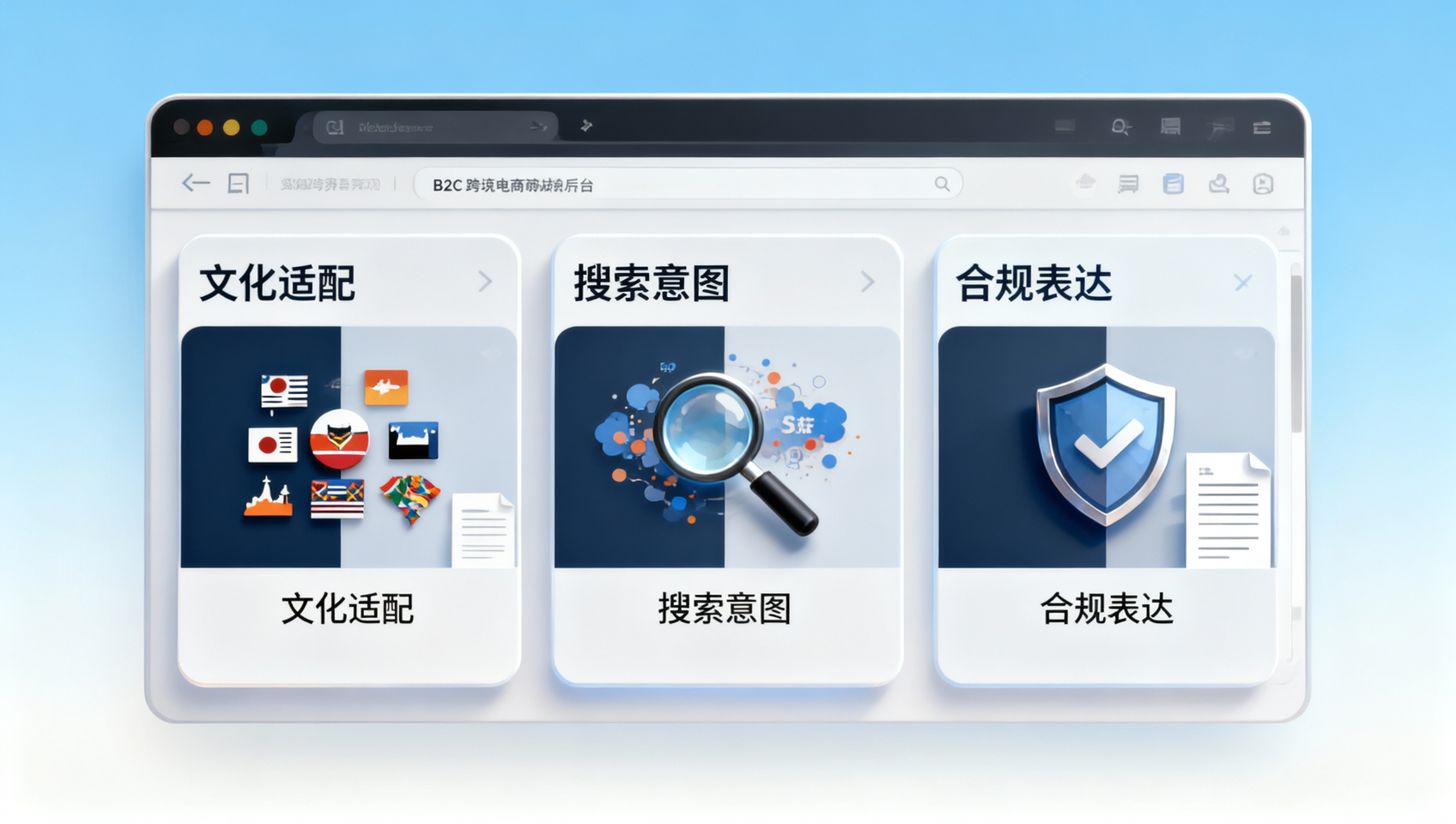
The third type is businesses targeting multiple markets. If a company serves English-, Russian-, Arabic-, Spanish-, or Japanese-speaking markets at the same time, a single-language website can no longer adequately support growth. A multilingual cross-border e-commerce store can help improve the local reading experience and search visibility in different national markets.
In terms of decision-making roles, business owners focus on the return on investment, foreign trade managers focus on inquiry quality, operations teams focus on content maintenance efficiency, and marketing teams focus on traffic conversion. A mature cross-border e-commerce store solution needs to address the core concerns of all these roles at the same time.
VI. How Overseas Marketing Can Coordinate with a Cross-Border E-Commerce Store
Many businesses achieve only average results after building a cross-border e-commerce store. The problem is usually not whether the pages look attractive, but whether a complete customer acquisition loop has been established. The truly effective approach is to coordinate the store with Google SEO, Google Ads, social media content, and remarketing activities rather than allowing it to exist in isolation.
Organic search is suitable for accumulating long-term traffic, advertising is suitable for cold-starting a new website and breaking into key markets, and social media platforms such as Facebook, LinkedIn, and TikTok are more suitable for brand reach and secondary education. The cross-border e-commerce store handles the final reception and conversion of traffic, and all three are indispensable.
Yiyingbao’s advantage in this area is that it integrates AI website development, multilingual content, SEO optimization, advertising, and social media operations into the same service chain. Businesses do not need to coordinate with multiple suppliers separately, making it easier to unify data standards, content strategies, and conversion objectives.
For businesses with limited budgets, it is recommended to first define the primary target market and core products, and then develop content and advertising around key pages. Compared with spreading efforts evenly, testing multiple channels around one clear product category and country generally makes it easier to validate the actual conversion capability of a cross-border e-commerce store.
VII. Cost Structure, TCO, and ROI Evaluation Methods
From a procurement perspective, the total cost of ownership of a cross-border e-commerce store includes not only website development fees, but also domain names, servers, SSL certificates, multilingual content, page maintenance, SEO, advertising, social media operations, and personnel coordination costs. Looking only at the initial website development price can easily lead to incorrect conclusions.
If a business chooses fully customized development, its initial investment and communication cycle are generally higher, while subsequent iterations also depend on the technical team. A mature SaaS or semi-customized system is often more suitable for small and medium-sized businesses expanding overseas that want to launch quickly, update continuously, and control their budgets.
When evaluating ROI, businesses should not look only at traffic. They should also consider the number of qualified inquiries, order conversion rate, customer acquisition cost, and contribution from repeat purchases. For B2B companies, the value of a high-quality inquiry is generally much greater than that of an ordinary click, making content professionalism and trust signals particularly important.
The value of Yiyingbao’s one-stop model lies in reducing system fragmentation, repetitive content development, and coordination losses among multiple teams. For businesses without overseas digital teams, this model often offers greater practical value in terms of time costs, execution efficiency, and subsequent operational continuity.
VIII. Cross-Border E-Commerce Store Trends and Implementation Recommendations for 2026
In 2026, cross-border e-commerce stores will place greater emphasis on multilingual capabilities, localization, intelligent content generation, and visibility in AI search. Businesses will no longer compete only for traditional search rankings, but will also need to consider whether their content can be easily understood, cited, and recommended by intelligent question-answering systems.
The second trend is the further integration of website development and marketing. In the past, many projects stopped at launch delivery. Today, businesses are paying greater attention to traffic, inquiries, and conversion results after launch. Teams capable of providing website development, SEO, advertising, social media, and operations services at the same time will have increasingly clear advantages.
The third trend is the specialization of industry content. Whether the business involves machinery and equipment, chemical materials, medical devices, or new energy, a cross-border e-commerce store needs more in-depth product descriptions, application scenarios, case materials, and FAQ structures to support comparison and evaluation by customers with high decision-making costs.
For businesses preparing to develop a cross-border e-commerce store, it is recommended to proceed in the order of first defining the positioning, then building the website, promoting it afterward, and continuing with operations. To shorten the trial-and-error cycle, businesses can prioritize Yiyingbao solutions with experience in AI website development, multilingual deployment, overseas marketing, and operational growth, and quickly transform website assets into sustainable overseas customer acquisition capabilities.
 What are the core functions of an AI marketing system? Linear scoring, automated follow-up, and data attribution analysisWhat are the core functions of an AI marketing system? This article focuses on linear scoring, automated follow-up, and data attribution, and explains how to identify high-value customers, improve conversion efficiency, and optimize ad returns in a website+marketing integrated scenario, helping businesses achieve growth faster.
 Why is a B2C cross-border e-commerce store converting poorly? From payment experience to trust design, review each item step by stepWhy is a B2C cross-border e-commerce store converting poorly? Don’t just focus on traffic. Review payment experience, trust design, checkout process, localization, and product page copy to quickly identify why orders are being lost and improve conversion rates.
 Where to Start with Google SEO Optimization? Foreign Trade Website Keyword Layout and Indexing StrategyWhere to Start with Google SEO Optimization? This article focuses on foreign trade website keyword layout and indexing strategy, guiding you to first diagnose the technical foundation, then plan page hierarchy and content alignment to improve indexing, rankings, and inquiry conversion.
 What Should You Pay Attention to in Responsive Website Development? Page Adaptation, Speed and SEO Key PointsWhat Should You Pay Attention to in Responsive Website Development? This article focuses on page adaptation, loading speed and SEO key points, and explains the multi-device display, multilingual support and conversion optimization approach to help enterprise websites balance search visibility, user experience and lead generation results.
 What functions are needed for cross-border store development? Products, payment, and logistics configuration listWhat core functions should cross-border store development have? This article summarizes product management, payment collection, logistics fulfillment, marketing conversion, and backend configuration lists, helping businesses avoid detours and quickly build a cross-border store that is ready to operate, promote, and convert.
 Website data analysis: Which core metrics should be examinedWebsite data analysis: Which core metrics should be examined? From traffic sources, bounce rate, and time on site to conversion rate and technical performance, quickly understand the growth logic behind the data and help companies optimize website and integrated marketing service lead generation results.
 What risks can an expired SSL certificate bring?What risks can an expired SSL certificate bring? Not only can it trigger browser security warnings, but it may also lead to customer loss, form interruptions, SEO fluctuations, and a decline in brand trust. Understanding the key risks and preventive measures helps ensure stable website traffic acquisition and conversions.
 What determines B2C cross-border e-commerce website development costs? A breakdown of features, interfaces, and deployment methodsWhat determines B2C cross-border e-commerce website development costs? From feature complexity, payment, logistics and tax interfaces to SaaS or custom deployment, a comprehensive breakdown of cost differences to help enterprises budget more accurately, control risks, and improve conversions