









- Levanta’s Inaugural China Summit Held in Shenzhen, Focusing on AI and Cross-Border Brand GrowthOct 20, 2026View details
- The October Edition of the 2026 GGE Shenzhen Cross-Border E-Commerce Expo OpensOct 20, 2026View details
- Dongguan’s foreign trade imports and exports reached RMB 1.29 trillion in the first three quarters, a record high for the same periodOct 20, 2026View details
- Liaoning Holds Province-Wide Meeting to Advance Cross-Border E-Commerce, Emphasizing the Need to Explore Differentiated Development PathsOct 20, 2026View details
- Advanced Manufacturing Seizes Global Opportunities as Guangdong’s Q3 Foreign Trade Surpasses RMB 3 Trillion for the First TimeOct 20, 2026View details
- Can the average annual growth rate reflect real opportunities in overseas markets?Oct 07, 2026View details
How can B2B website SEO structure optimization shorten the click path to product pages?
Product pages are buried too deep, making them hard for customers to find and potentially difficult for search engines to discover fully. The key to optimizing a B2B website’s SEO structure is not to put every product on the homepage, but to start with navigation, categories, and internal links. This helps buyers find products by following familiar selection logic and gives important pages stable, crawlable entry points.
This is especially true for export websites selling industrial equipment and components, where products are often organized by business unit or internal model number. The structure may seem clear to the company, but overseas buyers may not know which category to click. To shorten the click path, first change the structure that makes people find products according to the company’s internal organization.
Check Entry Points Before Changing URLs
Click depth and URL directory depth are not the same thing. A product page with a short-looking URL still lacks an effective entry point if it can only be found through the site search. A page with a longer directory path is not necessarily hard to access if it has clear category links. Avoid changing URLs in bulk just to make them “flatter,” as this can create migration risks for existing pages.
Start by selecting featured products, products that already receive organic traffic, and new products that need promotion. Then follow the routes to them from the homepage, product center, and industry solution pages. Record the number of clicks and whether users must search, change filters, or browse through multiple pages. Next, use a website crawler to check link depth and identify orphan pages with no internal links pointing to them.
You can set a design goal of making core products reachable from the homepage in about two or three clicks, but this is not a strict search-engine ranking requirement. More important than the number of clicks is whether each step matches how buyers make decisions.
Navigation Directs Buyers; Category Pages Help Them Choose
The main navigation should prioritize major product categories buyers recognize, rather than internal labels such as “Business Unit 1” or “Integrated Business.” If you have many product lines, you can use grouped menus, but avoid displaying every model. Be sure to test the mobile experience in particular: a menu with multiple nested levels can be cumbersome in practice, even if it works well on desktop.
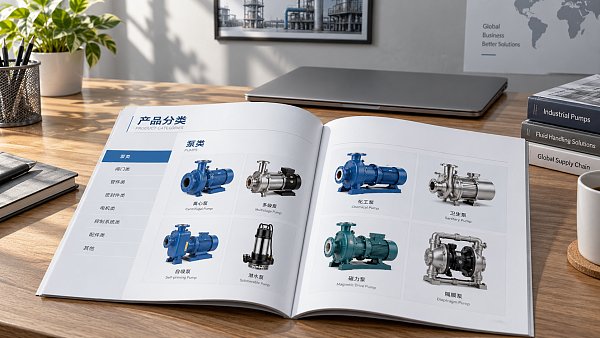
A category page should be more than a collection of product thumbnails. For example, pump buyers may filter by the fluid handled, material, or operating conditions rather than starting with a model number. The page should show enough key specifications to distinguish products and provide clickable product names, so users can make an initial assessment without opening each product detail page.
You could change the structure from “Homepage → Product Center → Business Category → Series → Model” to “Homepage → Core Product Category → Specific Product.” However, this does not mean that all series pages should be removed. Keep series pages that provide distinct selection value and explain differences between models; only merge intermediate levels that have different names but duplicate content.
Link Solution Pages and Technical Content Directly to Products
B2B customers may not enter your website through the homepage. They might first read an article comparing materials or an industry application solution. If the only option at the end of the page is “Contact Us,” they have to return to the product center and search again. A more practical approach is to link to the relevant series or specific product near the point where buyers are making a selection, and explain the applicable conditions.
For example, if the content discusses requirements for transporting corrosive fluids, link to products that meet those requirements rather than adding a generic “Learn More” link. Make the link text clear about the product category or application. If suitability is uncertain, state that parameters such as the fluid and temperature need to be verified, so the internal link does not mislead users.
Product pages should also include breadcrumbs that link back to the category, along with links to genuinely related accessories, alternative models, or selection guides. Do not make random recommendations in the “Related Products” section or group incompatible products together. A short path does not mean more links; it means making the next step useful.
Being Clickable Does Not Guarantee Reliable Crawling
After restructuring, check that navigation, product cards, and pagination use links with valid URLs. Do not rely solely on click scripts or infinite scrolling to load additional products. A sitemap can help search engines discover URLs, but it cannot replace internal links between category and product pages.
Faceted navigation also requires careful decisions. Freely combining material, size, and application filters may generate many similar URLs. You can consider creating dedicated landing pages for combinations that address clear needs and have distinct content. Other combinations can generally remain as filters; canonicalization and crawling strategies should be determined based on the existing system. Multilingual sites should also be checked to ensure that switching languages leads to the corresponding page rather than always returning users to the homepage.
After Launch, Test the Paths—not Just the Page Design
Keep a list of featured products as a test sample, and compare click depth, orphan pages, broken links, and visits from category pages to product pages before and after the changes. B2B inquiries often involve long decision cycles, so it is not advisable to judge success based only on inquiry volume in the first few days after launch. Product reachability and the indexing status of key pages are more useful metrics to monitor initially.
For companies using integrated website-building and marketing services such as 易营宝, category planning, template-based internal links, and promotional landing pages can be reviewed together in the same round of requirements planning. 易营宝 provides intelligent website building, multilingual websites, and SEO services. In practice, the company still needs to provide its featured products, the terms buyers use, and product selection parameters; automatically generated categories should not replace business judgment.
Testing changes on one product line is usually a better way to uncover problems than rebuilding the entire site. Ask a colleague unfamiliar with the website structure to find a product based on a specific purchasing need. If they still have to keep going back, guess which category to choose, or rely on search, continue adjusting the entry points instead of adding another layer of explanation.
Related Articles

Related Products
 Yiyingbao SaaS Intelligent Website Building and Marketing SystemYiyingbao SaaS Intelligent Website Building and Marketing System, AI-powered no-code website building, rapid creation of multilingual B2B international websites in 10 minutes, global server acceleration, AI-powered SEO optimization, helping businesses connect efficiently with global markets. The perfect integration of technology and operation makes building an international trade website remarkably simple
 AI+SEM Intelligent Advertising Marketing SystemAI+SEM drives intelligent ad creation, empowering full-funnel precision advertising marketing. The system automatically generates weekly/monthly reports, AI recommends keywords and target countries, monitors core metrics in real-time with intelligent alerts, and enables one-click high-conversion ad solutions to help quickly acquire customers and improve ROI.
 AI+SEO Dual-Engine System Optimization ServicesYiyingbao’s AI+SEO dual-engine optimization system helps foreign trade enterprises acquire high-quality organic traffic through AI-powered keyword research, content generation, and comprehensive technical optimization, significantly improving search rankings and conversion rates.
 AI+SNS Social Media Marketing SystemYingbao AI+SNS Social Media Marketing System - Precision social capture for the social media era. Supports one-click content synchronization across major platforms like Facebook and LinkedIn. AI intelligently rewrites posts for enhanced relevance. 24/7 AI customer service and user profiling analysis empower businesses to efficiently expand into global markets.
 AI+SEO营销解决方案易营宝AI+SEO营销解决方案,通过AI批量写作、智能生成TDK、精准关键词扩词等功能,全面优化网站SEO效果,提升流量与转化率。助力企业构建高效智能网站新生态。
 AI+SEM Advertising Marketing SolutionsAI+SEM Advertising Marketing Solution leverages AI technology to deeply empower SEM ad campaigns. It automatically generates weekly/monthly reports using AI, presenting account data across multiple dimensions for comprehensive insights into campaign performance and trends. The system precisely recommends keywords and target countries, intelligently generates high-conversion ad copy, and enables one-click activation of efficient campaign plans to help businesses rapidly acquire customers. Simultaneously, it monitors core metrics in real time, intelligently identifies abnormal fluctuations, and issues timely alerts to ensure stable, high-return advertising results.
 Domain Name ServicesEasyWin provides professional domain name services, including intelligent queries, one-stop registration, brand protection, and full lifecycle management, helping businesses build a digital brand image.
 EasyOperate B2C Cross-Border E-Commerce Platform & Independent WebsiteEasyStore B2C Cross-border E-commerce Independent Store is an intelligent website building and cross-border e-commerce integrated solution independently developed by EasyStore Information Technology (Beijing) Co., Ltd. The system is specially designed for small and medium-sized as well as large export enterprises, integrating 'website building, operation, marketing, advertising, and conversion' into one, helping enterprises quickly establish cross-border e-commerce independent stores to achieve brand globalization and global sales growth.
The platform supports multiple languages, multiple currencies, and multi-channel marketing, with built-in AI intelligent translation and SEO optimization systems, suitable for mainstream markets such as Southeast Asia, Europe and America, Latin America, and the Middle East, assisting Chinese manufacturing enterprises in efficiently deploying international e-commerce strategies. SSL证书易营宝提供专业SSL安全证书服务,包括单域名和泛域名证书,确保网站数据传输加密、身份验证和完整性保护,助力企业建立安全可信的在线业务环境。









