









- Can the average annual growth rate reflect real opportunities in overseas markets?Oct 07, 2026View details
- Which customer acquisition channels will be affected by cross-border marketing trends in 2026?Sep 06, 2026View details
- Which homogenization risks should be considered in an analysis of the AI-powered website building industry?Aug 30, 2026View details
- How Will AI Marketing Trends 2026 Change Advertising Budget AllocationAug 28, 2026View details
- Is the EV SSL certificate market shrinking or upgrading? How should companies assess certificate procurement?Aug 11, 2026View details
- Why the old AMP SEO 2020 practices no longer work and what has changed in current optimization prioritiesAug 02, 2026View details
Is GEO operations more suitable for B2B or B2C companies?
When many companies begin exploring AI search and generative answer distribution, they often start with a very direct question: Is GEO operations more suitable for B2B companies, or is it a better fit for B2C? On the surface, this seems like an either-or choice. However, anyone who has worked on overseas customer acquisition knows that results are not determined by the business label itself, but by how customers search, compare, and make decisions, as well as whether your content can enter these decision-making stages.
If we give the conclusion first: GEO is not inherently oriented toward B2B or B2C. Instead, it is more suitable for business models involving complex information, high selection barriers, and a need for explanation. From this perspective, B2B is generally more likely to generate deep value, while B2C relies more on scenario-based content, brand communication, and distribution efficiency. Both can benefit from GEO, but the approaches are by no means the same.
Before Taking Sides, Understand What GEO Actually Optimizes
GEO can generally be understood as content optimization for generative engines and AI search results. It is related to traditional SEO, but the focus is not exactly the same. SEO places greater emphasis on a webpage’s ranking and clicks in search results, while GEO focuses more on whether your brand, product information, professional viewpoints, and answers to use-case questions can be identified, cited, and summarized by AI systems, or even appear as part of a “recommended answer.”
This means that GEO operations are not simply about writing a few articles or embedding a few keywords. They are more like building a content system that can be understood by machines and trusted by users. This includes website structure, product-page messaging, case-study logic, FAQ systems, consistency across multilingual content, and the credibility of information across platforms.
This is particularly important for the integrated website and marketing services industry. Companies are not seeking exposure alone; they ultimately want to generate inquiries, leads, purchases, and repeat purchases, or ensure that overseas customers repeatedly encounter consistent brand information across different channels. The value of GEO lies precisely in this transition from “being seen” to “being understood.”
Why B2B Is Generally Better Suited to GEO Operations
B2B businesses often share several characteristics: slow decision-making, long decision chains, and numerous questions. Customers do not place an order immediately because of a short advertisement. Instead, they repeatedly search for answers to questions such as “How should I choose a supplier?”, “What are the differences between these solutions?”, “How can delivery capabilities be evaluated?”, “Which national standards are applicable?”, and “Can customization be supported?” These questions are naturally suited to being addressed through GEO.
In other words, B2B customers are not simply searching for a product keyword. They are looking for an “explanation they can trust.” The emergence of AI search and generative answers is bringing this type of explanatory content to the forefront.
For example, an export-oriented manufacturing website may previously have focused only on product pages and inquiry forms. Today, however, customers may first ask in AI search: “What applications are suitable for this type of industrial component?”, “What are the differences between Chinese suppliers and local suppliers?”, or “Is low-volume customization feasible?” If a company has already explained these questions clearly on its website, in knowledge content, case descriptions, and technical documentation, GEO is more likely to deliver results.
This is also why many B2B companies achieve more stable-than-expected results with GEO. It is not because they are more “advanced,” but because they already possess substantial content assets that are suitable for being structured, explained, and converted into answers.
B2B Companies Typically Have Three Advantages When Implementing GEO
First, high professional content density. Product specifications, industry standards, procurement advice, and solution comparisons are exactly the types of information that AI can easily extract and organize.
Second, an abundance of long-tail questions. B2B searches may not generate massive traffic, but they often carry clear intent. The quality of business opportunities behind the searches “How can a multilingual export website increase inquiries?” and “Affordable website templates” is entirely different.
Third, a long pre-purchase education period. Customers encounter content during multiple rounds of comparison. GEO can continuously influence their perception rather than relying on a single click to drive conversion.
B2C Can Also Benefit from GEO, but the Focus Is Completely Different
Saying that B2B is more suitable does not mean that B2C is unsuitable. In fact, many cross-border brands, independent-store sellers, and niche consumer-product businesses also have significant opportunities with GEO. The difference is that B2C users’ search behavior is more fragmented, and their content triggers are more emotional.
B2C consumers do not always ask, “Which one is the best?” They more often ask, “Is this right for me?”, “How should I use or match it?”, “Is it worth buying?”, “What alternatives are available?”, or “How should a beginner choose?” These questions are also suitable for generative answers, but the content should be less reliant on industry jargon and more closely connected to everyday use cases.
Take a cross-border independent website as an example. Simply filling product detail pages with information often makes it difficult to establish sufficient brand visibility in AI search. In contrast, websites that create content around usage methods, style matching, purchasing advice, comparison lists, and common misconceptions are more likely to be recognized as sources that “can answer questions.”
Therefore, a more accurate answer to the question “Is GEO operations more suitable for B2B companies, or is it a better fit for B2C?” is this: B2B is better suited to using GEO to build professional trust, while B2C is better suited to using GEO to capture entry points in consumer decision-making. Their value is different, and it is not enough to consider only which one can gain traction more quickly.
The Real Difference Maker Is Not the Sector, but the Content Structure
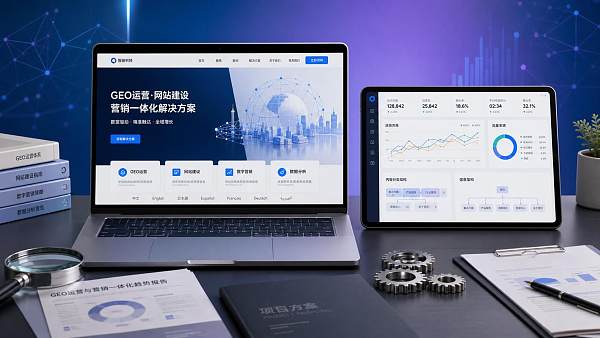
Many companies mistakenly believe that creating an English website and updating a blog means they have entered the GEO stage. In reality, GEO places greater emphasis on whether content forms an “understandable network.” If website information is scattered, pages are disconnected, product pages contain only brief introductions, case-study pages lack background information, and FAQs consist merely of vague questions and answers, then even a large amount of content may not be easy for AI to cite.
This is where the key difference between B2B and B2C becomes clear.
B2B needs a “problem–solution–evidence” structure. For example: What challenge does the customer face? Why are conventional solutions insufficient? How does your product or service solve the problem? Which regions or industries is it suitable for? What should be considered during delivery? This structure is not only beneficial for human readers, but also makes it easier for search engines and generative systems to extract core information.
B2C needs a “scenario–comparison–decision” structure. For example: Who is it suitable for? How does it differ from other options? What details should be considered before purchase? How should customers choose according to different budgets? Consumers may not have the patience to read a lengthy white paper, but they are willing to view content that can quickly help them make a judgment.
In other words, GEO is not simply about adding more content; it is about restructuring the way content is organized. The earlier a company recognizes this, the greater its opportunity to secure a position in AI search scenarios.
From a Conversion Perspective, How Should B2B and B2C Companies Decide Whether GEO Is Worth the Investment?
If you are a business owner, the most practical question is usually not “Can we do it?” but “Is it worth doing now?” Four dimensions can be considered when making this judgment.
First, determine whether decision-making depends on information and explanation. The more a business needs to educate the market, explain its products, and build awareness, the more suitable it is for GEO. B2B almost always meets these conditions. Some high-ticket and specialized B2C businesses do as well, such as functional products, home systems, sporting equipment, and beauty-tech categories.
Second, determine whether content can accumulate as a long-term asset. If your traffic depends almost entirely on advertising and disappears as soon as you stop spending, while your products continue to have search demand, GEO is worth developing. It does not replace advertising; instead, it reduces dependence on a single advertising channel.
Third, determine whether you have an independent website and the ability to support content. GEO ultimately needs to be built on a company’s own digital assets. Without a sustainably operated website, it is difficult to form a complete brand-awareness journey through fragmented platform content alone.
Fourth, determine whether the target markets have multilingual and regional differences in search behavior. Once a company targets markets such as North America, Europe, Southeast Asia, and the Middle East, users in different regions will express their questions differently. At this point, a platform with multilingual website development and coordinated SEO and GEO capabilities can significantly improve execution efficiency.
For International Businesses, GEO Should Not Be Viewed in Isolation
For export-oriented companies, manufacturing factories, and cross-border brands in particular, GEO should not be treated as an isolated service in overseas growth strategies. It should be considered together with website architecture, SEO fundamentals, advertising landing pages, social media content, and brand information consistency.
Consider a practical situation: if AI search directs users to your website but the pages load slowly, language versions are confusing, product information is unclear, and the form experience is poor, then increased visibility earlier in the process will still be difficult to convert into qualified business opportunities. Conversely, an independent website that already has a marketing-oriented structure will generally achieve more stable results when combined with SEO and GEO optimization.
This is why more and more companies no longer purchase website development, SEO, advertising, social media, and GEO as separate services, but instead prefer integrated solutions. Platforms such as 易营宝, an AI-driven enterprise SaaS platform, are suitable for international businesses not only because they can build websites, but also because they place multilingual website development, B2B export-oriented marketing websites, B2C cross-border stores, Google SEO, advertising, and GEO generative engine optimization within the same growth pathway. For companies, this integration reduces many problems caused by “each team working separately and data becoming fragmented.”
A More Practical Answer: Different Companies Have Different Priorities
If a more specific recommendation is required, it can be understood as follows:
B2B-oriented companies, especially those engaged in export inquiries, customization, technical services, and project-based businesses, should generally launch GEO earlier. Because the customer decision cycle is long, the earlier a company develops its content assets, the more likely it is that future customer acquisition costs can be spread over time.
B2C-oriented companies, if they operate in highly homogenized markets with intense price competition, may not see immediate results from GEO alone. However, if a brand is building differentiation, needs content-led product discovery, or hopes to increase its frequency of appearance in AI search, GEO is also worth investing in. It should simply be advanced alongside product-page optimization, social media distribution, and advertising.
Therefore, the ultimate answer to “Is GEO operations more suitable for B2B companies, or is it a better fit for B2C?” does not lie in the company’s industry identity. It lies in whether the company can communicate its value in an understandable way and whether it is willing to build content as growth infrastructure.
Conclusion
Overseas marketing today is no longer simply about “having a website, SEO, and advertising.” Users are beginning to ask questions, compare options, and filter information through AI tools, and the ways in which brands are discovered are also quietly changing. B2B companies often find it easier to gain deeper trust value from GEO, while B2C companies have more opportunities to use GEO to enter the early stages of consumer decision-making.
If your business inherently requires explanation, comparison, education, and persuasion, it is generally not too early to begin developing GEO. What you should really be concerned about is not whether you belong to B2B or B2C, but whether you are present in the answer when potential customers submit their questions to AI.
Related Articles

Related Products
 Yiyingbao SaaS Intelligent Website Building and Marketing SystemYiyingbao SaaS Intelligent Website Building and Marketing System, AI-powered no-code website building, rapid creation of multilingual B2B international websites in 10 minutes, global server acceleration, AI-powered SEO optimization, helping businesses connect efficiently with global markets. The perfect integration of technology and operation makes building an international trade website remarkably simple
 AI+SEM Intelligent Advertising Marketing SystemAI+SEM drives intelligent ad creation, empowering full-funnel precision advertising marketing. The system automatically generates weekly/monthly reports, AI recommends keywords and target countries, monitors core metrics in real-time with intelligent alerts, and enables one-click high-conversion ad solutions to help quickly acquire customers and improve ROI.
 AI+SEO Dual-Engine System Optimization ServicesYiyingbao’s AI+SEO dual-engine optimization system helps foreign trade enterprises acquire high-quality organic traffic through AI-powered keyword research, content generation, and comprehensive technical optimization, significantly improving search rankings and conversion rates.
 AI+SNS Social Media Marketing SystemYingbao AI+SNS Social Media Marketing System - Precision social capture for the social media era. Supports one-click content synchronization across major platforms like Facebook and LinkedIn. AI intelligently rewrites posts for enhanced relevance. 24/7 AI customer service and user profiling analysis empower businesses to efficiently expand into global markets.
 AI+SEO营销解决方案易营宝AI+SEO营销解决方案,通过AI批量写作、智能生成TDK、精准关键词扩词等功能,全面优化网站SEO效果,提升流量与转化率。助力企业构建高效智能网站新生态。
 AI+SEM Advertising Marketing SolutionsAI+SEM Advertising Marketing Solution leverages AI technology to deeply empower SEM ad campaigns. It automatically generates weekly/monthly reports using AI, presenting account data across multiple dimensions for comprehensive insights into campaign performance and trends. The system precisely recommends keywords and target countries, intelligently generates high-conversion ad copy, and enables one-click activation of efficient campaign plans to help businesses rapidly acquire customers. Simultaneously, it monitors core metrics in real time, intelligently identifies abnormal fluctuations, and issues timely alerts to ensure stable, high-return advertising results.
 Domain Name ServicesEasyWin provides professional domain name services, including intelligent queries, one-stop registration, brand protection, and full lifecycle management, helping businesses build a digital brand image.
 EasyOperate B2C Cross-Border E-Commerce Platform & Independent WebsiteEasyStore B2C Cross-border E-commerce Independent Store is an intelligent website building and cross-border e-commerce integrated solution independently developed by EasyStore Information Technology (Beijing) Co., Ltd. The system is specially designed for small and medium-sized as well as large export enterprises, integrating 'website building, operation, marketing, advertising, and conversion' into one, helping enterprises quickly establish cross-border e-commerce independent stores to achieve brand globalization and global sales growth.
The platform supports multiple languages, multiple currencies, and multi-channel marketing, with built-in AI intelligent translation and SEO optimization systems, suitable for mainstream markets such as Southeast Asia, Europe and America, Latin America, and the Middle East, assisting Chinese manufacturing enterprises in efficiently deploying international e-commerce strategies. SSL证书易营宝提供专业SSL安全证书服务,包括单域名和泛域名证书,确保网站数据传输加密、身份验证和完整性保护,助力企业建立安全可信的在线业务环境。









