









- Can the average annual growth rate reflect real opportunities in overseas markets?Oct 07, 2026View details
- Which customer acquisition channels will be affected by cross-border marketing trends in 2026?Sep 06, 2026View details
- Which homogenization risks should be considered in an analysis of the AI-powered website building industry?Aug 30, 2026View details
- How Will AI Marketing Trends 2026 Change Advertising Budget AllocationAug 28, 2026View details
- Is the EV SSL certificate market shrinking or upgrading? How should companies assess certificate procurement?Aug 11, 2026View details
- Why the old AMP SEO 2020 practices no longer work and what has changed in current optimization prioritiesAug 02, 2026View details
Can translating website content increase the likelihood of a brand being cited in AI search answers
Translating website content can increase a brand’s chances of entering the information pool used in AI search answers, but it is not a direct switch for improving citation rates. For generative search, the value of language versions lies not in “having one more crawlable page,” but in whether the brand can provide verifiable, attributable information that answers specific questions in ways understood by the target market.
When users ask procurement, comparison, compliance, or application questions in English, German, Japanese, or Spanish, AI systems are more inclined to organize reliable sources in the same language and regional context. Companies without content in the corresponding language often struggle to enter the candidate information set; however, simply machine-translating Chinese pages into multilingual versions is likewise unlikely to achieve stable citations. Content quality, entity authority, page structure, and the completeness of localization remain the deciding factors.
Why Translation Affects Visibility in AI Answers
AI search responses are not “keyword ranking displays” in the traditional sense. Their core task is to understand questions, retrieve relevant information, assess source credibility, and then generate explanatory answers with citations. Website translation primarily changes the linguistic boundaries within which a brand can be understood and retrieved.
For example, when overseas buyers search for the material properties, customization process, minimum order requirements, or regulatory compatibility of a product category, English-native pages are more likely to achieve a direct semantic match with the query. If a company provides this information only on Chinese pages, the search system may recognize the brand but not necessarily consider it an appropriate source of evidence for answering questions in foreign languages.
This is also the practical answer behind “does translating a website help it appear in ai search answers?”: it helps, but it helps with coverage eligibility and semantic relevance rather than automatically earning recommendations. Translation gives a brand the opportunity to participate in knowledge competition for queries in different languages; whether it can be cited depends on whether the page provides answers that are sufficiently clear, credible, and extractable.
AI Cares More About “Localized Facts” Than Language Conversion Alone
In traditional SEO, translated pages are sometimes regarded as a means of expanding keyword coverage. In generative search scenarios, the limitations of this approach are more apparent. AI needs to identify the entities, attributes, relationships, and conditions in content: who the company is, what it manufactures or provides, which markets it serves, what specifications its products have, and which materials, processes, certifications, or delivery mechanisms support a particular capability.
The most common issue with literal translation is that it retains Chinese communication habits without converting them into verifiable commercial language for the target market. Expressions such as “strong capabilities,” “leading quality,” and “professional service” lack factual density in any language. They neither support user decision-making nor provide information that AI can cite when answering a specific question.
More effective localized content should be organized around questions genuinely asked in the target market: how product ingredients or materials are described, which confirmation points are required in the customization process, how packaging and shipping conditions are defined, how after-sales or sample policies are communicated, and how relevant terms are used within local procurement chains. Language is only the vehicle; the granularity of facts determines whether content has extractable value.
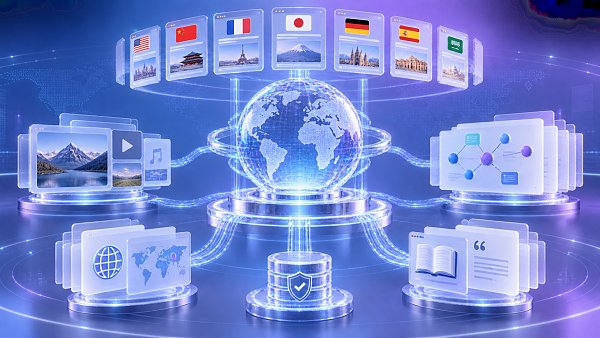
Citation Opportunities Depend on Four Types of Foundational Signals
The first is answer completeness. AI is more likely to cite pages that can explain a question independently, rather than pages containing only product images, slogans, and inquiry buttons. A page that clearly answers “what it is, which scenarios it applies to, what limitations it has, how to choose it, and what the basis is” is generally more useful than a broad brand introduction.
The second is source identifiability. The company name, business scope, contact details, team or factory information, product categories, and policy pages need to remain consistent. If language versions use inconsistent company names, addresses, product models, or capability descriptions, the system’s understanding of the brand entity becomes blurred and the mutual support among content is weakened.
The third is technical accessibility. Language versions must have independent, crawlable URLs and use appropriate hreflang annotations to help search engines understand the relationship between language and region. Putting all languages into a dynamic switching module on one page, or relying on scripts to replace body content after loading, increases the cost of crawling and understanding. Important body content should not exist only in images, PDFs, or interactive components that are difficult to parse.
The fourth is external validation. When organizing answers, generative search does not typically rely solely on a company’s self-description. Industry media, trade show directories, association pages, compliance databases, partner materials, and high-quality third-party content may all contribute to brand credibility. A multilingual website cannot replace these external signals, but it can make external mentions and on-site information easier to align semantically.
The Real Value of Multilingual Content: Narrowing the Gap Between the “Language of the Question” and the “Language of Evidence”
Companies often understand international website translation as a content replication project, while in reality it is closer to rebuilding a knowledge base. Different markets express the same demand differently: some search by product category, some focus more on application scenarios, and some approach it through regulations, materials, certifications, or supply chain risks. If pages translate only headings and basic introductions without covering commonly used local question formulations, AI may crawl the content but still struggle to establish a strong connection with complex queries.
This is particularly evident for categories such as fragrances, bath and body care, and cosmetics, which depend heavily on visual presentation and customization communication. A website needs to explain brand positioning, packaging and process details, OEM collaboration workflows, production capabilities, and quality standards at the same time. With visuals alone and no structured explanation, AI has difficulty citing information accurately; with parameters alone and no page experience aligned with local aesthetics and procurement practices, post-visit conversion efficiency is also affected. For website solutions such as fragrances, bath and body care, and cosmetics, placing immersive displays, product matrices, OEM timelines, and capability data into a clear vertical information structure does more than improve visual presentation; it also transforms scattered company information into page evidence that is easier to understand and verify.
“Bulk Translation” Should Not Be Mistaken for a GEO Strategy
The focus of generative engine optimization is not submitting more pages to AI, but reducing the likelihood that systems misinterpret brand information. Common problems with large volumes of low-differentiation pages include inconsistent terminology, conflicting product attributes, vague regional information, duplicate content, and semantic distortion caused by translation-like phrasing. Even if such pages are indexed, they may not become citation sources for high-quality answers.
Another misconception is to build only an English website. English does cover broad international business communication, but it does not mean it can fully cover local queries in Europe, Latin America, the Middle East, Japan and South Korea, or Russian-speaking markets. Whether to invest in a particular language should not be determined by the number of languages, but by actual customer sources, sales regions, product complexity, transaction cycles, and content maintenance capabilities. A language site without the capacity for long-term updates is generally less effective than first developing a few versions for core markets in depth and with accuracy.
The Pages Worth Greater Investment Are Not Those That Translate Every Page Equally
When budgets are limited, prioritize content that serves a decision-making and explanatory function: core product or solution pages, key application pages, technical and quality information, customization processes, delivery and service policies, frequently asked questions, and About pages that establish company identity. These are important entry points for organic search and are also more likely to become citable factual sources in AI answers.
Translated content should also be supported by a unified terminology database. Product names, material names, process names, specification units, certification descriptions, and trade terms in particular must not vary arbitrarily across pages. For AI systems, stable and consistent wording helps confirm that this information belongs to the same brand and product system; for customers, it also reduces communication costs caused by differences in descriptions.
When measuring the results of investment, it is not advisable to look only at the number of multilingual pages or organic traffic alone. More meaningful signals include whether long-tail search entry points relevant to the business appear in the target language, whether pages are cited by search summaries or third-party answers, whether overseas visitors continue to view specifications, processes, and contact details after arriving, and whether different language versions generate qualified inquiries. Visibility in AI answers itself is difficult to use as the sole indicator, because citation placement, answer formats, and product categories continue to change.
Future Competition Is Not Just About “Whether You Have a Foreign-Language Website”
As users become increasingly accustomed to asking AI questions directly, the role of websites will gradually shift from simple brand showcases to corporate information sources that machines can understand and users can verify. Translation remains foundational work, but competitive differentiation will lie in the depth of localization: whether target-market terminology is used, whether specific and genuine decision-making questions are answered, and whether brand facts remain consistent both on and off the website.
Therefore, translating website content is worthwhile, but it should not be planned according to the “number of pages.” Instead, it should be planned around “which questions in key markets require the brand itself to provide credible answers.” Websites that AI can cite are usually not those with the most languages, but those with the clearest information, the most complete evidence, and the greatest consistency across language versions.
Related Articles


Related Products
 Yiyingbao SaaS Intelligent Website Building and Marketing SystemYiyingbao SaaS Intelligent Website Building and Marketing System, AI-powered no-code website building, rapid creation of multilingual B2B international websites in 10 minutes, global server acceleration, AI-powered SEO optimization, helping businesses connect efficiently with global markets. The perfect integration of technology and operation makes building an international trade website remarkably simple
 AI+SEM Intelligent Advertising Marketing SystemAI+SEM drives intelligent ad creation, empowering full-funnel precision advertising marketing. The system automatically generates weekly/monthly reports, AI recommends keywords and target countries, monitors core metrics in real-time with intelligent alerts, and enables one-click high-conversion ad solutions to help quickly acquire customers and improve ROI.
 AI+SEO Dual-Engine System Optimization ServicesYiyingbao’s AI+SEO dual-engine optimization system helps foreign trade enterprises acquire high-quality organic traffic through AI-powered keyword research, content generation, and comprehensive technical optimization, significantly improving search rankings and conversion rates.
 AI+SNS Social Media Marketing SystemYingbao AI+SNS Social Media Marketing System - Precision social capture for the social media era. Supports one-click content synchronization across major platforms like Facebook and LinkedIn. AI intelligently rewrites posts for enhanced relevance. 24/7 AI customer service and user profiling analysis empower businesses to efficiently expand into global markets.
 AI+SEO营销解决方案易营宝AI+SEO营销解决方案,通过AI批量写作、智能生成TDK、精准关键词扩词等功能,全面优化网站SEO效果,提升流量与转化率。助力企业构建高效智能网站新生态。
 AI+SEM Advertising Marketing SolutionsAI+SEM Advertising Marketing Solution leverages AI technology to deeply empower SEM ad campaigns. It automatically generates weekly/monthly reports using AI, presenting account data across multiple dimensions for comprehensive insights into campaign performance and trends. The system precisely recommends keywords and target countries, intelligently generates high-conversion ad copy, and enables one-click activation of efficient campaign plans to help businesses rapidly acquire customers. Simultaneously, it monitors core metrics in real time, intelligently identifies abnormal fluctuations, and issues timely alerts to ensure stable, high-return advertising results.
 Domain Name ServicesEasyWin provides professional domain name services, including intelligent queries, one-stop registration, brand protection, and full lifecycle management, helping businesses build a digital brand image.
 EasyOperate B2C Cross-Border E-Commerce Platform & Independent WebsiteEasyStore B2C Cross-border E-commerce Independent Store is an intelligent website building and cross-border e-commerce integrated solution independently developed by EasyStore Information Technology (Beijing) Co., Ltd. The system is specially designed for small and medium-sized as well as large export enterprises, integrating 'website building, operation, marketing, advertising, and conversion' into one, helping enterprises quickly establish cross-border e-commerce independent stores to achieve brand globalization and global sales growth.
The platform supports multiple languages, multiple currencies, and multi-channel marketing, with built-in AI intelligent translation and SEO optimization systems, suitable for mainstream markets such as Southeast Asia, Europe and America, Latin America, and the Middle East, assisting Chinese manufacturing enterprises in efficiently deploying international e-commerce strategies. SSL证书易营宝提供专业SSL安全证书服务,包括单域名和泛域名证书,确保网站数据传输加密、身份验证和完整性保护,助力企业建立安全可信的在线业务环境。









