









- Hapag-Lloyd’s $4.2 billion acquisition of ZIM faces a closing delay; ZIM reports third-quarter net profit of $830 millionNov 24, 2026View details
- SCFI falls for a third straight week to 3,503.78 points, with blank sailings on trans-Pacific routes rising to 10Nov 24, 2026View details
- Lazada 11.11 Mega Sale: LazMall Contributes Nearly Two-Thirds of GMVNov 23, 2026View details
- Shein’s European Revenue Falls 16% as Tighter Rules on Low-Value Direct Shipments Take EffectNov 23, 2026View details
- EU Low-Value Parcel Rules Impact Cargo Flows: Air Freight Volume from China to Europe Down 17% in OctoberNov 23, 2026View details
- Indonesia and the EU Sign Comprehensive Economic Partnership Agreement, 90.4% of Tariff Lines to Become Duty-Free ImmediatelyNov 23, 2026View details
Does AI search affect SEO strategy for B2B websites?
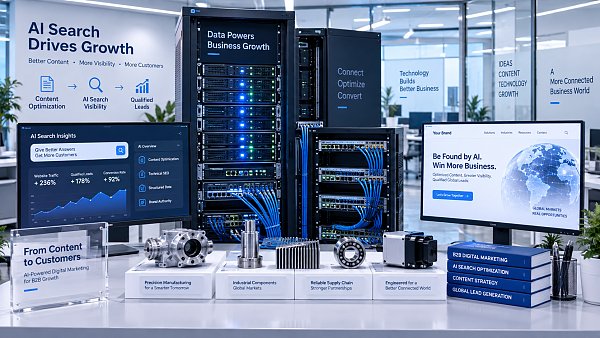
Does AI search affect SEO strategy? For B2B websites, the answer is yes. However, this does not mean that traditional SEO has become ineffective, nor does it mean that companies can gain visibility simply by adding a few pieces of “AI-generated content.” More precisely, search results are shifting from “providing users with a list of links” to “integrating answers first, then offering sources and next-step options.” If B2B websites still organize content solely around keyword rankings, they may continue to receive traffic but find it harder to enter the decision-making process of high-intent buyers.
For companies seeking overseas inquiries through their official websites, the core question raised by AI search is this: when buyers directly ask questions such as “What operating conditions are certain types of equipment suitable for?”, “What capabilities should a supplier have?”, or “How should different material solutions be compared?”, can the website content be understood, cited, and support subsequent inquiry conversion?
AI search changes how content is discovered and used
Traditional search optimization usually focuses on keywords, page rankings, backlinks, and click-through rates. AI search still uses these signals, but places greater emphasis on whether a page can provide a clear, credible, and separable answer to a specific question. It does not simply match a word; it also attempts to understand the searcher’s objectives, constraints, and context.
For example, when a user searches for “industrial valve supplier,” conventional search result pages may display a list of suppliers. However, when the user further asks, “How should industrial valve suppliers suitable for high-temperature corrosive environments be evaluated?”, AI search is more likely to integrate information on materials, certification capabilities, manufacturing processes, lead times, test reports, and after-sales support. At this point, pages containing only product names and company profiles are unlikely to become valuable citation sources.
This also explains a common phenomenon: some B2B websites still rank for core product terms, but their inquiry quality has not improved accordingly. The reason may not necessarily be declining traffic, but rather that the website lacks content that helps buyers narrow down their options and cannot cover key decision-making stages such as research, comparison, and validation.
SEO strategy needs to shift from “covering keywords” to “covering decision-making questions”
AI search does not favor the longest pages. It is more likely to use content with a clear structure, consistent facts, and the ability to answer specific questions. B2B websites should retain product pages and industry pages, but content planning should not stop at combinations of “product keywords + regional keywords.”
What is more worth investing in is thematic content built around purchasing decisions. For example, an industrial equipment manufacturer can continuously explain a product category: what operating conditions it is suitable for, how to choose among different specifications, which parameters need to be confirmed before installation, where common failures originate, and which technical documents should be requested during procurement. Such content can serve long-tail needs in traditional search and is also more likely to be extracted by AI systems as supporting evidence in answers.
Content depth does not mean filling a page with technical jargon. What truly adds value is breaking down buyers’ vague questions and clarifying conditions and boundaries. For example, instead of merely stating that a product is “high-temperature resistant,” explain the relationship between temperature resistance and materials, media, pressure, and sealing structures. Instead of merely stating “customization supported,” specify the customizable scope, the parameters that need to be provided, and the factors that may affect lead times.
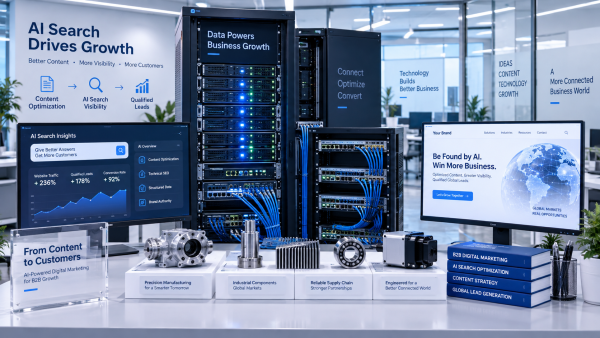
Product pages remain central, but need to take on more trust-building responsibilities
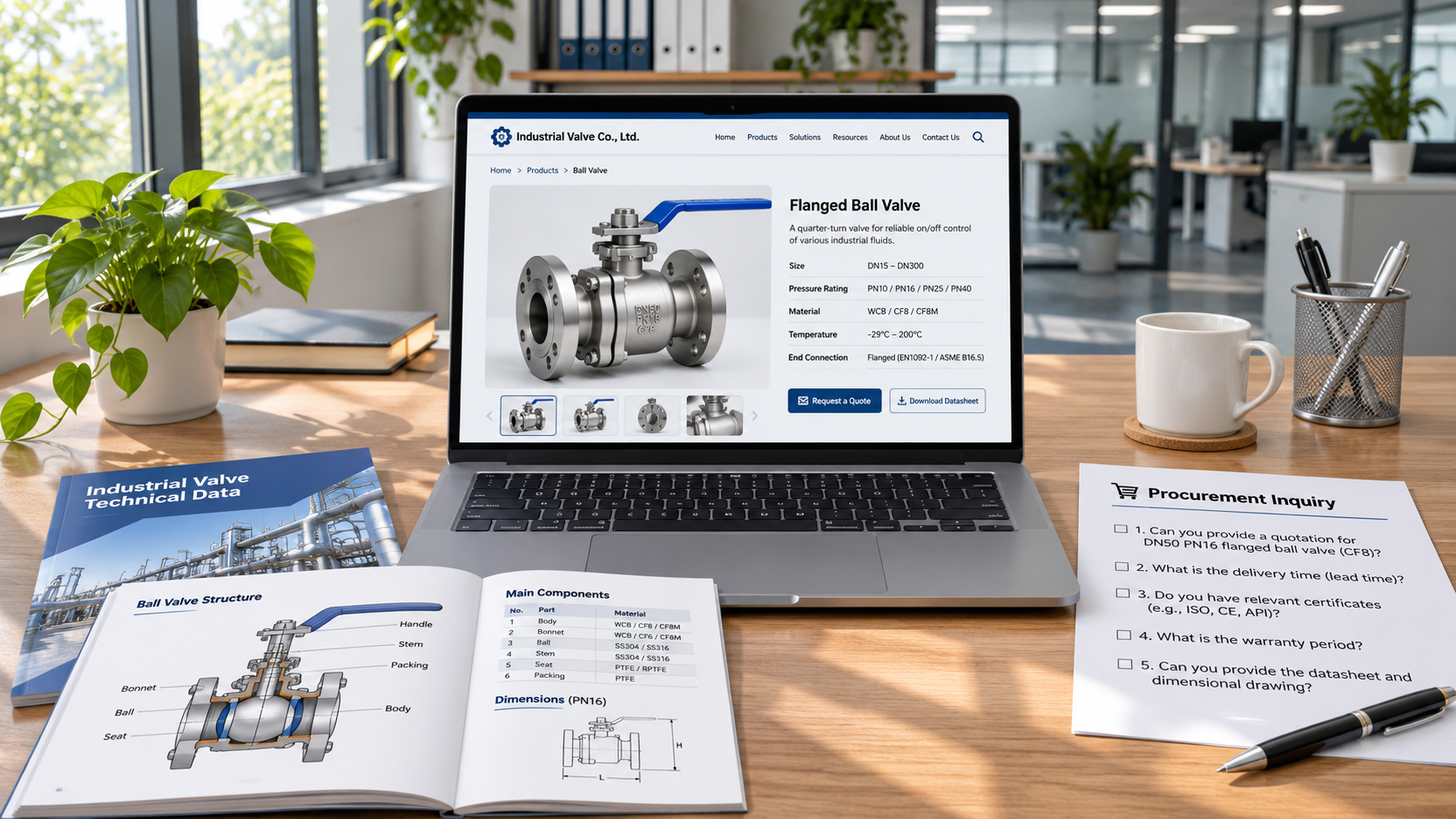
In B2B scenarios, AI search may help users complete initial screening, but complex procurement decisions will ultimately return to company websites for verification. A product page should not merely be an electronic catalog; it should become a page where buyers can confirm whether “this supplier is suitable for cooperation.”
A product page better suited to the AI search era usually needs to address four types of information:
- Product facts: Information such as models, materials, specifications, application scope, and compatibility conditions should be accurate and readable. Avoid placing key parameters only in images or downloadable files.
- Selection criteria: Explain which needs different models, configurations, or solutions are suitable for, helping users complete their first round of evaluation independently.
- Capability proof: Present information directly related to the product in production, quality inspection, delivery, R&D, or service processes, rather than broadly listing general company advantages.
- Clear conversion paths: Let buyers know what information they need to prepare before requesting a quotation, and provide forms, document downloads, or communication channels that are easy to use.
Multilingual websites especially need to ensure content consistency. Direct machine translation can easily result in inconsistent terminology, missing parameters, or semantic deviations. For overseas buyers, this not only affects indexing but may also reduce confidence in supply capabilities. Product pages, solution pages, and inquiry forms for key markets should be prioritized for localized proofreading rather than merely pursuing a greater number of languages.
Technical SEO has not been replaced; it has become even more important for whether AI can understand a website
Some people understand GEO, or Generative Engine Optimization, as “content written for AI,” while overlooking whether the website itself is accessible, crawlable, and parsable. Slow page loading, confusing navigation hierarchies, excessive duplicate pages, and parameter information locked inside images can all weaken search engines’ and AI systems’ understanding of website content.
When making practical adjustments, several fundamental issues should be checked first: whether every important product has an independent and standardized URL; whether page titles, body content, and structured information are consistent; whether multilingual versions correspond correctly; whether important pages can be crawled normally; and whether key technical information in images and PDFs is explained in text within the HTML body. These tasks may seem less popular than “generating content,” but they determine whether subsequent content investments can be effectively recognized.
For manufacturing companies with a large number of models, they should also avoid using nearly identical pages in bulk to cover keywords. If pages differ only in model numbers or a small number of parameters, search systems will find it difficult to determine the unique value of each page. A more suitable approach is to establish clear product categories, parameter filters, and application descriptions, allowing model pages, category pages, and solution pages to serve different purposes.
Beyond traffic metrics, assess inquiry quality in the AI era
AI search may reduce clicks from some simple question-and-answer queries, so judging SEO success solely by changes in organic traffic will become one-sided. B2B websites should pay greater attention to which pages generate form submissions, document downloads, sample requests, or meaningful conversations; whether inquiries include key information such as product models, purchase quantities, and application scenarios; and whether visitors from different languages and markets reach the correct landing pages.
This requires SEO, advertising, and website conversion to no longer operate independently. Search content creates awareness, advertising can capture high-commercial-intent keywords, social media content helps establish ongoing engagement, and the website is responsible for turning technical information and company capabilities into credible starting points for communication. For companies operating across multiple markets, centrally managing websites, content, campaigns, and lead sources is usually more practically valuable than pursuing a single AI search tactic in isolation.
The intelligent website building, multilingual website, SEO/GEO optimization, and overseas marketing capabilities provided by Yiyingbao are suitable for companies expanding internationally that need to coordinate website development, search visibility, and customer acquisition channels. When choosing this type of integrated solution, the key is not whether the feature list is long enough, but whether the website enables the company to retain control over content, data, and conversion paths while continuously adapting to target markets.
No need to rush to “rebuild your website for AI”; first make these three assessments
First, confirm whether the website genuinely answers the questions buyers ask before making a purchase. If the content mainly consists of company promotion and product listings, prioritize completing information on product selection, application conditions, process capabilities, and procurement procedures.
Second, distinguish between brand presentation pages and lead-generation pages. The former can communicate company positioning and value propositions, while the latter must provide specific, verifiable information that can drive the next action. Combining these two objectives on one page often results in neither being done well.
Third, review the content production process. AI can assist with organizing materials, generating drafts, and expanding multilingual versions, but technical parameters, application boundaries, lead-time commitments, and compliance statements must be confirmed by business personnel. Large volumes of unreviewed, similar content may damage brand credibility and are also unlikely to establish long-term search value.
AI search will indeed affect the SEO strategy of B2B websites, but the impact is not about whether a company keeps up with a new term. It is about whether it upgrades its website from a “display window” into a digital sales asset that can be understood, verified, and used to advance purchasing decisions. First, ensure that every key page answers real questions; then enable technology, content, and conversion paths to work together. This is the more reliable way to respond to this trend.
Related Articles
 How Long Does AI Search Optimization Take to Show Results? What Factors Affect the Timeline?
 Google, ChatGPT, and other platforms are starting to provide promo codes directly in search results
 How do the optimization priorities of AI SEO and traditional SEO differ?


Related Products
 Yiyingbao SaaS Intelligent Website Building and Marketing SystemYiyingbao SaaS Intelligent Website Building and Marketing System, AI-powered no-code website building, rapid creation of multilingual B2B international websites in 10 minutes, global server acceleration, AI-powered SEO optimization, helping businesses connect efficiently with global markets. The perfect integration of technology and operation makes building an international trade website remarkably simple
 AI+SEM Intelligent Advertising Marketing SystemAI+SEM drives intelligent ad creation, empowering full-funnel precision advertising marketing. The system automatically generates weekly/monthly reports, AI recommends keywords and target countries, monitors core metrics in real-time with intelligent alerts, and enables one-click high-conversion ad solutions to help quickly acquire customers and improve ROI.
 AI+SEO Dual-Engine System Optimization ServicesYiyingbao’s AI+SEO dual-engine optimization system helps foreign trade enterprises acquire high-quality organic traffic through AI-powered keyword research, content generation, and comprehensive technical optimization, significantly improving search rankings and conversion rates.
 AI+SNS Social Media Marketing SystemYingbao AI+SNS Social Media Marketing System - Precision social capture for the social media era. Supports one-click content synchronization across major platforms like Facebook and LinkedIn. AI intelligently rewrites posts for enhanced relevance. 24/7 AI customer service and user profiling analysis empower businesses to efficiently expand into global markets.
 AI+SEO营销解决方案易营宝AI+SEO营销解决方案,通过AI批量写作、智能生成TDK、精准关键词扩词等功能,全面优化网站SEO效果,提升流量与转化率。助力企业构建高效智能网站新生态。
 AI+SEM Advertising Marketing SolutionsAI+SEM Advertising Marketing Solution leverages AI technology to deeply empower SEM ad campaigns. It automatically generates weekly/monthly reports using AI, presenting account data across multiple dimensions for comprehensive insights into campaign performance and trends. The system precisely recommends keywords and target countries, intelligently generates high-conversion ad copy, and enables one-click activation of efficient campaign plans to help businesses rapidly acquire customers. Simultaneously, it monitors core metrics in real time, intelligently identifies abnormal fluctuations, and issues timely alerts to ensure stable, high-return advertising results.
 Domain Name ServicesEasyWin provides professional domain name services, including intelligent queries, one-stop registration, brand protection, and full lifecycle management, helping businesses build a digital brand image.
 EasyOperate B2C Cross-Border E-Commerce Platform & Independent WebsiteEasyStore B2C Cross-border E-commerce Independent Store is an intelligent website building and cross-border e-commerce integrated solution independently developed by EasyStore Information Technology (Beijing) Co., Ltd. The system is specially designed for small and medium-sized as well as large export enterprises, integrating 'website building, operation, marketing, advertising, and conversion' into one, helping enterprises quickly establish cross-border e-commerce independent stores to achieve brand globalization and global sales growth.
The platform supports multiple languages, multiple currencies, and multi-channel marketing, with built-in AI intelligent translation and SEO optimization systems, suitable for mainstream markets such as Southeast Asia, Europe and America, Latin America, and the Middle East, assisting Chinese manufacturing enterprises in efficiently deploying international e-commerce strategies. SSL证书易营宝提供专业SSL安全证书服务,包括单域名和泛域名证书,确保网站数据传输加密、身份验证和完整性保护,助力企业建立安全可信的在线业务环境。









