









- Hapag-Lloyd’s $4.2 billion acquisition of ZIM faces a closing delay; ZIM reports third-quarter net profit of $830 millionNov 24, 2026View details
- SCFI falls for a third straight week to 3,503.78 points, with blank sailings on trans-Pacific routes rising to 10Nov 24, 2026View details
- Lazada 11.11 Mega Sale: LazMall Contributes Nearly Two-Thirds of GMVNov 23, 2026View details
- Shein’s European Revenue Falls 16% as Tighter Rules on Low-Value Direct Shipments Take EffectNov 23, 2026View details
- EU Low-Value Parcel Rules Impact Cargo Flows: Air Freight Volume from China to Europe Down 17% in OctoberNov 23, 2026View details
- Indonesia and the EU Sign Comprehensive Economic Partnership Agreement, 90.4% of Tariff Lines to Become Duty-Free ImmediatelyNov 23, 2026View details
How Do TDK SEO Configuration Errors Affect Page Indexing?

How Do Incorrect TDK SEO Settings Affect Page Indexing?
When many websites cannot be found in search results, their first reaction is to check the server, sitemap, or backlinks, while overlooking the TDK SEO settings in the page header. Here, TDK usually refers to Title, Description, and Keywords. They are not the only switches that determine whether a page is indexed, but disorganized settings can make it difficult for search engines to quickly identify a page's topic, language, commercial intent, and differences from other pages. This can subsequently affect post-crawl indexing decisions, search result display, and later rankings.
A commonly misunderstood point needs to be clarified first: no matter how well a title and description are written, they cannot override technical issues such as robots blocking crawling, noindex directives, incorrect canonical tags, pages returning abnormal status codes, or insufficient content quality. Conversely, even if a page can be crawled, search engines may lower its priority for independent indexing and display if numerous pages use duplicate, blank, or body-irrelevant TDK content. For corporate websites with many product models, deep category hierarchies, and multiple target country markets, this issue is especially likely to be amplified in bulk.
When the Title Is Incorrect, the Page Topic Becomes Unclear First
The Title is one of the most important topical signals of a page and one of the texts most frequently seen by users in search results. Common errors are not limited to “missing keywords,” but include using the same title for all pages, listing only the brand name on product pages, using exactly the same title for category and detail pages, or continuously stuffing unrelated popular terms into the title.
For example, if a manufacturing company's “industrial valves” category page and the detail page for a specific model both use “Industrial Valve Supplier | Company Name,” it is difficult for search engines to distinguish the search scope of the two pages from the title alone. The former should generally cover the category, application, or purchasing intent, while the latter should reflect the model, key specifications, or suitable application scenarios. Although the page body can still provide supplementary information, highly repetitive titles weaken the division of topics among pages within the site.
Another risk is inconsistency between what the title promises and the page content. If terms such as “manufacturer,” “wholesale,” “customization,” or “technical specifications” are included in the title, but the body lacks corresponding qualification statements, product information, or service scope, search engines may rewrite the title themselves, and users may also leave quickly after clicking. A title is not an advertising space, but a condensed statement of the page's content boundaries.
Description Does Not Directly Determine Indexing, but It Affects Search Result Interpretability
Meta Description is generally not regarded as a direct ranking factor, nor can it replace page content, but it serves as a reference for generating search snippets. When descriptions are blank or duplicated, or when a meaningless company introduction is copied onto hundreds of pages, a common result is that search engines extract navigation, footer, or body fragments as snippets themselves. Even if a page has been indexed, its search result may still fail to clearly explain “what problem this page can solve.”
A more reliable approach is not to mechanically control the word count, but to prioritize explaining the page's main subject: product pages can summarize the product type, core features, and application conditions; service pages should state the service scope, delivery targets, and main content; technical articles should identify the issue, assessment path, and scope of application. The information in the description must be supported by corresponding evidence in the main page content, avoiding unverifiable vague terms such as “high quality,” “professional,” and “leading.”
The Keywords Tag Should No Longer Be Treated as a Shortcut to Indexing
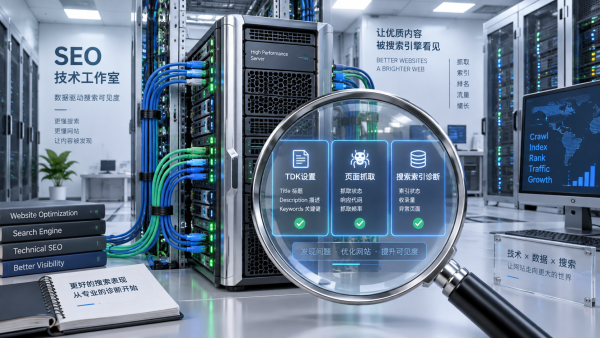
During tdk seo troubleshooting, Keywords are often the most likely element to be overhandled. Taking Google as an example, meta keywords are not a signal used for its webpage rankings. Stuffing this tag with large numbers of product terms, country terms, competitor terms, or even irrelevant high-traffic terms will neither earn the page corresponding rankings nor compensate for weak content, missing internal links, or crawling restrictions.
This does not mean keyword research has no value. What truly matters is mapping search terms to page types: when users look for a specific model, they should reach a detail page with complete specifications; when comparing solutions, they should reach a category, selection guide, or technical comparison page; when looking for suppliers, they are more suited to reaching a company capability or service page. Keywords should be reflected in clear titles, H1 headings, body structure, image descriptions, and internal-link anchor text, rather than being hidden collectively in a single meta tag.
Related Configurations More Likely Than TDK to Cause “Not Indexed” Issues
Technical troubleshooting should not stop at the three tags in a page's source code. In practice, TDK issues often occur together with site-generation logic, template rules, and internationalization configurations. For example, a website-building system may automatically generate titles for filter pages, internal search pages, and paginated pages, but their content is similar and their canonical links all point to incorrect addresses. Or a multilingual site may translate titles without correctly configuring relationships between language versions, and may even have multiple language pages sharing the same canonical. In such cases, the root cause of indexing anomalies is not merely the copy, but conflicting page identity signals.
Therefore, when determining why a page has not been indexed, first confirm whether the server returns a normal indexable status, then verify robots, meta robots, canonical, sitemap, internal links, and actual body content quality, and finally check whether the TDK genuinely reflects the page content. If this order is reversed, teams can easily revise title wording repeatedly while overlooking the configuration that is actually blocking indexing.
TDK for Multilingual Websites Puts Greater Demands on the Publishing Process
A common situation on export websites is that the Chinese site has complete titles and descriptions, while English, German, or Japanese versions replace only a few fields or even retain Chinese meta information directly. This prevents users in the target market from understanding search results and can distort the topic expression of language versions. Machine-translated titles likewise require manual review, particularly for product names, industry terms, units of measurement, and procurement wording; word-for-word correspondence alone should not be pursued.
Yiyingbao has long served foreign trade companies, manufacturing factories, cross-border sellers, and brand globalization projects. In its intelligent website building and multilingual website development scenarios, TDK should not be regarded as a supplementary field after launch, but should be incorporated into page templates, language versions, product data, and publishing review workflows. For pages of the same product in North American, European, Middle Eastern, or Latin American markets, topical information should also be adjusted according to commonly used local search expressions, while maintaining consistency among product specifications, landing page content, and inquiry paths.
This work requires coordination among website building, SEO, content, and promotion because advertising landing pages, organic search pages, and social media sharing pages all read or are indirectly affected by page metadata. Yiyingbao's AI- and big data-driven website and overseas marketing service system covers intelligent website building, SEO, advertising, and social media operations, making it better suited to reviewing page-generation rules, content audits, and subsequent promotion data within the same workflow, rather than having separate teams each maintain conflicting sets of titles.
Turn TDK Review into an Actionable Publishing Standard
A more mature approach is to establish rules by page type instead of completing them page by page based on intuition. Product detail pages should at least distinguish models or key attributes; category pages should highlight the product category and filter scope; article pages should address one clear question; country or language pages should confirm that the local language, regional content, and link relationships are all properly matched. Before importing products in bulk, template rendering results can be sampled first to prevent an empty field from causing duplicate titles across the entire site.
After publishing, search engine webmaster tools should also be used to observe the reasons pages are indexed or not indexed, and to sample the titles and snippets actually displayed in search results. If search engines frequently rewrite them, this need not immediately be considered a fault, but the assessment should return to the page itself: is the title too generic, does the H1 conflict with it, does the body lack support for the title's promise, or is the page indeed highly similar to other URLs?
The value of TDK SEO lies not in creating more keywords, but in giving every indexable page a clear, credible, and distinguishable identity. For technical evaluation, the most worthwhile question is not “whether all three tags have been filled in,” but whether the page topic, indexing directives, canonical relationships, and actual content all point to the same conclusion. Only when these signals are consistent can indexing issues have a traceable and verifiable resolution path.
Related Articles
 Google Confirms Completion of the November 2026 Core Algorithm Update Rollout
 How to Expand Website Content Topics Using Competitor Keywords
 How can you detect markup errors in structured data on a webpage?
Related Products
 Yiyingbao SaaS Intelligent Website Building and Marketing SystemYiyingbao SaaS Intelligent Website Building and Marketing System, AI-powered no-code website building, rapid creation of multilingual B2B international websites in 10 minutes, global server acceleration, AI-powered SEO optimization, helping businesses connect efficiently with global markets. The perfect integration of technology and operation makes building an international trade website remarkably simple
 AI+SEM Intelligent Advertising Marketing SystemAI+SEM drives intelligent ad creation, empowering full-funnel precision advertising marketing. The system automatically generates weekly/monthly reports, AI recommends keywords and target countries, monitors core metrics in real-time with intelligent alerts, and enables one-click high-conversion ad solutions to help quickly acquire customers and improve ROI.
 AI+SEO Dual-Engine System Optimization ServicesYiyingbao’s AI+SEO dual-engine optimization system helps foreign trade enterprises acquire high-quality organic traffic through AI-powered keyword research, content generation, and comprehensive technical optimization, significantly improving search rankings and conversion rates.
 AI+SNS Social Media Marketing SystemYingbao AI+SNS Social Media Marketing System - Precision social capture for the social media era. Supports one-click content synchronization across major platforms like Facebook and LinkedIn. AI intelligently rewrites posts for enhanced relevance. 24/7 AI customer service and user profiling analysis empower businesses to efficiently expand into global markets.
 AI+SEO营销解决方案易营宝AI+SEO营销解决方案,通过AI批量写作、智能生成TDK、精准关键词扩词等功能,全面优化网站SEO效果,提升流量与转化率。助力企业构建高效智能网站新生态。
 AI+SEM Advertising Marketing SolutionsAI+SEM Advertising Marketing Solution leverages AI technology to deeply empower SEM ad campaigns. It automatically generates weekly/monthly reports using AI, presenting account data across multiple dimensions for comprehensive insights into campaign performance and trends. The system precisely recommends keywords and target countries, intelligently generates high-conversion ad copy, and enables one-click activation of efficient campaign plans to help businesses rapidly acquire customers. Simultaneously, it monitors core metrics in real time, intelligently identifies abnormal fluctuations, and issues timely alerts to ensure stable, high-return advertising results.
 Domain Name ServicesEasyWin provides professional domain name services, including intelligent queries, one-stop registration, brand protection, and full lifecycle management, helping businesses build a digital brand image.
 EasyOperate B2C Cross-Border E-Commerce Platform & Independent WebsiteEasyStore B2C Cross-border E-commerce Independent Store is an intelligent website building and cross-border e-commerce integrated solution independently developed by EasyStore Information Technology (Beijing) Co., Ltd. The system is specially designed for small and medium-sized as well as large export enterprises, integrating 'website building, operation, marketing, advertising, and conversion' into one, helping enterprises quickly establish cross-border e-commerce independent stores to achieve brand globalization and global sales growth.
The platform supports multiple languages, multiple currencies, and multi-channel marketing, with built-in AI intelligent translation and SEO optimization systems, suitable for mainstream markets such as Southeast Asia, Europe and America, Latin America, and the Middle East, assisting Chinese manufacturing enterprises in efficiently deploying international e-commerce strategies. SSL证书易营宝提供专业SSL安全证书服务,包括单域名和泛域名证书,确保网站数据传输加密、身份验证和完整性保护,助力企业建立安全可信的在线业务环境。









