









- Hapag-Lloyd’s $4.2 billion acquisition of ZIM faces a closing delay; ZIM reports third-quarter net profit of $830 millionNov 24, 2026View details
- SCFI falls for a third straight week to 3,503.78 points, with blank sailings on trans-Pacific routes rising to 10Nov 24, 2026View details
- Lazada 11.11 Mega Sale: LazMall Contributes Nearly Two-Thirds of GMVNov 23, 2026View details
- Shein’s European Revenue Falls 16% as Tighter Rules on Low-Value Direct Shipments Take EffectNov 23, 2026View details
- EU Low-Value Parcel Rules Impact Cargo Flows: Air Freight Volume from China to Europe Down 17% in OctoberNov 23, 2026View details
- Indonesia and the EU Sign Comprehensive Economic Partnership Agreement, 90.4% of Tariff Lines to Become Duty-Free ImmediatelyNov 23, 2026View details
How to Expand Website Content Topics Using Competitor Keywords
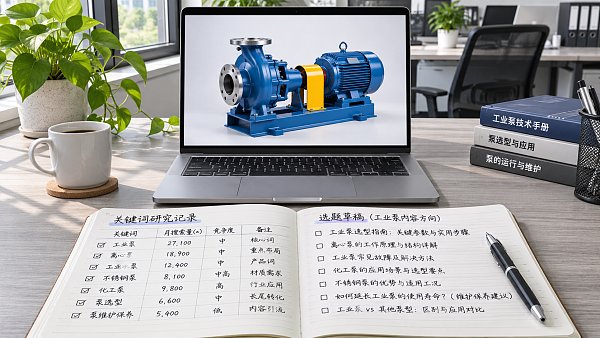
Running out of ideas for website content? Keyword research and competitor keyword expansion can help you uncover potential search demand, identify content opportunities, and develop topics that better match your target customers. The key is not to copy competitors’ articles, but to determine which search needs your own website should address.
Choose the right competitors first: Who is competing for your customers in search results?
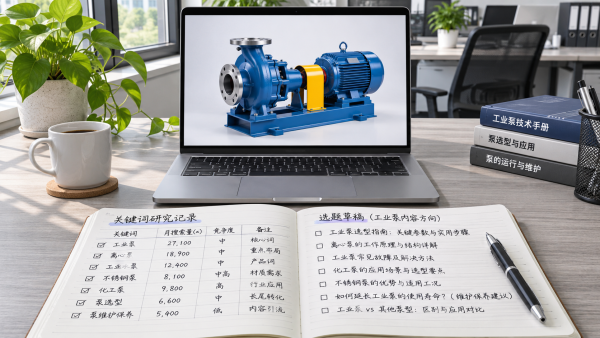
When researching keywords, first distinguish between business competitors and search competitors. Business competitors sell similar products. Search competitors are websites that regularly appear in your target customers’ search results. They may be industry peers, trade publications, directory platforms, or specialist blogs.
For example, an export company selling industrial pumps could search in English for “industrial water pump supplier” and “how to choose an industrial pump” to review the websites appearing for purchasing and informational queries, respectively. Websites that appear repeatedly and have content relevant to your business can be added to your analysis list.
Start with three to five sites: one or two direct competitors to identify topics about products and solutions, and then trade publications or specialist websites to uncover additional informational needs. If their target markets, customer types, or product specifications differ significantly from yours, do not apply their keywords directly.
As you work, record each website’s URL, target market, main products, audience type, and key sections. Search results vary by location, language, and device, so use search settings that match your target market whenever possible and verify results in the languages your customers commonly use.
Which competitor pages should you use to find keywords?
Start by reviewing competitors’ product category pages, product detail pages, application pages, FAQ pages, and blogs. Category pages can reveal how products are described, application pages can uncover industry needs, and blogs and FAQs can help you identify questions customers ask before purchasing.
On each page, record the title, main heading, subheadings, product names repeated in the body copy, and related questions. Do not collect isolated keywords alone. Keep the URL and page type for each one so you can assess search intent and content structure later.
If you have access to a keyword tool, enter a competitor’s domain or a specific page to see which terms may be driving its organic rankings. Filter the results by target country, language, and page. Search volume, rankings, and difficulty provided by these tools are usually estimates. Use them to compare opportunities, not as guarantees of actual traffic.
You can also get started without paid tools. Check autocomplete suggestions, related searches, and question modules on search results pages in your target market, then build a keyword list using competitor navigation and customer emails. Autocomplete suggestions are only leads; confirm the underlying demand by reviewing the search results.
If your website is connected to Google Search Console, you can also review queries for which your site already receives impressions and the pages associated with them. Comparing this data with your competitor keyword list can reveal topics where you have some existing visibility but insufficient coverage, as well as related questions you have not addressed.
Once you have competitor keywords, how can you turn them into content topics?
Start with a core product keyword, then expand it based on customers’ use cases, purchasing stages, and specific requirements. For example, starting with “industrial water pump,” you could organize related terms around application industries, materials, flow rates, maintenance issues, and supplier selection.
Suppose a competitor covers “industrial pump maintenance.” You could look for related questions about maintenance intervals, common faults, and spare part selection. First, however, verify that these topics relate to your products and that relevant search results exist in your target market. Avoid inventing keywords based on assumptions.
Group keywords by search intent. Users seeking to understand principles or choose a product need a guide. Those comparing models and specifications need a product comparison or selection page. Users looking for suppliers are more likely to need a category page, product page, or inquiry page. Synonyms can usually be covered within the same topic.
For example, “how to choose an industrial water pump” could be addressed with a selection guide covering flow rate, head, fluid, and installation environment. “Industrial water pump supplier,” on the other hand, is better suited to a page showcasing product range, qualifications, delivery capabilities, and an inquiry option.
To decide whether two keywords need separate articles, search for both and compare the results. If most results lead to similar pages, you can usually cover both in one piece. If the page types, problems addressed, or purchasing stages differ significantly, consider creating separate pages.
How can you prioritize topics and avoid creating content that fails to deliver?
Not every competitor keyword is worth targeting. First, exclude terms that do not match your products, target countries, or customer types. Then assess whether the search results show clear demand and whether your company has enough product information, case studies, or subject matter expertise to produce the content.
You can score each topic for business relevance, search demand, competition, and content readiness, using a scale of one to three for each factor. Prioritize topics that are highly relevant to your business, show a suitable opportunity in the search results, and can be supported by reliable internal information—not just those with high search volume.
Suppose “pump maintenance checklist” relates to your after-sales services and your team has maintenance documentation. Even if its estimated search volume is limited, it may still be worth prioritizing. By contrast, a popular topic about products you do not sell or regions you do not serve should generally receive a lower priority.
Next, check whether your website already has a similar page. If an existing article covers the main needs, add specifications, case studies, and FAQs, and improve internal links to product pages. Create a new page only when the new topic has a clearly different search intent.
Once you have chosen a topic, how can you create a competitive page?
Before writing, review several high-ranking pages for your target keyword. Note what they answer, what page types they use, and what information readers may still need. Search results change, and a high ranking does not mean the content is entirely accurate, so verify it against your professional knowledge.
Organize your content around the customer’s task rather than rephrasing a competitor’s title. An industrial pump selection guide could explain key parameters, outline selection steps, cover common mistakes, and clarify applicable conditions. Where possible, include real case studies and verify the data sources and scope of applicability.
Include relevant terms naturally in titles and subheadings, and prioritize expressions familiar to your target customers in the body text. For multilingual websites, have terminology reviewed by someone familiar with the local industry to avoid misunderstandings caused by literal translation. Standards, units, and purchasing habits may also need to be checked separately for each market.
When publishing, link the guide to relevant category, product, or contact pages so readers with purchasing needs can find out more. Product pages can also link back to selection and maintenance articles, helping users move smoothly between learning about their options and comparing products.
What should you track after publishing, and how can you keep your topic plan up to date?
Create a content planning sheet that records at least the target market, topic keywords, search intent, associated page, owner, publication date, and update date. Review periodically whether pages have been indexed and how impressions, clicks, related queries, and inquiries are changing.
If a page gets impressions but few clicks, check whether its title accurately addresses the search need. If it gets clicks but few users continue browsing, check whether the content solves their problem and whether related links are clear. Inquiries are also affected by factors such as products, pricing, and markets, so they should not be attributed to an article alone.
The value of keyword research and competitor keyword expansion lies in turning demand signals already validated by competitors into a content plan suited to your own customers. Find relevant competitors, group keywords by intent, prioritize topics, and review performance regularly to build a topic library that delivers business value over time.
Related Articles
 Google Confirms Completion of the November 2026 Core Algorithm Update Rollout
 How to Expand Website Content Topics Using Competitor Keywords
 How can you detect markup errors in structured data on a webpage?


Related Products
 Yiyingbao SaaS Intelligent Website Building and Marketing SystemYiyingbao SaaS Intelligent Website Building and Marketing System, AI-powered no-code website building, rapid creation of multilingual B2B international websites in 10 minutes, global server acceleration, AI-powered SEO optimization, helping businesses connect efficiently with global markets. The perfect integration of technology and operation makes building an international trade website remarkably simple
 AI+SEM Intelligent Advertising Marketing SystemAI+SEM drives intelligent ad creation, empowering full-funnel precision advertising marketing. The system automatically generates weekly/monthly reports, AI recommends keywords and target countries, monitors core metrics in real-time with intelligent alerts, and enables one-click high-conversion ad solutions to help quickly acquire customers and improve ROI.
 AI+SEO Dual-Engine System Optimization ServicesYiyingbao’s AI+SEO dual-engine optimization system helps foreign trade enterprises acquire high-quality organic traffic through AI-powered keyword research, content generation, and comprehensive technical optimization, significantly improving search rankings and conversion rates.
 AI+SNS Social Media Marketing SystemYingbao AI+SNS Social Media Marketing System - Precision social capture for the social media era. Supports one-click content synchronization across major platforms like Facebook and LinkedIn. AI intelligently rewrites posts for enhanced relevance. 24/7 AI customer service and user profiling analysis empower businesses to efficiently expand into global markets.
 AI+SEO营销解决方案易营宝AI+SEO营销解决方案,通过AI批量写作、智能生成TDK、精准关键词扩词等功能,全面优化网站SEO效果,提升流量与转化率。助力企业构建高效智能网站新生态。
 AI+SEM Advertising Marketing SolutionsAI+SEM Advertising Marketing Solution leverages AI technology to deeply empower SEM ad campaigns. It automatically generates weekly/monthly reports using AI, presenting account data across multiple dimensions for comprehensive insights into campaign performance and trends. The system precisely recommends keywords and target countries, intelligently generates high-conversion ad copy, and enables one-click activation of efficient campaign plans to help businesses rapidly acquire customers. Simultaneously, it monitors core metrics in real time, intelligently identifies abnormal fluctuations, and issues timely alerts to ensure stable, high-return advertising results.
 Domain Name ServicesEasyWin provides professional domain name services, including intelligent queries, one-stop registration, brand protection, and full lifecycle management, helping businesses build a digital brand image.
 EasyOperate B2C Cross-Border E-Commerce Platform & Independent WebsiteEasyStore B2C Cross-border E-commerce Independent Store is an intelligent website building and cross-border e-commerce integrated solution independently developed by EasyStore Information Technology (Beijing) Co., Ltd. The system is specially designed for small and medium-sized as well as large export enterprises, integrating 'website building, operation, marketing, advertising, and conversion' into one, helping enterprises quickly establish cross-border e-commerce independent stores to achieve brand globalization and global sales growth.
The platform supports multiple languages, multiple currencies, and multi-channel marketing, with built-in AI intelligent translation and SEO optimization systems, suitable for mainstream markets such as Southeast Asia, Europe and America, Latin America, and the Middle East, assisting Chinese manufacturing enterprises in efficiently deploying international e-commerce strategies. SSL证书易营宝提供专业SSL安全证书服务,包括单域名和泛域名证书,确保网站数据传输加密、身份验证和完整性保护,助力企业建立安全可信的在线业务环境。









