









- Hapag-Lloyd’s $4.2 billion acquisition of ZIM faces a closing delay; ZIM reports third-quarter net profit of $830 millionNov 24, 2026View details
- SCFI falls for a third straight week to 3,503.78 points, with blank sailings on trans-Pacific routes rising to 10Nov 24, 2026View details
- Lazada 11.11 Mega Sale: LazMall Contributes Nearly Two-Thirds of GMVNov 23, 2026View details
- Shein’s European Revenue Falls 16% as Tighter Rules on Low-Value Direct Shipments Take EffectNov 23, 2026View details
- EU Low-Value Parcel Rules Impact Cargo Flows: Air Freight Volume from China to Europe Down 17% in OctoberNov 23, 2026View details
- Indonesia and the EU Sign Comprehensive Economic Partnership Agreement, 90.4% of Tariff Lines to Become Duty-Free ImmediatelyNov 23, 2026View details
With a Limited Overseas Advertising Budget, Should You Prioritize Search or Social Media?
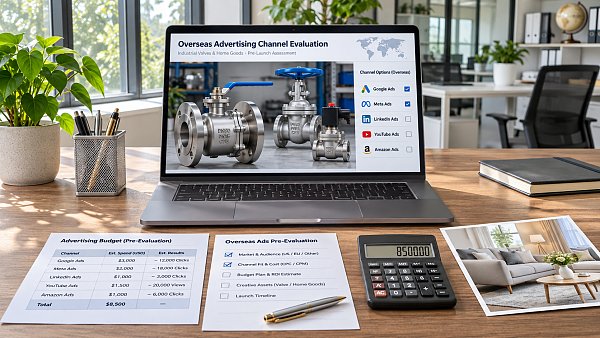
If your budget for overseas advertising is limited, which channel should you try first? If your target customers are already actively searching for your products, it is usually best to test search ads first. If your product needs to be shown in use, or customers have not yet formed a clear need, social media ads may be worth testing first. The key is not which platform is more popular, but whether a limited budget can generate feedback that helps you make a decision.
First, determine where customers are in the decision-making process
Search ads capture existing demand, while social media ads are better suited to reaching customers and generating demand. The former rely on users’ search queries to identify opportunities, while the latter typically display content based on audience characteristics and platform signals. Both can lead to sales, but customers’ readiness to buy often differs when they see the ad.
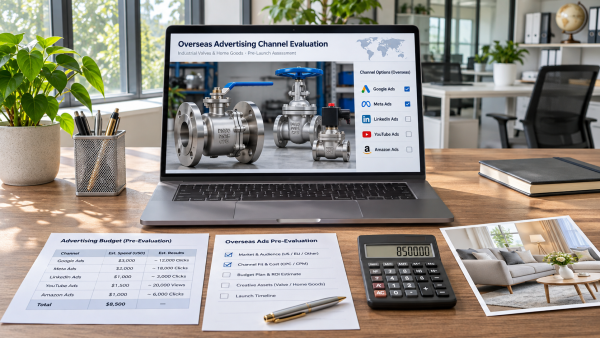
For example, if overseas procurement professionals search for specific specifications, materials, or “suppliers” when buying industrial valves, search ads make it easier to test demand around those purchasing needs. For home goods with a strong design element, images and short videos may explain product differences better than text searches, making social media a suitable starting point.
This is not a fixed distinction between industries: industrial products may also benefit from social media content showcasing factories and use cases. Conversely, if a consumer product has a specific model number or replacement demand, search ads may also be worth prioritizing.
If your budget for overseas advertising is limited, which channel should you try first? Use these four questions to narrow down your options
- Is there clear search demand? List the product, application, and supplier terms your customers might use, then check search volume and competition by target country and language. Google Ads Keyword Planner can help you explore keyword ideas and forecasts, but forecasts are not a guarantee of actual customer acquisition costs. [Source: Google Ads Help Center, Keyword Planner, https://support.google.com/google-ads/answer/6325025]
- Can people understand the product quickly? If the product requires a demonstration, a before-and-after comparison, or lifestyle context, and your business can consistently produce suitable content, you may be better positioned to test social media. If the main selling points are technical specifications and purchasing terms, a detailed page reached through search may be a better fit.
- What is the target conversion? High-value B2B companies should focus on qualified inquiries, purchase intent, and downstream sales opportunities—not just the number of form submissions. For cross-border e-commerce stores, evaluate performance in light of factors such as product margins, orders, and returns; clicks or add-to-cart actions alone are not enough.
- Can the test generate enough feedback? Concentrate your budget on one primary country, one product category, and one core conversion goal. If you expect very few clicks and lack the capacity to assess inquiry quality, narrow the scope, adjust the target market, or hold off on advertising rather than launching campaigns across multiple channels at once.
Estimate your affordable customer acquisition cost before deciding on the test budget
Do not work backward from the amount a platform recommends. Start with your business economics. A B2B company can first estimate: the amount you can spend to acquire a customer × the inquiry-to-sale conversion rate = the affordable cost per qualified inquiry. If your historical conversion rate is not yet reliable, use a range based on assumptions approved by your sales team, then revise it after testing.
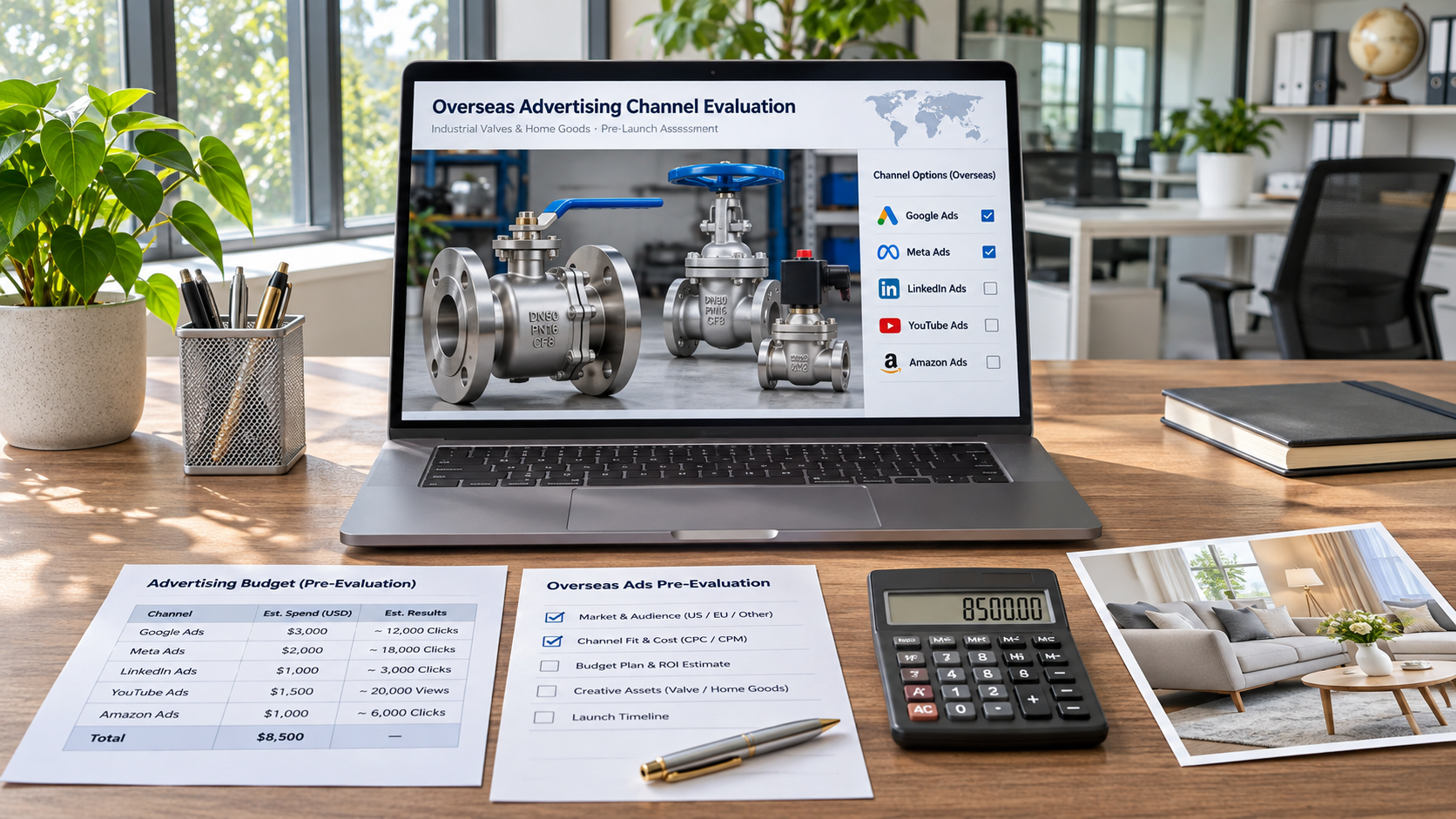
For example, a company estimates that it can spend up to RMB 1,000 to acquire a new customer, and its historical close rate for qualified inquiries is about 10%. That puts the indicative upper limit for each qualified inquiry at around RMB 100. “Qualified” must be defined in advance—for example, the target country, product being purchased, and contact details must meet your requirements. The calculation does not mean the platform will necessarily deliver customers at that cost.
Set aside some of your test budget for adjusting creative, keywords, or landing pages; there is no need to split the budget evenly between two channels from the outset. If your primary channel is not generating even basic feedback, opening another account will usually only make it harder to assess results.
Prepare tracking and landing pages before launching
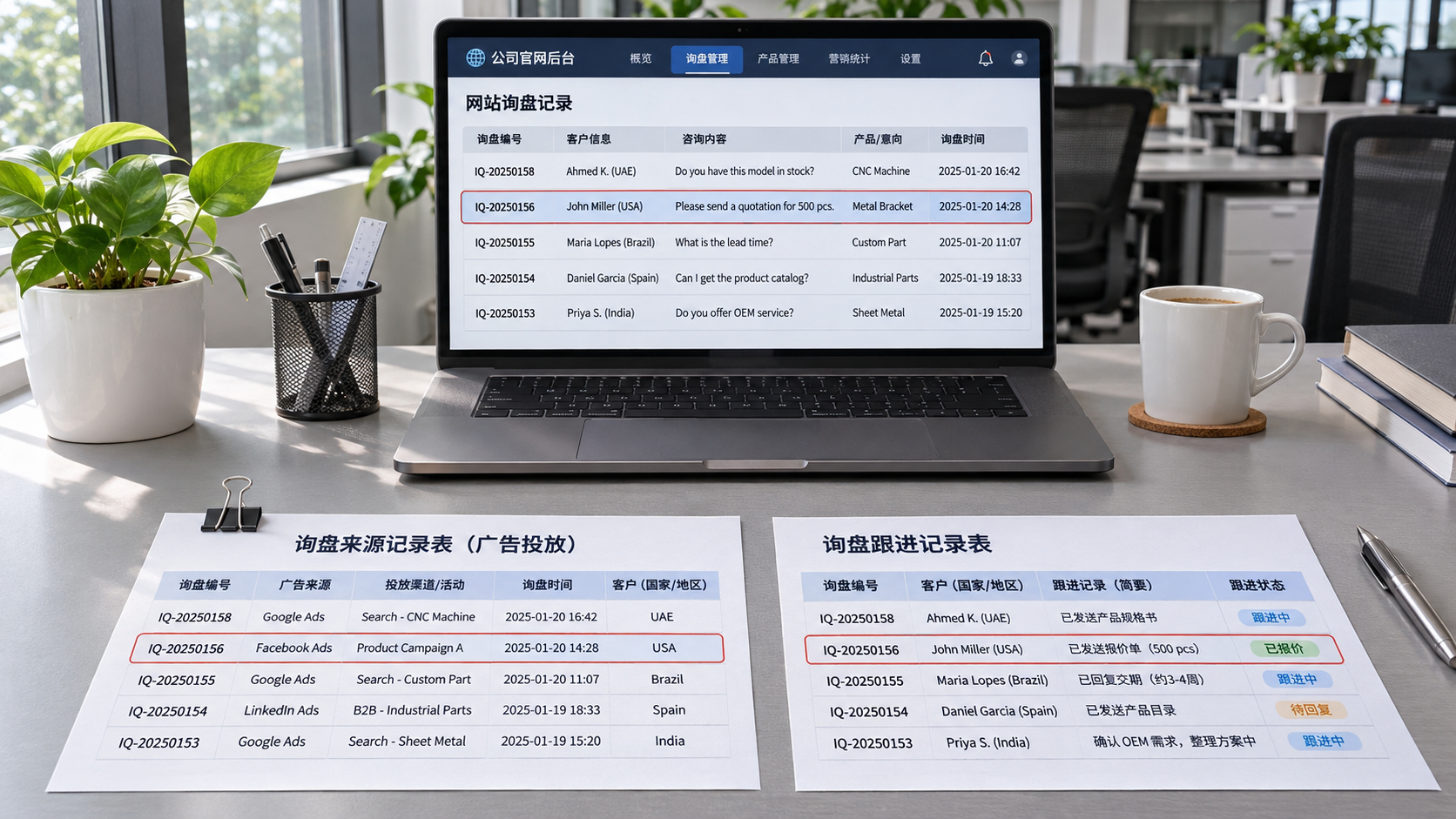
- Use a consistent definition of conversion: Decide whether you are tracking form submissions, email clicks, phone inquiries, or orders. Exclude internal tests and record the advertising source. Conversion tracking in Google Ads must be configured for the selected conversion action. [Source: Google Ads Help Center, About conversion tracking, https://support.google.com/google-ads/answer/1722022]
- Align the ad with the landing page: Visitors should be able to quickly find the product, language, and use case promised in the ad. B2B pages should provide specifications, purchasing steps, and clear contact information. Store pages should explain shipping, payment, and returns.
- Check that your sales team can follow up on leads: Test that forms are delivered correctly, assign a response owner, and record reasons for invalid leads. Otherwise, genuine demand generated by ads may be lost, leaving you with data that cannot inform decisions.
- Pay attention to privacy and consent: Check the requirements for tracking technologies, privacy notices, and consent mechanisms in your target markets. In particular, do not assume that configuring platform tools is the same as complying with the law. For data processing involving EU users, refer to the European Commission’s information on data protection and seek legal advice based on your specific business. [Source: European Commission, Data protection, https://commission.europa.eu/law/law-topic/data-protection_en]
After the test, what should you look at to decide whether to continue or switch channels?
First, check that the technical setup is working reliably, then assess business results. If impressions are high but clicks are low, review your keywords, audience, and ad messaging. If clicks are coming in but conversions are low, check the landing-page relevance and any barriers to submission. If you are getting inquiries but they do not meet your requirements, review your targeting, search terms, and form filters. Do not attribute every problem to the channel being unsuitable.
Continue advertising when the cost per qualified inquiry or order is moving toward a level your business can afford, and lead quality is validated by sales feedback or order data. If you have made reasonable adjustments to keywords, creative, and landing pages but still do not have enough feedback to make a decision, you can pause and move to another channel rather than continuing to add budget.
For teams that lack the capabilities to coordinate websites, tracking, and advertising, ask potential service providers to explain who owns the landing pages, what account access you will have, how data will be delivered, and how they distinguish form submissions from qualified sales opportunities. 易营宝 provides website development, SEO, advertising, and social media services. Whether it is right for your current project should still be assessed based on your target market, scope of work, and verifiable deliverables.
Frequently asked questions
Can I run search and social media ads at the same time?
Yes, provided both tests can generate enough feedback. When the budget is tight, a more prudent approach is to validate your primary channel first, then use the remaining budget to test an audience or creative hypothesis on another channel.
If search ad clicks are expensive, should I switch to social media?
Not necessarily. A lower cost per click does not mean a lower cost per qualified lead. Compare the rate of qualified inquiries after the click, sales results, and profit margins. Also check whether your search terms are misaligned with actual purchasing needs.
Related Articles
 With a Limited Overseas Advertising Budget, Should You Prioritize Search or Social Media?
 How can you track qualified inquiries generated by overseas advertising?
 Does a Slow-Loading Google Ads Landing Page Affect Ad Performance?
Related Products
 Yiyingbao SaaS Intelligent Website Building and Marketing SystemYiyingbao SaaS Intelligent Website Building and Marketing System, AI-powered no-code website building, rapid creation of multilingual B2B international websites in 10 minutes, global server acceleration, AI-powered SEO optimization, helping businesses connect efficiently with global markets. The perfect integration of technology and operation makes building an international trade website remarkably simple
 AI+SEM Intelligent Advertising Marketing SystemAI+SEM drives intelligent ad creation, empowering full-funnel precision advertising marketing. The system automatically generates weekly/monthly reports, AI recommends keywords and target countries, monitors core metrics in real-time with intelligent alerts, and enables one-click high-conversion ad solutions to help quickly acquire customers and improve ROI.
 AI+SEO Dual-Engine System Optimization ServicesYiyingbao’s AI+SEO dual-engine optimization system helps foreign trade enterprises acquire high-quality organic traffic through AI-powered keyword research, content generation, and comprehensive technical optimization, significantly improving search rankings and conversion rates.
 AI+SNS Social Media Marketing SystemYingbao AI+SNS Social Media Marketing System - Precision social capture for the social media era. Supports one-click content synchronization across major platforms like Facebook and LinkedIn. AI intelligently rewrites posts for enhanced relevance. 24/7 AI customer service and user profiling analysis empower businesses to efficiently expand into global markets.
 AI+SEO营销解决方案易营宝AI+SEO营销解决方案,通过AI批量写作、智能生成TDK、精准关键词扩词等功能,全面优化网站SEO效果,提升流量与转化率。助力企业构建高效智能网站新生态。
 AI+SEM Advertising Marketing SolutionsAI+SEM Advertising Marketing Solution leverages AI technology to deeply empower SEM ad campaigns. It automatically generates weekly/monthly reports using AI, presenting account data across multiple dimensions for comprehensive insights into campaign performance and trends. The system precisely recommends keywords and target countries, intelligently generates high-conversion ad copy, and enables one-click activation of efficient campaign plans to help businesses rapidly acquire customers. Simultaneously, it monitors core metrics in real time, intelligently identifies abnormal fluctuations, and issues timely alerts to ensure stable, high-return advertising results.
 Domain Name ServicesEasyWin provides professional domain name services, including intelligent queries, one-stop registration, brand protection, and full lifecycle management, helping businesses build a digital brand image.
 EasyOperate B2C Cross-Border E-Commerce Platform & Independent WebsiteEasyStore B2C Cross-border E-commerce Independent Store is an intelligent website building and cross-border e-commerce integrated solution independently developed by EasyStore Information Technology (Beijing) Co., Ltd. The system is specially designed for small and medium-sized as well as large export enterprises, integrating 'website building, operation, marketing, advertising, and conversion' into one, helping enterprises quickly establish cross-border e-commerce independent stores to achieve brand globalization and global sales growth.
The platform supports multiple languages, multiple currencies, and multi-channel marketing, with built-in AI intelligent translation and SEO optimization systems, suitable for mainstream markets such as Southeast Asia, Europe and America, Latin America, and the Middle East, assisting Chinese manufacturing enterprises in efficiently deploying international e-commerce strategies. SSL证书易营宝提供专业SSL安全证书服务,包括单域名和泛域名证书,确保网站数据传输加密、身份验证和完整性保护,助力企业建立安全可信的在线业务环境。









