









- Lazada 11.11 Mega Sale: LazMall Contributes Nearly Two-Thirds of GMVNov 23, 2026View details
- Shein’s European Revenue Falls 16% as Tighter Rules on Low-Value Direct Shipments Take EffectNov 23, 2026View details
- EU Low-Value Parcel Rules Impact Cargo Flows: Air Freight Volume from China to Europe Down 17% in OctoberNov 23, 2026View details
- Indonesia and the EU Sign Comprehensive Economic Partnership Agreement, 90.4% of Tariff Lines to Become Duty-Free ImmediatelyNov 23, 2026View details
- Qingdao Port's Imports and Exports Exceed RMB 23.699 Trillion in the First 10 Months, Drawing Attention to Port IntelligenceNov 22, 2026View details
- Ningbo Cross-Border E-Commerce Export Value Surges 94.87% Year on Year, Opening Up a New Billion-Yuan Growth TrackNov 22, 2026View details
How Does AI Search Discover Web Pages and Use Them to Answer Questions?
How can I understand and apply search engine principles to help my website rank prominently in AI search results? This article explains the technical factors that improve website visibility in AI search, starting with crawling, indexing, and content citation mechanisms.
For technical evaluators, the first point to understand is that a page being crawlable is only the starting point for consideration. It does not mean the page will necessarily be indexed, retrieved, or cited in an answer. Different AI search products also handle these processes differently, so each stage should be verified separately.
What steps does AI search take from discovering a webpage to generating an answer?
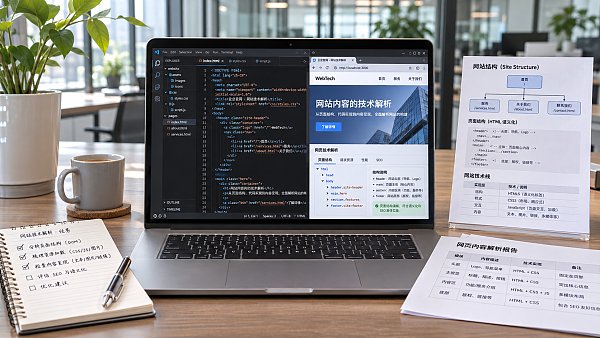
A common path is for a search system to discover a URL through links or a sitemap, crawl and parse the page, and then build or access an index according to the product’s rules. When a user asks a question, the system retrieves relevant information, selects candidate content, and may cite some of those sources when generating an answer.
This process is not exactly the same across all products. Some AI search products rely on their own search indexes, some combine third-party search results, and others access webpages directly or use other authorized data. Whether links appear in an answer also depends on the product’s design.
Therefore, during an evaluation, “discovered,” “crawlable,” “indexed,” “retrievable,” and “cited” should be treated as distinct states. For example, a page may appear in traditional search results but not be cited in an AI answer because its content is not sufficiently relevant to the question, its information is outdated, or it is competing with other candidate sources.
How can you confirm that search systems can discover and crawl your webpages?
First, check whether key pages can be reached through internal links, especially product category pages, specification pages, application case studies, and FAQ pages. Even if an orphan page has been published, it may not be crawled effectively for a long time if there is no path for discovering it.
The XML sitemap should list the canonical URLs you want indexed and be kept up to date. A sitemap can help search systems discover pages, but submitting one does not guarantee that they will be crawled or indexed. You should also check actual activity using search platform reports and server logs.
Next, check robots.txt, page status codes, and access restrictions. For content you want to be discovered, confirm that the relevant crawlers are not blocked by rules, that pages return a normal HTTP status code, and that they are not inaccessible because of login walls, regional restrictions, or incorrect firewall blocks.
Different services may use different crawlers, some for search discovery and others for different purposes. Consult each platform’s official documentation, configure access rules according to your business goals, and verify requests in your logs. An access identifier alone is not enough to confirm that a request is genuine.
Why might a page still not be indexed even if it loads?
After a successful crawl, the system still needs to parse the page and decide whether it is worth retaining. Check for a noindex directive, an incorrect canonical link or redirect chain, and multiple URLs serving highly duplicated content. These issues can all affect indexing results.
For websites that rely on JavaScript rendering, inspect both the initial HTML and the rendered page to confirm that titles, body text, product specifications, and internal links can be reliably retrieved. Server-side rendering or prerendering may be technical options, but the decision should be based on actual crawl tests.
For multilingual websites, also check the links between language versions, canonical URLs, and hreflang annotations to avoid incorrectly directing different language pages to the same version. For overseas markets, the page language, regional information, and actual service scope should also be consistent.
Use a search platform’s URL inspection tool to check its reported crawl and indexing status, then verify visits against your server logs. A normal status in the tool is only part of the investigation; you still need to run real queries on the target product to verify whether the page can be found.
What kind of content is more likely to become a candidate source for AI answers?
Technical accessibility solves the problem of getting in the door, but the content’s ability to answer specific questions is just as important. Address customers’ actual queries with clear answers, such as material specifications, suitable operating environments, delivery scope, and test conditions, rather than relying only on generic statements about company strengths.
Place key conclusions clearly in the relevant sections and explain the applicable conditions in natural language. Tables can show differences in specifications, but the main conclusions should also be explained in the body text. Avoid keeping important information only in images, downloadable attachments, or interactive components that are difficult to parse.
For content that requires factual support, specify data sources, test methods, publication dates, and update dates. When discussing certifications or performance metrics, state the applicable models and scope. Verifiable information helps readers assess the content and helps systems understand its context.
Structured data can help search products that support the relevant markup understand entities and page information, such as product names, prices, or organization details. However, it does not guarantee inclusion in AI citations, and the marked-up content must match what users actually see on the page.
For example, if a page presents the research study Research on Optimizing the Application of Activity-Based Costing in Coal Mining Enterprises, it should explain the research subject, cost accounting methods, and applicable conditions so readers can assess whether the material is relevant to their question.
How can you verify your website’s actual visibility in AI search?
Start by building a representative set of questions covering brand searches, product specification comparisons, industry applications, and purchasing decisions. Record the query language, region, platform used, and test date, then observe separately whether the website appears, where it appears, and whether it has a citation link.
For pages that do not appear, investigate in sequence: whether the URL can be discovered, whether the relevant crawlers successfully access it, whether the page is indexed by the search system in question, and whether the content directly answers the question. Identifying the specific stage makes it clear what needs to be changed.
For pages that have been cited, also check whether the citation is accurate, whether the landing page matches the answer, and whether visitors can continue to view specifications or contact the company. AI answers change over time, by region, and according to how questions are phrased, so a single test cannot represent consistent performance.
Technical indicators can be assessed alongside crawl status in logs, indexing reports from search platforms, and referral traffic and conversion data in analytics tools. Some AI platforms’ referral sources may not be fully identifiable, so combine observable data with manual sampling when evaluating results.
What should you optimize first, and how should you evaluate the investment?
Prioritize technical issues that affect large numbers of pages, such as incorrect crawl rules, abnormal redirects, and key content that cannot be rendered. Then select high-value product and application pages and supplement them with verifiable specifications, case studies, and answers to common customer questions.
Yiyingbao provides smart website building, multilingual website development, and SEO and GEO services. When evaluating such solutions, confirm whether you can independently configure crawl rules, canonical URLs, sitemaps, and structured data, and whether the solution provides optimization reports that can be verified.
Ultimately, assess results based on technical accessibility, how well the content addresses users’ needs, and ongoing monitoring. Crawling and indexing are the foundation, while clear and reliable content is a condition for being included in answers; no single setting can guarantee that a website will consistently rank prominently in AI search.
Related Articles
 How Long Does AI Search Optimization Take to Show Results? What Factors Affect the Timeline?
 Google, ChatGPT, and other platforms are starting to provide promo codes directly in search results
 How do the optimization priorities of AI SEO and traditional SEO differ?


Related Products
 Yiyingbao SaaS Intelligent Website Building and Marketing SystemYiyingbao SaaS Intelligent Website Building and Marketing System, AI-powered no-code website building, rapid creation of multilingual B2B international websites in 10 minutes, global server acceleration, AI-powered SEO optimization, helping businesses connect efficiently with global markets. The perfect integration of technology and operation makes building an international trade website remarkably simple
 AI+SEM Intelligent Advertising Marketing SystemAI+SEM drives intelligent ad creation, empowering full-funnel precision advertising marketing. The system automatically generates weekly/monthly reports, AI recommends keywords and target countries, monitors core metrics in real-time with intelligent alerts, and enables one-click high-conversion ad solutions to help quickly acquire customers and improve ROI.
 AI+SEO Dual-Engine System Optimization ServicesYiyingbao’s AI+SEO dual-engine optimization system helps foreign trade enterprises acquire high-quality organic traffic through AI-powered keyword research, content generation, and comprehensive technical optimization, significantly improving search rankings and conversion rates.
 AI+SNS Social Media Marketing SystemYingbao AI+SNS Social Media Marketing System - Precision social capture for the social media era. Supports one-click content synchronization across major platforms like Facebook and LinkedIn. AI intelligently rewrites posts for enhanced relevance. 24/7 AI customer service and user profiling analysis empower businesses to efficiently expand into global markets.
 AI+SEO营销解决方案易营宝AI+SEO营销解决方案,通过AI批量写作、智能生成TDK、精准关键词扩词等功能,全面优化网站SEO效果,提升流量与转化率。助力企业构建高效智能网站新生态。
 AI+SEM Advertising Marketing SolutionsAI+SEM Advertising Marketing Solution leverages AI technology to deeply empower SEM ad campaigns. It automatically generates weekly/monthly reports using AI, presenting account data across multiple dimensions for comprehensive insights into campaign performance and trends. The system precisely recommends keywords and target countries, intelligently generates high-conversion ad copy, and enables one-click activation of efficient campaign plans to help businesses rapidly acquire customers. Simultaneously, it monitors core metrics in real time, intelligently identifies abnormal fluctuations, and issues timely alerts to ensure stable, high-return advertising results.
 Domain Name ServicesEasyWin provides professional domain name services, including intelligent queries, one-stop registration, brand protection, and full lifecycle management, helping businesses build a digital brand image.
 EasyOperate B2C Cross-Border E-Commerce Platform & Independent WebsiteEasyStore B2C Cross-border E-commerce Independent Store is an intelligent website building and cross-border e-commerce integrated solution independently developed by EasyStore Information Technology (Beijing) Co., Ltd. The system is specially designed for small and medium-sized as well as large export enterprises, integrating 'website building, operation, marketing, advertising, and conversion' into one, helping enterprises quickly establish cross-border e-commerce independent stores to achieve brand globalization and global sales growth.
The platform supports multiple languages, multiple currencies, and multi-channel marketing, with built-in AI intelligent translation and SEO optimization systems, suitable for mainstream markets such as Southeast Asia, Europe and America, Latin America, and the Middle East, assisting Chinese manufacturing enterprises in efficiently deploying international e-commerce strategies. SSL证书易营宝提供专业SSL安全证书服务,包括单域名和泛域名证书,确保网站数据传输加密、身份验证和完整性保护,助力企业建立安全可信的在线业务环境。









