









- Can the average annual growth rate reflect real opportunities in overseas markets?Oct 07, 2026View details
- Which customer acquisition channels will be affected by cross-border marketing trends in 2026?Sep 06, 2026View details
- Which homogenization risks should be considered in an analysis of the AI-powered website building industry?Aug 30, 2026View details
- How Will AI Marketing Trends 2026 Change Advertising Budget AllocationAug 28, 2026View details
- Is the EV SSL certificate market shrinking or upgrading? How should companies assess certificate procurement?Aug 11, 2026View details
- Why the old AMP SEO 2020 practices no longer work and what has changed in current optimization prioritiesAug 02, 2026View details
Is renewing Yiyingbao’s SEO service for foreign trade websites expensive?
After working together for a period of time, many companies start to wonder whether renewing Yiyingbao's foreign trade website SEO service is expensive. On the surface, this seems to be a question about price, but what they are usually trying to understand is something else: whether the current ongoing investment can still bring stable inquiries, controllable customer acquisition costs, and a clearer growth outlook than changing service providers or switching to advertising.
In the website and marketing services integration industry, renewal has never been simply about comparing quotations. Foreign trade SEO, in particular, depends on website development capabilities in the early stage, content and technical execution in the middle stage, and accumulated data, keyword assets, and conversion efficiency in the later stage. In other words, whether the service is expensive cannot be judged separately from the business stage, website foundation, and actual delivery.
First, understand why companies hesitate when it is time to renew
When most foreign trade companies sign up for SEO services for the first time, they are more likely to accept the idea of “let's try it for a while first.” However, their mindset changes significantly when it is time to renew. By then, companies are no longer concerned only with whether they have traffic. Instead, they begin to ask three more specific questions: Is the ranking stable? Are the inquiries valuable? Can this service continue to scale results?
This is why people searching for “Is Yiyingbao's foreign trade website SEO service renewal expensive?” are often not looking for a standard answer. They are making a second assessment:
- If results have already been achieved, is an increase in the renewal price reasonable?
- If traffic has increased but inquiries remain average, is the problem with SEO itself or with website conversion?
- If the service appears to cover many areas, which parts continue to provide value and which may merely look “busy”?
This type of assessment becomes more complex when applied to an integrated website development and marketing service provider such as Yiyingbao. Companies typically purchase more than SEO activities alone. The package may also include a website development system, multilingual pages, content support, advertising coordination, social media distribution, and even AI-assisted optimization capabilities. Whether renewal is expensive is actually an evaluation of the marginal value of this combined service.
Before deciding whether renewal is worthwhile, do not rush to look at the quotation
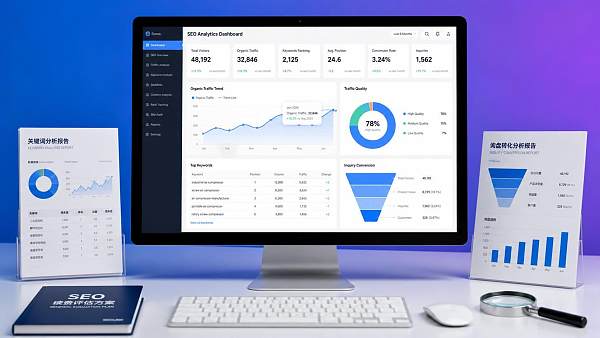
If a company compares only the renewal amount with the first-year contract value, the conclusion can easily be misleading. A more reliable approach is to first examine what assets SEO has actually accumulated during the previous cooperation period.
At least four dimensions should be considered here.
1. Have keyword assets been established?
If, over the past year, only a few brand keywords and company-name keywords have ranked, while industry, product, and use-case keywords that genuinely generate purchasing demand have very limited coverage, then renewal may not be worthwhile even if the price is low. This indicates that the website has not yet established sustainable organic search entry points.
Conversely, if the website has continuously gained exposure for keywords covering multiple core country markets, product lines, and purchasing stages, renewal is essentially about maintaining and expanding existing assets. In this case, it is not appropriate to judge whether the service is expensive simply by looking at the “annual fee.”
2. Is the traffic structure healthy?
Some companies see organic traffic increasing and assume that SEO is effective. However, in the B2B foreign trade context, it is more important to examine whether the traffic sources match the target customers. For example, are visits concentrated in target markets? Do visitors land on product pages, solution pages, and industry application pages rather than on large numbers of blog or general information pages?
If SEO mainly brings low-intent traffic, even an inexpensive renewal may simply amplify ineffective visits. Conversely, if the traffic volume is not particularly large but the proportion of visitors from target countries is high, key landing pages maintain stable engagement, and inquiry-page visit paths are clear, this is often more valuable than data that merely appears “busy.”
3. Is inquiry quality improving?
One of the most common judgment mistakes made by foreign trade companies is equating the number of inquiries with SEO value. In reality, the key question is not whether SEO renewal is worthwhile based on the total number of inquiries, but on the proportion of qualified inquiries, sample conversion rates, changes in the sales cycle, and whether the leads are closer to the customer types the company actually wants.
If the number of inquiries increases after cooperation begins, but many come from non-target countries, individual buyers, or small-volume buyers seeking low prices, the company's sales team may instead feel that they are “getting busier without getting better results.” In this case, the reasonableness of renewal should be reassessed by returning to the keyword strategy, page content, and lead qualification mechanisms.
SEO that is truly worth renewing should make the sales department feel that leads are more precise, not merely more numerous.
4. Are technical and content efforts sustainable?
Foreign trade SEO is not as simple as publishing a few articles every month. Website structure, URL rules, multilingual indexing, page loading, Schema markup, content clustering, and country-market version strategies all matter. If these foundations were properly established during the first year, subsequent maintenance costs should theoretically decrease. However, if many foundational tasks remain unfinished after the first year and the second year still focuses on “filling in the basics,” companies need to carefully assess the value of renewal.
This is especially important for companies using integrated SaaS website development and marketing solutions. Website editability, page generation efficiency, technical SEO capabilities, and coordination of content publishing all directly affect the cost-effectiveness of subsequent renewals.
When a higher renewal price may still be reasonable
A common view in the industry is that SEO should become increasingly cheaper over time. This is not necessarily wrong, but it is incomplete.
If a company's website has moved from the “built for presentation” stage into the “continuous customer acquisition” stage, subsequent work often shifts from basic execution to more challenging market expansion. This may include adding languages, establishing new regional sites, building content clusters around niche industry keywords, aligning SEO with Google Ads landing-page strategies, and even beginning to optimize visibility in AI search. These tasks are not necessarily easier than those in the first year.
Taking a platform-based service provider such as Yiyingbao, which combines website development systems with overseas marketing capabilities, as an example: if renewal includes more than routine content updates—such as website technical iteration, expansion of the keyword map, multilingual page optimization, advertising and SEO coordination, AI-assisted content production, and exploration of GEO-related capabilities—then a price higher than the first-year fee or that of an ordinary outsourced operations company is not necessarily unreasonable. The prerequisite is that the delivery scope is clearly defined and the data results can be verified.
In other words, whether the service is expensive does not depend on “how much more expensive it is,” but on whether “the additional components are capabilities the company genuinely needs at its current stage.”
When a low renewal price may still not be worthwhile
Another common misconception is equating low-cost renewal with cost optimization. In foreign trade SEO, the most expensive factor is often not the service fee but time.
If a company's website has been operating for a year but still has the following problems, it should remain cautious even if the renewal quotation is not high:
- Core product keyword rankings have shown little improvement over an extended period;
- A large amount of new content has been added, but indexing and click performance remain weak;
- Inquiry growth relies mainly on advertising, while SEO's contribution remains unclear;
- Service reports focus on displaying activities and lack business interpretation;
- Every communication discusses traffic, while conversion pages and sales feedback are rarely addressed.
This usually means that the problem is not just the budget, but a disconnect between the strategy and business objectives. Continuing to renew may simply prolong an inefficient situation.
The advantage of an integrated service provider may also be the most easily overlooked variable when assessing renewal
Under the traditional division of labor, a website development company builds the site, an SEO company handles optimization, an advertising company manages traffic acquisition, and the company coordinates everything internally. The advantage is flexibility in purchasing individual services, but the disadvantages are also clear: responsibility boundaries can become fragmented, data standards can be difficult to unify, and website structure, content, and conversion issues are often blamed on one another.
In theory, an integrated website and marketing service provider such as Yiyingbao can evaluate website development, SEO, advertising, social media, and multilingual strategies within a single framework. For foreign trade companies, this model has two practical benefits:
- The website can be built around customer acquisition rather than first creating a presentation-oriented corporate website and then having to add SEO later;
- At renewal time, it is easier to determine whether the entire process is effective instead of focusing only on the workload of a single role.
However, this model also involves a purchasing risk: the broader the service scope, the easier it is for companies to be attracted by the idea that “everything is included” while overlooking whether each capability is actually implemented. Especially at the renewal stage, companies should not focus only on how many modules are listed in the proposal. They should examine which modules genuinely produced results during the previous period.
Before renewing, companies should at least clarify these points
If you are currently deciding whether to renew, do not rush to discuss the price. First, make the questions specific. An experienced service team will generally not avoid these questions.
After asking these questions, many companies can determine the general direction for themselves: whether to renew, negotiate a different service structure, or consider changing the service model.
The answer differs for companies at different stages
Even for the same foreign trade website SEO renewal, different companies may reach completely different conclusions.
For a manufacturing company that has just shifted from platform-based customer acquisition to independent website-based customer acquisition, the website foundation may still be under development while SEO has begun to generate initial inquiries. At this stage, the priority for renewal is usually not reducing the price, but confirming whether the service provider can continue to deepen the website, particularly whether product pages, application pages, and multilingual market pages can be expanded continuously.
For an overseas brand that already has stable advertising campaigns, SEO renewal is more like assessing whether organic traffic can dilute overall customer acquisition costs. Such companies should focus more on whether SEO can capture non-brand searches, content searches, and AI search entry points rather than merely maintaining brand keywords.
For a small or medium-sized foreign trade company with significant business fluctuations and a sensitive budget, renewal decisions need to be more practical. Instead of pursuing a “large and comprehensive” annual plan, it is better to confirm whether the core country markets and product keywords are worth continued investment. SEO can be reduced, but savings should be made on peripheral items rather than by stopping the development of critical assets.
The real question is not “Is it expensive?” but “Should we continue investing in this path?”
Whether renewing Yiyingbao's foreign trade website SEO service is expensive is essentially not a uniform pricing question, but a business decision. For foreign trade companies, once SEO has generated meaningful accumulation, renewal often means purchasing time, stability, and compounding growth potential. However, if no clear keyword assets, target-market traffic, or qualified-inquiry logic has been established after a year, even an inexpensive renewal may simply continue consuming the budget.
Therefore, when renewal time arrives, the most valuable action is usually not to negotiate a lower price first, but to break down the data, break down the services, and match the results with the process. If they align, a higher price may be reasonable; if they do not, continuing may not be worthwhile no matter how low the price is.
Related Articles


Related Products
 Yiyingbao SaaS Intelligent Website Building and Marketing SystemYiyingbao SaaS Intelligent Website Building and Marketing System, AI-powered no-code website building, rapid creation of multilingual B2B international websites in 10 minutes, global server acceleration, AI-powered SEO optimization, helping businesses connect efficiently with global markets. The perfect integration of technology and operation makes building an international trade website remarkably simple
 AI+SEM Intelligent Advertising Marketing SystemAI+SEM drives intelligent ad creation, empowering full-funnel precision advertising marketing. The system automatically generates weekly/monthly reports, AI recommends keywords and target countries, monitors core metrics in real-time with intelligent alerts, and enables one-click high-conversion ad solutions to help quickly acquire customers and improve ROI.
 AI+SEO Dual-Engine System Optimization ServicesYiyingbao’s AI+SEO dual-engine optimization system helps foreign trade enterprises acquire high-quality organic traffic through AI-powered keyword research, content generation, and comprehensive technical optimization, significantly improving search rankings and conversion rates.
 AI+SNS Social Media Marketing SystemYingbao AI+SNS Social Media Marketing System - Precision social capture for the social media era. Supports one-click content synchronization across major platforms like Facebook and LinkedIn. AI intelligently rewrites posts for enhanced relevance. 24/7 AI customer service and user profiling analysis empower businesses to efficiently expand into global markets.
 AI+SEO营销解决方案易营宝AI+SEO营销解决方案,通过AI批量写作、智能生成TDK、精准关键词扩词等功能,全面优化网站SEO效果,提升流量与转化率。助力企业构建高效智能网站新生态。
 AI+SEM Advertising Marketing SolutionsAI+SEM Advertising Marketing Solution leverages AI technology to deeply empower SEM ad campaigns. It automatically generates weekly/monthly reports using AI, presenting account data across multiple dimensions for comprehensive insights into campaign performance and trends. The system precisely recommends keywords and target countries, intelligently generates high-conversion ad copy, and enables one-click activation of efficient campaign plans to help businesses rapidly acquire customers. Simultaneously, it monitors core metrics in real time, intelligently identifies abnormal fluctuations, and issues timely alerts to ensure stable, high-return advertising results.
 Domain Name ServicesEasyWin provides professional domain name services, including intelligent queries, one-stop registration, brand protection, and full lifecycle management, helping businesses build a digital brand image.
 EasyOperate B2C Cross-Border E-Commerce Platform & Independent WebsiteEasyStore B2C Cross-border E-commerce Independent Store is an intelligent website building and cross-border e-commerce integrated solution independently developed by EasyStore Information Technology (Beijing) Co., Ltd. The system is specially designed for small and medium-sized as well as large export enterprises, integrating 'website building, operation, marketing, advertising, and conversion' into one, helping enterprises quickly establish cross-border e-commerce independent stores to achieve brand globalization and global sales growth.
The platform supports multiple languages, multiple currencies, and multi-channel marketing, with built-in AI intelligent translation and SEO optimization systems, suitable for mainstream markets such as Southeast Asia, Europe and America, Latin America, and the Middle East, assisting Chinese manufacturing enterprises in efficiently deploying international e-commerce strategies. SSL证书易营宝提供专业SSL安全证书服务,包括单域名和泛域名证书,确保网站数据传输加密、身份验证和完整性保护,助力企业建立安全可信的在线业务环境。









