









- Four Annual Industry Reports Released at the 14th Digital Marketing Development ForumNov 29, 2026View details
- Sichuan Announces 2026 Provincial Cross-Border E-Commerce Parks; Two Chengdu Industrial Parks SelectedNov 29, 2026View details
- People’s Daily Focuses on Liaoning Cross-Border E-Commerce: Xiaobeihe Hosiery Reaches Overseas Markets Through Digital ChannelsNov 29, 2026View details
- What Are the Ranking Criteria for China's Top 100 SaaS Companies?Nov 28, 2026View details
- Eight Departments, Including the Ministry of Commerce, Issue the 15th Five-Year Plan for the Development of Trade in ServicesNov 27, 2026View details
- General Administration of Customs Issues New Rules on Import and Export Cosmetic Labeling, Effective December 1Nov 26, 2026View details
What Costs Should a Multilingual Website SEO Maintenance Budget Include?
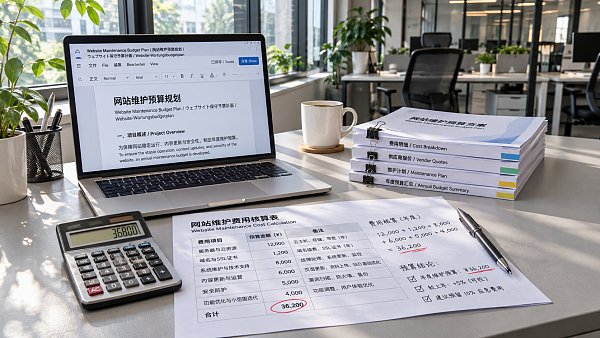
Is multilingual website SEO maintenance expensive? For finance approvers, the key question is not whether costs inevitably rise with the number of languages, but how many pages need to be maintained in each market, how frequently the content is updated, and whether the current system can support different language versions. Before approval, separate one-time remediation, ongoing operations, and additional purchases to avoid underestimating future investment or paying for services that are not yet needed.
Is multilingual website SEO maintenance expensive? Start by reviewing the cost structure
Multilingual SEO maintenance typically consists of infrastructure and technical maintenance, translation and localization, content optimization, and monitoring and analysis. These costs do not all increase in direct proportion to the number of languages: servers and some technical troubleshooting can be shared, while keyword research, translation review, and content for local markets often require separate investment.
Finance teams should ask for quotes to be broken down into “one-time fees + recurring fees + as-needed fees.” For example, adapting templates for a new language version may be a one-time project; content updates and monitoring are ongoing work; and urgent troubleshooting or large-scale page migration may be quoted separately. If the existing website has a sound technical foundation, do not assume that the full website development cost must be paid again.
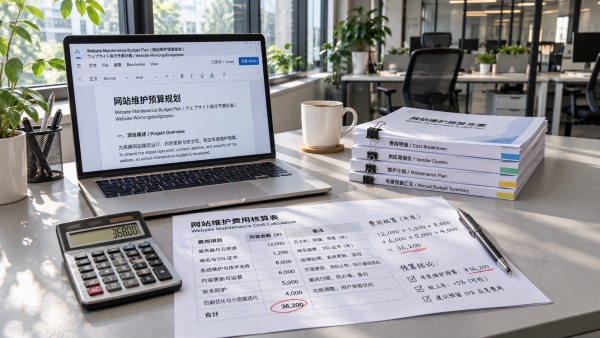
Six types of costs to include in the budget
1. Website technology and infrastructure
Check whether domains, hosting, the content management system, multilingual plugins, or interfaces incur fees, and whether renewals, upgrades, and technical support are included in the contract. When multiple languages share a system, confirm whether costs vary by site, page, account, or traffic volume. If regional servers or special features are needed, clarify the conditions that would trigger these costs.
Technical SEO maintenance also includes checks for page crawlability, indexing issues, duplicate content, redirects, sitemaps, and the association between language versions. Google recommends using different URLs to distinguish language versions and using methods such as hreflang to help search engines understand the relationship between them. The implementation and review work should be included in the scope of delivery. Reference: Google’s guide to managing multi-regional and multilingual websites.
2. Translation, localization, and human review
Translation costs should cover new pages and also account for synchronizing language versions when the source text is updated. When requesting a quote, confirm whether pricing is based on source-text characters, target-text characters, pages, or working hours, and whether glossaries, title tags and meta descriptions, image text, and human proofreading are included.
Machine translation can be used as a first draft, but key content such as product specifications, industry terminology, and delivery terms should still be reviewed by people with relevant industry knowledge. Google also cautions that publishing automatically translated content without human review may affect content quality. Reference: Google’s guide to multilingual websites.
3. Keywords and page optimization for each market
The way people search for the same product may differ across regions, so Chinese keywords should not simply be translated word for word. The budget should cover target-market keyword research, search intent analysis, adjustments to titles and body copy, internal link maintenance, and optimization of product or category pages.
When procuring services, ask the provider to list the markets, pages, and level of work covered in each cycle. For languages where demand has not yet been validated, you can start by maintaining core product pages and the contact page, then expand based on actual performance rather than rewriting all pages at once.
4. Content creation and updates
In addition to translating existing content, some markets may need original purchasing guides, FAQs, or application information. Clarify who is responsible for topic selection, writing, technical review, publishing, and revisions, as well as when the client needs to provide materials. If product specifications change frequently, also set aside time to review historical pages.
5. Tools, monitoring, and reporting
Costs may include SEO tool subscriptions, dashboard setup, and manual analysis. Google Search Console can be used to review a website’s performance in Google Search; website ownership must be verified before use. Reference: Getting started with Search Console. For commercial tools, check the number of accounts, data coverage, subscription term, and whether data can be exported after the contract ends.
Reports should not focus on rankings alone. Finance teams can request organic search traffic, qualified inquiries, or sales metrics by language or market, with the data sources, measurement definitions, and limitations affecting results clearly stated. Traffic growth does not necessarily mean revenue growth, so attribution methods should be agreed with the sales team.
6. Coordination, compliance, and unforeseen costs
The time spent by internal product experts, translation reviewers, IT, and sales teams is also a real cost. If the site serves different jurisdictions, privacy policies, cookie management, or legal counsel review may also be required. Specific obligations depend on the business and target markets and should be assessed by qualified professionals; do not assume that one template will work in every region.
You may also set aside an emergency budget for compatibility fixes after system upgrades, errors on important pages, or website migrations. The amount to reserve should be based on historical incidents, planned changes, and the scope of the contract, rather than a fixed percentage.
How can finance compare quotes and avoid additional costs later?
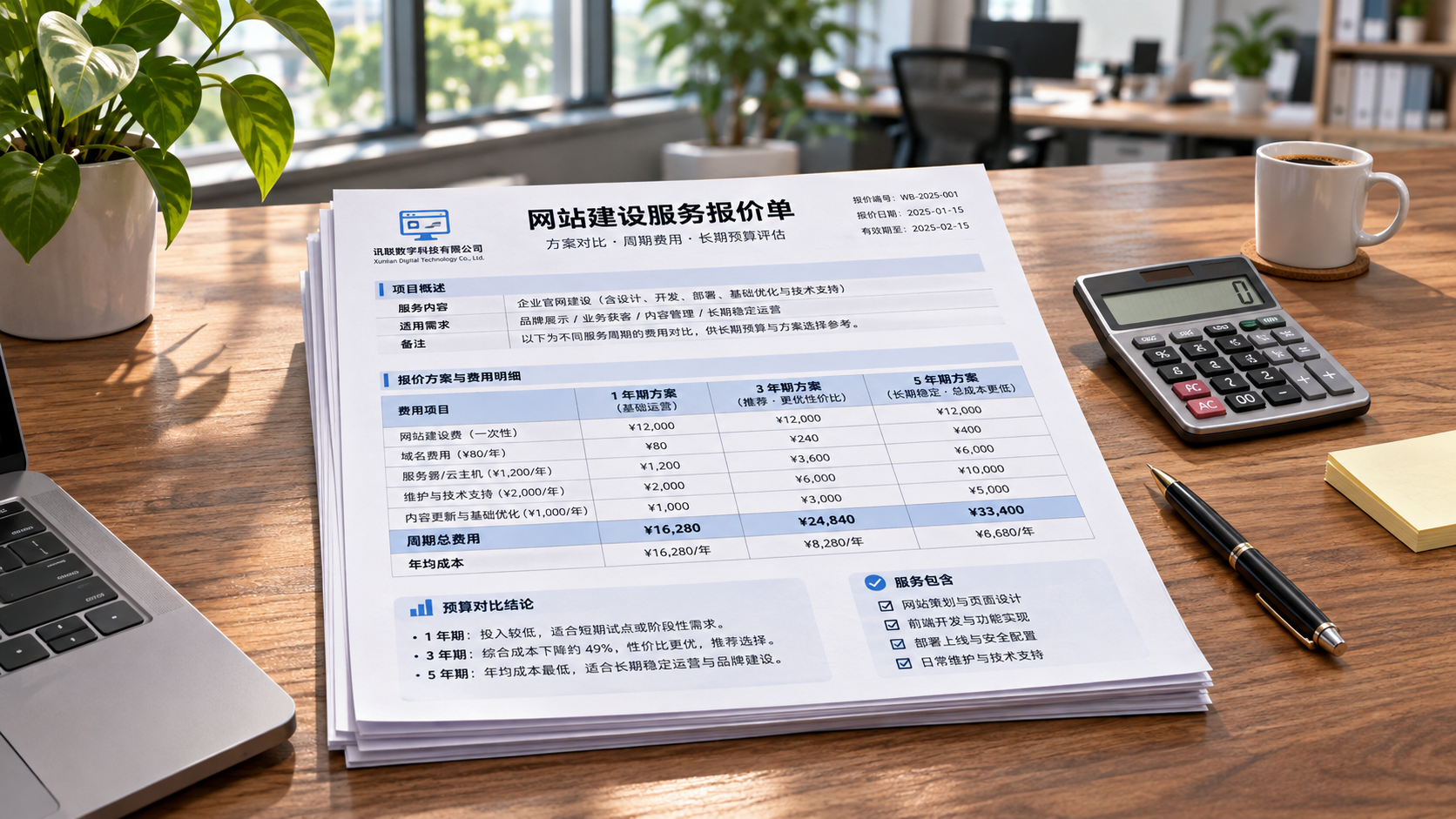
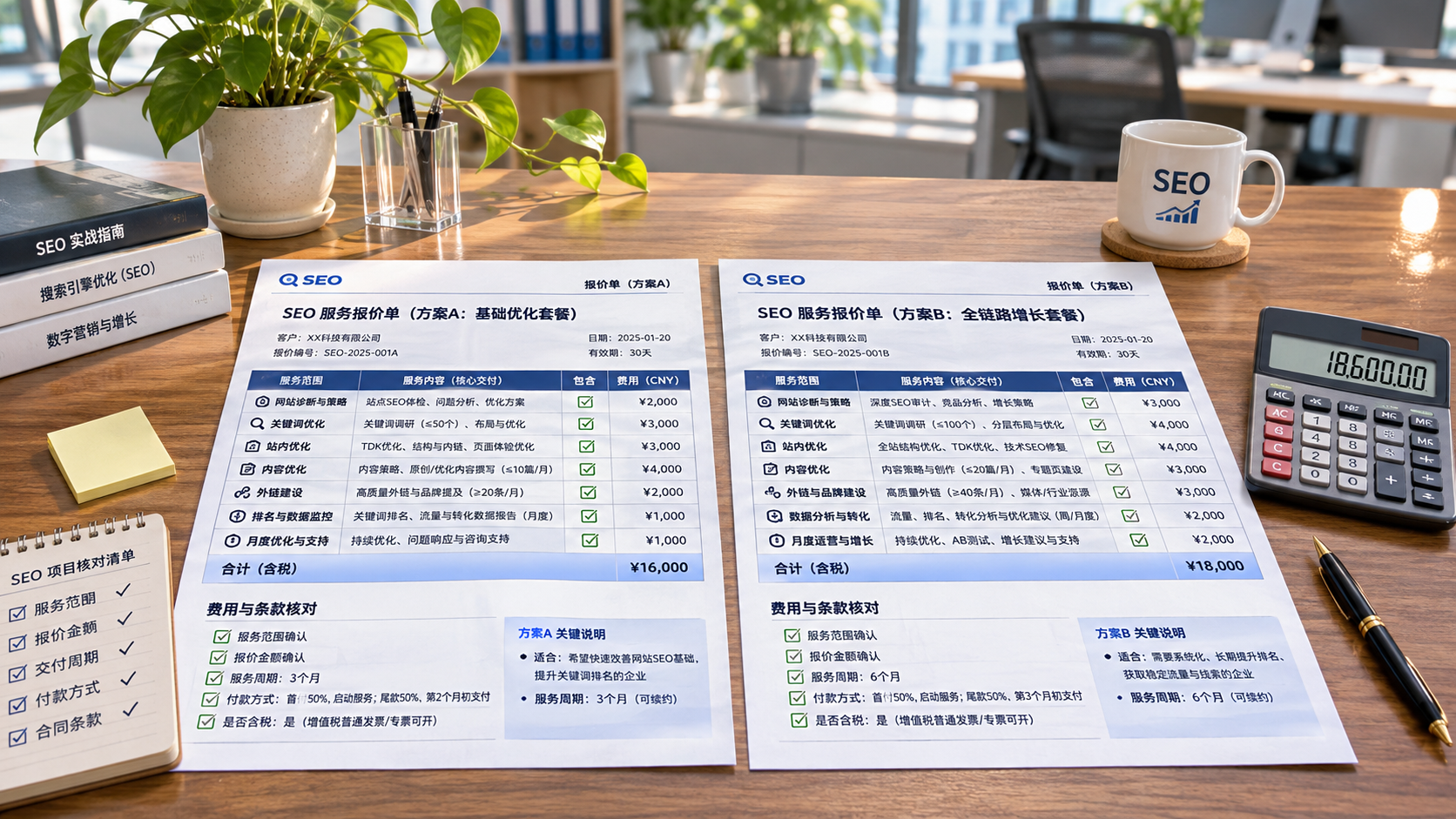
When comparing proposals, use the same scope of procurement—for example, the same number of languages and pages, update frequency, and review standards. A low-cost proposal that only provides translation and excludes technical fixes or human proofreading cannot be directly compared with a full maintenance plan. Also watch for advertising spend, link-building fees, or new website development costs being bundled into monthly SEO fees without being itemized.
How can you assess budget returns more reliably?
- Define business objectives first: Distinguish qualified B2B inquiries, distributor applications, and B2C orders. Do not treat every form submission as a qualified lead.
- Establish a consistent cost basis: In addition to supplier fees, include internal labor, tool subscriptions, and necessary third-party reviews; account for advertising budgets separately.
- Set a comparison period: Record organic search performance in each market before procurement and compare it regularly, while noting factors such as seasonality, website redesigns, and sales follow-up.
- Expand in stages: First check whether technical issues have been fixed and pages published as planned, then decide whether to expand language coverage based on traffic quality and qualified inquiries.
SEO performance is affected by factors such as the competitive landscape, search demand, and the website’s technical foundation. Suppliers cannot guarantee specific rankings or sales revenue. Approval documents should focus instead on verifiable work, data access, and review mechanisms.
Two common questions before procurement
Can translation services alone replace multilingual SEO maintenance?
No, not completely. Translation addresses language, but does not automatically cover search demand research, connections between language versions, indexing checks, or performance monitoring. If the budget is limited, first clarify which tasks will be handled internally, then procure the missing services.
Does assigning website development, SEO, and advertising to the same provider save money?
It may reduce communication and integration coordination costs, but decisions should not be based solely on bundled discounts. You can ask providers such as EasyYingbao, which offer website development and overseas marketing services, to list website development, SEO, advertising management, and media placement fees separately, and confirm whether each service can be renewed independently. Actual savings should be assessed by comparing the scope of delivery and quotes.
Further reading: Integration and operational optimization strategies for mergers and acquisitions in the property management industry. This content relates to another business area and should not be used as a basis for multilingual SEO procurement.
Related Articles
 How can you assess future costs when comparing website-building platform providers?
 How much does Yingyingbao’s SaaS system cost per year?
 How can you tell whether a quote for Google SEO services is reasonable?

Related Products
 Yiyingbao SaaS Intelligent Website Building and Marketing SystemYiyingbao SaaS Intelligent Website Building and Marketing System, AI-powered no-code website building, rapid creation of multilingual B2B international websites in 10 minutes, global server acceleration, AI-powered SEO optimization, helping businesses connect efficiently with global markets. The perfect integration of technology and operation makes building an international trade website remarkably simple
 AI+SEM Intelligent Advertising Marketing SystemAI+SEM drives intelligent ad creation, empowering full-funnel precision advertising marketing. The system automatically generates weekly/monthly reports, AI recommends keywords and target countries, monitors core metrics in real-time with intelligent alerts, and enables one-click high-conversion ad solutions to help quickly acquire customers and improve ROI.
 AI+SEO Dual-Engine System Optimization ServicesYiyingbao’s AI+SEO dual-engine optimization system helps foreign trade enterprises acquire high-quality organic traffic through AI-powered keyword research, content generation, and comprehensive technical optimization, significantly improving search rankings and conversion rates.
 AI+SNS Social Media Marketing SystemYingbao AI+SNS Social Media Marketing System - Precision social capture for the social media era. Supports one-click content synchronization across major platforms like Facebook and LinkedIn. AI intelligently rewrites posts for enhanced relevance. 24/7 AI customer service and user profiling analysis empower businesses to efficiently expand into global markets.
 AI+SEO营销解决方案易营宝AI+SEO营销解决方案,通过AI批量写作、智能生成TDK、精准关键词扩词等功能,全面优化网站SEO效果,提升流量与转化率。助力企业构建高效智能网站新生态。
 AI+SEM Advertising Marketing SolutionsAI+SEM Advertising Marketing Solution leverages AI technology to deeply empower SEM ad campaigns. It automatically generates weekly/monthly reports using AI, presenting account data across multiple dimensions for comprehensive insights into campaign performance and trends. The system precisely recommends keywords and target countries, intelligently generates high-conversion ad copy, and enables one-click activation of efficient campaign plans to help businesses rapidly acquire customers. Simultaneously, it monitors core metrics in real time, intelligently identifies abnormal fluctuations, and issues timely alerts to ensure stable, high-return advertising results.
 Domain Name ServicesEasyWin provides professional domain name services, including intelligent queries, one-stop registration, brand protection, and full lifecycle management, helping businesses build a digital brand image.
 EasyOperate B2C Cross-Border E-Commerce Platform & Independent WebsiteEasyStore B2C Cross-border E-commerce Independent Store is an intelligent website building and cross-border e-commerce integrated solution independently developed by EasyStore Information Technology (Beijing) Co., Ltd. The system is specially designed for small and medium-sized as well as large export enterprises, integrating 'website building, operation, marketing, advertising, and conversion' into one, helping enterprises quickly establish cross-border e-commerce independent stores to achieve brand globalization and global sales growth.
The platform supports multiple languages, multiple currencies, and multi-channel marketing, with built-in AI intelligent translation and SEO optimization systems, suitable for mainstream markets such as Southeast Asia, Europe and America, Latin America, and the Middle East, assisting Chinese manufacturing enterprises in efficiently deploying international e-commerce strategies. SSL证书易营宝提供专业SSL安全证书服务,包括单域名和泛域名证书,确保网站数据传输加密、身份验证和完整性保护,助力企业建立安全可信的在线业务环境。









