









- Eight Departments, Including the Ministry of Commerce, Issue the 15th Five-Year Plan for the Development of Trade in ServicesNov 27, 2026View details
- General Administration of Customs Issues New Rules on Import and Export Cosmetic Labeling, Effective December 1Nov 26, 2026View details
- U.S. to Announce Section 301 Investigation Findings on 16 Economies, Potentially Proposing New TariffsNov 26, 2026View details
- Hapag-Lloyd’s $4.2 billion acquisition of ZIM faces a closing delay; ZIM reports third-quarter net profit of $830 millionNov 24, 2026View details
- SCFI falls for a third straight week to 3,503.78 points, with blank sailings on trans-Pacific routes rising to 10Nov 24, 2026View details
- Lazada 11.11 Mega Sale: LazMall Contributes Nearly Two-Thirds of GMVNov 23, 2026View details
How much does Yingyingbao’s SaaS system cost per year?

How much does the Yiyingbao SaaS system cost per year? During financial approval, first distinguish between the system usage fee and the total annual project investment: website implementation, multilingual content, marketing services, and advertising spend may not all be included in the annual system fee.
There is currently no verifiable public standard price list or specific package information for Yiyingbao, so a single annual price cannot be provided on that basis. The actual amount should be based on a written quotation from the supplier covering the type of website, scope of features, and service period. For approvers, it is more important to confirm what the price covers and what may incur additional charges than to ask for the lowest price.
How much does the Yiyingbao SaaS system cost per year? Start by breaking down the quotation
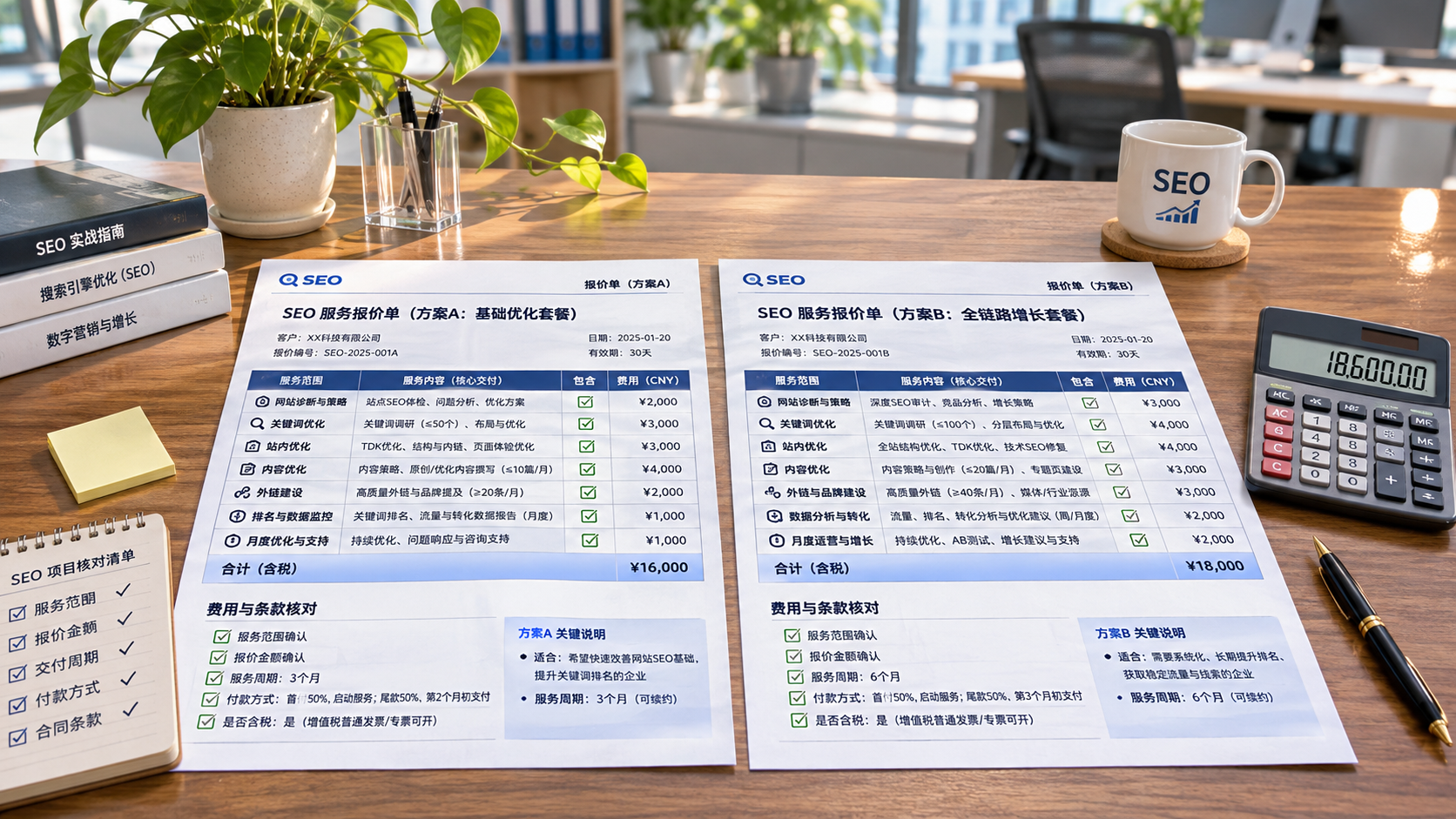
Even for a one-year contract, the workload may vary between a B2B inquiry website, a B2C cross-border e-commerce store, and a multilingual brand website. Ask the supplier to quote each of the following items separately and indicate whether it is mandatory.
The items in the table are a cost-checking list. They do not mean that Yiyingbao necessarily charges for each item individually or that every item is suitable for purchase. Asking the supplier to mark each item as “included,” “additional charge,” or “not applicable” makes it easier for finance to verify than a quotation that simply says “one-stop service.”

Calculate costs across three stages: the first year, renewals, and exit
First-year total investment = system fee + implementation fee + add-ons and third-party costs + marketing service fees + advertising media budget. Items already included in the package should not be counted twice. For monthly services, multiply the monthly fee by the actual number of months purchased. For usage-based items, set a budget cap based on business estimates and allow room for adjustments.
For example, if a company purchases only an inquiry website and basic website development services, without advertising management or plans to run ads, the budget should not automatically include advertising costs. Conversely, even if the supplier’s quotation includes advertising management, confirm separately whether media spend is included.
The renewal budget should exclude one-time implementation fees that the contract confirms do not need to be paid again, while including system renewal fees, domain and third-party service renewals, ongoing marketing services, and estimated additional usage. Do not use a first-year promotional price as the basis for the second-year budget. Obtain written details of the renewal price or price adjustment rules.
The cost of exit should also be included in the approval review: whether website content and leads can be exported when the contract ends, what formats are available, whether data processing fees apply, and how the domain, advertising accounts, and creative assets will be transferred. Whether website functionality or design can be migrated depends on the contract and actual technical conditions; do not assume that “data can be exported” means the website can be migrated.
Which requirements are most likely to push costs above expectations?
Languages, pages, and content production
For a multilingual website, clarify how many languages and pages are included in the package, and whether translation, human proofreading, and subsequent revisions are covered. The implementation checklist should also specify who provides product information and whether image usage rights are required. If languages or pages are added later, ask the supplier to explain in advance how the additional work will be priced.
E-commerce transactions and external tools
In addition to displaying products, a B2C store may involve payments, logistics, tax calculations, and order management. Finance should confirm item by item which functions are provided by the system, which rely on third parties, and who is responsible for third-party subscription fees or transaction-related charges. Until the integration scope is confirmed, do not judge total costs based solely on a claim that the system “supports e-commerce.”
Marketing services and media spend
Quotations for SEO, GEO, advertising, and social media management should specify deliverables, service periods, and each party’s responsibilities. For example, clarify which page optimizations, content production, and reports are included in SEO services, and whether advertising services cover account setup, creative production, or ongoing optimization. Service fees are not the same as advertising costs, and advertising spend is not the same as inquiry or order revenue.
Before financial approval, ask the business team to provide five items of information
- Confirm the purchase objective: Is the goal to build a corporate website, generate B2B inquiries, or operate a cross-border e-commerce store? Once the objective is clear, remove modules and services that are not currently needed.
- Define the scope of deliverables: List the website, languages, pages, accounts, features, and content production included, and agree on how changes in requirements will be quoted.
- Verify payment and acceptance terms: Link each payment milestone to contract signing, website launch, or another verifiable delivery milestone. Define acceptance criteria, remediation deadlines, and responsible parties.
- Check taxes and contracting entities: Confirm whether the quotation includes tax, the applicable tax rate, invoice details, the payment recipient, and the service provider to ensure they align with the procurement process.
- Agree on account and asset ownership: Specify the registrant of the domain, and the management permissions and transfer arrangements for website content, customer leads, advertising accounts, and creative assets.
After receiving a quotation, ask the business team to prepare a list of “required items, optional items, and items not being purchased for now,” then have the supplier confirm the price and validity period for each item. For services promising to generate traffic or inquiries, check the contract’s definitions of metrics, measurement methods, and remedies if targets are not met. Verbal promises not included in the contract should not be treated as a basis for projected budget returns.
Frequently asked approval questions
Can we purchase only the system without marketing services?
Check with Yiyingbao whether separate purchasing is supported and which basic services are included. If the services can be separated, also confirm whether launch implementation, routine maintenance, and ongoing technical support are charged separately.
How should we compare quotations from two different suppliers?
First standardize the website type, number of languages, features, delivery period, and service scope, then compare the total first-year investment, renewal costs, and exit costs. Do not directly compare a quotation covering only the system with one that includes website development and operations.
Can we approve website development first if the advertising budget has not been determined?
Website development and marketing campaigns can be considered for approval in separate stages. However, confirm in advance whether the website will meet future requirements for promotional pages, analytics, and account permissions, as well as the cost of adding features later, to avoid duplicating work after launch.
Related Articles
 How much does Yingyingbao’s SaaS system cost per year?
 How can you tell whether a quote for Google SEO services is reasonable?
 What services are typically included in overseas marketing partnership fees?


Related Products
 Yiyingbao SaaS Intelligent Website Building and Marketing SystemYiyingbao SaaS Intelligent Website Building and Marketing System, AI-powered no-code website building, rapid creation of multilingual B2B international websites in 10 minutes, global server acceleration, AI-powered SEO optimization, helping businesses connect efficiently with global markets. The perfect integration of technology and operation makes building an international trade website remarkably simple
 AI+SEM Intelligent Advertising Marketing SystemAI+SEM drives intelligent ad creation, empowering full-funnel precision advertising marketing. The system automatically generates weekly/monthly reports, AI recommends keywords and target countries, monitors core metrics in real-time with intelligent alerts, and enables one-click high-conversion ad solutions to help quickly acquire customers and improve ROI.
 AI+SEO Dual-Engine System Optimization ServicesYiyingbao’s AI+SEO dual-engine optimization system helps foreign trade enterprises acquire high-quality organic traffic through AI-powered keyword research, content generation, and comprehensive technical optimization, significantly improving search rankings and conversion rates.
 AI+SNS Social Media Marketing SystemYingbao AI+SNS Social Media Marketing System - Precision social capture for the social media era. Supports one-click content synchronization across major platforms like Facebook and LinkedIn. AI intelligently rewrites posts for enhanced relevance. 24/7 AI customer service and user profiling analysis empower businesses to efficiently expand into global markets.
 AI+SEO营销解决方案易营宝AI+SEO营销解决方案,通过AI批量写作、智能生成TDK、精准关键词扩词等功能,全面优化网站SEO效果,提升流量与转化率。助力企业构建高效智能网站新生态。
 AI+SEM Advertising Marketing SolutionsAI+SEM Advertising Marketing Solution leverages AI technology to deeply empower SEM ad campaigns. It automatically generates weekly/monthly reports using AI, presenting account data across multiple dimensions for comprehensive insights into campaign performance and trends. The system precisely recommends keywords and target countries, intelligently generates high-conversion ad copy, and enables one-click activation of efficient campaign plans to help businesses rapidly acquire customers. Simultaneously, it monitors core metrics in real time, intelligently identifies abnormal fluctuations, and issues timely alerts to ensure stable, high-return advertising results.
 Domain Name ServicesEasyWin provides professional domain name services, including intelligent queries, one-stop registration, brand protection, and full lifecycle management, helping businesses build a digital brand image.
 EasyOperate B2C Cross-Border E-Commerce Platform & Independent WebsiteEasyStore B2C Cross-border E-commerce Independent Store is an intelligent website building and cross-border e-commerce integrated solution independently developed by EasyStore Information Technology (Beijing) Co., Ltd. The system is specially designed for small and medium-sized as well as large export enterprises, integrating 'website building, operation, marketing, advertising, and conversion' into one, helping enterprises quickly establish cross-border e-commerce independent stores to achieve brand globalization and global sales growth.
The platform supports multiple languages, multiple currencies, and multi-channel marketing, with built-in AI intelligent translation and SEO optimization systems, suitable for mainstream markets such as Southeast Asia, Europe and America, Latin America, and the Middle East, assisting Chinese manufacturing enterprises in efficiently deploying international e-commerce strategies. SSL证书易营宝提供专业SSL安全证书服务,包括单域名和泛域名证书,确保网站数据传输加密、身份验证和完整性保护,助力企业建立安全可信的在线业务环境。









