









- China’s Ministry of Commerce Responds to Additional Charges on Low-Value Imports Imposed by the EUNov 06, 2026View details
- Two Internet Development Reports Released at the 2026 World Internet ConferenceNov 05, 2026View details
- Internet Business Revenue of Enterprises Above the Designated Size Reached RMB 1.716 Trillion in the First Three Quarters, with Profits Up 17.6%Nov 05, 2026View details
- Shopify's Third-Quarter Revenue and GMV Fall Short of Expectations, Sending Shares Tumbling Before the Market OpensNov 04, 2026View details
- Temu Sellers See a Decline in Traffic as the Platform’s Traffic Allocation ShiftsNov 04, 2026View details
- UK Regulator Requires E-Commerce Businesses to Clearly Display Total Prices Including Mandatory Delivery ChargesNov 04, 2026View details
How to choose an AI batch article generation service? Focus on originality, controllability, and SEO adaptability
Choosing AI batch article generation services, what is truly difficult is not finding a tool that can “produce drafts quickly,” but determining whether it can serve the business in the long term. For an integrated website and marketing operation, content not only has to bear the update frequency, but also relates to search indexing, brand expression, lead conversion, and follow-up promotion synergy. Volume is only the threshold; originality, controllability, and SEO adaptability are the core criteria that determine investment value.
Why this issue deserves more attention now
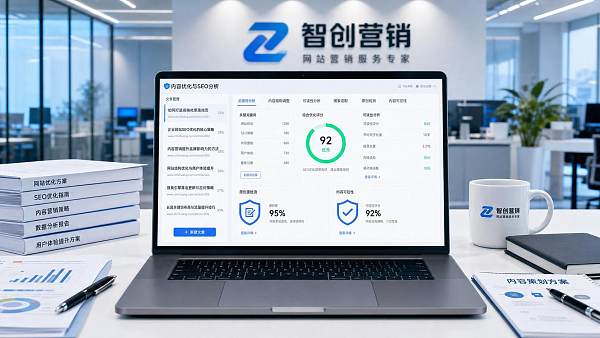
In the past, when doing content, the focus was often on whether there was “someone writing it.” Now, when doing content, the more common pressure is “whether it can keep being written, written at scale, and written accurately.” Especially in foreign trade, cross-border, e-commerce, and brand going-global scenarios, a website often needs to cover product pages, industry pages, FAQ pages, information pages, and multilingual pages, and content demand multiplies accordingly.
This is also why AI batch article generation services have quickly entered the procurement field of view. What it seems to solve is an efficiency issue, but what it actually touches is a deeper growth logic: whether the content can be understood by search engines, whether it can match the search intent of different markets, and whether it can steadily support site authority accumulation.
If a service only batches together sentences, it may bring page growth in the short term, but in the long run it is likely to lead to problems such as high duplication, poor indexing, high bounce rates, and lost brand control. For websites that rely on SEO, landing pages, and overseas social media synergy, this risk is not small.
First, understand what AI batch article generation services actually deliver
AI batch article generation services are not the same as “giving a model a topic and letting it automatically produce a batch of articles.” A more mature solution delivers a content production capability set, including topic organization, keyword layout, content structure control, semantic differentiation, page adaptation, and subsequent optimization support.
In simple terms, the gap in service quality often does not lie in whether AI is used, but in whether AI has been integrated into a real business workflow. Whether it can generate content around the site structure, whether it can combine the website-building system, category planning, conversion path, and market promotion rhythm—these are what determine whether the result is usable.
In an integrated website + marketing service scenario, content has never been an isolated asset. It needs to work in coordination with page templates, internal linking structure, regional versions, ad copy, and search capture. If the content system is disconnected from the website system and marketing system, the articles produced in batches will be very difficult to truly generate compound returns.
Originality is not just about checking similarity; it is more about indexing and brand safety
When many people evaluate AI batch article generation services, their first reaction is to look at duplicate rates. This is certainly important, but it is not enough. Because real originality is not just about rewriting sentences and rearranging paragraphs; it is about whether the content logic, information organization, and semantic expression are independent.
If a batch of articles revolves around the same set of keywords and repeatedly uses templates, even if the apparent similarity is not high, search systems may still judge the pages as low-value. Especially in the fields of industry content, product knowledge, and scenario interpretation, mechanical rewriting is very hard to form an effective indexing advantage.
What is more worth paying attention to is brand safety. Once content involves product capabilities, service scope, delivery commitments, or regional markets, it cannot simply pursue “writing like an article.” Whether the expression is accurate, whether it is exaggerated, and whether it aligns with the brand stance will all affect the external image.
Therefore, when evaluating originality, at least three layers should be examined: text duplication risk, semantic homogenization risk, and factual/brand expression risk. Only when all three pass can AI batch article generation services have long-term value.
Controllability determines whether content can truly enter the business workflow
Many projects fail not because AI cannot write, but because after it is written, no one dares to put it online directly. The reason usually lies in insufficient controllability. Unifying title style, stabilizing structure, shifting focus, and mixing terms will all cause the content team to repeatedly rework, quickly offsetting any efficiency gains.
A mature AI batch article generation service should support clear content rules. For example, industry terminology management, brand forbidden terms, country/region differences, page-length ranges, paragraph structures, keyword placement, and call-to-action methods should all be preset or adjustable.
In actual use, controllability is also reflected in the collaboration chain. Whether it supports batch generation by category, whether layered review is possible, whether secondary editing is convenient, and whether it can be connected with the website backend or CMS—these seemingly small details actually determine landing efficiency directly.
Several intuitive signals for judging controllability
- Whether it can generate different rules based on industry, product line, and country site.
- Whether it can fix the article structure instead of fluctuating randomly each time.
- Whether it can preserve brand tone and avoid content sounding like a “generic template.”
- Whether it supports manual review checkpoints instead of fully automated publishing.
- Whether it can synchronize articles to website categories, topic pages, or landing page systems.
SEO adaptability determines whether content can be seen
For AI batch article generation services, SEO adaptability is not as simple as “adding keywords.” Truly effective adaptation should at least include keyword research, topic clustering, page structure, internal link arrangement, title and summary organization, and search intent matching.
Many low-quality services tend to have one problem: it seems the keywords are covered, but the content has not established a clear hierarchy, the internal pages compete with each other, and as a result none of the articles perform well. Doing this may increase content volume, but it does not necessarily improve search performance.
This is especially true for overseas markets. Search habits, terminology, and question entry points vary significantly by region. If a multilingual site is only directly translated, it is difficult to obtain stable traffic. SEO-adaptive solutions usually incorporate localized expression, industry context, and page goals into the content generation logic together.
When reviewing solutions, focus on comparing these dimensions
In integrated website and marketing scenarios, content value is amplified
Looking only at article generation can easily make content seem like low-cost filler. But when placed in a complete business chain, content is actually connected to website building, customer acquisition, and conversion. Whether a page has topic depth, whether a landing page has search support, and whether social promotion can later attract natural traffic all relate to the content foundation.
Platforms like EasyYingbao, which cover intelligent website building, SEO optimization, ad placement, social media operations, and GEO generative engine optimization at the same time, have their advantage in that content is not delivered in isolation. It can work with a self-developed website-building system, cross-border e-commerce system, AI advertising marketing system, and AI+SEO/GEO optimization system to form a closed loop from website building to growth.
This integrated perspective is crucial for judging content procurement. Because truly effective AI batch article generation services are often not about selling “articles” separately, but about embedding content into the customer acquisition system so that pages are more easily indexed and more easily support search, advertising, and social media traffic.
Which business scenarios are more suitable for introducing AI batch article generation services
Not all content is suitable for full-scale batching, but the following scenarios are usually more valuable. They have clear thematic boundaries and require long-term, continuous, and scaled updates.
- Industry news, common questions, and scenario page expansion for multilingual corporate websites.
- Long-tail content matrix built around product keywords for foreign trade independent sites.
- Supporting content generated around categories, use cases, and regional demand for cross-border stores.
- Landing page content packages used to supplement trust information and search support.
- Localized site building and regional market testing in the brand’s overseas expansion stage.
If the business covers multiple regional markets such as North America, Europe, Southeast Asia, Japan and South Korea, the Middle East, or Latin America, content demand will become more fragmented. At this point, AI batch article generation services that combine multilingual website building, SEO, and promotion strategies are usually more realistic.
When screening solutions, it is recommended to ask more specific questions
Truly effective evaluation is not about hearing how many “intelligent” descriptions there are, but about whether the needs can be broken down into concrete questions. The more specific the question, the easier it is to identify the service ceiling.
For example, you can first confirm which pages the content will be published to and whether the service supports the corresponding structure; then confirm where the keywords come from and how they are grouped; then see whether manual review and data feedback are supported; finally, check whether it can iteratively optimize by combining indexing, clicks, and conversion performance.
If a service provider understands both content generation and website architecture, SEO logic, and overseas marketing scenarios, then AI batch article generation services are usually more likely to deliver business results rather than remain at the surface level of “producing a lot of articles.”
From trial to long-term use, first establish your own judgment criteria
Instead of launching at large scale all at once, it is better to first test with a small number of categories, a few topic clusters, and a group of target markets. Focus on observing four things: content publishing efficiency, indexing quality, page dwell performance, and the cost of manual revision.
If the pilot results show that AI batch article generation services can stably meet originality requirements, have controllable generation rules, and provide real SEO help, then gradually expanding to more sites and language versions will be more stable.
What should ultimately be compared is not who generates faster, but who can better support long-term content asset accumulation. Establish an evaluation table around originality, controllability, and SEO adaptability, then verify it in combination with the website system, marketing routes, and regional market needs; the judgment will be clearer and subsequent investment will be more certain.
Related Articles
 Is an AI website builder suitable for creating multilingual websites?
 How can you assess data export capabilities when building an independent website with an AI website builder?
 Can a Japanese AI website generator create a multilingual website for international trade?
Related Products
 Yiyingbao SaaS Intelligent Website Building and Marketing SystemYiyingbao SaaS Intelligent Website Building and Marketing System, AI-powered no-code website building, rapid creation of multilingual B2B international websites in 10 minutes, global server acceleration, AI-powered SEO optimization, helping businesses connect efficiently with global markets. The perfect integration of technology and operation makes building an international trade website remarkably simple
 AI+SEM Intelligent Advertising Marketing SystemAI+SEM drives intelligent ad creation, empowering full-funnel precision advertising marketing. The system automatically generates weekly/monthly reports, AI recommends keywords and target countries, monitors core metrics in real-time with intelligent alerts, and enables one-click high-conversion ad solutions to help quickly acquire customers and improve ROI.
 AI+SEO Dual-Engine System Optimization ServicesYiyingbao’s AI+SEO dual-engine optimization system helps foreign trade enterprises acquire high-quality organic traffic through AI-powered keyword research, content generation, and comprehensive technical optimization, significantly improving search rankings and conversion rates.
 AI+SNS Social Media Marketing SystemYingbao AI+SNS Social Media Marketing System - Precision social capture for the social media era. Supports one-click content synchronization across major platforms like Facebook and LinkedIn. AI intelligently rewrites posts for enhanced relevance. 24/7 AI customer service and user profiling analysis empower businesses to efficiently expand into global markets.
 AI+SEO营销解决方案易营宝AI+SEO营销解决方案,通过AI批量写作、智能生成TDK、精准关键词扩词等功能,全面优化网站SEO效果,提升流量与转化率。助力企业构建高效智能网站新生态。
 AI+SEM Advertising Marketing SolutionsAI+SEM Advertising Marketing Solution leverages AI technology to deeply empower SEM ad campaigns. It automatically generates weekly/monthly reports using AI, presenting account data across multiple dimensions for comprehensive insights into campaign performance and trends. The system precisely recommends keywords and target countries, intelligently generates high-conversion ad copy, and enables one-click activation of efficient campaign plans to help businesses rapidly acquire customers. Simultaneously, it monitors core metrics in real time, intelligently identifies abnormal fluctuations, and issues timely alerts to ensure stable, high-return advertising results.
 Domain Name ServicesEasyWin provides professional domain name services, including intelligent queries, one-stop registration, brand protection, and full lifecycle management, helping businesses build a digital brand image.
 EasyOperate B2C Cross-Border E-Commerce Platform & Independent WebsiteEasyStore B2C Cross-border E-commerce Independent Store is an intelligent website building and cross-border e-commerce integrated solution independently developed by EasyStore Information Technology (Beijing) Co., Ltd. The system is specially designed for small and medium-sized as well as large export enterprises, integrating 'website building, operation, marketing, advertising, and conversion' into one, helping enterprises quickly establish cross-border e-commerce independent stores to achieve brand globalization and global sales growth.
The platform supports multiple languages, multiple currencies, and multi-channel marketing, with built-in AI intelligent translation and SEO optimization systems, suitable for mainstream markets such as Southeast Asia, Europe and America, Latin America, and the Middle East, assisting Chinese manufacturing enterprises in efficiently deploying international e-commerce strategies. SSL证书易营宝提供专业SSL安全证书服务,包括单域名和泛域名证书,确保网站数据传输加密、身份验证和完整性保护,助力企业建立安全可信的在线业务环境。









