









- EU Plans to Raise Tax on Incoming Small Parcels to €5Oct 31, 2026View details
- Maersk Adjusts Middle East Emergency Operating Cost Recovery Surcharge to USD 2,000 per ContainerOct 30, 2026View details
- Ministry of Commerce: Online retail sales grew 4.4% in the first three quarters, while cross-border e-commerce maintained relatively rapid growthOct 29, 2026View details
- CCTV reports: AI-powered smart hardware is expanding overseas at a faster pace, with orders for some best-selling products booked through next yearOct 29, 2026View details
- Alphabet Q3 Earnings: Google Search Advertising Revenue Rises 10.5% to $82 BillionOct 29, 2026View details
- AliExpress Announces New Service Rules for Russia, Linked to Wildberries Product IntegrationOct 28, 2026View details
Can a Japanese AI website generator create a multilingual website for international trade?
Can Japanese AI website-building tools meet the multilingual needs of international trade businesses? The answer is: some can, but “supporting Japanese content generation” does not mean “offering full multilingual website capabilities.” For technical evaluators, determining whether an ai webサイトジェネレーター is suitable for international trade requires further checks of language-version management, search engine compatibility, deployment options, and integrations with subsequent marketing activities.
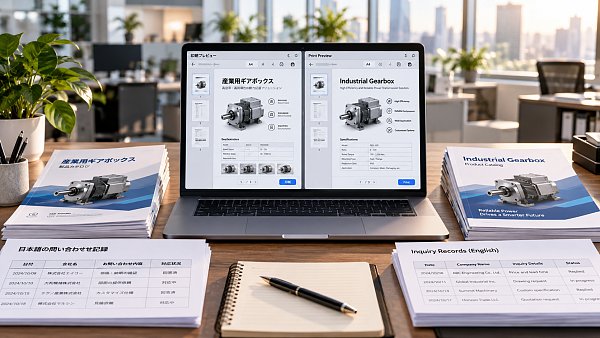
Suppose a manufacturing company needs to showcase its products to audiences in Japan, North America, and Southeast Asia. Even if a website-building tool can generate a Japanese homepage, it may not be able to create a separate URL for an English product page or route inquiries in different languages to the appropriate sales workflows. What is truly worth evaluating is the entire process, from content creation to overseas customer acquisition.
First, distinguish between a Japanese interface, Japanese content generation, and multilingual website building
When searching for Japanese AI website generators, it is easy to conflate several different capabilities. A product with a Japanese interface means only that editors can use the system in Japanese. Support for Japanese prompts and copy generation means that the AI can handle Japanese content. Multilingual website building, however, also requires the system to manage multiple language versions and deliver them reliably to visitors and search engines.
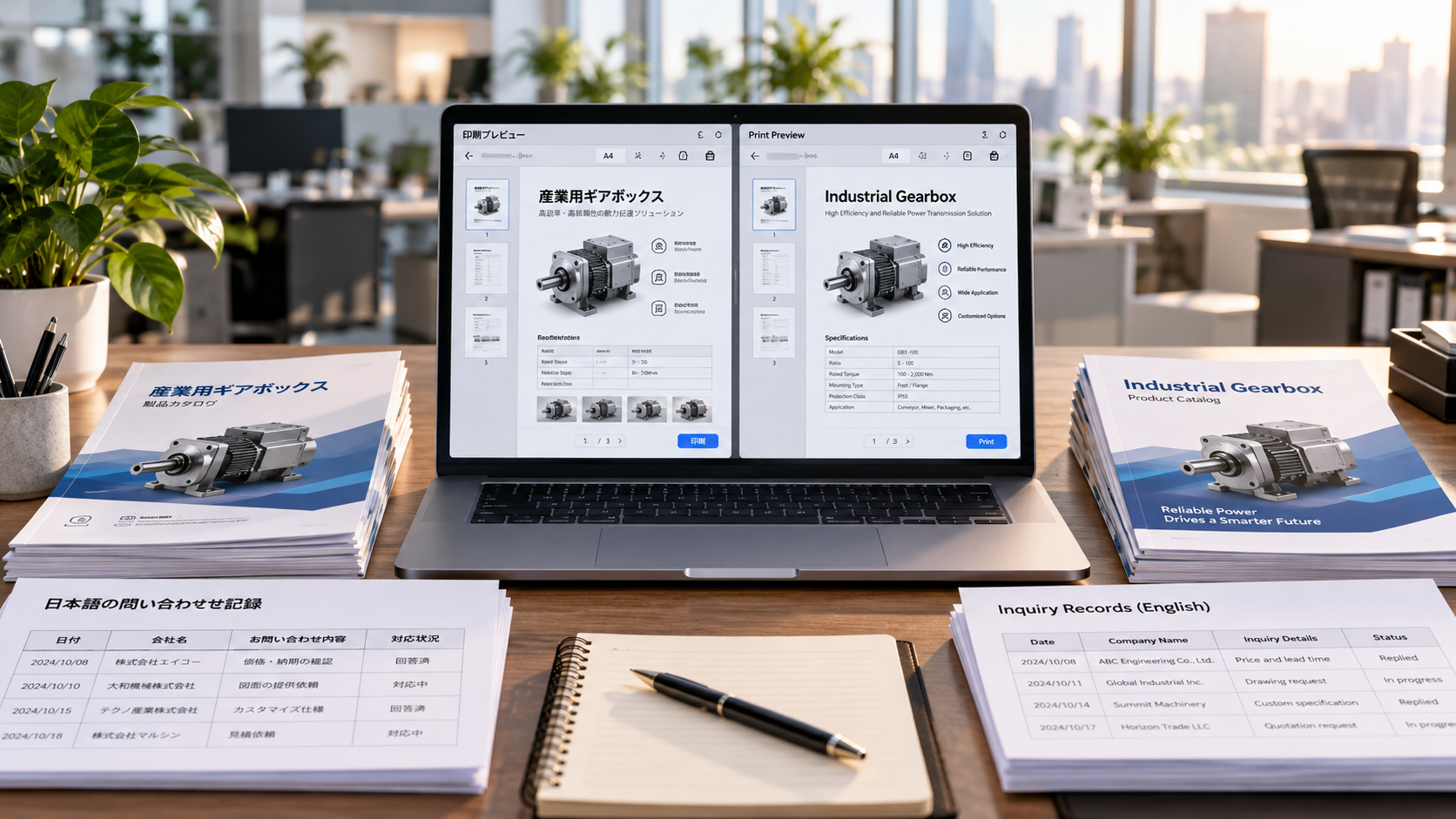
For evaluation, you can run a small-scale test using the same product: provide materials in Chinese or Japanese, generate a Japanese page, and then create an English version. Check whether the navigation, product specifications, form prompts, footer, and legal information can all be edited separately for each language. If you can replace only the main copy while buttons and system prompts remain fixed in one language, the site may end up with mixed languages after launch.
Also confirm how new products are maintained: does each language require a separate page, or are translations managed within a single content model? The former is straightforward, but updates can easily be missed when there are many products. The latter makes centralized management easier, but you need to check whether fields for each language can be edited independently and how missing translations are handled. Business staff should also review AI-generated industry terminology, specification units, and delivery terms; they should not be treated as accurate translations without verification.
Multilingual SEO: Pages must exist and be correctly recognized
A multilingual website for international trade typically needs a unique, accessible URL for each language version, for example using paths such as /ja/ and /en/. Relying solely on automatic browser translation, or replacing text through scripts at the same URL, can make it more difficult for search engines to recognize and index content in different languages. During testing, open each language URL directly and check that the main page content is accessible.
The following checks are more informative than the broad question of whether a tool “supports SEO”:
- Language and region annotations: Check whether the page can correctly set the HTML
langattribute and usehreflangto identify the corresponding language or regional versions. The versions should reference one another and point to accessible canonical pages. - Indexing and canonicalization: Confirm that each language page can have its own title, description, and canonical link. The
canonicalon a Japanese page should not indiscriminately point to the English homepage, as this could interfere with indexing of the different versions. - Sitemaps and internal links: Check whether the XML sitemap includes the language pages that need to be indexed and whether language-switching links can be accessed as regular links. Where possible, they should lead to the corresponding product or content, rather than always returning users to the homepage.
- Access controls: Check
robots.txt,noindex, and login restrictions to avoid inadvertently blocking pages that need to be indexed. Use automatic IP-based redirects with care, ensuring that users and search engines can access the language version they select.
These settings help search engines understand the website structure, but they do not guarantee indexing or rankings. After launch, use webmaster tools provided by search engines to check indexing status, and adapt content to search habits in each market rather than translating the same copy word for word into every language.
Deployment and operations: Who has control after the pages are generated?
Technical teams should also consider whether the website-building tool is a hosted SaaS solution or allows code export and self-hosting. The former typically reduces server maintenance, but you should verify domain connection, HTTPS, backup and recovery, access management, and the scope of data export. The latter may offer greater deployment flexibility, but also means the team must take responsibility for updates and security maintenance.
For B2B companies that rely on inquiries for lead generation, the form workflow is especially important. Submit test inquiries in both Japanese and English, and check field validation, email notifications, source-page tracking, and whether leads can enter your existing CRM. When personal information is involved, review privacy notices, data processing, and user consent mechanisms in light of the requirements in each target market. Do not assume that a form meets all compliance requirements simply because it can be submitted.
Performance and usability should also be tested in different regions. Check mobile layouts, image loading, font rendering, and the loading performance of key pages, and confirm that third-party analytics and ad conversion code can be integrated as needed. If the tool limits custom scripts, structured data, or page-level settings, the marketing team may need additional technical solutions later.
Use a pilot to determine whether the tool suits an international trade project
Rather than relying only on a feature list, choose a real product and create Japanese and English pages, then go through the entire publishing process: import product information, generate and manually edit copy, configure language URLs, submit a test inquiry, and check search engine accessibility and mobile performance. Recording how much manual intervention each step requires, and which settings can only be handled by the platform, often gives a better indication of long-term operating costs than a demo page does.
If the company will also need Google SEO, advertising landing pages, and overseas social media traffic, verify how data flows between the website-building system and marketing services. 易营宝 provides intelligent website building, multilingual website development, and overseas marketing services. When evaluating its solution or other comparable platforms, you should still verify each requirement against the target languages, deployment permissions, and specific integrations, rather than assuming that the service scope automatically covers every function the project needs.
Therefore, a Japanese AI website generator can be a starting point for building a multilingual website for international trade. Whether it is suitable for a production project depends on whether language versions can be maintained independently, whether search engines can recognize the pages, and whether the company has the necessary deployment and data management capabilities. Validating these points with a small-scale pilot before expanding the project can make subsequent content updates and overseas promotion easier to manage.
Related Articles
 Can a Japanese AI website generator create a multilingual website for international trade?
 How do AI website builders and template-based website builders differ in page customization capabilities?
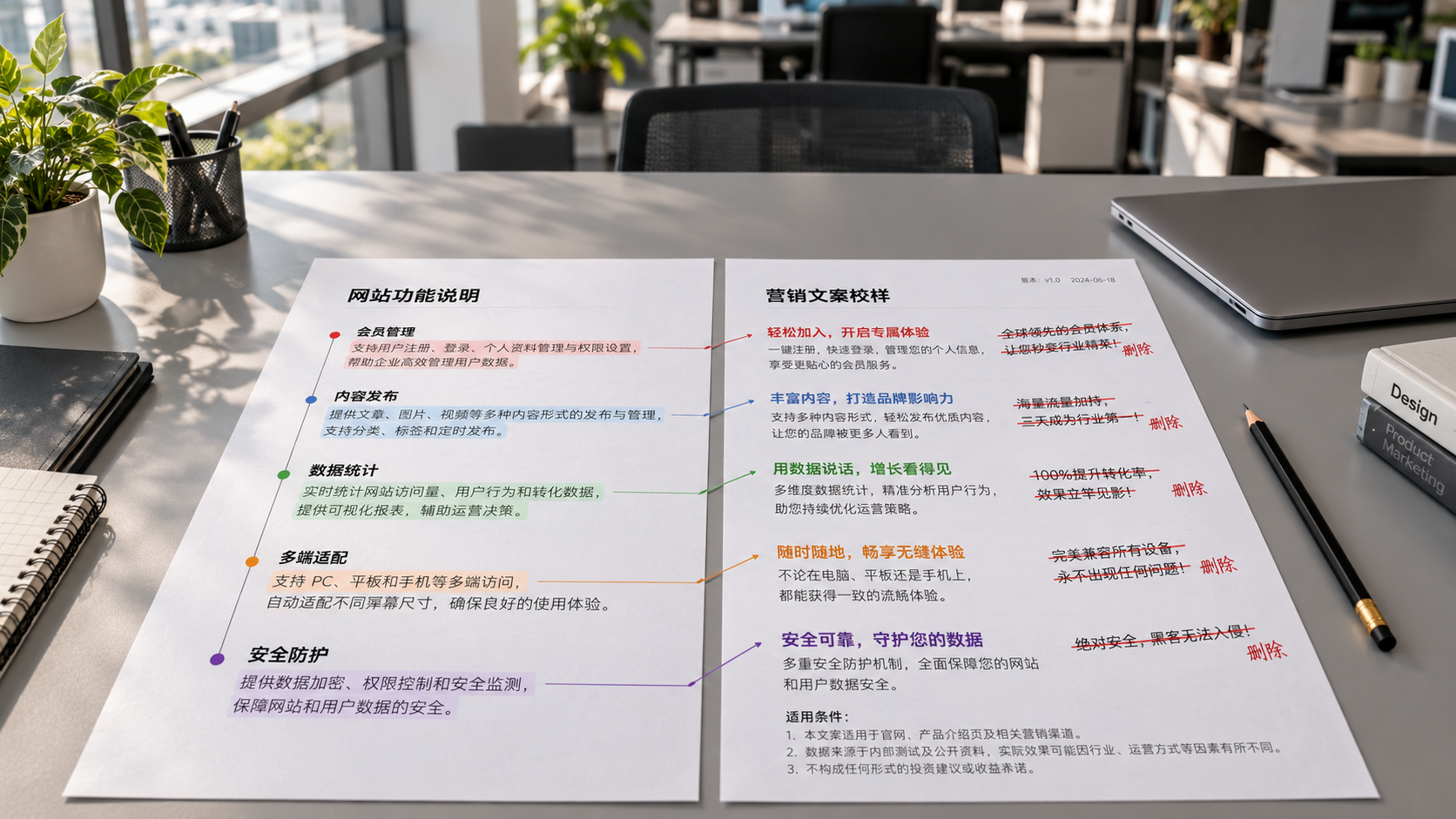
 How can you prevent AI-generated content on a marketing website from misrepresenting your selling points?

Related Products
 Yiyingbao SaaS Intelligent Website Building and Marketing SystemYiyingbao SaaS Intelligent Website Building and Marketing System, AI-powered no-code website building, rapid creation of multilingual B2B international websites in 10 minutes, global server acceleration, AI-powered SEO optimization, helping businesses connect efficiently with global markets. The perfect integration of technology and operation makes building an international trade website remarkably simple
 AI+SEM Intelligent Advertising Marketing SystemAI+SEM drives intelligent ad creation, empowering full-funnel precision advertising marketing. The system automatically generates weekly/monthly reports, AI recommends keywords and target countries, monitors core metrics in real-time with intelligent alerts, and enables one-click high-conversion ad solutions to help quickly acquire customers and improve ROI.
 AI+SEO Dual-Engine System Optimization ServicesYiyingbao’s AI+SEO dual-engine optimization system helps foreign trade enterprises acquire high-quality organic traffic through AI-powered keyword research, content generation, and comprehensive technical optimization, significantly improving search rankings and conversion rates.
 AI+SNS Social Media Marketing SystemYingbao AI+SNS Social Media Marketing System - Precision social capture for the social media era. Supports one-click content synchronization across major platforms like Facebook and LinkedIn. AI intelligently rewrites posts for enhanced relevance. 24/7 AI customer service and user profiling analysis empower businesses to efficiently expand into global markets.
 AI+SEO营销解决方案易营宝AI+SEO营销解决方案,通过AI批量写作、智能生成TDK、精准关键词扩词等功能,全面优化网站SEO效果,提升流量与转化率。助力企业构建高效智能网站新生态。
 AI+SEM Advertising Marketing SolutionsAI+SEM Advertising Marketing Solution leverages AI technology to deeply empower SEM ad campaigns. It automatically generates weekly/monthly reports using AI, presenting account data across multiple dimensions for comprehensive insights into campaign performance and trends. The system precisely recommends keywords and target countries, intelligently generates high-conversion ad copy, and enables one-click activation of efficient campaign plans to help businesses rapidly acquire customers. Simultaneously, it monitors core metrics in real time, intelligently identifies abnormal fluctuations, and issues timely alerts to ensure stable, high-return advertising results.
 Domain Name ServicesEasyWin provides professional domain name services, including intelligent queries, one-stop registration, brand protection, and full lifecycle management, helping businesses build a digital brand image.
 EasyOperate B2C Cross-Border E-Commerce Platform & Independent WebsiteEasyStore B2C Cross-border E-commerce Independent Store is an intelligent website building and cross-border e-commerce integrated solution independently developed by EasyStore Information Technology (Beijing) Co., Ltd. The system is specially designed for small and medium-sized as well as large export enterprises, integrating 'website building, operation, marketing, advertising, and conversion' into one, helping enterprises quickly establish cross-border e-commerce independent stores to achieve brand globalization and global sales growth.
The platform supports multiple languages, multiple currencies, and multi-channel marketing, with built-in AI intelligent translation and SEO optimization systems, suitable for mainstream markets such as Southeast Asia, Europe and America, Latin America, and the Middle East, assisting Chinese manufacturing enterprises in efficiently deploying international e-commerce strategies. SSL证书易营宝提供专业SSL安全证书服务,包括单域名和泛域名证书,确保网站数据传输加密、身份验证和完整性保护,助力企业建立安全可信的在线业务环境。









