









- Which customer acquisition channels will be affected by cross-border marketing trends in 2026?Sep 06, 2026View details
- Which homogenization risks should be considered in an analysis of the AI-powered website building industry?Aug 30, 2026View details
- How Will AI Marketing Trends 2026 Change Advertising Budget AllocationAug 28, 2026View details
- Is the EV SSL certificate market shrinking or upgrading? How should companies assess certificate procurement?Aug 11, 2026View details
- Why the old AMP SEO 2020 practices no longer work and what has changed in current optimization prioritiesAug 02, 2026View details
- How to Choose Topics for an Industry News Section to Attract More Organic Search TrafficJul 29, 2026View details
How to Use the Yiyingbao AI Marketing Engine to Turn Visitor Behavior into Leads for Automated Follow-Up
How to use the Yiyingbao AI Marketing Engine? The key is not to turn on every feature, but to enable the system to truly understand visitor behavior: who is just passing by, who is comparing suppliers, who is close to submitting an inquiry, and who should be prioritized for sales follow-up. For frontline operations personnel, the most common problem is not “What can the tool do?” but “Why does the website receive visitors every day, yet so few can ultimately be handed over to the sales team for follow-up?”
The underlying issue is usually not traffic, but a breakdown in lead identification and follow-up mechanisms. Many companies run websites, advertising, SEO, and social media campaigns, but visitor behavior after entering the site is not systematically recorded. There are no tags, no scoring, and no follow-up actions triggered. As a result, the traffic may look substantial, while genuinely convertible leads remain buried in access logs.
If the Yiyingbao AI Marketing Engine is treated merely as a data dashboard, its value will be limited. The truly effective approach is to use it as an execution system covering “visitor identification—behavior assessment—automated outreach—sales handoff,” rather than as a tool for viewing reports.
Before Enabling Automation, Clearly Define What Counts as a Lead
Many operators want to set up automated follow-up as soon as they start, only to quickly discover that the messages sent receive no response and that sales complain about inaccurate leads. The problem often lies in the very first step: the company has not clearly defined what constitutes a qualified lead.
In international trade and global business, visitor behavior has different levels of intent. Visiting the homepage, browsing blog content, or staying for a dozen seconds may indicate that traffic has reached the site, but these actions cannot directly demonstrate purchasing intent. By contrast, if the same visitor repeatedly views product detail pages, downloads technical documents, visits certification pages, reviews delivery information and case studies, or opens the contact page without submitting a form, these behaviors are generally much closer to a genuine business opportunity.
Therefore, when using the Yiyingbao AI Marketing Engine, the first task is not to configure messages, but to establish behavioral tiers. In practice, website behavior can initially be divided into three categories:
- Shallow-level behavior: homepage visits, browsing general information, and short stays;
- Mid-level behavior: viewing multiple product pages, switching language versions, entering the FAQ, and visiting pages related to pricing;
- Deep-level behavior: downloading catalogs, submitting forms, repeatedly visiting similar products, viewing qualifications and case studies, and clicking WhatsApp/email buttons.
Only after these behaviors have been mapped to different levels of intent can subsequent AI identification, automated scoring, and follow-up logic avoid becoming distorted.
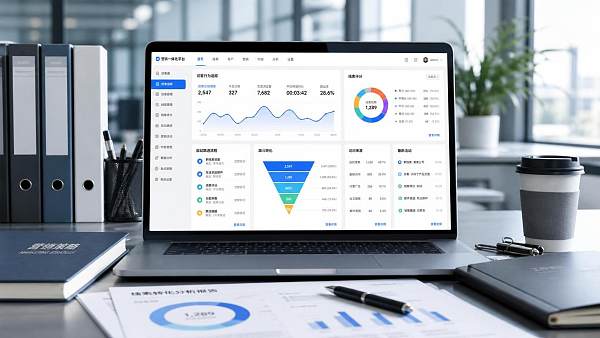
What Really Matters Is Not Visitor Tracking, but Behavioral Scoring Rules
Many companies know that they need to track visitors, but overlook a more important layer: tracking is only data collection, while scoring determines subsequent actions.
The question “How do you use the Yiyingbao AI Marketing Engine?” ultimately comes down to how to convert behavioral data into actionable lead priorities. For operators, the most practical approach is not to pursue a complex model, but to first establish a sufficiently stable and explainable scoring logic.
For example, viewing a single page can receive a low score, while continuously viewing multiple product categories can increase the score. Visiting the “About Us” page may have limited significance, whereas visiting pages such as “Certifications,” “Application Cases,” “Delivery Information,” and “Contact Us” is often more closely related to the purchasing decision path. Furthermore, if a visitor returns multiple times within a short period, or enters from Google organic search and directly visits high-value pages, the quality of this behavior is usually higher than that of broad traffic generated by casual social media clicks.
The most important point at the operational level is that scoring rules should serve sales actions, not make the data look good. A common mistake is to include all behaviors in high-frequency statistics, resulting in inflated scores. Sales then receive a batch of “highly engaged” but non-prospective leads and gradually lose trust in the system.
A more reliable approach is to prioritize the identification of the following high-value signals:
- Continuous browsing related to the same product or solution;
- Interest in qualifications, case studies, delivery capabilities, MOQ, and technical documentation;
- Entering from a search channel and directly visiting commercial pages;
- Repeated visits within a relatively short period;
- Visitors who have already submitted their contact information but continue returning to the site.
These behaviors are more meaningful for assessment than a single visit duration and are also more suitable as triggers for automated follow-up.
Automated Follow-Up Is Not Mass Messaging, but Content Triggered by Behavior
When many companies talk about automation, they easily turn it into “bulk distribution of template messages.” This approach is usually inconsistent in B2B scenarios. In international trade, in particular, purchasing cycles are long, multiple roles are involved, and decision-making chains are complex. If the follow-up content does not match the visitor’s current stage, automation may instead reduce conversion rates.
The correct approach is to trigger different content based on different visitor behaviors, rather than sending everyone the same follow-up.
For example, if a visitor mainly browses industry articles and solution pages, they may still be in the research stage. Suitable content to trigger would include case studies, application information, and solution comparisons, rather than a direct invitation to request a quotation. If a visitor has already viewed product specification pages, packaging and shipping pages, or certification pages in succession, it would be more appropriate to send transaction-oriented information such as samples, catalogs, specification sheets, and delivery details.
This is where the Yiyingbao AI Marketing Engine should truly add value: connecting on-site behavior with subsequent outreach content, so that every automated action is as closely aligned as possible with the visitor’s current stage of evaluation.
From an execution perspective, automated follow-up should at least avoid two common problems:
- Triggering too early: visitors are aggressively prompted to submit their information as soon as they enter the site, which can interrupt browsing;
- Triggering too late: visitors have already shown clear interest, but the system fails to send a timely reminder or provide automated follow-through, causing lead interest to decline rapidly.
Operators should focus more on whether the timing of the triggers is appropriate than on whether the process is “fully automated.” In many businesses, semi-automation is more effective than full automation: the system first identifies and filters visitors, then hands high-value visitors over to staff for precise follow-up.
If the Website Structure Is Not Right, Even the Best Engine Cannot Identify High-Quality Leads
The effectiveness of this type of tool is closely related to the website’s own content structure. There is an often-overlooked fact in the industry: an AI marketing engine cannot create leads out of thin air. It can only amplify the site’s existing identification and conversion capabilities.
If the website content itself is too thin, the page paths are confusing, product information is incomplete, and key pages lack clear call-to-action buttons, then even if the system records visitor activity, it will be difficult to form an actionable behavior chain.
For operators, three aspects can be reviewed first to determine whether a site is suitable for integrating this type of engine:
- Whether there are clearly defined high-value pages, such as product pages, case study pages, qualification pages, download pages, and inquiry pages;
- Whether these pages form a natural path rather than existing in isolation;
- Whether the pages provide sufficient trackable actions, such as downloads, consultation clicks, form submissions, and contact-information clicks.
If these basic conditions are insufficient, additional automation settings can only continue revolving around low-quality behavior. Many companies feel that “the system is not effective,” when the reality is that their websites still follow a presentation-oriented logic and have not been structurally designed for conversion and identification.
What Operators Should Focus on Most Is Not Traffic, but the “Deliverable Lead Rate”
Frontline personnel working in overseas marketing are most easily influenced by traffic, click-through rates, and time spent on site. These metrics certainly have reference value, but they cannot answer a more important question: how many visitors ultimately become leads that can be handed over to sales for processing?
To make full use of the Yiyingbao AI Marketing Engine, daily reviews should focus on how many valid handoffs are generated after behavioral identification. In other words, among the visitors recorded by the system, how many are identified as high-intent visitors, how many trigger automated actions, and how many ultimately enter the sales team’s view.
This metric is more meaningful than the number of inquiries alone. Many international trade websites receive relatively few direct form submissions but have a large number of “high-intent visitors who have not submitted their information.” If these visitors can first be identified and then nurtured through remarketing, email follow-up, content re-engagement, and other methods, the lead pool will be much larger than what is shown by form submissions alone.
During operational reviews, several changes can be monitored closely:
- Whether the proportion of high-intent visitors among total visitors is increasing;
- Whether visits to high-value pages are becoming more concentrated along specific paths;
- Whether return visit and lead capture rates improve after automated outreach;
- Whether sales provide more positive feedback after receiving leads.
If the system only generates more data without improving lead delivery quality, the configuration direction is still not correct.
Disconnection from Sales Is the Most Common Reason Automated Follow-Up Fails
Many marketing automation projects ultimately fail to operate effectively, not because of technical problems, but because marketing and sales have not formed a closed loop. After the system identifies a high-intent visitor, the lead will still be lost if there are no clear rules telling the team “who will handle it, how soon, and how.”
Therefore, in actual use, the Yiyingbao AI Marketing Engine cannot remain solely on the operations side. Ideally, operations personnel define the behaviors and trigger logic, while sales participate in confirming which types of visitors deserve priority follow-up. Both sides then work together to refine the rules.
For example, sales may provide feedback that some visitors who visit frequently but never submit their information are probably competitors or students, while some visitors who do not visit often but directly view MOQ and certification documents may actually have a higher probability of conversion. This frontline feedback is important for refining AI scoring rules and is more closely aligned with real business conditions than simply reviewing backend data.
In actual collaboration, at least three points should be clearly defined:
- What score or combination of behaviors must be reached before the system sends a lead to sales;
- Whether sales need to record follow-up results after receiving a lead so that the information can be fed back into the system;
- Which leads should continue to be nurtured automatically and which must be taken over manually.
Without this step, automation can easily remain in a state where “the marketing department believes it is useful,” while the sales team does not adopt it.
The Best Starting Point Is Not the Most Complex Scenario, but the Most Repetitive One
If a company is just beginning to use this type of system, there is no need to pursue complex integrations across all channels, languages, and sites from the outset. A more practical approach is to first get the scenarios that are easiest to standardize up and running.
For example, establish high-intent behavior identification for core product pages; trigger subsequent content delivery for visitors who download materials; and set up second-follow-up reminders for customers who have submitted their information but have not yet converted. These scenarios have a high degree of repetition and clear business logic, making it easier to verify whether the rules are effective.
Once these basic workflows are running smoothly, they can gradually be extended to advertising landing pages, multilingual sites, social media traffic pages, and remarketing audience management, resulting in much higher efficiency.
Ultimately, “How do you use the Yiyingbao AI Marketing Engine?” is not a question about learning features, but about adopting an operational mindset. What operators really need to do is not fill in every setting, but focus on the business conversion path to identify the behaviors that are most worth recognizing, the timing that is most worth automating, and the visitors who should most appropriately be handed over to sales.
When visitor behavior can be continuously identified, interpreted, and followed up on, website traffic will no longer be merely numbers in a report. It will gradually become sales leads that can be tracked, followed up on, and converted. This is the true value of an AI marketing engine in an integrated website and marketing scenario.
Related Articles



Related Products
 Yiyingbao SaaS Intelligent Website Building and Marketing SystemYiyingbao SaaS Intelligent Website Building and Marketing System, AI-powered no-code website building, rapid creation of multilingual B2B international websites in 10 minutes, global server acceleration, AI-powered SEO optimization, helping businesses connect efficiently with global markets. The perfect integration of technology and operation makes building an international trade website remarkably simple
 AI+SEM Intelligent Advertising Marketing SystemAI+SEM drives intelligent ad creation, empowering full-funnel precision advertising marketing. The system automatically generates weekly/monthly reports, AI recommends keywords and target countries, monitors core metrics in real-time with intelligent alerts, and enables one-click high-conversion ad solutions to help quickly acquire customers and improve ROI.
 AI+SEO Dual-Engine System Optimization ServicesYiyingbao’s AI+SEO dual-engine optimization system helps foreign trade enterprises acquire high-quality organic traffic through AI-powered keyword research, content generation, and comprehensive technical optimization, significantly improving search rankings and conversion rates.
 AI+SNS Social Media Marketing SystemYingbao AI+SNS Social Media Marketing System - Precision social capture for the social media era. Supports one-click content synchronization across major platforms like Facebook and LinkedIn. AI intelligently rewrites posts for enhanced relevance. 24/7 AI customer service and user profiling analysis empower businesses to efficiently expand into global markets.
 AI+SEO营销解决方案易营宝AI+SEO营销解决方案,通过AI批量写作、智能生成TDK、精准关键词扩词等功能,全面优化网站SEO效果,提升流量与转化率。助力企业构建高效智能网站新生态。
 AI+SEM Advertising Marketing SolutionsAI+SEM Advertising Marketing Solution leverages AI technology to deeply empower SEM ad campaigns. It automatically generates weekly/monthly reports using AI, presenting account data across multiple dimensions for comprehensive insights into campaign performance and trends. The system precisely recommends keywords and target countries, intelligently generates high-conversion ad copy, and enables one-click activation of efficient campaign plans to help businesses rapidly acquire customers. Simultaneously, it monitors core metrics in real time, intelligently identifies abnormal fluctuations, and issues timely alerts to ensure stable, high-return advertising results.
 Domain Name ServicesEasyWin provides professional domain name services, including intelligent queries, one-stop registration, brand protection, and full lifecycle management, helping businesses build a digital brand image.
 EasyOperate B2C Cross-Border E-Commerce Platform & Independent WebsiteEasyStore B2C Cross-border E-commerce Independent Store is an intelligent website building and cross-border e-commerce integrated solution independently developed by EasyStore Information Technology (Beijing) Co., Ltd. The system is specially designed for small and medium-sized as well as large export enterprises, integrating 'website building, operation, marketing, advertising, and conversion' into one, helping enterprises quickly establish cross-border e-commerce independent stores to achieve brand globalization and global sales growth.
The platform supports multiple languages, multiple currencies, and multi-channel marketing, with built-in AI intelligent translation and SEO optimization systems, suitable for mainstream markets such as Southeast Asia, Europe and America, Latin America, and the Middle East, assisting Chinese manufacturing enterprises in efficiently deploying international e-commerce strategies. SSL证书易营宝提供专业SSL安全证书服务,包括单域名和泛域名证书,确保网站数据传输加密、身份验证和完整性保护,助力企业建立安全可信的在线业务环境。









