









- Lazada 11.11 Mega Sale: LazMall Contributes Nearly Two-Thirds of GMVNov 23, 2026View details
- Shein’s European Revenue Falls 16% as Tighter Rules on Low-Value Direct Shipments Take EffectNov 23, 2026View details
- EU Low-Value Parcel Rules Impact Cargo Flows: Air Freight Volume from China to Europe Down 17% in OctoberNov 23, 2026View details
- Indonesia and the EU Sign Comprehensive Economic Partnership Agreement, 90.4% of Tariff Lines to Become Duty-Free ImmediatelyNov 23, 2026View details
- Qingdao Port's Imports and Exports Exceed RMB 23.699 Trillion in the First 10 Months, Drawing Attention to Port IntelligenceNov 22, 2026View details
- Ningbo Cross-Border E-Commerce Export Value Surges 94.87% Year on Year, Opening Up a New Billion-Yuan Growth TrackNov 22, 2026View details
How AI and Google Search Console Work Together to Analyze SEO Growth Opportunities
With collaborative analysis using AI and Google Search Console, marketers can quickly identify traffic fluctuations, keyword opportunities, and page optimization directions, turning SEO data from something merely visible into actionable growth strategies.
First, Determine: What Opportunities Are Search Data Actually Signaling?

Users searching for “ai google search console” are usually not simply looking to understand tool definitions. Instead, they want to solve a more practical problem: how to quickly identify SEO growth opportunities worth investing in when faced with large volumes of impression, click, query, and page data.
For frontline marketers, the main concerns are often why traffic has changed, which keywords rank but generate no clicks, which pages are about to gain more impressions, and whether optimization can generate inquiries, orders, or qualified leads.
Google Search Console excels at providing real search performance data, including queries, pages, clicks, impressions, average rankings, indexing status, and Core Web Vitals. However, it does not directly tell you which page should be revised first.
This is precisely where AI adds value. It can help organize anomalies, categorize keyword intent, compare differences between time periods, identify page issues, and turn fragmented data into actionable task lists for marketers.
Therefore, the core of AI and Google Search Console collaborative analysis is not “letting AI replace SEO judgment,” but making data filtering, preliminary diagnosis, and content planning more efficient. Marketers still need to make final decisions based on products, markets, and conversion goals.
Use AI to Identify the Keywords That Should Be Prioritized
Do not focus only on keywords ranking first. More common growth opportunities come from queries with continuously increasing impressions, rankings between positions 4 and 20, and significantly low click-through rates. These keywords usually have a relatively low optimization threshold.
In practice, export query data for the most recent 28 days and the preceding 28 days from Search Console, then use AI to categorize it by changes in impressions, clicks, average ranking, and click-through rate. Focus on keyword groups with “growing impressions but stagnant clicks.”
Such data often indicates that Google has begun recognizing the page topic, but the title, description, content relevance, or search result presentation is still insufficient to drive clicks. Compared with building new keywords from scratch, optimizing keywords that already have a foundation usually produces results faster.
AI can also categorize large numbers of long-tail search terms by intent into informational, comparison, purchasing, brand, and problem-oriented types. For example, the content objectives of “industrial valve supplier” and “how to choose industrial valve” are not the same.
Marketers should first confirm whether keywords with stronger commercial intent are supported by appropriate landing pages. If purchasing-oriented searches lead to blog articles, or tutorial-oriented searches go directly to product pages, both rankings and traffic quality may be affected.
For multilingual websites, it is recommended to export data separately by country, language, and directory. AI can help identify wording differences across markets, but local purchasing habits, unit conventions, certification requirements, and commonly used customer terminology must not be overlooked.
Identify Traffic Declines and Content Gaps at the Page Level
When organic traffic declines, do not rush to rewrite the entire website. Compare two similar periods in Search Console, review the clicks, impressions, rankings, and corresponding queries for declining pages, and then determine exactly where the issue lies.
If both impressions and rankings decline, possible causes include stronger competing pages, insufficient content freshness, indexing issues, or weakened topical relevance. If impressions remain stable while clicks decline, titles, descriptions, rich results, and search intent alignment should be examined more closely.
When providing declining pages and their queries to AI, ask it to output three parts: “possible causes, evidence requiring manual verification, and recommended actions.” This helps prevent AI from treating correlation-based assumptions as conclusions and reduces the risk of making incorrect page revisions.
Content gap analysis is also well suited to AI assistance. By entering high-impression, low-ranking queries together with existing page topics, you can determine whether to add a section, include an FAQ, split out a topic page, or create a new category or use-case page.
However, keyword cannibalization must be checked before creating new pages. If multiple pages on the website already compete around similar terms, continually adding content will dilute authority. AI can list semantically similar pages, while marketers should determine the primary page, supporting pages, and internal linking relationships.
For foreign trade company websites, product specification pages, industry solution pages, and case study pages serve different search purposes. Taking Yiyingbao Foreign Trade Marketing (Super) Website as an example, its multilingual management, full-stack SEO, and marketing closed-loop analytics capabilities help centrally manage data from different markets and page destination relationships.
Establish a Repeatable Data Analysis Process
A more effective approach is not to conduct an occasional overall review, but to establish a regular cadence. It is recommended to review anomalous pages and indexing issues weekly, complete keyword opportunity screening monthly, and evaluate content structure, conversion paths, and growth quality in key markets quarterly.
The first step is to define the analysis scope. Do not analyze all website data at once; instead, segment it by core product line, target country, language directory, or conversion page. The clearer the scope, the easier it is to verify and implement AI-generated classifications.
The second step is to define consistent metrics. For content pages, focus on impressions, rankings, and newly covered queries. For product pages, also monitor form submissions, quote requests, or consultation behavior after organic visits to avoid pursuing traffic with no commercial value.
The third step is to turn AI output into task cards. Each task should clearly specify the page URL, target keywords, changes to be made, person responsible, completion date, and review cycle. Analysis that does not translate into specific pages and actions will usually remain only at the report level.
The fourth step is to retain data snapshots from before and after optimization. SEO results often take several weeks to stabilize. Recording change dates, page versions, and ranking changes makes it possible to distinguish seasonal fluctuations, algorithm impacts, and actual optimization effects.
The fifth step is to prioritize technical fundamentals. If pages are not indexed, have mobile usability issues, load slowly, or contain incorrect language-version annotations, even the most refined keyword analysis will struggle to deliver its full value. First ensure that search engines can crawl and understand the website.
Avoid Treating AI Recommendations as Final Answers
AI can quickly summarize Search Console data, but it cannot automatically understand a company’s actual profit structure, inventory situation, sales capacity, or customer quality. Therefore, keyword priority should not be ranked by search volume alone; business relevance and conversion likelihood must also be considered.
For example, a keyword may have very high impressions, but if users are only seeking free materials or definition explanations, it may not be worth allocating extensive page resources. In contrast, keywords with lower search volume but including model numbers, materials, certifications, or purchasing-region qualifiers may be closer to conversion.
Small data samples also require caution. A page growing from two clicks to six clicks may appear to have a high percentage increase, but this does not necessarily constitute a trend. AI should help uncover clues rather than create certainty from limited data.
Human review should also be retained when revising titles, expanding content, or translating multilingual content. This is especially important for technical products and medical, financial, regulatory, and certification-related content, where factual accuracy and localized expression directly affect user trust and search quality.
Conclusion: Make Search Data a Workbench for Continuous Growth
After combining AI with Google Search Console, the greatest change is not having a more attractive data report, but enabling marketers to answer three questions more quickly: where the opportunities are, why they are worth pursuing, and what should be changed next.
Start with pages that have high impressions but low clicks, rankings close to the first page, and abnormal traffic. Then use AI to categorize keywords, diagnose pages, and prioritize tasks. Only by continuously reviewing data and conversion results can SEO analysis truly become a cumulative growth capability.
Related Articles
 How Do AI Marketing Cases Reflect Changes in Content Production?
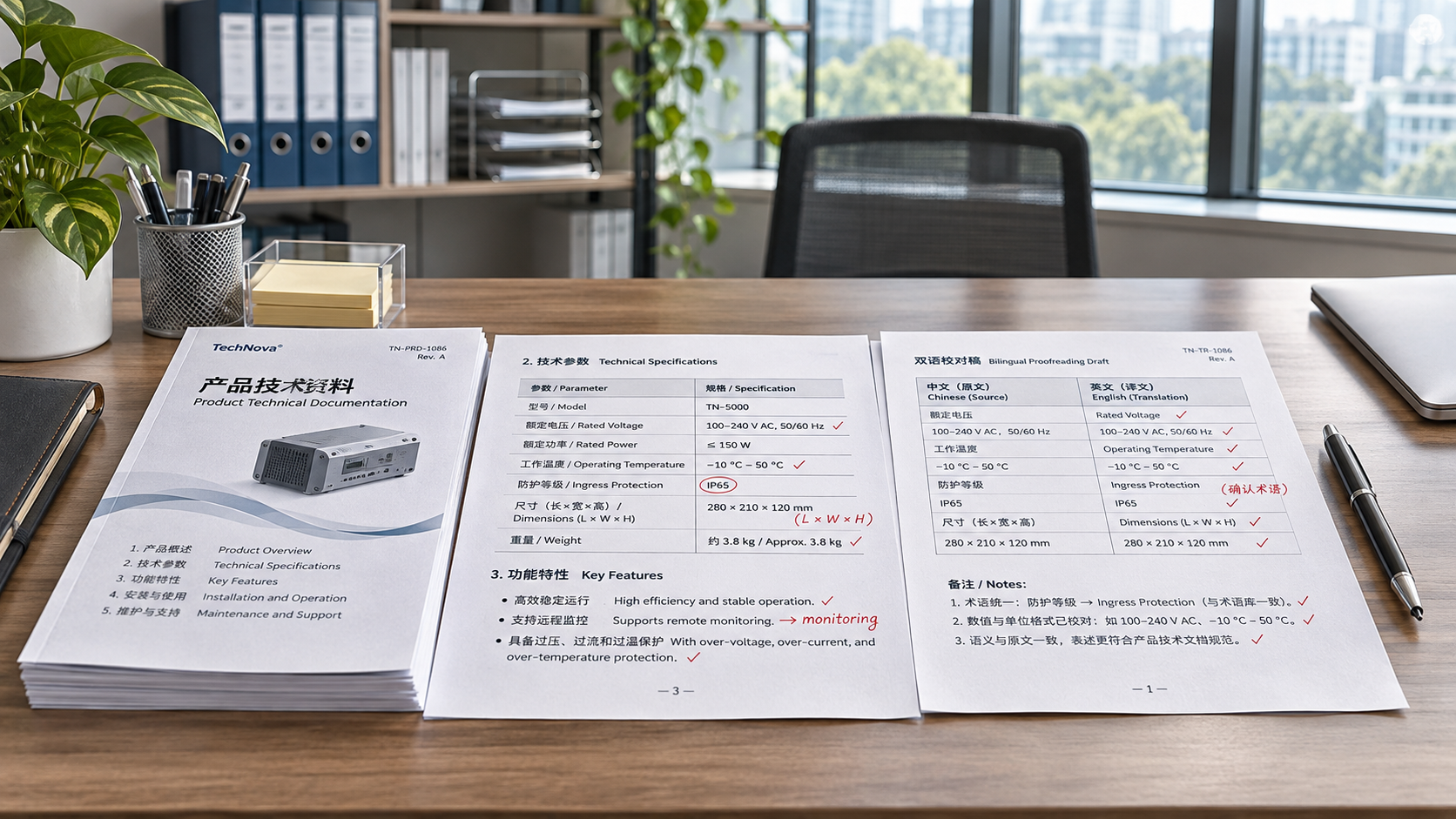
 AI Content Generation for Export Websites: How to Prevent Errors in Product Specifications and Translation
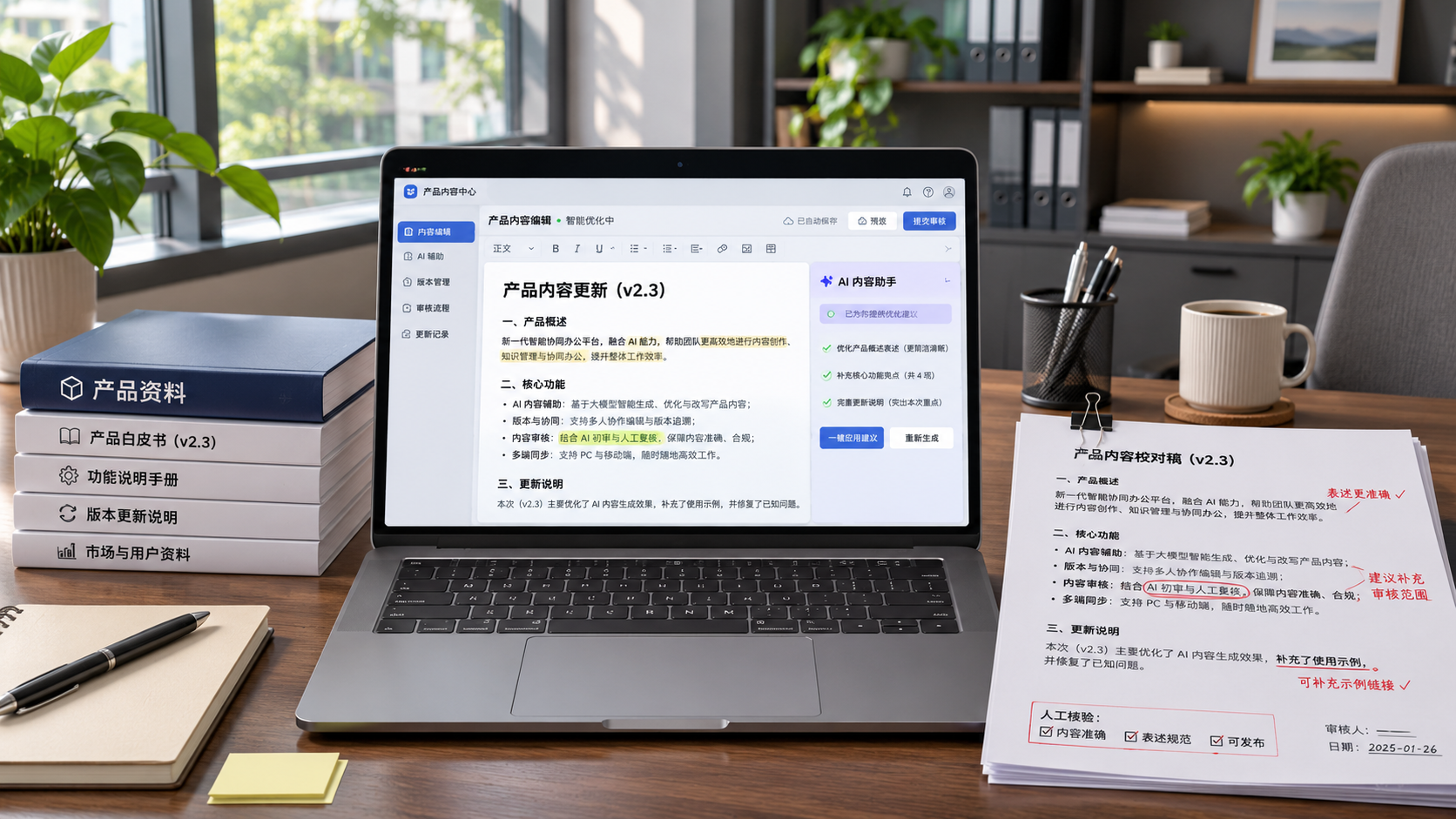
 How Can AI Drive Website Content Updates as an Engine of Innovation?
Related Products
 Yiyingbao SaaS Intelligent Website Building and Marketing SystemYiyingbao SaaS Intelligent Website Building and Marketing System, AI-powered no-code website building, rapid creation of multilingual B2B international websites in 10 minutes, global server acceleration, AI-powered SEO optimization, helping businesses connect efficiently with global markets. The perfect integration of technology and operation makes building an international trade website remarkably simple
 AI+SEM Intelligent Advertising Marketing SystemAI+SEM drives intelligent ad creation, empowering full-funnel precision advertising marketing. The system automatically generates weekly/monthly reports, AI recommends keywords and target countries, monitors core metrics in real-time with intelligent alerts, and enables one-click high-conversion ad solutions to help quickly acquire customers and improve ROI.
 AI+SEO Dual-Engine System Optimization ServicesYiyingbao’s AI+SEO dual-engine optimization system helps foreign trade enterprises acquire high-quality organic traffic through AI-powered keyword research, content generation, and comprehensive technical optimization, significantly improving search rankings and conversion rates.
 AI+SNS Social Media Marketing SystemYingbao AI+SNS Social Media Marketing System - Precision social capture for the social media era. Supports one-click content synchronization across major platforms like Facebook and LinkedIn. AI intelligently rewrites posts for enhanced relevance. 24/7 AI customer service and user profiling analysis empower businesses to efficiently expand into global markets.
 AI+SEO营销解决方案易营宝AI+SEO营销解决方案,通过AI批量写作、智能生成TDK、精准关键词扩词等功能,全面优化网站SEO效果,提升流量与转化率。助力企业构建高效智能网站新生态。
 AI+SEM Advertising Marketing SolutionsAI+SEM Advertising Marketing Solution leverages AI technology to deeply empower SEM ad campaigns. It automatically generates weekly/monthly reports using AI, presenting account data across multiple dimensions for comprehensive insights into campaign performance and trends. The system precisely recommends keywords and target countries, intelligently generates high-conversion ad copy, and enables one-click activation of efficient campaign plans to help businesses rapidly acquire customers. Simultaneously, it monitors core metrics in real time, intelligently identifies abnormal fluctuations, and issues timely alerts to ensure stable, high-return advertising results.
 Domain Name ServicesEasyWin provides professional domain name services, including intelligent queries, one-stop registration, brand protection, and full lifecycle management, helping businesses build a digital brand image.
 EasyOperate B2C Cross-Border E-Commerce Platform & Independent WebsiteEasyStore B2C Cross-border E-commerce Independent Store is an intelligent website building and cross-border e-commerce integrated solution independently developed by EasyStore Information Technology (Beijing) Co., Ltd. The system is specially designed for small and medium-sized as well as large export enterprises, integrating 'website building, operation, marketing, advertising, and conversion' into one, helping enterprises quickly establish cross-border e-commerce independent stores to achieve brand globalization and global sales growth.
The platform supports multiple languages, multiple currencies, and multi-channel marketing, with built-in AI intelligent translation and SEO optimization systems, suitable for mainstream markets such as Southeast Asia, Europe and America, Latin America, and the Middle East, assisting Chinese manufacturing enterprises in efficiently deploying international e-commerce strategies. SSL证书易营宝提供专业SSL安全证书服务,包括单域名和泛域名证书,确保网站数据传输加密、身份验证和完整性保护,助力企业建立安全可信的在线业务环境。









