









- Amazon Reportedly Sends Exclusivity Warning Letters to Multiplatform SellersNov 03, 2026View details
- New TikTok Shop Cross-Border Returns Rules for Southeast Asia Take Effect on November 5Nov 03, 2026View details
- U.S. Tightens De Minimis Exemption Channel and Revises Section 321 Data PilotNov 03, 2026View details
- Amazon FBA Fuel and Logistics Surcharge in 10 European Countries to Increase to 2% on November 2Nov 02, 2026View details
- EU Customs Code reform to take effect on November 1, with new handling fees for direct-mail small parcelsNov 01, 2026View details
- EU Plans to Raise Tax on Incoming Small Parcels to €5Oct 31, 2026View details
What Is the Difference in Security Between Free and Paid SSL Certificates?
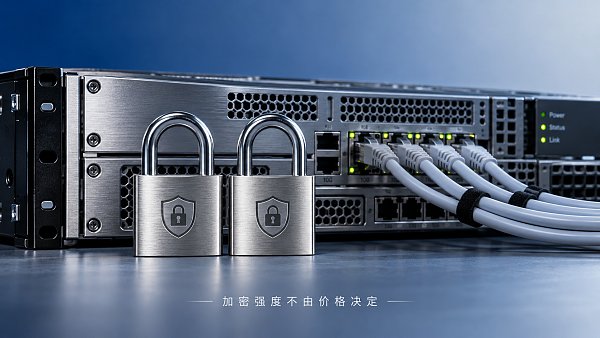
Free SSL certificates are not inherently less secure than paid certificates. When both certificates are trusted by browsers, use appropriate keys and algorithms, and are deployed with the same server configuration, they can provide the same level of HTTPS transport encryption. What you mainly pay for with a paid certificate is more extensive identity verification, support, and management capabilities—not simply “stronger encryption.”
To assess the differences between free and paid SSL certificates, separate three questions: Is data in transit protected? Has the entity behind the website been verified? Can the certificate be kept running correctly over time? Price is no substitute for evaluating these three factors.
Encryption Strength Is Not Determined by the Certificate Price
What are commonly called SSL certificates are used for TLS connections on modern websites. A certificate helps the browser verify the server’s identity and establish an encrypted connection. The specific protocols and cipher suites used also depend on the negotiation between the server and browser.
Therefore, if two websites use trusted certificates, appropriate key configurations, and TLS 1.2 or TLS 1.3, one will not automatically have stronger encryption than the other simply because one certificate is free and the other is paid. The claim that “paid certificates use 256-bit encryption, while free certificates have weaker encryption” confuses certificate keys, connection encryption algorithms, and commercial pricing.
Conversely, a paid certificate cannot compensate for a leaked private key, server vulnerabilities, or incorrect configuration. HTTPS protects the transmission channel; it does not prevent malicious code from being injected into a website or ensure that customer information submitted through a form is stored properly.
The Real Difference Is Who Has Been Verified
Free certificate services commonly provide domain-validated (DV) certificates. The issuing authority confirms, through a specified validation method, that the applicant controls the domain. This does not verify the applicant’s business entity, ability to fulfill obligations, or commercial reputation. A paid certificate may also be a DV certificate, so a fee alone does not mean that the organization’s identity has been verified.
The value of OV and EV certificates lies in providing additional verifiable information about the organization, not in increasing encryption strength when configurations are otherwise the same. Mainstream browsers do not generally display a company name prominently in the address bar just because a site uses an EV certificate; this information may require opening the certificate details. Before purchasing, confirm that your business actually needs this identity verification rather than paying solely for an expected “advanced security indicator.”
Phishing websites can also obtain valid DV certificates. A browser’s indication that a connection is protected only means that it has connected to the domain associated with the certificate; it does not mean that the domain is the official brand website the visitor intended to access.
Operational Security Gaps Often Occur During Renewal and Deployment
For lead-generation websites and online stores, an expired certificate triggers browser warnings and can affect access, form submissions, and transactions. What you should really compare is who is responsible for renewal, whether failed renewals trigger alerts, and how quickly service can be restored after an issue.
A free certificate does not necessarily require manual maintenance. Services that support the ACME protocol can automate issuance and renewal; when automation is properly configured, a shorter certificate lifecycle does not necessarily increase the manual workload. Paid certificates also have validity periods and reissuance requirements. The term of a purchase contract is not the same as the period for which a single certificate can be used continuously.
The practical value of a paid plan may include deployment assistance, centralized management, multi-domain asset management, or a defined response commitment, but these are not included in every product. Check the scope of service: does support cover server installation, CDN configuration, validation failures, and emergency certificate replacement, or does it only provide certificate files?
Websites that use a CDN or reverse proxy should also check both connections: “browser to CDN” and “CDN to origin server.” Enabling HTTPS on the first connection does not mean the second is also encrypted and correctly validates the certificate. Buying a more expensive certificate will not automatically fix these connection configuration issues.
Which Reasons for Paying Are Valid—and Which Are Often Exaggerated
If a website mainly showcases products and receives inquiries, and its hosting platform provides a trusted certificate, automatic renewal, and outage monitoring, a free DV certificate is usually sufficient for transport encryption. Sensitive activities such as login and payment are not inherently unsafe just because a free certificate is used; they should still be assessed in light of the payment architecture, account security, and data-handling requirements.
A paid plan has a measurable basis for purchase if a partner’s security review explicitly requires organizational validation or if a company needs to manage many domains centrally and obtain a clear service response commitment. In that case, compare certificate type, domain coverage, and maintenance services separately rather than comparing only brands and prices.
Some commercial certificates include indemnity commitments, but the covered events, beneficiaries, and claim conditions are subject to the terms and do not mean that compensation will be paid whenever a website is attacked or a transaction loss occurs. The indemnity amount is not an indicator of encryption strength.
SEO is not, by itself, a sufficient reason to purchase a paid certificate. HTTPS is a basic website configuration, but this does not support the conclusion that “paid certificates rank higher than free certificates.” Similarly, a certificate cannot replace compliance measures such as privacy notices, access controls, and data storage protections.
Base Your Selection on Verifiable Requirements
Before purchasing, confirm compatibility with the browsers and devices you target, check that all required primary domains, subdomains, and other independent domains are covered, and define responsibility for private key storage, renewal alerts, and incident handling. Wildcard certificates also have coverage limits; do not assume that one certificate covers domain names at every level.
If these requirements are already reliably handled by your website-building or hosting service, choosing a free certificate does not mean lowering your security standards. If you lack the capacity for ongoing maintenance, purchasing a service with clearly defined operational responsibilities is more meaningful than buying an expensive certificate on its own. Your budget should address verifiable identity requirements and operational safeguards, not the perception that “paid means more secure.”
Related Articles
 How to Evaluate the Delivery Capabilities of a Website Development Provider in Guangdong?
 Independent Website Loading Slowly? How to Troubleshoot Image Loading Issues
 How Can Improving the Form Experience Increase Website Inquiry Conversion Rates?

Related Products
 Yiyingbao SaaS Intelligent Website Building and Marketing SystemYiyingbao SaaS Intelligent Website Building and Marketing System, AI-powered no-code website building, rapid creation of multilingual B2B international websites in 10 minutes, global server acceleration, AI-powered SEO optimization, helping businesses connect efficiently with global markets. The perfect integration of technology and operation makes building an international trade website remarkably simple
 AI+SEM Intelligent Advertising Marketing SystemAI+SEM drives intelligent ad creation, empowering full-funnel precision advertising marketing. The system automatically generates weekly/monthly reports, AI recommends keywords and target countries, monitors core metrics in real-time with intelligent alerts, and enables one-click high-conversion ad solutions to help quickly acquire customers and improve ROI.
 AI+SEO Dual-Engine System Optimization ServicesYiyingbao’s AI+SEO dual-engine optimization system helps foreign trade enterprises acquire high-quality organic traffic through AI-powered keyword research, content generation, and comprehensive technical optimization, significantly improving search rankings and conversion rates.
 AI+SNS Social Media Marketing SystemYingbao AI+SNS Social Media Marketing System - Precision social capture for the social media era. Supports one-click content synchronization across major platforms like Facebook and LinkedIn. AI intelligently rewrites posts for enhanced relevance. 24/7 AI customer service and user profiling analysis empower businesses to efficiently expand into global markets.
 AI+SEO营销解决方案易营宝AI+SEO营销解决方案,通过AI批量写作、智能生成TDK、精准关键词扩词等功能,全面优化网站SEO效果,提升流量与转化率。助力企业构建高效智能网站新生态。
 AI+SEM Advertising Marketing SolutionsAI+SEM Advertising Marketing Solution leverages AI technology to deeply empower SEM ad campaigns. It automatically generates weekly/monthly reports using AI, presenting account data across multiple dimensions for comprehensive insights into campaign performance and trends. The system precisely recommends keywords and target countries, intelligently generates high-conversion ad copy, and enables one-click activation of efficient campaign plans to help businesses rapidly acquire customers. Simultaneously, it monitors core metrics in real time, intelligently identifies abnormal fluctuations, and issues timely alerts to ensure stable, high-return advertising results.
 Domain Name ServicesEasyWin provides professional domain name services, including intelligent queries, one-stop registration, brand protection, and full lifecycle management, helping businesses build a digital brand image.
 EasyOperate B2C Cross-Border E-Commerce Platform & Independent WebsiteEasyStore B2C Cross-border E-commerce Independent Store is an intelligent website building and cross-border e-commerce integrated solution independently developed by EasyStore Information Technology (Beijing) Co., Ltd. The system is specially designed for small and medium-sized as well as large export enterprises, integrating 'website building, operation, marketing, advertising, and conversion' into one, helping enterprises quickly establish cross-border e-commerce independent stores to achieve brand globalization and global sales growth.
The platform supports multiple languages, multiple currencies, and multi-channel marketing, with built-in AI intelligent translation and SEO optimization systems, suitable for mainstream markets such as Southeast Asia, Europe and America, Latin America, and the Middle East, assisting Chinese manufacturing enterprises in efficiently deploying international e-commerce strategies. SSL证书易营宝提供专业SSL安全证书服务,包括单域名和泛域名证书,确保网站数据传输加密、身份验证和完整性保护,助力企业建立安全可信的在线业务环境。









