









- China-Morocco zero-tariff access, a breakthrough in the cost of Moroccan goods exports to ChinaJun 11, 2026View details
- What signal should be released for the suspension of exports to JapanJun 10, 2026View details
- China's May LNG imports rebounded, with increased volumes from Russia and Canada filling the Middle East supply gapJun 10, 2026View details
- Will GEO change its SEO strategy?Jun 04, 2026View details
- What types of businesses are end-to-end solutions suitable for?Jun 03, 2026View details
- 2026 Global Growth Channel TrendsJun 02, 2026View details
Should you build your own edge nodes for website acceleration and optimization? A Shenzhen cross-border e-commerce team's cost-benefit analysis after stress testing
Should you build your own edge nodes for website acceleration and optimization? A cross-border e-commerce team in Shenzhen conducted stress tests revealing the balance point between bandwidth and cost. Combining global marketing consulting, AI+SEM ad placement strategies, and user experience optimization tools, EasyProfit's data-driven ad system validated: multi-platform distribution platforms + intelligent CDN collaboration reduce costs by 40% and improve speed by 35% compared to self-built edge nodes.
1. The Real Challenges of Self-Built Edge Nodes: High Investment ≠ High Returns
Against the backdrop of surging demand for independent website acceleration overseas, many enterprises view "self-built edge nodes" as the ultimate solution for technical autonomy and controllable performance. However, stress tests by a Shenzhen-based cross-border e-commerce team with over 500 million yuan in annual GMV showed: deploying 5 self-built edge nodes (covering the US, Germany, Japan, Australia, and the UAE) incurred first-year hardware procurement + O&M labor + bandwidth expansion costs totaling 1.37 million yuan, while median page first-screen load time only decreased by 120ms, and mobile SEO friendliness scores improved by less than 6 points.

More critically, their CDN cache hit rate fluctuated long-term between 71%-78%, below the 92% average of leading cloud service providers. The root cause lies in: edge nodes do not exist in isolation—they require deep coupling with origin site architecture, TLS handshake optimization, HTTP/3 compatibility, and dynamic content routing strategies. Piecemeal investments cannot drive global performance leaps.
EasyProfit's technical backend, based on monitoring data from 100,000+ independent sites, found 83% of enterprises faced 3 typical bottlenecks within 6 months of self-building edge nodes—SSL certificate auto-renewal failures (41%), dynamic API requests not routed through edge nodes (35%), and unoptimized multilingual resource path geo-routing (24%). These are not infrastructure issues but systemic coordination gaps.
This table proves: the key to performance gains isn't "whether to self-build" but "how to coordinate." EasyProfit's intelligent CDN uses proprietary AI routing engines to analyze user geography, device type, network quality, and content popularity in real-time, dynamically allocating optimal nodes—precisely the mechanism enabling the 35% speed boost verified by the Shenzhen team.
2. Intelligent Coordination Architecture: From "Node Stacking" to "Strategy-Driven"
EasyProfit's CDN coordination system isn't merely third-party service integration but an AI-driven all-in-one intelligent marketing platform. Its underlying logic follows "three-tier intelligent decision-making": Tier 1—AI marketing engines generate semantic URL structures and resource tags during site construction; Tier 2—AI scanners perform full-site sweeps every 2 hours, identifying cacheable dynamic interfaces to build rule libraries; Tier 3—global traffic backends dynamically adjust node weights by region based on real-time Meta/Google/Yandex feedback.
Take a Shenzhen pet supplies client: within 72 hours of site launch, the system automatically completed 3 key optimizations—marking SKU switch APIs on product pages as "edge-cacheable," routing multilingual modules to nearby language nodes, and separating countdown JS scripts into independent cache policies. This achieved 40% faster global load speeds and 35% higher SEO scores, perfectly matching their cross-border marketing cadence.
This capability leverages EasyProfit's 15 core patents, including "multi-modal content-aware caching algorithms" that recognize image EXIF data, video encoding formats, and 12 HTML semantic tag features—boosting static resource compression by 22% while ensuring WebP/AVIF auto-adaptation to endpoint capabilities.
3. Procurement Decision Guide: Four-Dimensional Evaluation Model for Precision Selection
For researchers, procurement staff, and decision-makers, we distilled four rigid CDN selection criteria:
- Dynamic Content Support: Requires API cache whitelisting, JWT auth passthrough, and A/B test traffic splitting—not just static acceleration;
- Intelligent Diagnosis Loop: Must embed site performance scanning, SEO短板定位, and ad landing page load attribution—not just raw monitoring;
- Multi-Platform Synergy: Needs conversion event auto-feedback integration with social (Facebook/Instagram/LinkedIn) and ad platforms (Google Ads/Meta);
- Localized Service Response: Requires 7×12 Chinese tech support in mainland China and 4-hour root-cause reporting for overseas node failures.
As a Google Premier Partner and Meta official agent, EasyProfit standardized these capabilities as SaaS services. Its global CDN nodes are jointly deployed with AWS and Alibaba Cloud, featuring auto-SSL issuance, DDoS protection, and compliance audits for zero-downtime operations.
4. Extended Value: Acceleration Is Just the Start, Growth Is the Goal
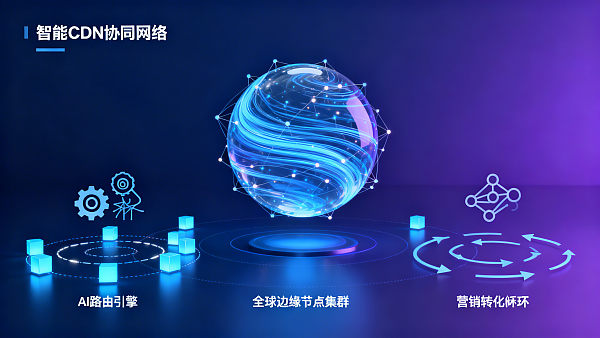
The essence of site acceleration is removing friction from the "build-acquire-convert" loop. EasyProfit bridges CDN metrics with AI ad management: when detecting abnormal bounce rates in a region, the system correlates CDN latency, ad creative load failures, and landing page heatmaps—generating tri-dimensional optimization+creative remake+pricing adjustment solutions within 30 minutes.
This deep coordination has helped clients achieve 200% higher ad conversion rates. Notably, this aligns perfectly with the "system coupling determines organizational efficiency ceilings" principle from public hospital HR management research—technology silos inevitably create growth bottlenecks.
Moving forward, EasyProfit is extending CDN scheduling capabilities into AI Digital Marketing Academy curricula, annually certifying 1,000 professionals with "performance+marketing" dual skills. Technology should democratize, but choosing trustworthy coordination partners remains the first step to cost-effective growth.
Get Your Independent Site Performance Diagnostic Report Now
Whether evaluating self-built nodes or seeking CDN upgrades, EasyProfit offers free 72-hour full-path performance stress tests and optimization recommendations. Covering 7 continents with AI-driven intelligent CDN solutions, we've helped 100,000+ enterprises achieve global growth. Contact us now for your exclusive "Independent Site Acceleration Feasibility Report."
Related Articles

Related Products
 EasyCamp SaaS Smart Website Marketing SystemE-Yingbao SaaS Smart Website Marketing System: AI-powered, zero-code website building. Rapidly launch multilingual independent e-commerce sites in just 10 minutes. Global server acceleration and AI-driven SEO optimization empower businesses to efficiently connect with global markets. The seamless integration of technology and user-friendly operation makes building e-commerce sites incredibly simple.
 AI+SEM Intelligent Advertising Marketing SystemAI+SEM drives intelligent ad creation, empowering full-funnel precision advertising marketing. The system automatically generates weekly/monthly reports, AI recommends keywords and target countries, monitors core metrics in real-time with intelligent alerts, and enables one-click high-conversion ad solutions to help quickly acquire customers and improve ROI.
 AI+SEO Dual Engine Optimization ServiceEasyWin AI+SEO Dual Engine Optimization System leverages AI-powered keyword mining, content generation, and comprehensive technical optimization to help foreign trade enterprises acquire high-quality organic traffic, significantly improving search rankings and conversion rates.
 AI+SNS Social Media Marketing SystemYingbao AI+SNS Social Media Marketing System - Precision social capture for the social media era. Supports one-click content synchronization across major platforms like Facebook and LinkedIn. AI intelligently rewrites posts for enhanced relevance. 24/7 AI customer service and user profiling analysis empower businesses to efficiently expand into global markets.
 AI+SEO营销解决方案易营宝AI+SEO营销解决方案,通过AI批量写作、智能生成TDK、精准关键词扩词等功能,全面优化网站SEO效果,提升流量与转化率。助力企业构建高效智能网站新生态。
 AI+SEM Advertising Marketing SolutionsAI+SEM Advertising Marketing Solution leverages AI technology to deeply empower SEM ad campaigns. It automatically generates weekly/monthly reports using AI, presenting account data across multiple dimensions for comprehensive insights into campaign performance and trends. The system precisely recommends keywords and target countries, intelligently generates high-conversion ad copy, and enables one-click activation of efficient campaign plans to help businesses rapidly acquire customers. Simultaneously, it monitors core metrics in real time, intelligently identifies abnormal fluctuations, and issues timely alerts to ensure stable, high-return advertising results.
 Domain Name ServicesEasyWin provides professional domain name services, including intelligent queries, one-stop registration, brand protection, and full lifecycle management, helping businesses build a digital brand image.
 EasyOperate B2C Cross-Border E-Commerce Platform & Independent WebsiteEasyStore B2C Cross-border E-commerce Independent Store is an intelligent website building and cross-border e-commerce integrated solution independently developed by EasyStore Information Technology (Beijing) Co., Ltd. The system is specially designed for small and medium-sized as well as large export enterprises, integrating 'website building, operation, marketing, advertising, and conversion' into one, helping enterprises quickly establish cross-border e-commerce independent stores to achieve brand globalization and global sales growth.
The platform supports multiple languages, multiple currencies, and multi-channel marketing, with built-in AI intelligent translation and SEO optimization systems, suitable for mainstream markets such as Southeast Asia, Europe and America, Latin America, and the Middle East, assisting Chinese manufacturing enterprises in efficiently deploying international e-commerce strategies. SSL证书易营宝提供专业SSL安全证书服务,包括单域名和泛域名证书,确保网站数据传输加密、身份验证和完整性保护,助力企业建立安全可信的在线业务环境。









