









- The China-US tariff arrangement has reached a preliminary consensus, and the trade association will be establishedJun 15, 2026View details
- What determines B2C cross-border e-commerce website development costs? A breakdown of features, interfaces, and deployment methodsJun 17, 2026View details
- China-Morocco zero-tariff access, a breakthrough in the cost of Moroccan goods exports to ChinaJun 11, 2026View details
- What signal should be released for the suspension of exports to JapanJun 10, 2026View details
- China's May LNG imports rebounded, with increased volumes from Russia and Canada filling the Middle East supply gapJun 10, 2026View details
- Will GEO change its SEO strategy?Jun 04, 2026View details
- What types of businesses are end-to-end solutions suitable for?Jun 03, 2026View details
- 2026 Global Growth Channel TrendsJun 02, 2026View details
Which Middle East website system features are essential
What features are essential in a Middle East website building system? For companies expanding overseas, multilingual support, payment adaptation, site speed optimization, and search engine optimization services are all indispensable. Only by choosing the right cross-border website development solution can you balance conversion efficiency with long-term growth.
For companies planning to enter the Gulf countries and surrounding markets, a website is not just a display window, but the core hub for customer acquisition, conversion, after-sales service, and brand building. Whether they are business decision-makers, daily operations staff, distributors, or after-sales maintenance teams, they all face the same question directly: for a website system targeting the Middle East market, which functions must be prioritized in the initial build, and which can be postponed for later iteration.
From the perspective of integrated website + marketing services, the real essential need is not simply attractive page design, but building a complete closed loop around traffic acquisition, visitor experience, payment conversion, local trust, and long-term operations. E-Marketing Information Technology (Beijing) Co., Ltd. has long served global growth scenarios. Relying on artificial intelligence, big data, and localized service experience, it usually breaks down Middle East website building systems into 4 layers: "basic architecture, marketing capability, operational support, and continuous optimization," helping companies launch faster with shorter implementation cycles.
Multilingual and localized presentation is the first essential requirement of a Middle East website building system
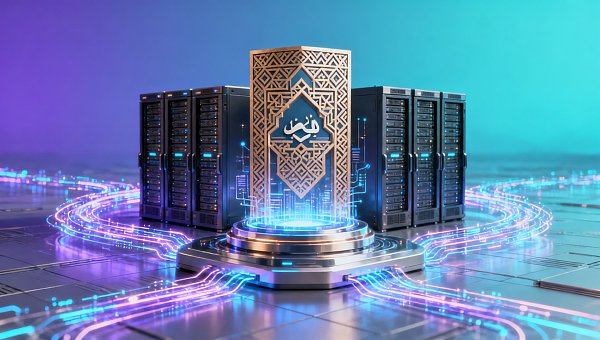
The most common misconception in the Middle East market is treating "launching an English website" as "launching a Middle East website." In fact, the Arabic interface, English interface, and bilingual content switching required in some industries often directly affect lead quality. A website targeting Middle Eastern customers should support at least 2 language versions. If it covers key regions such as the UAE, Saudi Arabia, and Qatar, it is recommended to reserve a content structure of 3 or more versions to adapt to different business lines and user sources.
Localization is not just translation. It also includes right-to-left page layout, date formats, currency display, preferred contact methods, and form field design. For example, if an Arabic website still uses a left-aligned layout, users will clearly feel it is unnatural; if forms only support English input, it will also reduce the willingness of end consumers and channel customers to submit. For operators, a visual management backend and a multilingual content synchronization mechanism can reduce repetitive maintenance work by 30%–50%.
For business decision-makers, the value of localized presentation is reflected in 2 aspects: first, shortening the user understanding path; second, improving brand credibility. Many B2B purchasing decisions are not completed during the first visit, but if the website can clearly present product categories, service capabilities, and local contact methods within 3 seconds, subsequent inquiries and distribution partnership opportunities will increase significantly.
4 capabilities to focus on when evaluating multilingual website development
- The frontend supports switching between Arabic and English, and URL, navigation, and button text can be configured separately.
- The backend supports unified management of multilingual pages, avoiding rebuilding the site every time there is a redesign.
- Forms, customer service entry points, and email notifications support multilingual content output.
- Non-text content such as images, Banner, and product specification tables can be replaced by language.
If a company is simultaneously deploying an official website, landing pages, and campaign sites, it is recommended to include language versions, product categories, form fields, and FAQ modules together in standard templates. This can usually control the launch cycle of new sites within 7–15 working days, instead of rebuilding separately for each country.
The table below can help companies quickly determine which localization display functions in a Middle East website building system are "must-haves for launch" and which belong to "subsequent enhancements."
From the implementation sequence perspective, bilingual capability, RTL adaptation, and localized forms should be completed in the first phase; multicurrency support, regional content distribution, and country-specific landing pages can be optimized in the second phase after traffic stabilizes.
Payment adaptation, inquiry conversion, and trust components determine whether the website can truly close deals
Many companies understand Middle East website development as simply "translating the official website," while overlooking a more critical step: making it easy for customers to leave leads, complete payments, or enter the sales process. For B2B companies, inquiry forms, WhatsApp entry points, quotation downloads, sample requests, and appointment scheduling are core nodes in the conversion chain; for retail or light e-commerce businesses, payment gateways, logistics explanations, and return policies are also essential needs.
Middle Eastern users have relatively high requirements for communication immediacy, so a website should be equipped with at least 2 types of contact paths: one is an instant communication entry point, such as online chat or social media redirection; the other is a structured form entry point used to collect key information such as country, demand type, purchase volume, and contact details. Form fields are generally recommended to be controlled within 5–8 items. Too few fields affect sales judgment, while too many may reduce submission rates.
If a corporate website has online payment functionality, priority should be given to common local payment methods, currency conversion, tax display, and checkout process stability. Even if online transactions are not currently completed directly, it is still recommended to reserve payment module interfaces in preparation for future landing pages, e-commerce pilot operations, or distributor ordering system upgrades.
Conversion components should not only "exist," but also be "usable"
In actual operations, the common problem for companies is not the lack of buttons, but the lack of a trackable conversion path. A mature Middle East website building system should at least support lead source recording, page click tracking, form conversion statistics, and message synchronization distribution. Only in this way can business decision-makers know how many effective customers are brought by paid traffic, organic traffic, and social traffic respectively.
This kind of data capability is also highly related to a company's internal management approach. For example, when evaluating channel placement effectiveness, on-site capital recovery cycles, or marketing ROI, many teams also refer simultaneously to internal management materials, such as Research on Problems and Countermeasures in Corporate Fund Management, so as to review website conversion, order collection, and capital utilization efficiency within the same operational chain.
Trust enhancement modules suitable for the Middle East market
- Provide a clear company introduction, service scope, and response time description. It is recommended to specify feedback within 24 hours or handling within 1 working day.
- Display local cooperation regions, delivery processes, and after-sales support methods, making it easier for distributors and agents to judge cooperation feasibility.
- Add specific information such as parameters, application scenarios, and delivery cycles on product pages, avoiding purely promotional descriptions.
- Provide FAQ, logistics explanations, and after-sales entry points for end consumers to reduce decision-making concerns.
If a website can only display brand slogans but cannot support inquiry, quotation, and payment actions, then even if it has traffic, it is still difficult to form stable growth. For the Middle East market, conversion chain design often has a more direct impact on business performance than homepage visuals.
Site speed, server architecture, and mobile experience are the keys to retaining traffic
The third essential requirement of a Middle East website building system is access speed and stability. Especially in advertising campaigns or social media traffic-driving scenarios, if a landing page takes 1–2 seconds longer to open, it may lead to obvious user loss. If companies focus only on page design while ignoring CDN distribution, image compression, script simplification, and caching strategies, customer acquisition costs will be invisibly pushed higher later.
It is usually recommended that companies control the first-screen loading time of core pages within 3 seconds, keep mobile page size around 2MB as much as possible, and avoid loading too many large images and third-party scripts on key product pages at the same time. For websites involving promotion across multiple countries, regional node acceleration and static resource separation should also be considered to reduce cross-region access fluctuations.
Mobile experience is especially important. A large amount of traffic in the Middle East market comes from mobile devices, so corporate websites, campaign pages, and inquiry pages all need to be designed with mobile scenarios as the priority. Button size, form input, image cropping, Arabic layout, and floating customer service entry points cannot simply copy the PC site layout.
5 indicators recommended to focus on when selecting technology
- Whether first-screen loading speed can be stably controlled within the 2–3 second range.
- Whether images, videos, and documents support tiered loading and compression processing.
- Whether the website has CDN acceleration, caching strategies, and exception monitoring mechanisms.
- Whether mobile menus, forms, and buttons are optimized for touchscreen operation.
- Whether content updates will not affect the existing SEO link structure and page stability.
For after-sales maintenance personnel, stability also means lower troubleshooting costs. If the backend supports log viewing, version rollback, permission management, and modular updates, common maintenance issues can usually be located within 1–2 hours instead of causing repeated rework due to a chaotic site structure.
The table below is suitable for evaluating whether a Middle East website building system meets the basic standards at the performance and experience level.
From a procurement perspective, performance optimization is not an optional add-on, but a foundational capability that affects advertising costs, organic traffic performance, and user dwell time. Especially when multiple sites are operated in parallel, a unified technical architecture can significantly reduce subsequent maintenance complexity.
SEO, content operations, and marketing synergy determine whether a website can continuously generate inquiries
If a Middle East website building system only solves the problem of "being accessible" but lacks search engine optimization and content operation capabilities, then the website lifecycle is often very short. For companies, website development is not a one-time delivery, but a process of continuously acquiring organic traffic, accumulating industry keyword rankings, and building customer assets. Especially in B2B overseas expansion scenarios, many customers go through 2–4 weeks or even longer of comparison before entering the contact or procurement stage.
Therefore, a qualified system should support page titles, descriptions, custom URLs, image ALT, internal link structure, structured content publishing, and multilingual SEO configuration. Only in this way can companies deploy different keywords and industry scenario terms separately on Arabic sites, English sites, and topic pages, instead of crowding all content into the same page.
For operators, it is best to choose a system with a low barrier to content updates. If articles, case studies, product pages, FAQ, and landing pages can be quickly generated through visual components, it is better suited for synchronization with social media promotion, advertising campaigns, and holiday activities. For example, during Ramadan, exhibition periods, or new product launches, special topic pages can be launched quickly within 48 hours.
3 practical values of integrating website building with marketing
First, it reduces system fragmentation. When the official website, SEO pages, ad landing pages, and social media destination pages use the same backend, content reuse efficiency is higher and data statistics are more complete. Second, it makes conversion tracking easier. Companies can see the real lead performance of different countries, different languages, and different channels. Third, it facilitates continuous optimization. If a certain page has a high bounce rate or a certain form has low conversion, these issues can be quickly identified and adjusted within 7 or 14 days.
The advantage of E-Marketing Information Technology (Beijing) Co., Ltd. in the direction of integrated website + marketing services lies precisely in considering intelligent website development, SEO optimization, social media marketing, and advertising placement within the same growth framework. For companies wanting to enter the Middle East market, this integrated solution is more suitable for mid- to long-term operations, rather than just creating a static website where "going live means the end."
FAQ: The 3 questions companies ask most often
How do you choose a website system suitable for the Middle East market? It is recommended to first look at 4 indicators: multilingual capability, conversion support capability, speed stability, and SEO scalability. If 2 of these 4 items have obvious weaknesses, later renovation costs are usually higher than making a one-time comprehensive plan at the beginning.
How long is the delivery cycle generally? For conventional corporate websites and inquiry-based sites, the first-phase launch can usually be completed within 2–4 weeks; if it includes Arabic adaptation, payment interfaces, multiple country landing pages, and marketing automation, the cycle may extend to 4–8 weeks.
What services should be prioritized during procurement? In addition to the system functions themselves, you should also look at content migration, subsequent maintenance, data statistics, search optimization support, and whether it can be linked with advertising and social media promotion. When necessary, you can also combine management-perspective materials such as Research on Problems and Countermeasures in Corporate Fund Management to evaluate the matching relationship between website building investment and later operational budgets.
The essential needs of a Middle East website building system ultimately boil down to 4 things: it must let local users understand the content, let customers convert smoothly, let pages load stably and quickly, and let the website continuously bring organic traffic and marketing leads. For business decision-makers, this means the investment must generate growth returns; for operations and maintenance teams, this means the system must be easy to use, scalable, and convenient for continuous optimization.
If you are planning an official website, inquiry site, brand site, or marketing landing page for the Middle East market, it is recommended to evaluate 4 dimensions simultaneously: multilingual architecture, payment and form design, site acceleration, and SEO content system, so as to avoid repeated redesigns later. If you want a more business-scenario-aligned integrated Middle East website development and marketing solution, please contact us now to get a customized solution and learn more about available solutions.
Related Articles



Related Products
 EasyCamp SaaS Smart Website Marketing SystemE-Yingbao SaaS Smart Website Marketing System: AI-powered, zero-code website building. Rapidly launch multilingual independent e-commerce sites in just 10 minutes. Global server acceleration and AI-driven SEO optimization empower businesses to efficiently connect with global markets. The seamless integration of technology and user-friendly operation makes building e-commerce sites incredibly simple.
 AI+SEM Intelligent Advertising Marketing SystemAI+SEM drives intelligent ad creation, empowering full-funnel precision advertising marketing. The system automatically generates weekly/monthly reports, AI recommends keywords and target countries, monitors core metrics in real-time with intelligent alerts, and enables one-click high-conversion ad solutions to help quickly acquire customers and improve ROI.
 AI+SEO Dual Engine Optimization ServiceEasyWin AI+SEO Dual Engine Optimization System leverages AI-powered keyword mining, content generation, and comprehensive technical optimization to help foreign trade enterprises acquire high-quality organic traffic, significantly improving search rankings and conversion rates.
 AI+SNS Social Media Marketing SystemYingbao AI+SNS Social Media Marketing System - Precision social capture for the social media era. Supports one-click content synchronization across major platforms like Facebook and LinkedIn. AI intelligently rewrites posts for enhanced relevance. 24/7 AI customer service and user profiling analysis empower businesses to efficiently expand into global markets.
 AI+SEO营销解决方案易营宝AI+SEO营销解决方案,通过AI批量写作、智能生成TDK、精准关键词扩词等功能,全面优化网站SEO效果,提升流量与转化率。助力企业构建高效智能网站新生态。
 AI+SEM Advertising Marketing SolutionsAI+SEM Advertising Marketing Solution leverages AI technology to deeply empower SEM ad campaigns. It automatically generates weekly/monthly reports using AI, presenting account data across multiple dimensions for comprehensive insights into campaign performance and trends. The system precisely recommends keywords and target countries, intelligently generates high-conversion ad copy, and enables one-click activation of efficient campaign plans to help businesses rapidly acquire customers. Simultaneously, it monitors core metrics in real time, intelligently identifies abnormal fluctuations, and issues timely alerts to ensure stable, high-return advertising results.
 Domain Name ServicesEasyWin provides professional domain name services, including intelligent queries, one-stop registration, brand protection, and full lifecycle management, helping businesses build a digital brand image.
 EasyOperate B2C Cross-Border E-Commerce Platform & Independent WebsiteEasyStore B2C Cross-border E-commerce Independent Store is an intelligent website building and cross-border e-commerce integrated solution independently developed by EasyStore Information Technology (Beijing) Co., Ltd. The system is specially designed for small and medium-sized as well as large export enterprises, integrating 'website building, operation, marketing, advertising, and conversion' into one, helping enterprises quickly establish cross-border e-commerce independent stores to achieve brand globalization and global sales growth.
The platform supports multiple languages, multiple currencies, and multi-channel marketing, with built-in AI intelligent translation and SEO optimization systems, suitable for mainstream markets such as Southeast Asia, Europe and America, Latin America, and the Middle East, assisting Chinese manufacturing enterprises in efficiently deploying international e-commerce strategies. SSL证书易营宝提供专业SSL安全证书服务,包括单域名和泛域名证书,确保网站数据传输加密、身份验证和完整性保护,助力企业建立安全可信的在线业务环境。









