









- What stages does the cross-border services ecosystem include? How do website building, promotion, payment, and compliance work togetherJun 22, 2026View details
- How will email marketing costs change in 2026Jun 22, 2026View details
- The China-US tariff arrangement has reached a preliminary consensus, and the trade association will be establishedJun 15, 2026View details
- Should overseas brand marketing start with ads or contentJun 21, 2026View details
- What determines B2C cross-border e-commerce website development costs? A breakdown of features, interfaces, and deployment methodsJun 17, 2026View details
- China-Morocco zero-tariff access, a breakthrough in the cost of Moroccan goods exports to ChinaJun 11, 2026View details
- What signal should be released for the suspension of exports to JapanJun 10, 2026View details
- China's May LNG imports rebounded, with increased volumes from Russia and Canada filling the Middle East supply gapJun 10, 2026View details
Why Middle East website-building system features should prioritize language and payment
The functionality of Middle East website building systems goes beyond page creation alone; it more directly affects project customer acquisition and conversion efficiency. For project managers, language adaptation and payment capabilities determine user trust, communication costs, and order fulfillment, making them core priorities that must be addressed first when expanding into the Middle East market.
The Middle East market is changing, and the focus of website building has shifted from “being able to go online” to “being able to close deals”
In the past, when many companies entered the Middle East market, their requirements for official websites and independent sites remained at a basic level such as “having Arabic pages,” “being able to display case studies,” and “being able to leave contact information.” But in the past two years, the market environment has changed significantly. Decision-making cycles for project-based procurement have shortened, customers now demand higher efficiency in online communication, cross-border inquiries increasingly rely on mobile devices, and the website experience is no longer just a window for brand display, but an important touchpoint for preliminary screening, trust building, and payment fulfillment.
This means that the focus of Middle East website building system functionality is also shifting. Project managers are no longer concerned only with whether the backend is easy to maintain, but pay more attention to whether the system truly adapts to local users’ language habits, browsing paths, and payment preferences. If the language is inaccurate, the page structure does not match reading direction, or payment methods cannot meet local needs, even the best products and solutions may be eliminated before an inquiry is ever made.
For engineering project leaders, this shift deserves particular attention. Middle Eastern customers usually care more about cooperation risks, delivery certainty, and communication efficiency. If a website cannot immediately answer “Who are you, are you reliable, and can I smoothly take the next step,” it will directly affect the quality of business opportunities. Therefore, re-examining the functionality of Middle East website building systems is no longer just a matter of technical optimization, but part of a market entry strategy.
Why language and payment have become the two core signals in Middle East website building system functionality
From a trend perspective, language and payment are becoming the two most intuitive indicators for judging a website’s degree of localization. The reason is not complicated: language determines understanding and trust, while payment determines conversion and execution. These two correspond respectively to the first half and second half of the user journey, and a weakness in either may result in high traffic but low inquiry volume, or high inquiry volume but low deal closure.
At the language level, Middle Eastern users are not satisfied with simple translation. Truly effective Middle East website building system functionality needs to support Arabic display logic, right-to-left layout adaptation, stable multilingual switching, and content segmentation for users in different countries. Although markets such as the UAE, Saudi Arabia, and Qatar all belong to the Middle East, customer concerns, business expression styles, and industry terminology habits are not exactly the same. Relying only on mechanical translation often fails to support high-quality project inquiries.
At the payment level, the trend is equally clear. Whether it is equipment prepayments, service deposits, sample purchases, membership registration, or online quotation confirmation, customers are increasingly inclined to complete more transaction-related actions online. If a website cannot support convenient, secure, and trustworthy payment methods, it will lengthen the decision-making path, increase the cost of manual confirmation, and make it easier for customers to turn to competitors that respond faster.
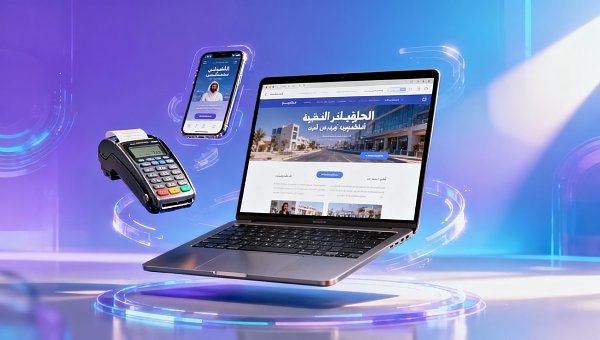
Three categories of driving factors are reshaping the functional requirements of Middle East website building systems
The first category is changes in user behavior. Mobile internet usage is high in the Middle East, and many customers first browse official websites, product pages, and case study pages on their phones before deciding whether to submit a form or initiate contact. This requires Middle East website building system functionality to balance loading speed, mobile layout, and the ability to quickly enter payment or inquiry portals. Slow pages, lagging switches, and failed forms all directly weaken user patience.
The second category is the online shift of procurement processes. In the past, communication in engineering projects relied more on offline channels, exhibitions, or referrals from acquaintances. Today, customers often compare suppliers online first before moving into in-depth discussions. For companies integrating websites + marketing services, website building systems are already tied together with customer acquisition, content, advertising, and data tracking. A website is no longer a standalone tool, but the infrastructure of the marketing conversion chain.
The third category is the upgrade of technical capabilities. Today, companies can fully improve overseas access experience through more mature deployment and acceleration solutions. For example, in scenarios involving foreign trade official websites, multilingual sites, and independent sites, global CDN acceleration empowers foreign trade B2B website building by using global node distribution, cache acceleration, dynamic origin optimization, and intelligent scheduling to help websites reduce cross-border access latency and minimize situations such as “cannot open, slow loading, and failed submission.” For Middle Eastern users, whether access is stable often directly affects their judgment of a company’s delivery capability.
Which business links are affected most obviously, project leaders should identify them first
Changes in Middle East website building system functionality do not affect all positions and links equally, but project managers are often the party facing the highest coordination costs and the most direct pressure. This is because frontend website experience issues often end up turning into project advancement problems.
The first area affected is frontend customer acquisition. After visits are brought in through advertising, search traffic, and social media referrals, if the language feels unnatural or key buttons are hard to understand, users will not continue exploring. The second area affected is lead qualification. Engineering-related customers usually focus on qualifications, case studies, delivery processes, and after-sales response. If this content cannot be clearly presented in localized language, inquiry quality will decline significantly. The third is payment fulfillment and intent confirmation. Many actions that could originally be pushed forward online are forced back into manual follow-up, increasing the communication burden on project teams.
In future evaluations, language adaptation cannot be judged only by translation, and payment capability cannot be judged only by interfaces
When evaluating Middle East website building system functionality, many companies tend to interpret language as “whether multilingual support is available” and payment as “whether payment interfaces can be integrated.” But from the current trend, such evaluation standards are already too low. What really needs attention is whether the system can embed language and payment into the complete user journey.
Language adaptation should at least include content structure adjustment, terminology consistency, page direction adaptation, mobile display consistency, and content strategies for different national markets. Payment capability is not limited to collecting payments, but also involves trust signals before payment, order confirmation, payment process stability, exception alerts, and subsequent data recording. Especially for engineering projects, equipment procurement, and service-based cooperation, payment is often an important signal by which customers judge a company’s degree of standardization.
This is also why more and more companies are beginning to plan Middle East website building system functionality at the collaborative level of marketing, sales, and delivery, rather than handing it over solely to the technical department. Whether website building results are truly good ultimately depends not on whether the pages have been completed, but on whether they have actually reduced customer hesitation, improved communication efficiency, and driven real transactions.
What actions are companies better suited to take now, the evaluation criteria should be more practical
For companies preparing to enter or already deeply cultivating the Middle East market, it is recommended to re-examine existing websites from three levels. First, check whether the language is “usable and trustworthy,” rather than simply “translated.” Second, check whether the payment path is smooth and whether it can support real business actions such as samples, deposits, and service fees. Third, check whether website access performance is stable, especially overseas first-screen speed, form submission success rate, and key page opening conditions.
If the company itself provides an integrated solution of websites + marketing services, then it is even more important to coordinate technology with conversion. E-Bang Information Technology (Beijing) Co., Ltd. has long built full-chain capabilities around intelligent website building, SEO optimization, social media marketing, advertising placement, and localization services. Its experience also shows that competition in the Middle East market is not only about traffic, but also about system adaptation capability and localized execution capability. What project leaders need to assess is not a single function, but whether the entire chain is designed for the target market.
In terms of response rhythm, companies can first complete language upgrades for key pages, then optimize payment and forms, and then continue strengthening access performance, security protection, and data monitoring. If the site serves many overseas users, it can also combine capabilities such as edge caching, dynamic request optimization, and health checks to further reduce conversion losses caused by regional access fluctuations. The key here is not to pursue a pile of technical buzzwords, but to ensure that customers can see it, understand it, and complete the payment at critical moments.
Conclusion: judging Middle East website building system functionality must ultimately return to business results
From a trend perspective, Middle East website building system functionality is shifting from a basic display tool to infrastructure for business growth. Language adaptation determines whether customers are willing to continue learning more, payment capability determines whether business opportunities can be smoothly advanced, and access speed and stability determine whether these efforts can truly be perceived by users. For project managers and engineering project leaders, what is truly worth focusing on is not how many pages the website has, but whether it has effectively reduced communication costs, strengthened trust, and facilitated order fulfillment.
If companies want to further assess how these trends affect their own business, it is recommended to focus on confirming several questions: can customers in target countries quickly understand the website content, are core pages adapted to Arabic reading habits, are inquiry and payment paths smooth enough, is overseas access stable, and do the existing Middle East website building system functions truly support coordination across marketing, sales, and project delivery. Only by clarifying these questions can a company’s investment in the Middle East market be more likely to convert into sustained growth.
Related Articles
 Are you really hitting the right target with Google FB for truck bed exports?
 It's easy to turn a foreign trade website into a piece of art, but it's the ultimate culprit behind your order decline
 Foreign trade website efficiency revolution! Yiyingbao component upgrade + inquiry optimization, inquiries surge!



Related Products
 EasyCamp SaaS Smart Website Marketing SystemE-Yingbao SaaS Smart Website Marketing System: AI-powered, zero-code website building. Rapidly launch multilingual independent e-commerce sites in just 10 minutes. Global server acceleration and AI-driven SEO optimization empower businesses to efficiently connect with global markets. The seamless integration of technology and user-friendly operation makes building e-commerce sites incredibly simple.
 AI+SEM Intelligent Advertising Marketing SystemAI+SEM drives intelligent ad creation, empowering full-funnel precision advertising marketing. The system automatically generates weekly/monthly reports, AI recommends keywords and target countries, monitors core metrics in real-time with intelligent alerts, and enables one-click high-conversion ad solutions to help quickly acquire customers and improve ROI.
 AI+SEO Dual Engine Optimization ServiceEasyWin AI+SEO Dual Engine Optimization System leverages AI-powered keyword mining, content generation, and comprehensive technical optimization to help foreign trade enterprises acquire high-quality organic traffic, significantly improving search rankings and conversion rates.
 AI+SNS Social Media Marketing SystemYingbao AI+SNS Social Media Marketing System - Precision social capture for the social media era. Supports one-click content synchronization across major platforms like Facebook and LinkedIn. AI intelligently rewrites posts for enhanced relevance. 24/7 AI customer service and user profiling analysis empower businesses to efficiently expand into global markets.
 AI+SEO营销解决方案易营宝AI+SEO营销解决方案,通过AI批量写作、智能生成TDK、精准关键词扩词等功能,全面优化网站SEO效果,提升流量与转化率。助力企业构建高效智能网站新生态。
 AI+SEM Advertising Marketing SolutionsAI+SEM Advertising Marketing Solution leverages AI technology to deeply empower SEM ad campaigns. It automatically generates weekly/monthly reports using AI, presenting account data across multiple dimensions for comprehensive insights into campaign performance and trends. The system precisely recommends keywords and target countries, intelligently generates high-conversion ad copy, and enables one-click activation of efficient campaign plans to help businesses rapidly acquire customers. Simultaneously, it monitors core metrics in real time, intelligently identifies abnormal fluctuations, and issues timely alerts to ensure stable, high-return advertising results.
 Domain Name ServicesEasyWin provides professional domain name services, including intelligent queries, one-stop registration, brand protection, and full lifecycle management, helping businesses build a digital brand image.
 EasyOperate B2C Cross-Border E-Commerce Platform & Independent WebsiteEasyStore B2C Cross-border E-commerce Independent Store is an intelligent website building and cross-border e-commerce integrated solution independently developed by EasyStore Information Technology (Beijing) Co., Ltd. The system is specially designed for small and medium-sized as well as large export enterprises, integrating 'website building, operation, marketing, advertising, and conversion' into one, helping enterprises quickly establish cross-border e-commerce independent stores to achieve brand globalization and global sales growth.
The platform supports multiple languages, multiple currencies, and multi-channel marketing, with built-in AI intelligent translation and SEO optimization systems, suitable for mainstream markets such as Southeast Asia, Europe and America, Latin America, and the Middle East, assisting Chinese manufacturing enterprises in efficiently deploying international e-commerce strategies. SSL证书易营宝提供专业SSL安全证书服务,包括单域名和泛域名证书,确保网站数据传输加密、身份验证和完整性保护,助力企业建立安全可信的在线业务环境。









