









- What stages does the cross-border services ecosystem include? How do website building, promotion, payment, and compliance work togetherJun 22, 2026View details
- How will email marketing costs change in 2026Jun 22, 2026View details
- The China-US tariff arrangement has reached a preliminary consensus, and the trade association will be establishedJun 15, 2026View details
- Should overseas brand marketing start with ads or contentJun 21, 2026View details
- What determines B2C cross-border e-commerce website development costs? A breakdown of features, interfaces, and deployment methodsJun 17, 2026View details
- China-Morocco zero-tariff access, a breakthrough in the cost of Moroccan goods exports to ChinaJun 11, 2026View details
- What signal should be released for the suspension of exports to JapanJun 10, 2026View details
- China's May LNG imports rebounded, with increased volumes from Russia and Canada filling the Middle East supply gapJun 10, 2026View details
Why is my foreign trade website not getting inquiries due to SEO issues? What's the problem?
If your foreign trade website has implemented SEO but isn't generating inquiries, the problem often lies not in traffic, but in the inadequacy of your website's title, description, keywords (TDK), SEO optimization, user experience optimization, and conversion path design. This article will break down the core issues causing low inquiries for independent foreign trade websites.
Why does my foreign trade website have SEO rankings but no inquiries?
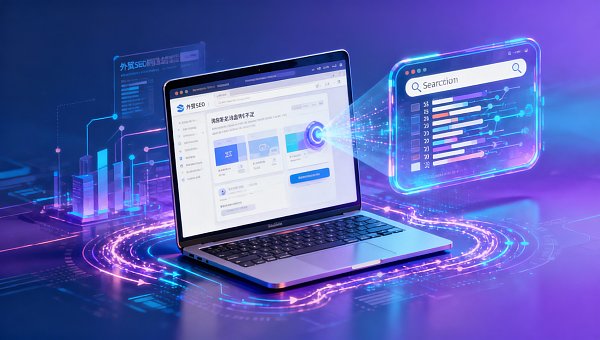
Many companies, when doing SEO for their foreign trade websites, first focus on keyword rankings and the number of pages indexed. However, what truly impacts inquiries is often whether the quality of traffic matches the conversion rate. Ranking in the top 20 does not equate to effective customer acquisition, especially in B2B scenarios where the purchasing decision-making chain typically lasts two weeks to three months. If a page cannot answer the buyer's key questions, traffic will quickly be lost.
A common question among users and operators is, "Why is no one leaving their contact information even though there are visits?" Business decision-makers are more concerned with return on investment (ROI), while project managers focus on delivery schedules and lead quality. For distributors, agents, and end consumers, different roles have different priorities after entering the website. If independent website SEO optimization only covers a single intent, it will be difficult to support conversions from multiple roles.
Low inquiry rates on foreign trade websites typically stem from four issues: unfocused title, description, and marketing (TDK) settings; content inconsistent with search intent; insufficient page trust; and excessively long inquiry paths. In particular, when there is no clear division of functions between the homepage, product pages, solution pages, and landing pages, users may leave within 30 to 90 seconds.
For the integrated website and marketing services industry, the truly effective approach is not single-point optimization, but rather integrating website structure, SEO strategy, content layout, data tracking, and conversion design. E-Creative Information Technology (Beijing) Co., Ltd., with over a decade of experience in global digital marketing, leverages artificial intelligence and big data capabilities, emphasizing a complete closed loop from "traffic acquisition" to "inquiry growth."
Common problems can be identified by checking these four types of issues first.
- Keyword bias: Focusing only on broad industry terms while neglecting high-converting long-tail keywords such as "supplier," "factory," "customization," "quotation," and "wholesale."
- Insufficient information on the page: Product parameters, application scenarios, delivery cycle, and after-sales support are described too superficially, failing to help the purchasing department make informed decisions.
- Conversion entry points are hidden: too few inquiry buttons, too many form fields, and a lack of instant contact tools lead to excessively high lead generation costs.
- Incomplete trust building: Without case studies, processes, service commitments, frequently asked questions, and compliance explanations, users find it difficult to proceed to the next step of communication.
TDK (Title, Description, Keywords), page structure, and search intent: where do problems usually lie?
The foundation of SEO for foreign trade websites isn't the number of articles published, but rather whether each page has a clear theme. If TDK (Title, Description, Keywords) is simply a matter of keyword stuffing, search engines may crawl it, but they will struggle to accurately understand the page's value. More common problems include titles that resemble company self-descriptions, descriptions that sound like slogans, and keyword placement that's disconnected from user search scenarios.
Taking a B2B independent website as an example, the homepage is suitable for brand and industry keywords, category pages are suitable for product and solution keywords, and detail pages are suitable for model, application, and procurement keywords. If these three types of content are mixed on the same page, search engine ranking will be weakened, and the user's reading path will become confusing. It is generally recommended to plan a three-tiered structure in the initial stages of website construction before moving on to content production.
Besides structure, content depth also directly impacts inquiries. Buyers are interested not only in "what you do," but also in "which scenarios it's suitable for, how long the delivery time is, what customizations you support, and how you handle after-sales service." If a page lacks this type of information, even with good keyword rankings, it will only lead to browsing and not an inquiry.
Some companies refer to management and operational materials to optimize their internal marketing processes in order to supplement their content, and this approach itself is not problematic. For example, in terms of budget management, project evaluation, and input-output analysis, further reading on the exploration of a comprehensive budget management approach for manufacturing enterprises driven by strategy can help decision-makers understand the pace of foreign trade marketing investment and return from a budget perspective.
To determine if a page has "ranking but no conversions," check these 5 items.
The table below is suitable for operations personnel, project managers, and business managers to quickly identify key gaps in the SEO optimization of independent websites, especially for websites that still have few inquiries 3 to 6 months after going live.
If two or more of the above conditions are present, the low number of inquiries is not just a traffic issue, but rather a problem with the website's fundamentals and marketing integration. At this point, rather than continuing to pursue more indexed pages, it's more important to rebuild the page logic and conversion path.
What kind of pages are more likely to generate valid inquiries?
Effective web pages typically possess three characteristics: first, a singular theme, allowing users to grasp the page's message within five seconds of entering; second, complete information supporting initial purchasing decisions; and third, clear actionable steps, guiding users through the next steps: requesting quotes, samples, downloading materials, or scheduling a meeting. Many websites don't lack in quantity, but rather in the business communication skills of these key pages.
Beyond SEO optimization for independent websites, how does user experience optimization affect inquiries?
SEO optimization for independent websites brings in visitors, but user experience optimization determines whether they stay. For mobile users, if the first screen loads in more than 3 to 5 seconds, images are too heavy, or navigation is too deep, the browsing experience will be significantly degraded. This is especially true for overseas customers visiting from different regions, where site stability and page response speed directly impact their willingness to communicate.
Besides speed, information organization is also crucial. Operators want to quickly find updatable modules in the backend, after-sales personnel focus on the clarity of service instructions, project managers care about whether the solution page can support complex project explanations, and distributors prioritize pricing mechanisms, agency support, and regional cooperation methods. Since a single page serves multiple user groups, it's essential to address different questions through layered content.
Many corporate websites simply create product pages with "images and a few lines of text," which is far from sufficient in today's competitive environment. A more suitable design includes application scenarios, frequently asked questions, delivery cycles, customization options, service processes, and contact information. It's generally recommended that each core page cover at least four types of information modules to reduce the cost of secondary searches for users.
In its integrated website + marketing services practice, YiYingBao Information Technology (Beijing) Co., Ltd. emphasizes the synergy between intelligent website building and SEO, social media, and advertising, treating the website not as an "online business card" but as a platform for generating leads, filtering needs, and improving conversion rates. For websites with few inquiries, this holistic approach is more effective than simply changing a few keywords.
What content do different users focus on when they enter the website?
If a business targets multiple audiences, its pages cannot use a single, uniform script. The table below is suitable for website content planning and also for sales, operations, and project teams to consistently convey key information on their pages.
The value of this layered design lies in the fact that the same SEO traffic entering the website will not be lost due to information misalignment. Increased inquiries often come from users finding answers faster, rather than simply increasing the number of visitors.
Three steps to prioritize for user experience optimization
- First, optimize the first screen: Explain what you offer, who it is suitable for, and how to contact the customer in the first screen to reduce the guessing cost for visitors.
- Further conversion components were added, including a fixed inquiry button, a simplified form, FAQs, and links to download materials or schedule a consultation.
- Finally, conduct behavior tracking: observe bounce rate, dwell time, and form submission points weekly, and use the data to correct content and structure.
How should the conversion path be designed from traffic to inquiries?
Why are foreign trade websites failing to generate inquiries through SEO? The core issue lies in the conversion path. After search traffic enters a website, it must go through at least three stages: "understanding needs—building trust—initiating contact." If any link in this chain is missing, the user will get stuck. This is especially true for high-priced, customized, or project-based businesses, where customers often don't place an order on their first visit but rather complete an initial screening.
Therefore, a website shouldn't have only one "Contact Us" page. A more effective approach is to create different levels of entry points on the homepage, product pages, solution pages, case study pages, and FAQ pages, such as getting a quote, requesting a catalog, submitting a request, and scheduling a consultation. This covers users at different stages of their engagement, keeping previously lost users on the site for further conversion.
In practice, the conversion optimization of an independent foreign trade website can be divided into four steps: Step 1 is to diagnose the existing structure; Step 2 is to sort out the keyword and page mapping; Step 3 is to complete the core content modules; and Step 4 is to integrate data tracking and continuous testing. Most projects can complete the first round of structural optimization within 4 to 8 weeks, followed by monthly iterations.
For budget-conscious businesses, it's unnecessary to overhaul the entire website at once. Instead, prioritize piloting with 10 to 20 pages that have high traffic, high bounce rates, or high commercial value. This allows for better control over costs and makes it easier to identify which pages are most impacting inquiries.
A feasible inquiry conversion path
Suitable page layout logic for B2B foreign trade websites
- Search entry page: It includes industry keywords, product keywords, and application keywords, addressing the question, "Can you meet my needs?"
- Trust Verification Page: Answers "Are you reliable?" through service processes, team capabilities, localized support, and frequently asked questions.
- Action page: Respond to "What should I do next" through quotation form, consultation portal, and document download.
- Follow-up and closure: There should be a clear feedback mechanism within 24 to 72 hours after submission to avoid the clues from cooling down.
If a company simultaneously implements SEO, social media marketing, and advertising, it's crucial that its website adheres to a unified standard. Yiyingbao Information Technology (Beijing) Co., Ltd., leveraging its integrated capabilities in intelligent website building, SEO optimization, social media marketing, and advertising, can channel traffic from different channels into a single conversion logic, reducing lead loss caused by channel fragmentation.
Common Misconceptions, FAQs and Why Choose Us
Many companies believe that simply updating articles will generate inquiries for their foreign trade website's SEO, or that achieving a first-page ranking signifies project success. In reality, SEO is more like a long-term growth project; website building, content, data, inquiry handling, and sales follow-up are all indispensable. Below, we provide more direct advice based on common search questions.
How long does it typically take to see changes in inquiries on an international trade website via SEO?
If the website's foundation is weak, the first two to four weeks are typically spent correcting the structure, title, description, and keywords (TDK), and page content. Afterward, over one to three months, gradually observe changes in indexing, ranking, and behavioral data. An increase in inquiries doesn't necessarily translate to a rise in rankings; often, improvements in page experience and conversion entry points will first bring about an improvement in existing traffic.
Does more traffic necessarily mean more inquiries?
Not necessarily. Increased invalid traffic only raises operating costs. For integrated website and marketing service projects, keyword intent, page load, and sales conversion matching are more important. 100 targeted visitors are often more valuable than 1,000 general visitors.
When budget is limited, should you prioritize SEO or website redesign?
If there are obvious problems with the website structure and conversion path, it's recommended to make small-scale site modifications first before proceeding with independent website SEO optimization. This is because traffic flowing to a website with poor handling capacity will be more wasted. The priority is usually: core page structure, title, description, keywords (TDK), mobile experience, form paths, and supplementing key content.
Why choose us?
Founded in 2013 and headquartered in Beijing, Yiyingbao Information Technology (Beijing) Co., Ltd. is driven by artificial intelligence and big data, and provides long-term services for global growth scenarios. The company offers comprehensive solutions encompassing intelligent website building, SEO optimization, social media marketing, and advertising, treating SEO for foreign trade websites not as a standalone technical action but as an integral part of its business growth strategy.
If you are currently facing issues such as "traffic without inquiries", "disorganized keyword layout", "unclear investment in independent website SEO optimization", or "unstable lead quality despite multi-channel promotion", you can directly discuss the following: website diagnosis scope, page structure adjustment suggestions, core keyword planning, inquiry form optimization, standard delivery cycle, customized solution configuration, and phased pricing methods.
For enterprise decision-makers, the focus should be on budget breakdown, phased goals, and investment pace; for operational staff, the focus should be on backend maintenance, content updates, and data tracking; for project managers, after-sales personnel, and channel partners, the focus should be on site function synergy, cross-regional service support, and lead distribution methods. Clearly defining the problems will ensure the solution is more closely aligned with actual business needs.
If you are evaluating a website redesign or marketing upgrade, you can also explore relevant management ideas by combining the comprehensive budget management approach for manufacturing enterprises driven by strategy . By examining project investment from the perspective of budget and execution synergy, you can truly transform your foreign trade independent website from a display tool into a tool for continuous customer acquisition.
Related Articles
 Are you really hitting the right target with Google FB for truck bed exports?
 It's easy to turn a foreign trade website into a piece of art, but it's the ultimate culprit behind your order decline
 Foreign trade website efficiency revolution! Yiyingbao component upgrade + inquiry optimization, inquiries surge!


Related Products
 EasyCamp SaaS Smart Website Marketing SystemE-Yingbao SaaS Smart Website Marketing System: AI-powered, zero-code website building. Rapidly launch multilingual independent e-commerce sites in just 10 minutes. Global server acceleration and AI-driven SEO optimization empower businesses to efficiently connect with global markets. The seamless integration of technology and user-friendly operation makes building e-commerce sites incredibly simple.
 AI+SEM Intelligent Advertising Marketing SystemAI+SEM drives intelligent ad creation, empowering full-funnel precision advertising marketing. The system automatically generates weekly/monthly reports, AI recommends keywords and target countries, monitors core metrics in real-time with intelligent alerts, and enables one-click high-conversion ad solutions to help quickly acquire customers and improve ROI.
 AI+SEO Dual Engine Optimization ServiceEasyWin AI+SEO Dual Engine Optimization System leverages AI-powered keyword mining, content generation, and comprehensive technical optimization to help foreign trade enterprises acquire high-quality organic traffic, significantly improving search rankings and conversion rates.
 AI+SNS Social Media Marketing SystemYingbao AI+SNS Social Media Marketing System - Precision social capture for the social media era. Supports one-click content synchronization across major platforms like Facebook and LinkedIn. AI intelligently rewrites posts for enhanced relevance. 24/7 AI customer service and user profiling analysis empower businesses to efficiently expand into global markets.
 AI+SEO营销解决方案易营宝AI+SEO营销解决方案,通过AI批量写作、智能生成TDK、精准关键词扩词等功能,全面优化网站SEO效果,提升流量与转化率。助力企业构建高效智能网站新生态。
 AI+SEM Advertising Marketing SolutionsAI+SEM Advertising Marketing Solution leverages AI technology to deeply empower SEM ad campaigns. It automatically generates weekly/monthly reports using AI, presenting account data across multiple dimensions for comprehensive insights into campaign performance and trends. The system precisely recommends keywords and target countries, intelligently generates high-conversion ad copy, and enables one-click activation of efficient campaign plans to help businesses rapidly acquire customers. Simultaneously, it monitors core metrics in real time, intelligently identifies abnormal fluctuations, and issues timely alerts to ensure stable, high-return advertising results.
 Domain Name ServicesEasyWin provides professional domain name services, including intelligent queries, one-stop registration, brand protection, and full lifecycle management, helping businesses build a digital brand image.
 EasyOperate B2C Cross-Border E-Commerce Platform & Independent WebsiteEasyStore B2C Cross-border E-commerce Independent Store is an intelligent website building and cross-border e-commerce integrated solution independently developed by EasyStore Information Technology (Beijing) Co., Ltd. The system is specially designed for small and medium-sized as well as large export enterprises, integrating 'website building, operation, marketing, advertising, and conversion' into one, helping enterprises quickly establish cross-border e-commerce independent stores to achieve brand globalization and global sales growth.
The platform supports multiple languages, multiple currencies, and multi-channel marketing, with built-in AI intelligent translation and SEO optimization systems, suitable for mainstream markets such as Southeast Asia, Europe and America, Latin America, and the Middle East, assisting Chinese manufacturing enterprises in efficiently deploying international e-commerce strategies. SSL证书易营宝提供专业SSL安全证书服务,包括单域名和泛域名证书,确保网站数据传输加密、身份验证和完整性保护,助力企业建立安全可信的在线业务环境。









