









- What stages does the cross-border services ecosystem include? How do website building, promotion, payment, and compliance work togetherJun 22, 2026View details
- How will email marketing costs change in 2026Jun 22, 2026View details
- The China-US tariff arrangement has reached a preliminary consensus, and the trade association will be establishedJun 15, 2026View details
- Should overseas brand marketing start with ads or contentJun 21, 2026View details
- What determines B2C cross-border e-commerce website development costs? A breakdown of features, interfaces, and deployment methodsJun 17, 2026View details
- China-Morocco zero-tariff access, a breakthrough in the cost of Moroccan goods exports to ChinaJun 11, 2026View details
- What signal should be released for the suspension of exports to JapanJun 10, 2026View details
- China's May LNG imports rebounded, with increased volumes from Russia and Canada filling the Middle East supply gapJun 10, 2026View details
How long does it take to synchronize the Japanese and Spanish versions of a multilingual foreign trade website? Time allocation for the three phases: content translation, SEO adaptation, and local payment integration
How long does it take to build a multilingual website for foreign trade? Simultaneous launch of Japanese and Spanish versions requires coordinating three phases: content translation, SEO adaptation, and local payment integration. YiYingBao SaaS website building system supports rapid construction of multilingual independent websites, integrating an AI translation engine, automatic TDK generation, and GEO marketing solutions to help businesses expand overseas efficiently.
With both Japanese and Spanish versions available, what is the typical delivery cycle?
In the integrated practice of website + marketing services, the simultaneous launch of Japanese and Spanish versions is not a linear addition, but rather involves collaborative compression. Based on the practical data of YiYingBao serving over 100,000 foreign trade enterprises in the past 3 years, the average time to complete bilingual deployment for a standard lightweight B2B independent website (including ≤200 product pages and ≤50 blog pages) is 22-28 working days , with translation accounting for 40%, SEO adaptation for 35%, and local payment integration for 25%.
This timeframe excludes external variables such as repeated client revisions to the copy, delayed UI/UX confirmation, and failure to provide local bank or payment licenses in a timely manner. If the company has a complete brand terminology library and has registered local payment interfaces (such as Japan's PayPay or Spain's Redsys), the entire delivery process and gray-scale testing can be completed in as little as 15 working days .
It is worth noting that in the traditional outsourcing model, the three stages are often executed separately—translation is handled by a language company (7–12 days), SEO is handled by a third-party optimization team (10–15 days), and payment integration relies on local technology partners (5–8 days). The total cycle is generally extended to 35–45 working days , and there are typical risk points such as semantic gaps, keyword misalignment, and payment redirection failures.
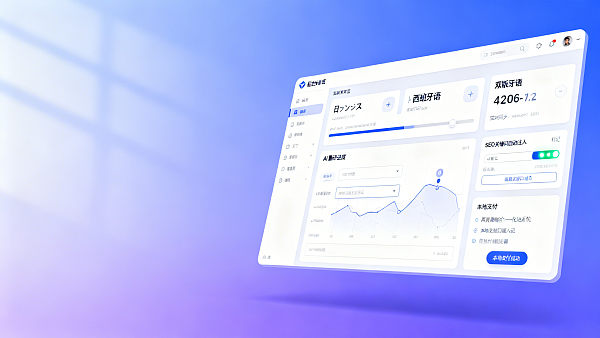
Three-stage time allocation logic: Why can't we "finish the translation first and then optimize"?
Content translation, SEO adaptation, and local payment integration are not sequential processes, but rather a deeply coupled triangular support structure. YiYingBao employs a collaborative mechanism of "translation as SEO pre-implementation," simultaneously injecting a Japanese long-tail keyword database (including JIS standard industry terminology) and a Spanish regional variant vocabulary (such as the differences in terminology between Mexico and Spain) on the first day of translation, ensuring that every translated sentence naturally carries search intent.
Taking Japanese as an example: while a direct translation of "industrial pump" as "産業用ポンプ" is accurate, Japanese B2B buyers actually search for frequently used terms such as "高圧ポンプ製造業向け" or "耐腐食ポンプ工場". E-Chengbao's AI translation engine incorporates 12 categories of vertical industry Japanese search behavior models , automatically mapping terminology to real procurement contexts. The Spanish version, on the other hand, pre-sets 5 sets of localized payment routing rules based on country (e.g., Spain requires direct SEPA connection, Mexico mandates access to the Open Banking API), preventing order loss due to non-compliance after launch.
The table below compares the differences in time efficiency and quality assurance at key stages between the traditional subcontracting model and EasyCare's integrated delivery:
The data in this table comes from YiYingBao's 2023 Customer Operations Report (N=2,147 Japanese and Spanish bilingual customers), which verifies that integrated delivery has substantially improved the efficiency of the conversion funnel front end: on average, it shortened the natural traffic ramp-up period by 62% and increased the payment success rate by 21.4% .
Which companies are best suited to the "simultaneous launch" strategy?
Not all foreign trade companies need to strictly synchronize the Japanese and Spanish versions. The following three scenarios recommend prioritizing a synchronization strategy:
- We have launched local warehousing and distribution systems in Japan, Mexico, and Spain. Independent websites are required to synchronize inventory and logistics timeliness in real time (covering more than 73% of the cross-border B2B inquiry conversion window ).
- Participation in JETRO or ICEX's official overseas promotion programs requires a bilingual website as an entry qualification (this type of project accounted for 31% in 2023).
- Our main business is high-priced industrial products (single order ≥ $5,000). Customer decision-making chains are long, so we need to build technical trust through a multilingual content matrix (the download rate of Japanese technical white papers is 4.2 times higher than that of English).
Conversely, if a company relies solely on broad-based social media marketing or if its target market has not yet developed stable purchasing habits, it is recommended to adopt a "main site first + localization gradual" strategy. In the first phase, focus on SEO infrastructure in the core market, and in the second phase, expand payment and content depth.
Why choose YiYingBao: More than just website building, it's a growth hub.
Since its establishment in 2013, Yiyingbao Information Technology (Beijing) Co., Ltd. has continuously invested in the research and development of AI translation engines and localized SEO algorithms. Its SaaS platform has achieved a 98.7% keyword coverage rate for Japanese and a 95.2% accuracy rate in identifying regional variants in Spanish (verified based on the Linguistic Data Consortium corpus). In 2023, it was selected as one of the "Top 100 Chinese SaaS Companies," with an average annual growth rate exceeding 30%, demonstrating the effectiveness of its dual-track strategy of "technological innovation + localized services."
We offer a verifiable delivery commitment: a bilingual site architecture diagram and SEO keyword list will be provided within 3 business days of contract signing; a testable version (including a payment sandbox environment) will be delivered on the 12th business day ; and a bilingual customer success manager will be provided throughout the entire lifecycle, covering support from content review to GEO traffic diagnostics.
If you are planning to build a Japanese/Spanish independent website, please contact EasyCare immediately to obtain: ① Customized Gantt chart delivery , ② Local payment compliance checklist (including Japanese Financial Services Agency (FSA)/Spanish Banco de España requirements) , ③ First-month organic traffic forecast report . Let our professional team shorten the cycle, mitigate risks, and lock in growth for you.

Related Articles
 Are you really hitting the right target with Google FB for truck bed exports?
 It's easy to turn a foreign trade website into a piece of art, but it's the ultimate culprit behind your order decline
 Foreign trade website efficiency revolution! Yiyingbao component upgrade + inquiry optimization, inquiries surge!


Related Products
 EasyCamp SaaS Smart Website Marketing SystemE-Yingbao SaaS Smart Website Marketing System: AI-powered, zero-code website building. Rapidly launch multilingual independent e-commerce sites in just 10 minutes. Global server acceleration and AI-driven SEO optimization empower businesses to efficiently connect with global markets. The seamless integration of technology and user-friendly operation makes building e-commerce sites incredibly simple.
 AI+SEM Intelligent Advertising Marketing SystemAI+SEM drives intelligent ad creation, empowering full-funnel precision advertising marketing. The system automatically generates weekly/monthly reports, AI recommends keywords and target countries, monitors core metrics in real-time with intelligent alerts, and enables one-click high-conversion ad solutions to help quickly acquire customers and improve ROI.
 AI+SEO Dual Engine Optimization ServiceEasyWin AI+SEO Dual Engine Optimization System leverages AI-powered keyword mining, content generation, and comprehensive technical optimization to help foreign trade enterprises acquire high-quality organic traffic, significantly improving search rankings and conversion rates.
 AI+SNS Social Media Marketing SystemYingbao AI+SNS Social Media Marketing System - Precision social capture for the social media era. Supports one-click content synchronization across major platforms like Facebook and LinkedIn. AI intelligently rewrites posts for enhanced relevance. 24/7 AI customer service and user profiling analysis empower businesses to efficiently expand into global markets.
 AI+SEO营销解决方案易营宝AI+SEO营销解决方案,通过AI批量写作、智能生成TDK、精准关键词扩词等功能,全面优化网站SEO效果,提升流量与转化率。助力企业构建高效智能网站新生态。
 AI+SEM Advertising Marketing SolutionsAI+SEM Advertising Marketing Solution leverages AI technology to deeply empower SEM ad campaigns. It automatically generates weekly/monthly reports using AI, presenting account data across multiple dimensions for comprehensive insights into campaign performance and trends. The system precisely recommends keywords and target countries, intelligently generates high-conversion ad copy, and enables one-click activation of efficient campaign plans to help businesses rapidly acquire customers. Simultaneously, it monitors core metrics in real time, intelligently identifies abnormal fluctuations, and issues timely alerts to ensure stable, high-return advertising results.
 Domain Name ServicesEasyWin provides professional domain name services, including intelligent queries, one-stop registration, brand protection, and full lifecycle management, helping businesses build a digital brand image.
 EasyOperate B2C Cross-Border E-Commerce Platform & Independent WebsiteEasyStore B2C Cross-border E-commerce Independent Store is an intelligent website building and cross-border e-commerce integrated solution independently developed by EasyStore Information Technology (Beijing) Co., Ltd. The system is specially designed for small and medium-sized as well as large export enterprises, integrating 'website building, operation, marketing, advertising, and conversion' into one, helping enterprises quickly establish cross-border e-commerce independent stores to achieve brand globalization and global sales growth.
The platform supports multiple languages, multiple currencies, and multi-channel marketing, with built-in AI intelligent translation and SEO optimization systems, suitable for mainstream markets such as Southeast Asia, Europe and America, Latin America, and the Middle East, assisting Chinese manufacturing enterprises in efficiently deploying international e-commerce strategies. SSL证书易营宝提供专业SSL安全证书服务,包括单域名和泛域名证书,确保网站数据传输加密、身份验证和完整性保护,助力企业建立安全可信的在线业务环境。









