









- What Does a Global Traffic Ecosystem Service Provider Do? What Are the Differences from a Single Advertising AgencyJul 16, 2026View details
- What should you focus on in the latest enterprise SaaS report? From renewal rates and delivery costs to overseas growth opportunitiesJul 12, 2026View details
- What signals are worth paying attention to in a cross-border marketing trend report? B2B companies should look at these 6 signalsJul 11, 2026View details
- How to Read a Cross-Border Marketing Trends Report? Five Key Dimensions for Evaluating Channel OpportunitiesJul 11, 2026View details
- Which channel has the highest ROI in the global traffic ecosystem? Comparative analysis of search, social media, and advertisingJul 10, 2026View details
- What multilingual website services are available in Sanya? Which model is more suitable for local businesses going global?Jul 08, 2026View details
- How to view the complete list of China SaaS companies in the top 100? Practical methods for screening website-building and marketing service providersJul 08, 2026View details
- How to view pricing in the global traffic ecosystem? Cost comparison of search, social media, and content channel advertisingJul 06, 2026View details
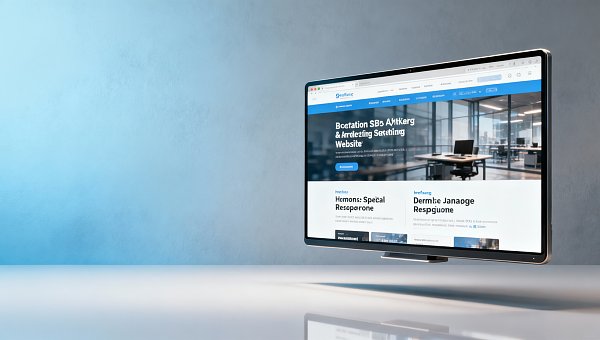
What is the process for building a multilingual foreign trade website? A 7-step standard SOP from language asset inventory and terminology database setup to localization QA
What is the process for building a multilingual website for foreign trade? This article provides a detailed explanation of the 7-step standard SOP, from language asset inventory and terminology database creation to localization QA, covering core concerns such as responsive corporate website system pricing, cross-border website development services, and how to choose a foreign trade marketing system, helping business decision-makers and technical evaluators efficiently implement global marketing solutions.
1. Why do foreign trade companies need a standardized multilingual website development process?
More than 68% of B2B procurement decision-makers worldwide refuse to use non-native-language websites to obtain product information (Statista 2023). In the overseas expansion practices of domestic enterprises, nearly 43% of multilingual websites suffer from three major pain points: inconsistent terminology, lack of cultural adaptation, and chaotic SEO structure. Data from over 100,000 foreign trade clients served by EasyBiz Information Technology shows that companies adopting the standardized 7-step SOP achieve an average 2.3x increase in multilingual site conversion rates, a 67% increase in localized content reuse, and a 52% reduction in later maintenance costs.
This process is not a generic template, but an industrial-grade delivery system integrating an AI semantic analysis engine with collaborative validation by localization expert teams across 27 countries. It directly addresses the “reusability” valued by information researchers, the “system compatibility” prioritized by technical evaluators, the “quality threshold” emphasized by quality control personnel, and the “ROI cycle” that decision-makers care about most—while the average end-to-end delivery cycle is 14–21 working days, and the first round of localization QA is completed within 30 days after the initial version goes live.
2. Detailed explanation of the 7-step standard SOP: from language assets to localization acceptance
Based on ten years of cross-border website development practice, EasyBiz has refined a 7-step standard process that is quantifiable, auditable, and traceable. Each step has clearly defined deliverables, responsible parties, and acceptance KPIs:
- Comprehensive language asset inventory (1–3 working days): Scan the source site HTML, PDF documents, product manuals, and customer service script library; identify all text nodes to be translated; and tag high-frequency words (≥5 occurrences/1,000 words), professional terminology density (industry average 12.7%), and the proportion of dynamic content (such as pricing and inventory interfaces).
- Co-building the terminology database and style guide (2–5 working days): Through triple verification by bilingual product managers + native translators + industry engineers, establish a controlled glossary containing ≥300 core terms, and define sentence preferences (such as avoiding passive voice in German), number formats (French spaces as thousand separators), and unit systems (U.S. standard °F/U.K. imperial inches).
- Multilingual architecture design (3–5 working days): Based on the pricing tiers of responsive enterprise website systems (basic edition ¥29,800起, flagship edition ¥89,800起), configure hreflang tags, independent subdomains/subdirectories, and localized CDN nodes (covering AWS Tokyo, Frankfurt, and Virginia).
- AI first draft + human post-editing (5–8 working days): Use the self-developed LinguaFlow engine for preprocessing, with 100% human proofreading coverage, focusing on cultural taboos (such as avoiding left-hand icons in the Middle East), legal compliance clauses (GDPR/CCPA), and copy for local payment methods (Brazil Boleto, Japan Konbini).
- Front-end localization development (4–7 working days): Adapt CSS rewrites for RTL languages (Arabic, Hebrew), inject JS components for date/currency/time zone handling, and conduct font license compliance checks (Chinese fonts must include GB18030 certification).
- Localization functional QA (3–5 working days): Execute 12 categories of specialized tests—including link redirection integrity (failure rate ≤0.3%), form submission success rate (≥99.98%), mobile touch hotspot areas (minimum size 48×48px), and SEO meta tag coverage (100% of pages include title/description).
- Continuous optimization for 30 days after launch (ongoing): Integrate Google Analytics 4 multilingual event tracking, and output weekly search term reports (Top 20 local long-tail keywords), bounce rate comparisons (target: <45%), and CTA click heatmaps.
3. Key deliverables and quality control metrics
To ensure delivery reliability, EasyBiz embeds quality control into every stage, forming a verifiable data dashboard. The table below lists the core deliverables and industry benchmark thresholds:
The table data comes from EasyBiz’s Q3 2023 quality audit report, covering sites in Germany, Japan, Brazil, and the UAE. It is worth noting that during the terminology database construction phase, the risk control model from Research on the Internal Control Construction Path of Public Hospitals from the Perspective of Financial Supervision was introduced, treating language deviation as a quantifiable operational risk item for early-stage interception.
4. How to choose a matching cross-border website development service provider?
When facing website-building tools, outsourcing teams, and SaaS platforms on the market, enterprises need to focus on four rigid indicators:
- Localization depth: Is there a native-language content strategist (not just a translator)? Can localized social media account operations be provided (such as LinkedIn Japan and X (formerly Twitter) Spanish)?
- Technical integration level: Does it support real-time data synchronization with ERP (SAP/Oracle), CRM (Salesforce), and payment gateways (Adyen, Stripe)? Average API integration time is ≤2 person-days.
- Compliance certainty: Does it include a built-in GDPR Cookie Consent Manager, a CCPA Do Not Sell module, and an automatic EU VAT rate calculation engine?
- Growth synergy: Does it connect website development with SEO optimization, localized Google Ads campaign groups, and TikTok Shop stores across multiple countries? EasyBiz clients achieve an average 186% growth in organic traffic within 90 days after launch.

5. Common misconceptions and risk avoidance checklist
In reviews of over 100,000 projects, the following misconceptions led 37% of multilingual sites to be forced into reconstruction within 6 months:
All EasyBiz projects sign the "Multilingual Content Consistency SLA", committing to a synchronization delay of ≤4 hours for major updates, with liquidated damages of 0.3% of the contract amount per day for breach.
6. Conclusion: Make multilingual websites a sustainable growth engine
Building a multilingual website for foreign trade is not a one-time translation project, but a sustainable growth system that uses language as the medium, data as the driver, and local users as the center. With its dual-wheel strategy of “technological innovation + localization services,” EasyBiz has helped over 100,000 enterprises turn multilingual websites into real inquiries and orders. From language asset inventory to localization QA, the 7-step SOP ensures that every bit of investment is measurable, optimizable, and replicable.
If you are evaluating cross-border website development services, considering how to choose a foreign trade marketing system, or need a detailed breakdown of responsive enterprise website system pricing, please contact an EasyBiz professional consultant today to obtain a customized multilingual website solution and ROI assessment report.
Related Articles

Related Products
 EasyCamp SaaS Smart Website Marketing SystemE-Yingbao SaaS Smart Website Marketing System: AI-powered, zero-code website building. Rapidly launch multilingual independent e-commerce sites in just 10 minutes. Global server acceleration and AI-driven SEO optimization empower businesses to efficiently connect with global markets. The seamless integration of technology and user-friendly operation makes building e-commerce sites incredibly simple.
 AI+SEM Intelligent Advertising Marketing SystemAI+SEM drives intelligent ad creation, empowering full-funnel precision advertising marketing. The system automatically generates weekly/monthly reports, AI recommends keywords and target countries, monitors core metrics in real-time with intelligent alerts, and enables one-click high-conversion ad solutions to help quickly acquire customers and improve ROI.
 AI+SEO Dual Engine Optimization ServiceEasyWin AI+SEO Dual Engine Optimization System leverages AI-powered keyword mining, content generation, and comprehensive technical optimization to help foreign trade enterprises acquire high-quality organic traffic, significantly improving search rankings and conversion rates.
 AI+SNS Social Media Marketing SystemYingbao AI+SNS Social Media Marketing System - Precision social capture for the social media era. Supports one-click content synchronization across major platforms like Facebook and LinkedIn. AI intelligently rewrites posts for enhanced relevance. 24/7 AI customer service and user profiling analysis empower businesses to efficiently expand into global markets.
 AI+SEO营销解决方案易营宝AI+SEO营销解决方案,通过AI批量写作、智能生成TDK、精准关键词扩词等功能,全面优化网站SEO效果,提升流量与转化率。助力企业构建高效智能网站新生态。
 AI+SEM Advertising Marketing SolutionsAI+SEM Advertising Marketing Solution leverages AI technology to deeply empower SEM ad campaigns. It automatically generates weekly/monthly reports using AI, presenting account data across multiple dimensions for comprehensive insights into campaign performance and trends. The system precisely recommends keywords and target countries, intelligently generates high-conversion ad copy, and enables one-click activation of efficient campaign plans to help businesses rapidly acquire customers. Simultaneously, it monitors core metrics in real time, intelligently identifies abnormal fluctuations, and issues timely alerts to ensure stable, high-return advertising results.
 Domain Name ServicesEasyWin provides professional domain name services, including intelligent queries, one-stop registration, brand protection, and full lifecycle management, helping businesses build a digital brand image.
 EasyOperate B2C Cross-Border E-Commerce Platform & Independent WebsiteEasyStore B2C Cross-border E-commerce Independent Store is an intelligent website building and cross-border e-commerce integrated solution independently developed by EasyStore Information Technology (Beijing) Co., Ltd. The system is specially designed for small and medium-sized as well as large export enterprises, integrating 'website building, operation, marketing, advertising, and conversion' into one, helping enterprises quickly establish cross-border e-commerce independent stores to achieve brand globalization and global sales growth.
The platform supports multiple languages, multiple currencies, and multi-channel marketing, with built-in AI intelligent translation and SEO optimization systems, suitable for mainstream markets such as Southeast Asia, Europe and America, Latin America, and the Middle East, assisting Chinese manufacturing enterprises in efficiently deploying international e-commerce strategies. SSL证书易营宝提供专业SSL安全证书服务,包括单域名和泛域名证书,确保网站数据传输加密、身份验证和完整性保护,助力企业建立安全可信的在线业务环境。









