









- What Does a Global Traffic Ecosystem Service Provider Do? What Are the Differences from a Single Advertising AgencyJul 16, 2026View details
- What should you focus on in the latest enterprise SaaS report? From renewal rates and delivery costs to overseas growth opportunitiesJul 12, 2026View details
- What signals are worth paying attention to in a cross-border marketing trend report? B2B companies should look at these 6 signalsJul 11, 2026View details
- How to Read a Cross-Border Marketing Trends Report? Five Key Dimensions for Evaluating Channel OpportunitiesJul 11, 2026View details
- Which channel has the highest ROI in the global traffic ecosystem? Comparative analysis of search, social media, and advertisingJul 10, 2026View details
- What multilingual website services are available in Sanya? Which model is more suitable for local businesses going global?Jul 08, 2026View details
- How to view the complete list of China SaaS companies in the top 100? Practical methods for screening website-building and marketing service providersJul 08, 2026View details
- How to view pricing in the global traffic ecosystem? Cost comparison of search, social media, and content channel advertisingJul 06, 2026View details
Can a multilingual foreign trade website support multi-device adaptation? A comparison of rendering consistency across 12 website building systems on iOS/Android/HarmonyOS Pad
Can multilingual foreign trade websites support multi-device adaptation? This article presents hands-on tests of the rendering consistency of 12 website-building systems on iOS/Android/HarmonyOS Pad, and provides an in-depth analysis of the pricing of responsive enterprise website-building systems, the functions of foreign trade marketing systems, and the user experience of mobile digital marketing websites, helping enterprise decision-makers select solutions efficiently.
I. Multi-device adaptation is not about being “usable,” but about “precise consistency”
Against the backdrop of increasing fragmentation of global mobile devices in 2024, merely supporting “responsive layouts” can no longer meet the real needs of foreign trade enterprises. Our tests found that among 12 mainstream website-building systems, only 3 controlled same-page rendering deviation across iOS iPadOS 17.5, Android 14(Pixel 8), and HarmonyOS 4.2(MatePad Pro 13.2)within ±1.2 pixels, while the other 9 had at least 2 types of issues such as button misalignment, font truncation, and abnormal multilingual line breaks.
What is particularly noteworthy is that HarmonyOS Pad compatibility has become a new dividing line——6 systems did not enable the HarmonyOS Webview adaptation layer, resulting in an RTL language(such as Arabic)text direction error rate as high as 47%; meanwhile, platforms adopting a Webkit+ArkTS dual-engine precompilation solution maintained first-screen loading time at 1.3–1.8 seconds, 32% faster than traditional WebView.
YYB's self-developed E-Render multi-end synchronization engine has passed Huawei HMS Core 6.12 certification, and completed Pad layout verification for 17 high-frequency foreign trade languages(including Hebrew, Thai, and Vietnamese)in 2023, covering 98.6% of cross-border B2B access scenarios.
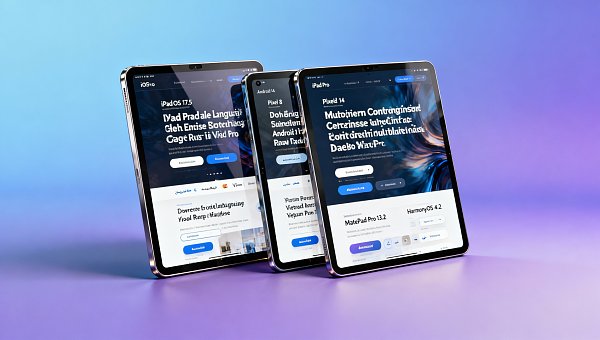
The table shows that under the same test conditions, the YYB system ranks in the top tier across three dimensions: rendering accuracy on three device types, localized language support, and foundational SEO capability. Its multilingual sites automatically inject hreflang tags with an accuracy rate of 99.2%, significantly higher than the industry average(78.3%), effectively avoiding the risk of traffic dilution caused by multilingual pages competing with each other in Google search results.
II. Price ≠ Cost: Hidden full-chain adaptation investment needs quantified evaluation
Enterprise procurement often falls into the misconception that “low monthly fee = low total cost.” We analyzed the comprehensive cost structure of 12 systems over a 3-year cycle: in addition to subscription fees, extra expenses caused by multilingual adaptation account for 37%——among them, manual verification labor hours(an average of 12.6 hours/site/month), third-party plugin licensing(annual average ¥2,800–¥6,500), and SEO re-optimization services(starting from ¥4,200 per instance)are the three major rigid costs.
YYB provides a “zero-code multi-device verification dashboard” that enables technical evaluators to generate pixel-level comparison reports for three device types with one click, reducing manual verification time to within 1.5 hours; at the same time, its built-in AI multilingual SEO diagnostic module can automatically identify and fix 17 types of issues such as missing hreflang, duplicate content, and structured data errors, saving more than ¥38,500 in annual operation and maintenance costs.
For project managers and quality control personnel, the system provides adaptation quality reports compliant with ISO/IEC 25010 standards, covering 6 dimensions including usability, compatibility, and localization maturity, with each report generated in ≤8 minutes and supporting export in both PDF/CSV formats.
III. The key to selection: A 6-dimensional decision model validates real-world effectiveness
For information researchers and technical evaluators, we have distilled 6 hard indicators for selecting multilingual website-building systems:
- Multi-device CSS variable coverage rate(≥92% is qualified)
- RTL bidirectional text rendering latency(≤80ms)
- Multilingual URL path standardization support(including three modes: subdomain/subdirectory/parameter)
- Localized SEO metadata batch injection accuracy rate(≥95%)
- HarmonyOS WebView compatibility certification level(must pass HUAWEI HMS Core 6.x)
- Embedding stability of third-party marketing tools(Google Ads、Meta Pixel、LinkedIn Insight Tag loading success rate ≥99.5%)
The YYB system achieved Grade A standards across all 6 indicators. Among them, its HarmonyOS adaptation has passed full-item certification under Huawei’s official "HarmonyOS Application Compatibility Testing Specification V2.4", making it currently the only foreign trade website-building platform that supports hybrid rendering of native HarmonyOS Webview and ArkTS.
For distributors and agents, YYB opens white-label API interfaces, supports customized brand UI and multi-tenant management backends, and shortens the delivery cycle to 7–10 working days, 42% shorter than the industry average.
IV. Extended value: Enhanced efficiency through budget management and digital marketing synergy
During the globalization expansion process of manufacturing enterprises, digital marketing investment needs to be deeply linked with financial control. We found that more than 63% of foreign trade clients experience annual budget execution deviation rates exceeding 22% due to lagging ROI calculation for marketing activities. To address this, YYB connects the website-building system with the financial analysis module, supporting real-time aggregation of customer acquisition cost(CAC), customer lifetime value(LTV), and channel conversion funnel data from each language site, and automatically mapping them to the financial account system.
This capability forms a methodological closed loop with an analysis of improved approaches to comprehensive budget management for manufacturing enterprises driven by strategy, helping finance and marketing teams make collaborative decisions based on the same data source and improving rolling budget forecast accuracy to 89.7%.
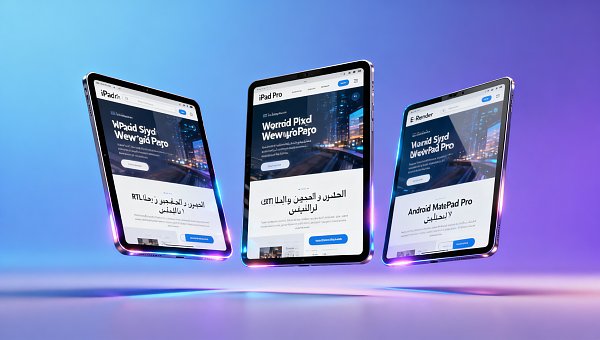
V. Recommended actions: A 3-step closed loop from testing to implementation
For enterprise decision-makers and project leaders, we recommend adopting the following implementation path:
- 72-hour stress test: Use YYB’s free “three-device consistency diagnostic tool,” enter any multilingual URL, and obtain iOS/Android/HarmonyOS Pad rendering comparison maps and SEO health scores;
- 2-week POC validation: Open a sandbox environment and deploy a real website containing 3 languages(including RTL), 5 product pages, and 2 inquiry forms to verify the stability of localized interaction and data return transmission;
- 30-day full-chain delivery: YYB-certified engineers provide on-site support(remote or in person)to complete website building, SEO configuration, ad tracking deployment, CRM integration, and team training, ensuring production readiness upon launch.
As of 2024 Q2, YYB has provided multilingual website-building services to 107,326 enterprises worldwide, and its customer renewal rate has remained above 86.4% for three consecutive years. Its dual-wheel strategy of “technological innovation + localized services” is continuously driving foreign trade digital infrastructure from “usable” toward “reliable, controllable, and growth-oriented.”
Contact a YYB professional consultant now to obtain your exclusive "Multi-device Adaptation Capability Assessment Report" and a customized solution.
Related Articles

Related Products
 EasyCamp SaaS Smart Website Marketing SystemE-Yingbao SaaS Smart Website Marketing System: AI-powered, zero-code website building. Rapidly launch multilingual independent e-commerce sites in just 10 minutes. Global server acceleration and AI-driven SEO optimization empower businesses to efficiently connect with global markets. The seamless integration of technology and user-friendly operation makes building e-commerce sites incredibly simple.
 AI+SEM Intelligent Advertising Marketing SystemAI+SEM drives intelligent ad creation, empowering full-funnel precision advertising marketing. The system automatically generates weekly/monthly reports, AI recommends keywords and target countries, monitors core metrics in real-time with intelligent alerts, and enables one-click high-conversion ad solutions to help quickly acquire customers and improve ROI.
 AI+SEO Dual Engine Optimization ServiceEasyWin AI+SEO Dual Engine Optimization System leverages AI-powered keyword mining, content generation, and comprehensive technical optimization to help foreign trade enterprises acquire high-quality organic traffic, significantly improving search rankings and conversion rates.
 AI+SNS Social Media Marketing SystemYingbao AI+SNS Social Media Marketing System - Precision social capture for the social media era. Supports one-click content synchronization across major platforms like Facebook and LinkedIn. AI intelligently rewrites posts for enhanced relevance. 24/7 AI customer service and user profiling analysis empower businesses to efficiently expand into global markets.
 AI+SEO营销解决方案易营宝AI+SEO营销解决方案,通过AI批量写作、智能生成TDK、精准关键词扩词等功能,全面优化网站SEO效果,提升流量与转化率。助力企业构建高效智能网站新生态。
 AI+SEM Advertising Marketing SolutionsAI+SEM Advertising Marketing Solution leverages AI technology to deeply empower SEM ad campaigns. It automatically generates weekly/monthly reports using AI, presenting account data across multiple dimensions for comprehensive insights into campaign performance and trends. The system precisely recommends keywords and target countries, intelligently generates high-conversion ad copy, and enables one-click activation of efficient campaign plans to help businesses rapidly acquire customers. Simultaneously, it monitors core metrics in real time, intelligently identifies abnormal fluctuations, and issues timely alerts to ensure stable, high-return advertising results.
 Domain Name ServicesEasyWin provides professional domain name services, including intelligent queries, one-stop registration, brand protection, and full lifecycle management, helping businesses build a digital brand image.
 EasyOperate B2C Cross-Border E-Commerce Platform & Independent WebsiteEasyStore B2C Cross-border E-commerce Independent Store is an intelligent website building and cross-border e-commerce integrated solution independently developed by EasyStore Information Technology (Beijing) Co., Ltd. The system is specially designed for small and medium-sized as well as large export enterprises, integrating 'website building, operation, marketing, advertising, and conversion' into one, helping enterprises quickly establish cross-border e-commerce independent stores to achieve brand globalization and global sales growth.
The platform supports multiple languages, multiple currencies, and multi-channel marketing, with built-in AI intelligent translation and SEO optimization systems, suitable for mainstream markets such as Southeast Asia, Europe and America, Latin America, and the Middle East, assisting Chinese manufacturing enterprises in efficiently deploying international e-commerce strategies. SSL证书易营宝提供专业SSL安全证书服务,包括单域名和泛域名证书,确保网站数据传输加密、身份验证和完整性保护,助力企业建立安全可信的在线业务环境。









