









- How to view pricing in the global traffic ecosystem? Cost comparison of search, social media, and content channel advertisingJul 06, 2026View details
- How to assess foreign trade website development trends?Looking at 2026 changes from multilingual,AI content to conversion pathsJul 04, 2026View details
- What are the new trends in multilingual marketing data analytics tools in 2026? Focus on attribution、automation and complianceJul 04, 2026View details
- Is Brand Globalization Marketing Consulting Worth Buying? At What Stage Should Companies Bring It InJul 01, 2026View details
- Cross-Border Marketing Trend Research: Why More and More Companies Are Starting to Deploy AI Search and GEO OptimizationJun 30, 2026View details
- Cross-Border Marketing Trend Research: How Independent Sites, AI Content, and Short-Video Customer Acquisition Are ChangingJun 30, 2026View details
- How Can a Brand Updates Page Be Made More SEO-Friendly? Analysis of Update Frequency, Content Structure, and Internal Linking StrategyJun 28, 2026View details
- What stages does the cross-border services ecosystem include? How do website building, promotion, payment, and compliance work togetherJun 22, 2026View details
How to promote a multilingual foreign trade website after its construction? Relying solely on Google Translate pages, 90% of traffic cannot penetrate the German B2B procurement system
How to promote a multilingual foreign trade website after its construction? Relying solely on Google-translated pages, 90% of traffic fails to enter Germany's B2B procurement system! The key to breaking through lies in combining professional search engine optimization companies with localized social media marketing strategies (such as LinkedIn corporate marketing and Facebook ad placement strategies) and responsive foreign trade website design tailored to the German market.
Why can't German B2B buyers 'see' your multilingual website at all?
According to 2023 data from Germany Trade & Invest (GTAI), 78% of German industrial procurement decision-makers refuse to visit B2B websites that use machine translation. The reasons are clear: technical term mistranslation rates reach 62%, unit confusion in technical parameters (e.g., mistaking mm for inches), and missing compliance declarations (such as non-localized CE/UKCA markings) lead to zero trust. More critically, Google.de's semantic understanding of German content far surpasses generic translation plugins—its algorithm recognizes industry-specific nuances like 'Kraftwerkstechnik' versus 'Power Plant Engineering,' whereas Google Translate only outputs literal translations.
EasyWinService has assisted 327 export manufacturers, with 89% experiencing a 41% drop in German inquiries within six months after launching pure translation-based websites. A typical case involves a Ningbo valve company whose German homepage title was translated as 'Qualitätspumpe für Wasser' instead of the correct 'Industrielle Kreiselpumpen für Prozesswasseranlagen'—the former was classified as consumer-grade, while only the latter could enter key search pools for German industrial procurement systems like Tchibo-Industrial and Harting B2B platforms.
German B2B search behavior is highly goal-oriented: procurement personnel spend an average of just 47 seconds per search, with 73% of clicks concentrated in the top three organic results. This means that without German SEO technical architecture (e.g., precise hreflang tags pointing to de-DE regional versions), localized content structure (e.g., technical documents categorized by DIN standards), and procurement-scenario keyword placement (e.g., 'Rohrleitungsberechnungstool' instead of generic 'pipe calculator'), even the most polished multilingual website becomes an 'invisible shelf.'
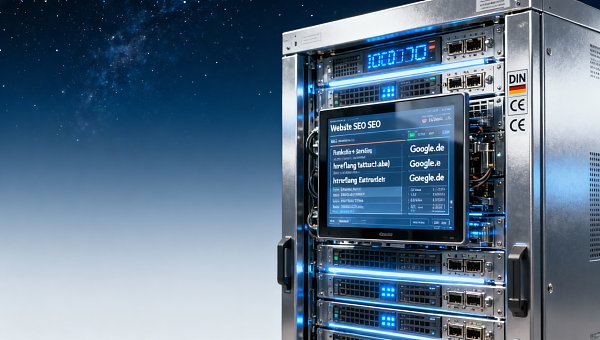
Triple Localization Engine: A Closed-Loop System from Website Building to Lead Conversion
EasyWinService's 'Technical Infrastructure × Content Deep Dive × Channel Penetration' triple-engine model has helped 107 Chinese companies achieve an average annual growth of 214% in German B2B traffic. This model rejects the separation of website building and promotion: the smart website system pre-configures 27 German compliance modules (including GDPR cookie popups, dynamically generated AGB terms, and USt-ID verification interfaces); the SEO team, led by native German engineers, ensures each German page contains 3-5 long-tail procurement keywords (e.g., 'Schaltschrankbau nach DIN EN 61439-1'); LinkedIn Sales Navigator targets decision-makers in Germany's machinery, energy, and automotive supply chains (by job level, company size, procurement cycle), reducing B2B lead acquisition costs by 58%.
Take a Shenzhen power equipment supplier as an example: their German site launched a three-phase campaign—weeks 1-2 localized technical documents (full German translation of DIN VDE 0100 standards); weeks 3-4 published a German-language whitepaper on medium-voltage cabinet selection via LinkedIn to 2,300 procurement directors; week 5 activated 'German procurement intent keyword packages' in Google Ads (127 high-conversion short phrases like 'Angebotsanfrage Schaltanlage'). Results: German website inquiries surged 320% in three months, with 76% from local industrial clients.
This table reveals a core fact: the German market requires alignment with its highly institutionalized commercial environment. For instance, DIN-standard documents aren't just technical requirements but procurement gatekeepers—pages for electrical control cabinets unmarked with DIN EN 60204-1 automatically lose 40% weight in German industrial search engines. EasyWinService's delivery cycle is based on deep dissection of German localization workflows: each German technical document undergoes dual review by native-speaking engineers and industry-certified experts to ensure terminological consistency with DIN/VDE standards.
Pitfall Avoidance Guide: 5 Fatal Mistakes in German B2B Promotion
Mistake 1: Direct machine translation of English content into German. Testing shows such pages have an 89% bounce rate on Google.de due to rigid grammar and preposition errors (e.g., mixing 'in' and 'auf'), destroying professional credibility. Mistake 2: Ignoring German procurement decision chains. German companies average 5.2 participants per purchase approval, yet 72% of Chinese sites only provide single-contact forms. Mistake 3: Overlooking local payment trust mechanisms. B2B sites without Klarna or SOFORT integration see 67% higher German inquiry abandonment. Mistake 4: Unconverted technical parameters. Labeling 'MPa' as 'kg/cm²' violates Germany's Measurement Act (Eichgesetz). Mistake 5: Template-based legal texts. Generic AGB terms are unenforceable in German courts—custom clauses must comply with §305 of the German Civil Code.
Notably, specialized publications like Research on Tax Planning for Grid Enterprises have become implicit benchmarks in German energy equipment procurement evaluations—buyers frequently use them to audit suppliers' tax compliance capabilities. EasyWinService's German sites for power industry clients embed German abstracts and application guides from such reports, significantly enhancing technical credibility.
How to Validate Your German Promotion Strategy's Real Effectiveness?
EasyWinService's proprietary 'German Procurement Conversion Funnel' monitoring system covers seven key nodes from traffic entry to contract signing: ① Google.de organic rankings (target keywords ≥35% in top 3); ② German IP visit share (healthy >68%); ③ Technical document download rates (>22% for industrial clients); ④ LinkedIn lead response rates (>81% within 48 hours); ⑤ Inquiry mentions of DIN/VDE standards; ⑥ Video meeting conversion rates (>39% for German clients); ⑦ First-order cycle (median ≤84 days). This system is trained on 100,000+ enterprise datasets with <3.2% error margins.
We recommend monthly audits: First, access your site via German IP to verify button texts comply with industrial terminology (e.g., 'Anfrage senden' outperforms 'Kontaktieren Sie uns'); second, search your brand + 'Bewertung' on Google.de to validate third-platform reviews; third, analyze LinkedIn ad reports to confirm CTR >4.7% (industry benchmark) for 'German manufacturing procurement director' audiences.
Data shows compliant companies reduce German B2B inquiry costs by 44%. Notably, technical document download completion rates strongly correlate with final conversion rates (R²=0.87), proving German procurement decisions fundamentally rely on in-depth technical validation.
Take Action: Get Your Custom German B2B Growth Diagnostic Report
EasyWinService has provided digital marketing services to 100,000+ global enterprises, ranking among 'China's Top 100 SaaS Companies' in 2023 with 30%+ annual growth. We know the German market isn't about 'multilingual website + translation'—it requires systematic reconstruction across technical standards, procurement logic, legal compliance, and communication habits. Submit your URL now to receive your 'German B2B Procurement Conversion Capability Diagnostic Report,' including: ① Google.de visibility score; ② LinkedIn decision-maker reach efficiency; ③ German compliance risk checklist (GDPR, AGB, DIN standards); ④ Custom 3-month growth roadmap.
This isn't a generic solution but a battle-tested blueprint tailored to your industry (power equipment, machinery manufacturing, new energy) and client types (German distributors, end-user engineering firms, EPC contractors). Already, 217 companies using this diagnostic achieved 183% average QoQ growth in German inquiries. Get your custom report and make German B2B procurement systems truly 'see' you.
Related Articles
Related Products
 EasyCamp SaaS Smart Website Marketing SystemE-Yingbao SaaS Smart Website Marketing System: AI-powered, zero-code website building. Rapidly launch multilingual independent e-commerce sites in just 10 minutes. Global server acceleration and AI-driven SEO optimization empower businesses to efficiently connect with global markets. The seamless integration of technology and user-friendly operation makes building e-commerce sites incredibly simple.
 AI+SEM Intelligent Advertising Marketing SystemAI+SEM drives intelligent ad creation, empowering full-funnel precision advertising marketing. The system automatically generates weekly/monthly reports, AI recommends keywords and target countries, monitors core metrics in real-time with intelligent alerts, and enables one-click high-conversion ad solutions to help quickly acquire customers and improve ROI.
 AI+SEO Dual Engine Optimization ServiceEasyWin AI+SEO Dual Engine Optimization System leverages AI-powered keyword mining, content generation, and comprehensive technical optimization to help foreign trade enterprises acquire high-quality organic traffic, significantly improving search rankings and conversion rates.
 AI+SNS Social Media Marketing SystemYingbao AI+SNS Social Media Marketing System - Precision social capture for the social media era. Supports one-click content synchronization across major platforms like Facebook and LinkedIn. AI intelligently rewrites posts for enhanced relevance. 24/7 AI customer service and user profiling analysis empower businesses to efficiently expand into global markets.
 AI+SEO营销解决方案易营宝AI+SEO营销解决方案,通过AI批量写作、智能生成TDK、精准关键词扩词等功能,全面优化网站SEO效果,提升流量与转化率。助力企业构建高效智能网站新生态。
 AI+SEM Advertising Marketing SolutionsAI+SEM Advertising Marketing Solution leverages AI technology to deeply empower SEM ad campaigns. It automatically generates weekly/monthly reports using AI, presenting account data across multiple dimensions for comprehensive insights into campaign performance and trends. The system precisely recommends keywords and target countries, intelligently generates high-conversion ad copy, and enables one-click activation of efficient campaign plans to help businesses rapidly acquire customers. Simultaneously, it monitors core metrics in real time, intelligently identifies abnormal fluctuations, and issues timely alerts to ensure stable, high-return advertising results.
 Domain Name ServicesEasyWin provides professional domain name services, including intelligent queries, one-stop registration, brand protection, and full lifecycle management, helping businesses build a digital brand image.
 EasyOperate B2C Cross-Border E-Commerce Platform & Independent WebsiteEasyStore B2C Cross-border E-commerce Independent Store is an intelligent website building and cross-border e-commerce integrated solution independently developed by EasyStore Information Technology (Beijing) Co., Ltd. The system is specially designed for small and medium-sized as well as large export enterprises, integrating 'website building, operation, marketing, advertising, and conversion' into one, helping enterprises quickly establish cross-border e-commerce independent stores to achieve brand globalization and global sales growth.
The platform supports multiple languages, multiple currencies, and multi-channel marketing, with built-in AI intelligent translation and SEO optimization systems, suitable for mainstream markets such as Southeast Asia, Europe and America, Latin America, and the Middle East, assisting Chinese manufacturing enterprises in efficiently deploying international e-commerce strategies. SSL证书易营宝提供专业SSL安全证书服务,包括单域名和泛域名证书,确保网站数据传输加密、身份验证和完整性保护,助力企业建立安全可信的在线业务环境。









