









- What Does a Global Traffic Ecosystem Service Provider Do? What Are the Differences from a Single Advertising AgencyJul 16, 2026View details
- What should you focus on in the latest enterprise SaaS report? From renewal rates and delivery costs to overseas growth opportunitiesJul 12, 2026View details
- What signals are worth paying attention to in a cross-border marketing trend report? B2B companies should look at these 6 signalsJul 11, 2026View details
- How to Read a Cross-Border Marketing Trends Report? Five Key Dimensions for Evaluating Channel OpportunitiesJul 11, 2026View details
- Which channel has the highest ROI in the global traffic ecosystem? Comparative analysis of search, social media, and advertisingJul 10, 2026View details
- What multilingual website services are available in Sanya? Which model is more suitable for local businesses going global?Jul 08, 2026View details
- How to view the complete list of China SaaS companies in the top 100? Practical methods for screening website-building and marketing service providersJul 08, 2026View details
- How to view pricing in the global traffic ecosystem? Cost comparison of search, social media, and content channel advertisingJul 06, 2026View details
How Can Social Media Marketing Strategies Balance Branding and Customer Acquisition
Against the backdrop of traffic dividends gradually peaking and customer acquisition costs continuing to rise, when companies do marketing on social platforms, they can no longer focus only on “exposure” or “follower count.” A truly effective strategy is to make brand building and lead generation happen in sync: enhancing awareness, building trust, and also bringing measurable business opportunities to sales. For companies evaluating search engine optimization agencies, website SEO optimization solutions, and one-stop marketing platform services, social platform marketing should not be treated as a standalone action, but as part of brand communication, content accumulation, official website conversion, and growth in conversions.
What companies care about most is not “whether to do social media,” but how to do it without ending up with only noise and no results

When many companies formulate social platform marketing strategies, the common challenge is often not the choice of platform itself, but two more practical issues: first, whether working on brand building will feel too “abstract” and fail to generate inquiries in the short term; second, whether overemphasizing customer acquisition will damage the brand image and make the content look more and more like hard-sell advertising.
From a growth practice perspective, this is actually not an either-or issue. Brand and customer acquisition do not conflict; what conflicts is the wrong execution method. A mature social platform marketing system is usually divided into three layers:
- Brand awareness layer: Solves the questions of “who you are, whether you are professional, and why you are worth trusting.”
- Interest education layer: Solves the questions of “whether your solution is right for me and what value it can bring.”
- Conversion handoff layer: Solves the questions of “how I contact you now, how I try it, how I consult, and how I make a deal.”
If a company only works on the first two layers, it is easy to end up with “the content looks good, but there are few leads”; if it only works on the last layer, it can easily force users into conversion before trust is established, ultimately resulting in high advertising costs and poor lead quality. Therefore, the key to balancing brand and customer acquisition is not posting more content, but ensuring that each type of content serves the user decision-making journey.
What kind of social platform marketing strategy can serve both branding and conversion at the same time
When companies formulate strategies, it is recommended to start with the “user decision-making journey” rather than “platform trends.” Truly effective social media marketing often has the following characteristics.
1. Define the goal first, then decide on content and platforms
At different business stages, social platforms take on different tasks. New brands need more to improve awareness and establish industry credibility; mature companies focus more on lead generation, reactivating existing customers, and driving repeat purchases. If the goal is unclear, the team will fall into the low-efficiency state of “doing a little bit of everything.”
For example, for companies offering integrated website + marketing services, if the target customers are business decision-makers and technical evaluators, then the content focus should not be limited to daily platform operation tips, but should cover:
- How SEO optimization solutions work together with social media
- How the official website captures social media traffic
- How paid advertising and organic traffic should work together
- How to allocate marketing budgets at different stages
2. Content structure should be layered, not just blindly “posting case studies” or “posting events”
Content that can balance both branding and customer acquisition is generally not of a single type, but has a clear division of roles:
- Brand content: Industry insights, methodologies, trend analysis, and successful experience to strengthen professional recognition.
- Trust-building content: Customer cases, delivery processes, service standards, and team capabilities to reduce cooperation concerns.
- Conversion content: White paper downloads, diagnostic consultations, solution downloads, and event registrations to drive lead submissions.
- Interactive content: Q&A, polls, live streams, and comment interactions to improve reach and engagement.
If a company only posts promotional information over the long term, users will quickly become fatigued; if it only talks about trends and concepts over the long term, it will be difficult to move into the deal-closing stage. A reasonable approach is to make content capable of both “generating interest” and “driving business.”
3. Social media is not the endpoint; the official website and landing pages are the real keys to conversion
Many companies have social media metrics that look good, but the final customer acquisition results are average. The core reason is the lack of a follow-through system. After users become interested on a platform, they usually go on to search the brand’s official website, review service cases, understand pricing models, and compare technical capabilities. At this point, if the website content is weak and the landing page logic is confusing, the investment made on the social media front end will be difficult to truly turn into orders.
Therefore, social platform marketing must be planned together with website development, SEO content structure, and form conversion design. Especially for B2B business, social media more often plays the role of “triggering interest” and “building trust,” while what truly drives conversion is still the website, consultation process, and sales follow-up mechanism.
When business decision-makers evaluate social media marketing performance, which metrics should they look at

If you only look at views, likes, and follower growth, you will often overestimate the value of social media marketing. For business managers, what is more worth paying attention to is layered metrics rather than surface-level popularity.
Brand-layer metrics
- Whether branded keyword search volume is increasing
- Whether social media content is driving direct visits to the official website
- Whether user comments, direct messages, and mentions include perception expressions such as “professional,” “reliable,” and “we’ve heard of you”
Customer acquisition metrics
- Whether the number of qualified leads is increasing
- Whether the lead acquisition cost from social media channels is controllable
- How well submitted leads match the target customer profile
- Whether the path from content reach to inquiry conversion is clear
Operations metrics
- Whether the sales cycle of customers brought in through social media has shortened
- Whether sales follow-up makes it easier to educate customers and reduce communication costs
- Whether content assets can be continuously reused in SEO, the official website, sales materials, and ad placements
This is also why more and more companies, when choosing service providers, no longer purchase “managed operations” or “content posting” services separately, but place greater emphasis on whether the provider has integrated capabilities from website development and SEO optimization to social media marketing and advertising placement. Because only when the full chain is connected can the traffic and trust brought by social media avoid being lost in the back end.
In which scenarios is it more suitable to link social media marketing with websites, SEO, and advertising
Not all companies need the same social media approach, but the following types of scenarios are particularly suitable for adopting a dual-goal strategy of “branding + customer acquisition.”
- New market expansion stage: Users are unfamiliar with the brand and need to be educated first, then converted.
- High-ticket or long decision-cycle business: Customers will not close a deal immediately because of one piece of content; trust must be built through continuous touchpoints.
- Cross-border or multilingual marketing scenarios: Brand image, localized messaging, and advertising strategies must be unified.
- Agent and distributor recruitment: It is necessary not only to attract end customers, but also to show partners the brand’s momentum and market support capabilities.
For example, when a company is entering the Middle East market, social media marketing cannot stop at simple content publishing. It must also consider the localized alignment of language, culture, website experience, and advertising keywords. In this kind of scenario, if the official website and social media are disconnected, it is difficult to form stable conversions. For companies with related overseas expansion needs, this can be combined with Arabic industry website development and marketing solutions to simultaneously improve Arabic website development, right-to-left layout, localized translation, website maintenance, and Google Ads Arabic keyword optimization, making the brand communication and customer acquisition chain more complete.
How to implement it at the execution level to avoid “the team is very busy, but the results are average”
From a practical operations perspective, if a social platform marketing strategy is to truly balance branding and customer acquisition, companies are advised to proceed according to the following steps:
- Unify goals: Clarify the role of social media in annual growth, whether it is for awareness building, lead generation, or market education.
- Map the audience: Distinguish between decision-makers, technical evaluators, end users, and channel partners, as each has different concerns.
- Design a content matrix: Cover at least four types of content: brand, trust, conversion, and interaction.
- Build handoff pages: Match social media content with topic pages, case study pages, form pages, or consultation pages to avoid traffic having nowhere to go.
- Set up a metrics system: Do not assess only operational data; track contributions to inquiries, opportunities, and deals.
- Continuously review and optimize: Analyze which content brings high-quality leads, which platforms are suitable for brand exposure, and gradually optimize budget allocation.
For companies, the truly efficient approach is not mechanically spreading across multiple platforms, but combining content and channels based on business goals. Especially as search and social media continue to integrate, users may first encounter the brand on social media, then search for the official website, review SEO content, and click ads to enter a consultation page. Whoever can connect this chain is more likely to turn marketing investment into stable growth.
When choosing a service provider, what should companies focus on instead of only looking at “quotes” and “follower case studies”
If a company plans to rely on an external team to advance social platform marketing, it is recommended to focus on evaluating the following points:
- Whether they understand the customer decision-making logic of the company’s industry, rather than only being able to create general entertainment content
- Whether they can simultaneously provide coordinated services such as website development, SEO optimization, social media operations, and ad placement
- Whether they have data analysis capabilities and can trace from exposure to leads and deals
- Whether they can provide localized solutions for different markets instead of template-based duplication
- Whether they have the ability to build long-term content assets and help companies establish a sustainable growth mechanism
For companies that need to balance both domestic and overseas markets, this is especially important. Because social media marketing is not just “posting and operating,” but the combined result of brand positioning, content strategy, website experience, search optimization, and media buying efficiency. If a service provider only solves one part of the process, it is often difficult to truly support business growth.
Overall, the answer to how a social platform marketing strategy can balance branding and customer acquisition is not “making the content fancier” or “spending more on ads,” but building a complete chain from awareness and trust to conversion around the user decision-making journey. For business decision-makers, what deserves the most attention is not the short-term data performance of a certain platform, but whether social media is truly helping the brand be seen, understood, and chosen, and ultimately bringing in sustainable, high-quality customers. Only when social media works together with the official website, SEO, advertising, and the sales process can brand value and customer acquisition efficiency improve at the same time.
Related Articles
 Attention! Builders' must-see: Yibingbao AI components updated, design efficiency directly doubled!
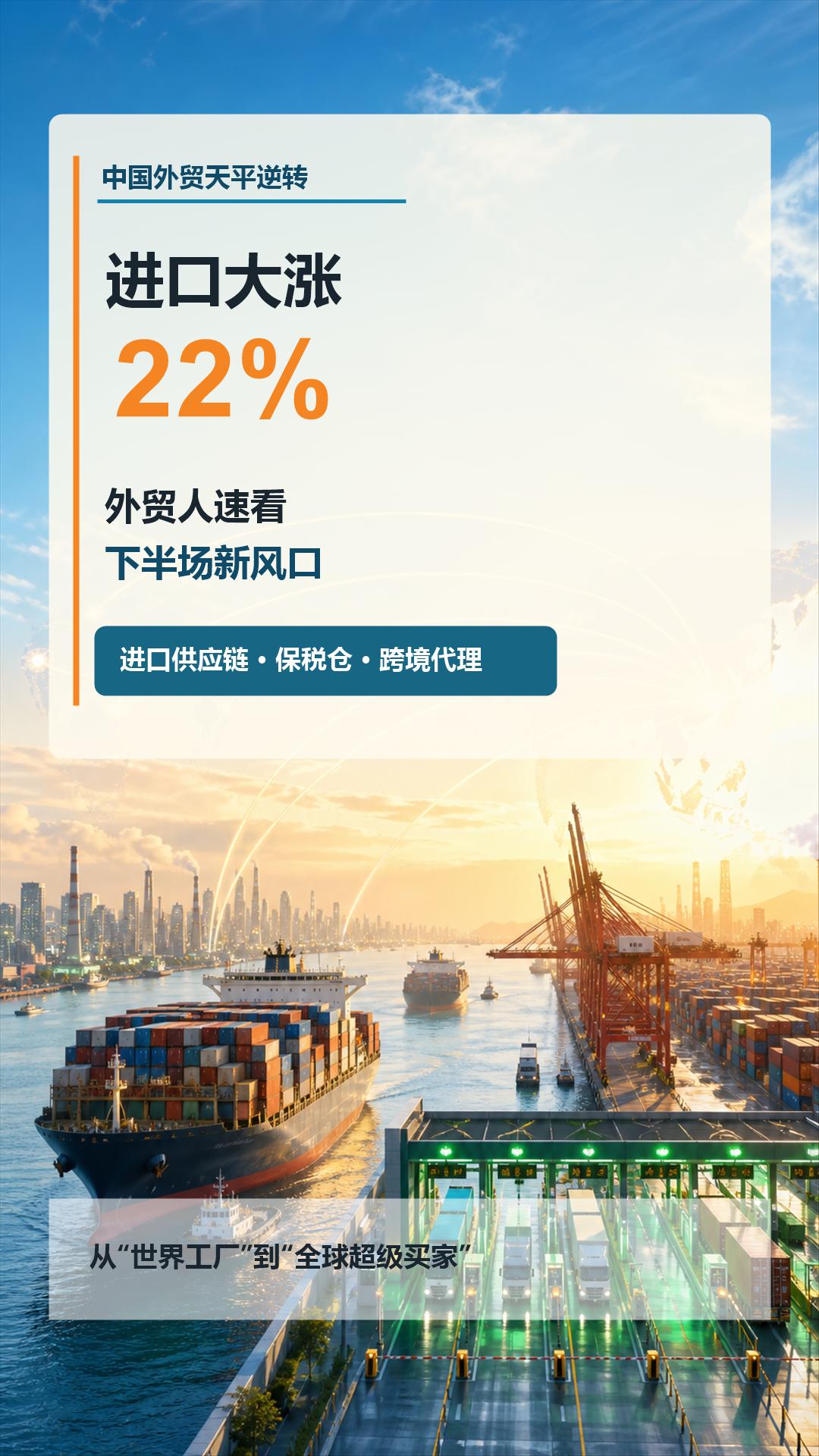
 China's foreign trade sees a turnaround: imports surge by 22%! Foreign trade professionals should quickly take note of the new trends in the second half of the year
 What Does a Global Traffic Ecosystem Service Provider Do? What Are the Differences from a Single Advertising Agency


Related Products
 EasyCamp SaaS Smart Website Marketing SystemE-Yingbao SaaS Smart Website Marketing System: AI-powered, zero-code website building. Rapidly launch multilingual independent e-commerce sites in just 10 minutes. Global server acceleration and AI-driven SEO optimization empower businesses to efficiently connect with global markets. The seamless integration of technology and user-friendly operation makes building e-commerce sites incredibly simple.
 AI+SEM Intelligent Advertising Marketing SystemAI+SEM drives intelligent ad creation, empowering full-funnel precision advertising marketing. The system automatically generates weekly/monthly reports, AI recommends keywords and target countries, monitors core metrics in real-time with intelligent alerts, and enables one-click high-conversion ad solutions to help quickly acquire customers and improve ROI.
 AI+SEO Dual Engine Optimization ServiceEasyWin AI+SEO Dual Engine Optimization System leverages AI-powered keyword mining, content generation, and comprehensive technical optimization to help foreign trade enterprises acquire high-quality organic traffic, significantly improving search rankings and conversion rates.
 AI+SNS Social Media Marketing SystemYingbao AI+SNS Social Media Marketing System - Precision social capture for the social media era. Supports one-click content synchronization across major platforms like Facebook and LinkedIn. AI intelligently rewrites posts for enhanced relevance. 24/7 AI customer service and user profiling analysis empower businesses to efficiently expand into global markets.
 AI+SEO营销解决方案易营宝AI+SEO营销解决方案,通过AI批量写作、智能生成TDK、精准关键词扩词等功能,全面优化网站SEO效果,提升流量与转化率。助力企业构建高效智能网站新生态。
 AI+SEM Advertising Marketing SolutionsAI+SEM Advertising Marketing Solution leverages AI technology to deeply empower SEM ad campaigns. It automatically generates weekly/monthly reports using AI, presenting account data across multiple dimensions for comprehensive insights into campaign performance and trends. The system precisely recommends keywords and target countries, intelligently generates high-conversion ad copy, and enables one-click activation of efficient campaign plans to help businesses rapidly acquire customers. Simultaneously, it monitors core metrics in real time, intelligently identifies abnormal fluctuations, and issues timely alerts to ensure stable, high-return advertising results.
 Domain Name ServicesEasyWin provides professional domain name services, including intelligent queries, one-stop registration, brand protection, and full lifecycle management, helping businesses build a digital brand image.
 EasyOperate B2C Cross-Border E-Commerce Platform & Independent WebsiteEasyStore B2C Cross-border E-commerce Independent Store is an intelligent website building and cross-border e-commerce integrated solution independently developed by EasyStore Information Technology (Beijing) Co., Ltd. The system is specially designed for small and medium-sized as well as large export enterprises, integrating 'website building, operation, marketing, advertising, and conversion' into one, helping enterprises quickly establish cross-border e-commerce independent stores to achieve brand globalization and global sales growth.
The platform supports multiple languages, multiple currencies, and multi-channel marketing, with built-in AI intelligent translation and SEO optimization systems, suitable for mainstream markets such as Southeast Asia, Europe and America, Latin America, and the Middle East, assisting Chinese manufacturing enterprises in efficiently deploying international e-commerce strategies. SSL证书易营宝提供专业SSL安全证书服务,包括单域名和泛域名证书,确保网站数据传输加密、身份验证和完整性保护,助力企业建立安全可信的在线业务环境。









