









- The China-US tariff arrangement has reached a preliminary consensus, and the trade association will be establishedJun 15, 2026View details
- China-Morocco zero-tariff access, a breakthrough in the cost of Moroccan goods exports to ChinaJun 11, 2026View details
- What signal should be released for the suspension of exports to JapanJun 10, 2026View details
- China's May LNG imports rebounded, with increased volumes from Russia and Canada filling the Middle East supply gapJun 10, 2026View details
- Will GEO change its SEO strategy?Jun 04, 2026View details
- What types of businesses are end-to-end solutions suitable for?Jun 03, 2026View details
- 2026 Global Growth Channel TrendsJun 02, 2026View details
- Changes in Search Engine Ranking Factors in 2026Jun 06, 2026View details
How to Optimize Cross-Border E-commerce Stores? 10 Key Page Details That Affect Conversion Rates
Cross-border Marketplace Conversion Optimization: Start with Page Details
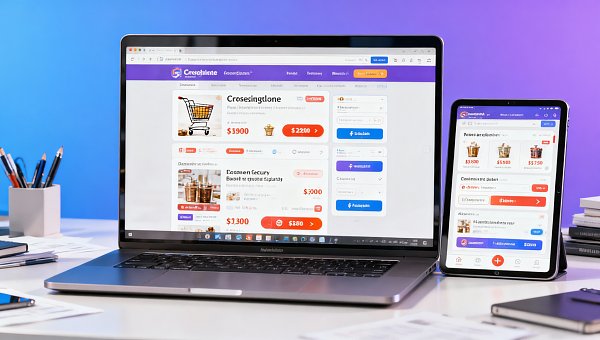
How do you improve cross-border marketplace conversion rates? Many merchants have decent traffic, but the real issues are concentrated in the add-to-cart, checkout, and payment stages. What truly affects order completion is often not the homepage redesign, but those small details on the page that are easy to overlook.
From actual operations, whether users are willing to keep moving forward usually depends on just a few signals: whether the information is clear enough, whether the process is smooth enough, and whether the perceived risk is low enough. Cross-border marketplace conversion optimization is essentially about continuously reducing user hesitation.
If your site already has stable traffic but still remains stuck at “many visits, few orders,” then you can prioritize checking the following 10 key page details. Many times, fixing these areas first will result in a noticeable improvement in conversion rates.
1. The homepage value proposition should be direct, don’t make users guess
The first few seconds after a user enters a product page are extremely critical. If the homepage does not clearly state the selling points, price, promotions, and delivery information, users are very likely to leave directly.
The first step in cross-border marketplace conversion optimization is to place “what I sell, who it is for, and why it is worth buying” where users can see it at a glance. Don’t hide it too deeply, and don’t use overly roundabout wording.
- The main headline should clearly state the product category and core use
- The subheadline should supplement the applicable scenarios or differentiators
- Display discounts and limited-time information directly beside the price
- Synchronize shipping location, delivery time, and return/exchange instructions on the homepage
2. Product images should not only look good, they should also reduce decision-making costs
Many product pages have exquisite images, but conversion is still low because the images only show the appearance and do not answer the questions users care about most.
In cross-border marketplace conversion optimization, the role of images is not to “decorate the page,” but to help users quickly understand size, material, details, usage methods, and effect comparisons.
- Prepare at least the main image, detail images, scenario images, and comparison images
- If possible, add short videos or GIFs
- Make key parameters visually annotated
- Avoid excessive retouching that causes a mismatch with the actual product
3. Price information should be transparent, don’t hide costs until the end
Cross-border users are very sensitive to total cost. The product page may seem inexpensive, but only at the checkout page do they discover shipping fees, taxes, and handling fees are much higher than expected, and abandoning the order is almost inevitable.
Therefore, cross-border marketplace conversion optimization must disclose cost components as early as possible. The more transparent it is, the easier it is to build trust, and the more it can reduce checkout-stage drop-off.
- Prompt shipping fee rules on the product page in advance
- Clearly state whether taxes are included or estimate the tax range
- Make coupon thresholds and usage conditions clear
- Avoid sudden hidden fees appearing on the checkout page
4. Variant selection should be simple, reducing “not knowing how to choose”
When there are too many colors, sizes, versions, or bundles, users are often not unwilling to buy, but simply unsure how to choose. At this point, if the page gives no guidance, the conversion rate will be noticeably affected.
A more effective approach is to turn complex choices into information that is easy to judge. For example, add labels such as “Recommended,” “Best Seller,” and “Suitable for Beginners” to help users make decisions faster.
In some product scenarios with higher requirements for networks and devices, you can also supplement basic technical explanations. For example, in enterprise network upgrade scenarios, it can naturally guide users to the Internet Protocol Version 6(IPV6)related solution, making it easier for users to understand the adaptation direction.
5. The add to cart and buy now buttons must always be clearly visible
Unclear button placement is one of the most common problems in cross-border marketplace conversion optimization. Especially on mobile, after users finish reading the content, they often cannot find the next step entry and then leave.
Buttons should not only be visible, but also make users clearly understand what will happen after clicking. For example, “Buy Now” should lead directly to checkout, while “Add to Cart” should allow continued selection. The copy must be explicit.
- The button color should contrast with the page’s main color
- Use a bottom floating button on mobile
- Supplement buttons nearby with payment security and shipping prompts
- Avoid having too many same-level action entry points at the same time
6. Trust elements should be placed first, don’t wait until users doubt before explaining
Cross-border transactions naturally come with a sense of distance. Users cannot see the merchant or touch the product, so they worry more about payment security, logistics risks, and after-sales issues.
This also means that cross-border marketplace conversion optimization cannot only talk about selling points; it must proactively answer “Can I buy with confidence?” Reviews, certifications, after-sales support, and payment security statements should all be placed as early as possible.
- Show real reviews and buyer photos
- Explain return and exchange policies and customer service response times
- Label payment methods and security guarantees
- Appropriately add brand qualifications and service commitments
7. The checkout process should not be too long, fewer fields is better
Many sites have well-made product pages, but users drop off as soon as they reach checkout. The usual reasons are too many form fields, too many steps, or forced registration.
At this stage of cross-border marketplace conversion optimization, the core is to shorten the path. Merge steps where possible, and don’t force users to manually enter information that can be automatically recognized.
- Support guest checkout
- Reduce non-essential fields
- Automatically match country and area codes
- Prompt address input errors in real time
8. The payment page should reduce uncertainty
The last few seconds before payment are the stage with the highest abandonment rate. What users care about most at this moment is not the discount, but whether “the money they pay out will be safe.”
If your site involves higher concurrency or global access stability, you should also pay attention to the underlying network experience. Solutions such as Internet Protocol Version 6(IPV6)have a 128-bit address length, native support for the IPSec protocol, and end-to-end encryption capabilities, which also have practical value in improving network security and access efficiency.
At the page level, payment methods, currencies, failure handling, and settlement explanations should be clearly stated to avoid users leaving temporarily due to uncertainty.
9. Multilingual and localization should not stop at translation
The poor results of many cross-border marketplace conversion optimizations are not because the product is bad, but because the page content is not localized enough. Users may understand the text, but that does not mean they are willing to place an order.
Currency, units of measurement, date formats, shipping instructions, and after-sales expressions should all comply with local habits. In particular, promotional copy translated literally often weakens persuasiveness.
In actual business, pages that truly achieve high conversion usually communicate “like a local brand,” rather than simply replacing Chinese content with another language.
10. Use data for continuous iteration, not just rely on intuition to redesign
Cross-border marketplace conversion optimization is not a one-time job. A page structure that works today may become ineffective next month due to changes in traffic sources, device mix, or market expectations.
A more reliable approach is to focus on key page data: homepage bounce rate, add-to-cart rate, checkout-to-payment conversion rate, payment success rate, and abandonment points. The data will tell you exactly where the problem is.
- Test only one variable at a time
- Prioritize changes to high-traffic pages
- Differentiate behavior patterns between new and returning customers
- Analyze data by country and channel
Implement all 10 details to make conversion improvements more tangible
In summary, cross-border marketplace conversion optimization is not about blindly pursuing complex functions, nor is it about frequently redesigning pages. Instead, it is about first sorting out the key details that affect order completion, one by one. Homepage messaging, product image information, price transparency, variant guidance, button design, trust building, checkout flow, payment security, localization experience, and data iteration are all indispensable.
If you are ready to start auditing, it is recommended to begin with the product page and checkout page. First solve the most direct leakage points, then gradually optimize the overall site path. This approach is more cost-effective and makes it easier to see real results. Truly effective cross-border marketplace conversion optimization often starts with these seemingly ordinary but highly impactful page details.
Related Articles



Related Products
 EasyCamp SaaS Smart Website Marketing SystemE-Yingbao SaaS Smart Website Marketing System: AI-powered, zero-code website building. Rapidly launch multilingual independent e-commerce sites in just 10 minutes. Global server acceleration and AI-driven SEO optimization empower businesses to efficiently connect with global markets. The seamless integration of technology and user-friendly operation makes building e-commerce sites incredibly simple.
 AI+SEM Intelligent Advertising Marketing SystemAI+SEM drives intelligent ad creation, empowering full-funnel precision advertising marketing. The system automatically generates weekly/monthly reports, AI recommends keywords and target countries, monitors core metrics in real-time with intelligent alerts, and enables one-click high-conversion ad solutions to help quickly acquire customers and improve ROI.
 AI+SEO Dual Engine Optimization ServiceEasyWin AI+SEO Dual Engine Optimization System leverages AI-powered keyword mining, content generation, and comprehensive technical optimization to help foreign trade enterprises acquire high-quality organic traffic, significantly improving search rankings and conversion rates.
 AI+SNS Social Media Marketing SystemYingbao AI+SNS Social Media Marketing System - Precision social capture for the social media era. Supports one-click content synchronization across major platforms like Facebook and LinkedIn. AI intelligently rewrites posts for enhanced relevance. 24/7 AI customer service and user profiling analysis empower businesses to efficiently expand into global markets.
 AI+SEO营销解决方案易营宝AI+SEO营销解决方案,通过AI批量写作、智能生成TDK、精准关键词扩词等功能,全面优化网站SEO效果,提升流量与转化率。助力企业构建高效智能网站新生态。
 AI+SEM Advertising Marketing SolutionsAI+SEM Advertising Marketing Solution leverages AI technology to deeply empower SEM ad campaigns. It automatically generates weekly/monthly reports using AI, presenting account data across multiple dimensions for comprehensive insights into campaign performance and trends. The system precisely recommends keywords and target countries, intelligently generates high-conversion ad copy, and enables one-click activation of efficient campaign plans to help businesses rapidly acquire customers. Simultaneously, it monitors core metrics in real time, intelligently identifies abnormal fluctuations, and issues timely alerts to ensure stable, high-return advertising results.
 Domain Name ServicesEasyWin provides professional domain name services, including intelligent queries, one-stop registration, brand protection, and full lifecycle management, helping businesses build a digital brand image.
 EasyOperate B2C Cross-Border E-Commerce Platform & Independent WebsiteEasyStore B2C Cross-border E-commerce Independent Store is an intelligent website building and cross-border e-commerce integrated solution independently developed by EasyStore Information Technology (Beijing) Co., Ltd. The system is specially designed for small and medium-sized as well as large export enterprises, integrating 'website building, operation, marketing, advertising, and conversion' into one, helping enterprises quickly establish cross-border e-commerce independent stores to achieve brand globalization and global sales growth.
The platform supports multiple languages, multiple currencies, and multi-channel marketing, with built-in AI intelligent translation and SEO optimization systems, suitable for mainstream markets such as Southeast Asia, Europe and America, Latin America, and the Middle East, assisting Chinese manufacturing enterprises in efficiently deploying international e-commerce strategies. SSL证书易营宝提供专业SSL安全证书服务,包括单域名和泛域名证书,确保网站数据传输加密、身份验证和完整性保护,助力企业建立安全可信的在线业务环境。









