- Die USA und China erreichen bei den Zollregelungen einen Konsens, und der Handelsrat wird gegründet15-06-2026Details anzeigen
- Grenzenloser Zollfreilagerstandort, Kostenoptimierung für marokkanische Warenexporte11-06-2026Details anzeigen
- Welches Signal zur vorübergehenden Aussetzung der japanischen Exportfreigabe?10-06-2026Details anzeigen
- China's LNG imports rebounded in May, with Russia and Canada increasing volumes to fill the Middle East supply gap10-06-2026Details anzeigen
- Wird GEO seine SEO-Strategie ändern?04-06-2026Details anzeigen
- Für welche Geschäftsbereiche eignet sich eine End-to-End-Lösung?03-06-2026Details anzeigen
- Trends globaler Wachstumskanäle 202602-06-2026Details anzeigen
- Änderungen der Suchmaschinen-Rankingfaktoren 202606-06-2026Details anzeigen
Wie optimiert man die Conversion eines Cross-Border-Onlineshops? 10 Schlüsseldetails der Seiten, die die Bestellrate beeinflussen
Cross-border Store Optimization, Start with Page Details
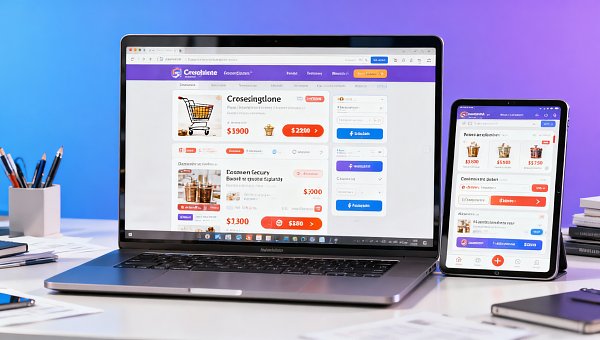
How do you optimize cross-border store conversions? Many merchants have plenty of traffic, but the problems are concentrated in the add-to-cart, checkout, and payment stages. What truly affects the order completion rate is often not the homepage redesign, but the small details on the page that are easy to ignore.
From actual operations, whether users are willing to continue going down usually depends on just a few signals: whether the information is clear enough, whether the process is smooth enough, and whether the sense of risk is low enough. Cross-border store conversion optimization is essentially about continuously reducing user hesitation.
If your site already has stable traffic, but always stays at “more browsing, fewer orders,” then you can first check the 10 key page details below. In many cases, fixing these areas first will lead to a more obvious improvement in conversion rate.
1. The value proposition on the first screen should be direct, don't make users guess
The first few seconds after users enter a product page are extremely important. If the first screen does not clearly explain the selling points, price, discounts, and delivery information, users are very likely to leave directly.
The first step in cross-border store conversion optimization is to place “what I am selling, who it is for, and why it is worth buying” where users can see it at first glance. Don't hide it too deeply, and don't use overly roundabout wording.
- The main title clearly states the product category and core use
- The subtitle supplements the applicable scenario or differentiating points
- Display discounts and limited-time information directly beside the price
- Show shipping location, lead time, and return/exchange instructions on the first screen in sync
2. Product images are not just for looking good, they should also reduce decision-making costs
Many product pages have exquisite images, but conversion is not high because the images only show the appearance and do not answer the questions users care about most.
In cross-border store conversion optimization, the job of images is not to “decorate the page,” but to help users quickly understand size, material, details, usage methods, and effect comparisons.
- Prepare at least main images, detail images, scene images, and comparison images
- Add short videos or animated images when possible
- Make key parameters visually annotated
- Avoid excessive retouching that leads to a mismatch with the delivered product
3. Price information should be transparent, don't hide the cost until the end
Cross-border users are very sensitive to total cost. A product page may look inexpensive, but only on the checkout page do they discover that shipping, taxes, and handling fees are relatively high, and abandoning the order is almost inevitable.
Therefore, cross-border store conversion optimization must disclose the cost structure as early as possible. The more transparent it is, the easier it is to build trust, and the more it can reduce drop-off during checkout.
- Clearly state shipping rules on the product page in advance
- Make it clear whether taxes are included or provide an estimated tax range
- Explain coupon thresholds and usage conditions clearly
- Avoid suddenly adding hidden fees on the checkout page
4. Specification selection should be simple, reducing the feeling of “I don't know how to choose”
When there are too many colors, sizes, versions, and package options, users are often not unwilling to buy, but unsure how to choose. At this point, if the page does not provide guidance, the conversion rate will be significantly affected.
A more effective approach is to turn complex choices into easy-to-judge information. For example, add labels such as “recommended,” “best seller,” and “suitable for beginners” to help users make decisions faster.
In some product scenarios with higher network and device requirements, basic technical explanations can also be added. For example, in enterprise network upgrade scenarios, it can naturally guide users to theInternet Protocol version 6(IPV6)related solution, making it easier for users to understand the adaptation direction.
5. Add to cart and Buy Now buttons should always be clearly visible
Button visibility is one of the most common issues in cross-border store conversion optimization. Especially on mobile, users often cannot find the next step after reading the content, and then they leave.
Buttons should not only be visible, but should also let users clearly understand what will happen after clicking. For example, “Buy Now” goes directly to checkout, while “Add to Cart” makes it convenient to continue choosing, and the copy must be clear.
- The button color should contrast with the page's main color
- On mobile, use a bottom floating button
- Supplement payment security and shipping reminders near the button
- Avoid too many same-level action entries appearing at the same time
6. Trust elements should be placed up front, don't wait until users have doubts to explain
Cross-border transactions naturally come with a sense of distance. Users cannot see the merchant or touch the product, and they are even more concerned about payment security, logistics risks, and after-sales issues.
This also means that cross-border store conversion optimization cannot just talk about selling points; it must also proactively answer the question of “can I buy with confidence.” Reviews, certifications, after-sales, and payment security explanations should all be placed as early as possible.
- Display real reviews and buyer photos
- Explain return/exchange policies and customer service response times
- Mark payment methods and security guarantees
- Appropriately add brand qualifications and service commitments
7. Keep the checkout process short, the fewer fields the better
Many site product pages are well done, but users drop off as soon as they reach checkout. The reason is usually that the form is too long, there are too many steps, or registration is mandatory.
At this stage of cross-border store conversion optimization, the core is to shorten the path. Merge steps where possible, and don't force users to manually enter information that can be automatically recognized.
- Support guest checkout
- Reduce non-essential fields
- Automatically match country and area code
- Prompt for address input errors in real time
8. The payment page should reduce uncertainty
The last few seconds before payment are the stage with the highest abandonment rate. What users care about most at this point is not the discount, but “whether this money will be paid out safely.”
If your site involves higher concurrency or global access stability, you should also pay attention to the underlying network experience. Solutions likeInternet Protocol version 6(IPV6)feature a 128-bit address length, native support for the IPSec protocol, and end-to-end encryption capabilities, which also have practical value in improving network security and access efficiency.
At the page level, payment methods, currency, failure handling, and arrival instructions should be explained clearly to avoid users leaving temporarily because of uncertainty.
9. Multilingual and localization should not stop at translation
The conversion results of many cross-border stores are not ideal, not because the product is poor, but because the page content is not localized enough. If users can understand the words, that does not mean they are willing to place an order.
Currency, units of measurement, date formats, shipping instructions, and after-sales expressions all need to conform to local habits. In particular, promotional copy translated literally often weakens persuasiveness.
In actual business, pages with truly high conversion usually achieve “communication like a local brand,” rather than simply replacing Chinese content with another language.
10. Use data for continuous iteration, not only rely on intuition to revise
Cross-border store conversion optimization is not a one-time task. A page structure that works today may become ineffective next month due to changes in traffic sources, device share, or market expectations.
A more stable approach is to monitor key page data: first-screen dwell time, add-to-cart rate, checkout-to-payment conversion rate, payment success rate, and abandonment points. The data will tell you exactly where the problem is.
- Test only one variable at a time
- Prioritize changes to high-traffic pages
- Differentiate behavior differences between new and returning customers
- Analyze data by country and channel
Make the 10 details in place, and the conversion improvement will be more tangible
In summary, cross-border store conversion optimization is not about blindly pursuing complex functions, nor is it about frequently redesigning pages, but about first organizing the key details that affect order completion one by one. First-screen presentation, image information, price transparency, specification guidance, button design, trust building, checkout process, payment security, localization experience, and data iteration are all indispensable.
If you are ready to start troubleshooting, it is recommended to begin with the product page and checkout page. First solve the most direct leakage points, and then gradually optimize the overall site path. This is more cost-effective and also makes it easier to see actual results. Truly effective cross-border store conversion optimization often starts with these seemingly ordinary but most influential page details.
Verwandte Artikel
 Die USA und China erreichen bei den Zollregelungen einen Konsens, und der Handelsrat wird gegründet
 B2B-Exportfabrik kalt gestartet: Wie nutzt man 1 Landingpage plus 5 Long-Tail-Keywords, um mit niedrigen Kosten den ersten Auftrag zu gewinnen?
 Warum ist es für Exporteure wichtig, mit Google eine unabhängige Website als Kern aufzubauen



Verwandte Produkte
 EasyCamp SaaS Intelligenter Website-Builder und Marketing-SystemE-Yingbao SaaS Intelligent Website Marketing System: KI-gesteuerte Website-Erstellung ohne Programmieraufwand. Erstellen Sie in nur 10 Minuten mehrsprachige, unabhängige Export-Websites. Globale Serverbeschleunigung und KI-gestützte SEO-Optimierung ermöglichen Unternehmen eine effiziente Anbindung an globale Märkte. Die nahtlose Verschmelzung von Technologie und benutzerfreundlicher Bedienung macht die Erstellung von Export-Websites bemerkenswert einfach.
 AI+SEO-Doppelantrieb-OptimierungsserviceEasypack AI+SEO-Doppelantrieb-Optimierungssystem nutzt KI zur intelligenten Keyword-Extraktion, Content-Generierung und umfassenden technischen Optimierung, um Exportunternehmen hochwertigen organischen Traffic zu verschaffen und die Suchmaschinenrankings sowie Conversion-Raten deutlich zu steigern.
 AI+SEM intelligente Werbemarketing-SystemAI+SEM-gesteuerte intelligente Kampagnenerstellung, ganzheitliche Unterstützung für präzises Werbemarketing. Das System generiert automatisch Wochen-/Monatsberichte, KI empfiehlt Keywords und Zielmärkte, überwacht Echtzeit-Kennzahlen und warnt intelligent, startet mit einem Klick hochkonvertierende Kampagnen, beschleunigt Lead-Generierung und steigert ROI.
 AI+SNS Social-Media-Marketing-SystemYingyingbao AI+SNS Social Media Intelligent Marketing System – Präzise Erfassung sozialer Daten für das Zeitalter der sozialen Medien. Unterstützt die Synchronisierung von Inhalten mit einem Klick auf allen wichtigen Plattformen, einschließlich Facebook und LinkedIn. KI-gestütztes Umschreiben von Beiträgen verbessert die Lokalisierung. Intelligenter Kundenservice rund um die Uhr und Analyse von Nutzerprofilen ermöglichen Unternehmen eine effiziente Expansion in globale Märkte.
 AI+SEM-Lösungen für WerbemarketingKI-gestützte SEM-Werbelösungen nutzen künstliche Intelligenz, um das SEM-Kampagnenmanagement erheblich zu verbessern. Mithilfe von KI werden wöchentliche und monatliche Berichte erstellt, die Kontodaten in mehreren Dimensionen darstellen und so einen umfassenden Überblick über die Werbeleistung und Trends ermöglichen. KI liefert präzise Empfehlungen zu Keywords und Zielländern, erstellt auf intelligente Weise Werbetexte mit hoher Konversionsrate und initiiert mit einem einzigen Klick eine effiziente Kampagnenumsetzung, wodurch die Kundenakquise für Unternehmen beschleunigt wird. Gleichzeitig überwacht das System die wichtigsten Kennzahlen in Echtzeit, identifiziert auf intelligente Weise ungewöhnliche Schwankungen und gibt rechtzeitig Warnmeldungen aus, um eine stabile Werbeleistung und hohe Renditen zu gewährleisten.
 AI+SEO营销解决方案易营宝AI+SEO营销解决方案,通过AI批量写作、智能生成TDK、精准关键词扩词等功能,全面优化网站SEO效果,提升流量与转化率。助力企业构建高效智能网站新生态。
 Domain-DienstleistungenEasyWin bietet professionelle Domain-Dienstleistungen an, einschließlich intelligenter Abfrage, One-Stop-Registrierung, Markenschutz und Rund-um-die-Uhr-Management, um Unternehmen bei der Gestaltung eines digitalen Markenimages zu unterstützen.
 EasySell B2C Cross-Border E-Commerce-Plattform und eigenständige WebsiteDer EasyStore B2C Cross-Border E-Commerce Independent Store ist eine intelligente Website-Erstellungs- und Cross-Border-E-Commerce-All-in-One-Lösung, die von der EasyStore Information Technology (Beijing) Co., Ltd. eigenständig entwickelt wurde. Das System wurde speziell für kleine, mittlere und große Exportunternehmen entwickelt und vereint „Website-Erstellung, Betrieb, Marketing, Werbung und Konversion“ in einem, um Unternehmen dabei zu unterstützen, schnell einen Cross-Border-E-Commerce-Independent-Store aufzubauen und so Markenexport und globalen Verkaufszuwachs zu realisieren.
Die Plattform unterstützt Mehrsprachigkeit, Multi-Währungen und Multi-Kanal-Marketing, verfügt über integrierte KI-Übersetzungs- und SEO-Optimierungssysteme und ist für Hauptmärkte wie Südostasien, Europa/Amerika, Lateinamerika und den Nahen Osten geeignet, um chinesischen Herstellern bei der effizienten Erschließung internationaler E-Commerce-Märkte zu helfen. B2B2C双模式独立站解决方案易营宝推出的B2B2C双模式独立站解决方案,专为同时开展批发与零售业务的企业打造。平台支持商品价格展示、商品多规格管理、购物车与购物车弹窗、购物车总价计算,以及统一批量询价等功能,帮助企业以更高效、更直观的方式触达B端与C端客户。通过云建站、大数据分析与广告智能投放体系,助力企业打破渠道壁垒,实现国内外市场拓展与品牌价值提升。