









- What Does a Global Traffic Ecosystem Service Provider Do? What Are the Differences from a Single Advertising AgencyJul 16, 2026View details
- What should you focus on in the latest enterprise SaaS report? From renewal rates and delivery costs to overseas growth opportunitiesJul 12, 2026View details
- What signals are worth paying attention to in a cross-border marketing trend report? B2B companies should look at these 6 signalsJul 11, 2026View details
- How to Read a Cross-Border Marketing Trends Report? Five Key Dimensions for Evaluating Channel OpportunitiesJul 11, 2026View details
- Which channel has the highest ROI in the global traffic ecosystem? Comparative analysis of search, social media, and advertisingJul 10, 2026View details
- What multilingual website services are available in Sanya? Which model is more suitable for local businesses going global?Jul 08, 2026View details
How to run a foreign trade independent station? The complete process from launch to customer acquisition
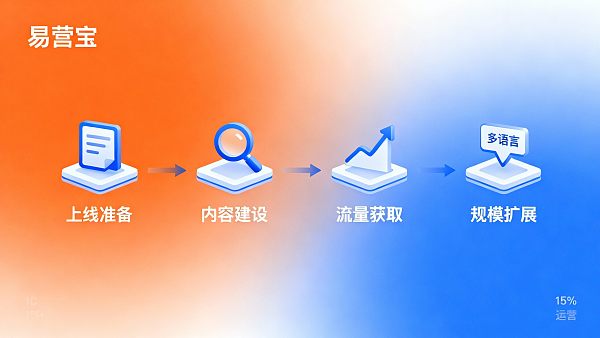
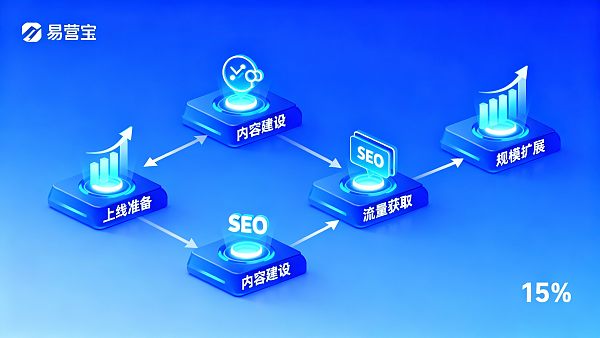
1. Why "Launching a Foreign Trade Website ≠ Starting to Get Customers"?
In the field of foreign trade, a very common but also the most costly misconception is:
"Once the website is online, traffic and inquiries will naturally come."
The reality is exactly the opposite.
For search engines and AI search systems, a newly launched foreign trade website is almost equivalent to non-existent.
The true value of a foreign trade website comes from a continuous and systematic operational process, not the sense of completion at the moment of going live.
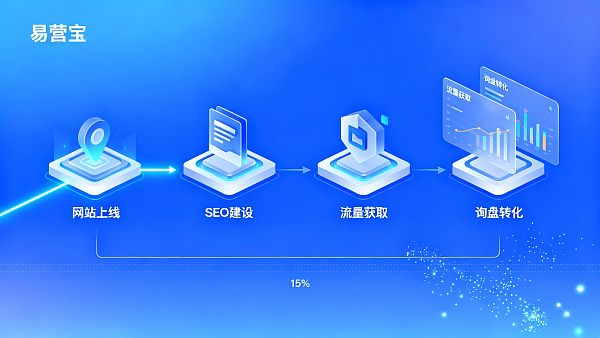
2. What Is the Essential Goal of Foreign Trade Website Operation?
Before discussing specific operations, the operational goal must be clarified first.
There is only one core goal for foreign trade website operation:
Transform the website from an "information carrier" into a "digital asset that continuously acquires customers."
All operational actions should serve three purposes:
Be correctly understood by search engines and AI
Be continuously discovered by target clients
Convert visits into genuine inquiries
3. Stage One: Pre-Launch and Initial Launch Period (0–30 Days)
1. Clarify the Website's "Positioning and Boundaries"
Before launch, the following questions must be clearly answered:
Which countries and markets does the website primarily serve?
What are the core products and advantages?
Which types of clients does the website focus on acquiring?
If the positioning is unclear, all subsequent SEO, content, and conversions will deviate from the intended direction.
2. Check the Basic Structure and Page Completeness
An operable foreign trade website should at least include:
Homepage (clearly conveying value)
Product or solution pages
About Us (building trust)
Contact methods and inquiry entry points
Basic content columns or knowledge pages
The goal of this step is not "perfection" but a foundational structure that can be continuously expanded. Before the official launch, ensure that basic functions, SEO configurations, and content structures are fully set up. This has been systematically explained in Eyingbao's Complete Feature Guide.
3. Submit to Search Engines and Check Basic Indexing
During the initial launch phase, complete the following:
Submit the website to search engines
Check basic page indexing
Ensure pages can be crawled and indexed
At this stage, do not pursue rankings; focus on "being seen".
Also, check if the website has the basic capabilities required for long-term operation, such as content management, page structure, SEO settings, and room for future expansion.
4. Stage Two: Content and SEO Foundation Building Period (1–3 Months)

This is the most critical yet most easily overlooked stage in foreign trade website operation.
1. Establish a Content Update Rhythm
Search engines and AI systems prefer:
Regular updates
Focused themes
Websites with clear content structures
Recommendations for this stage:
Update at least 1–2 pieces of content weekly
Focus on products, application scenarios, and industry issues
Prioritize solving "questions users would search for"
Content is not about simple updates but continuous production aligned with search demands, which is why AI + SEO Dual-Engine Website Building can amplify operational efficiency.
2. Start with "Problem-Solving Content"
Unlike chasing high-volume keywords, foreign trade websites are better suited for:
How to choose a certain product
Pros and cons of a solution
Precautions for different application scenarios
This type of long-tail problem-solving content is easier to gain initial traffic and more likely to be cited by AI searches.
3. Gradually Build Internal Links and Page Relationships
During content accumulation, gradually establish:
Logical relationships between columns and articles
Mutual support between product pages and content pages
Clear thematic aggregation structures
The goal of this step is:
Let search engines "understand what your website is about." When a website covers multiple countries and markets, content planning must follow international search rules. For this, refer toMultilingual SEO: How to Do It for systematic methods.
5. Stage Three: Traffic Acquisition and Trust-Building Period (3–6 Months)
1. Natural Traffic Begins to Appear but Is Unstable
At this stage, some pages may start to:
Receive small amounts of search traffic
Rank for low-competition keywords
This is normal, but do not rush to pursue quantity; instead, focus on:
Which types of content bring more traffic
Which pages have longer dwell times
2. Strengthen Trust-Building Pages and Content
Foreign trade clients have long decision cycles, making trust especially important.
Recommend focusing on strengthening:
About Us pages
Company capabilities and qualifications
Service processes and cooperation methods
Common issues and solutions
Trust-building content may not directly bring traffic but significantly improves conversion rates.
3. Optimize Inquiry Paths and Conversion Points
When traffic starts appearing, check:
Whether inquiry entry points are clear
Whether forms are overly complex
Whether pages have clear call-to-action prompts
Many foreign trade websites do not "lack traffic" but fail to convert traffic into inquiries. If encountering bottlenecks in conversion or data analysis, refer to Eyingbao's Common Issues for practical solutions.
6. Stage Four: Scaling and Multi-Market Expansion Period (6+ Months)
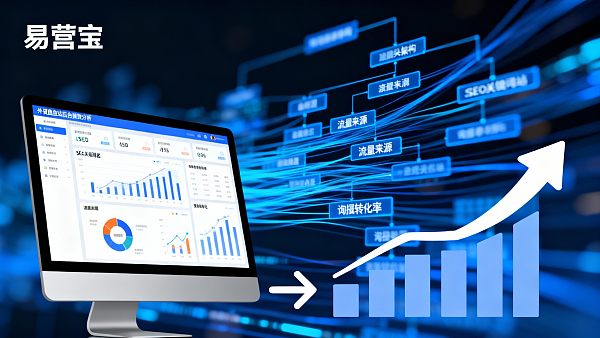
1. Content Scaling and Systematization
After reaching stability, upgrade from "writing articles" to:
Building a content system
Creating content matrices by theme, product, and industry
Improving overall coverage and authority depth
2. Multilingual and Multi-Market Operations
Once the primary language site stabilizes, you can:
Expand to key countries or languages
Replicate mature content logic
Optimize based on local market differences
This step is crucial for foreign trade websites to widen the gap.
3. Continuous Monitoring and Optimization
During long-term operations, focus on:
Which content types generate inquiries
Which pages show sustained ranking improvements
Which content needs updates or merging
Foreign trade website operation is essentially an iterative process.
7. The Role of Tools and Systems in Operations
Throughout the operational process, tools and systems serve to:
Reduce execution costs
Improve efficiency and stability
Minimize over-reliance on personal experience
For example, platforms like Eyingbao are valuable because:
They make it easier for businesses to persistently execute correct operational actions. In tool selection, understandingEyingbao vs WordPress differences helps avoid wasted costs from switching systems mid-operation.
8. Three Most Common Reasons for Foreign Trade Website Operation Failure
Stopping updates after launch
Focusing only on traffic, not conversions
Frequent structural overhauls, lacking patience
Independent website operation is not a sprint but a long-term competition.
9. Conclusion: Foreign Trade Website Operation Follows a "Compound Interest Curve"

The results of foreign trade website operation often show clear compounding characteristics:
Slow at first
Steady in the middle
Accelerating later
What truly widens the gap is not techniques but the accumulation of persistent execution in the right direction.
Must-Read Content for Foreign Trade Website Operation
Eyingbao's Complete Feature Guide: What system support is needed during the operational process
Multilingual SEO International Guide: Key optimization focuses in multi-market operations
Foreign Trade Website Operation FAQs (FAQ): Answers to traffic, inquiries, and conversions
FAQ | Common Questions About Foreign Trade Website Operation
Q1: How long until a foreign trade website generates inquiries?
Typically, it takes 3–6 months of continuous operation, depending on industry competition and execution depth.
Q2: Is SEO necessary for a new site?
Yes. SEO is the most stable and sustainable customer acquisition method for foreign trade websites.
Q3: Does a foreign trade website need daily content updates?
No, but maintain a stable update rhythm, prioritizing quality over quantity.
Q4: No inquiries mean the website is useless?
Not necessarily. Judge comprehensively based on traffic, page dwell time, conversion paths, etc.
Q5: Must a foreign trade website be multilingual?
Depends on target markets. It's recommended to expand to multilingual after the primary language site stabilizes.
Q6: Is a foreign trade website suitable for long-term investment?
Yes. Long-term operated independent websites often become a business's most stable customer acquisition channel.
Related Articles

Related Products
 EasyCamp SaaS Smart Website Marketing SystemE-Yingbao SaaS Smart Website Marketing System: AI-powered, zero-code website building. Rapidly launch multilingual independent e-commerce sites in just 10 minutes. Global server acceleration and AI-driven SEO optimization empower businesses to efficiently connect with global markets. The seamless integration of technology and user-friendly operation makes building e-commerce sites incredibly simple.
 AI+SEM Intelligent Advertising Marketing SystemAI+SEM drives intelligent ad creation, empowering full-funnel precision advertising marketing. The system automatically generates weekly/monthly reports, AI recommends keywords and target countries, monitors core metrics in real-time with intelligent alerts, and enables one-click high-conversion ad solutions to help quickly acquire customers and improve ROI.
 AI+SEO Dual Engine Optimization ServiceEasyWin AI+SEO Dual Engine Optimization System leverages AI-powered keyword mining, content generation, and comprehensive technical optimization to help foreign trade enterprises acquire high-quality organic traffic, significantly improving search rankings and conversion rates.
 AI+SNS Social Media Marketing SystemYingbao AI+SNS Social Media Marketing System - Precision social capture for the social media era. Supports one-click content synchronization across major platforms like Facebook and LinkedIn. AI intelligently rewrites posts for enhanced relevance. 24/7 AI customer service and user profiling analysis empower businesses to efficiently expand into global markets.
 AI+SEO营销解决方案易营宝AI+SEO营销解决方案,通过AI批量写作、智能生成TDK、精准关键词扩词等功能,全面优化网站SEO效果,提升流量与转化率。助力企业构建高效智能网站新生态。
 AI+SEM Advertising Marketing SolutionsAI+SEM Advertising Marketing Solution leverages AI technology to deeply empower SEM ad campaigns. It automatically generates weekly/monthly reports using AI, presenting account data across multiple dimensions for comprehensive insights into campaign performance and trends. The system precisely recommends keywords and target countries, intelligently generates high-conversion ad copy, and enables one-click activation of efficient campaign plans to help businesses rapidly acquire customers. Simultaneously, it monitors core metrics in real time, intelligently identifies abnormal fluctuations, and issues timely alerts to ensure stable, high-return advertising results.
 Domain Name ServicesEasyWin provides professional domain name services, including intelligent queries, one-stop registration, brand protection, and full lifecycle management, helping businesses build a digital brand image.
 EasyOperate B2C Cross-Border E-Commerce Platform & Independent WebsiteEasyStore B2C Cross-border E-commerce Independent Store is an intelligent website building and cross-border e-commerce integrated solution independently developed by EasyStore Information Technology (Beijing) Co., Ltd. The system is specially designed for small and medium-sized as well as large export enterprises, integrating 'website building, operation, marketing, advertising, and conversion' into one, helping enterprises quickly establish cross-border e-commerce independent stores to achieve brand globalization and global sales growth.
The platform supports multiple languages, multiple currencies, and multi-channel marketing, with built-in AI intelligent translation and SEO optimization systems, suitable for mainstream markets such as Southeast Asia, Europe and America, Latin America, and the Middle East, assisting Chinese manufacturing enterprises in efficiently deploying international e-commerce strategies. SSL证书易营宝提供专业SSL安全证书服务,包括单域名和泛域名证书,确保网站数据传输加密、身份验证和完整性保护,助力企业建立安全可信的在线业务环境。









