









- Which channel has the highest ROI in the global traffic ecosystem? Comparative analysis of search, social media, and advertisingJul 10, 2026View details
- What multilingual website services are available in Sanya? Which model is more suitable for local businesses going global?Jul 08, 2026View details
- How to view the complete list of China SaaS companies in the top 100? Practical methods for screening website-building and marketing service providersJul 08, 2026View details
- How to view pricing in the global traffic ecosystem? Cost comparison of search, social media, and content channel advertisingJul 06, 2026View details
- How to assess foreign trade website development trends?Looking at 2026 changes from multilingual,AI content to conversion pathsJul 04, 2026View details
- What are the new trends in multilingual marketing data analytics tools in 2026? Focus on attribution、automation and complianceJul 04, 2026View details
Cost and Effectiveness Comparison Between Efficient Cross-Border E-Commerce Ad Optimization Systems and Manual Placement
Introduction
YiYingBao leverages its AI+SEM advertising strategy and efficient cross-border e-commerce advertising optimization system, combining an AI marketing engine with social media automation to achieve cost reduction, efficiency improvement, and localized conversion of global traffic. This article, aimed at users and operators, corporate decision-makers, project managers, after-sales maintenance personnel, and channel agents, focuses on the cost structure, performance differences, and systematic optimization paths of cross-border e-commerce under different advertising models. From four perspectives—technical principles, economic costs, implementation methods, and case data—this article helps readers assess whether to migrate from purely manual advertising to an AI-driven advertising optimization system, or to introduce intelligent modules into existing manual advertising to achieve higher ROI and reproducible growth capabilities.
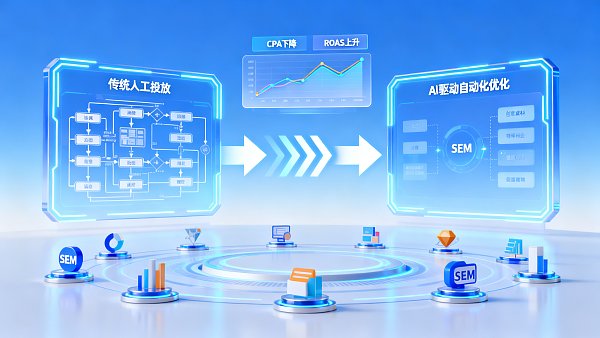
Why can using AI+SEM and a high-efficiency cross-border e-commerce advertising optimization system significantly improve campaign efficiency?
In cross-border scenarios, fluctuating traffic costs, regional compliance, and language localization are core pain points. The AI+SEM Advertising System transforms pricing and creative selection, which previously relied on manual experience, into closed-loop decision-making based on large-scale data through automated account diagnostics, keyword expansion, and creative optimization. Technically, the system can perform second-level scanning of account structures on platforms such as Google Ads, Yandex, and Meta, identifying inefficient keywords and conversion funnels and generating optimization suggestions to reduce invalid exposures and improve click-to-conversion efficiency. YiYingBao's technical capabilities are reflected in improved loading speed and SEO optimization for independent websites. With global CDN acceleration and AI content system support, loading speed for independent websites has increased by approximately 40%, and SEO scores have improved by an average of 35%. This means that the landing page quality and subsequent conversion probability of each ad click have significantly improved. Furthermore, AI's automation advantages in creative generation and dynamic keyword library construction can reduce manual creation costs by more than 50%, while the Creative Factory mode achieves case-level results with ad conversion rate increases of up to 200%. For cross-border e-commerce, it is necessary to pursue both short-term CPA reduction and long-term traffic assets. This is precisely the value of AI+SNS Marketing in cross-border marketing and website SEO synergy.
A detailed comparison of the costs and effectiveness of manual application and systematic optimization.
From a cost perspective, traditional manual advertising primarily incurs three types of expenses: labor costs, creative and testing costs, and time costs. A typical team requires keyword researchers, creative designers, data analysts, and account operators, resulting in high accumulated fixed monthly labor costs and outsourced creative costs. Furthermore, the long A/B testing iteration cycle leads to increased trial-and-error costs. In contrast, AI-driven cross-border e-commerce advertising optimization systems, while requiring initial investment in system integration and model training, can automate large-scale keyword expansion, TDK (Title, Description, Keywords), and creative variation generation through algorithms in the medium to long term, significantly reducing the frequency and duration of manual intervention. For example, in a typical medium-sized e-commerce company, after introducing an AI-powered advertising manager, manual hours can decrease by approximately 40% to 60%, creative production costs decrease by approximately 50%, and CPA decreases by an average of 20% to 40%, while ROAS shows a steady increase. From the perspective of effectiveness and scalability, the manual model is susceptible to experience limitations, has slow adaptation speed for cross-language advertising, and struggles to achieve simultaneous iteration of high-quality landing pages and ad text in multiple languages. Systematic optimization leverages a three-pronged approach: AI-driven keyword expansion, automatic TDK (Title, Description, Keywords) generation, and AI-generated images. This generates thousands of pieces of content daily and, combined with intelligent website analysis tools, optimizes SEO weaknesses, significantly shortening the time to market in new markets. Simultaneously, through real-time monitoring and machine learning strategy callbacks, campaign strategies achieve millisecond-level responses, rapidly adjusting budgets and bidding strategies to mitigate CPA fluctuations or regional events, thereby controlling CPA peaks and maintaining overall traffic stability. In conclusion, while manual campaigning remains valuable for small-scale trial-and-error or complex relationship maintenance, the AI+SEM system offers a superior cost-benefit structure for cross-border expansion aimed at scalability and continuous optimization.
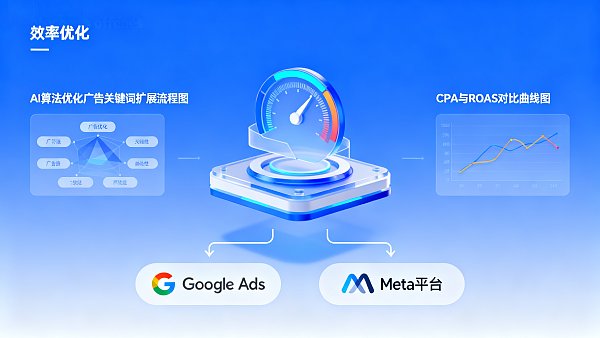
Implementation Path and Best Practices: From Account Diagnosis to Global Deployment Closed Loop
Successful implementation requires a clear, phased approach and quantifiable KPIs. The first phase is diagnosis and segmentation, which should begin with a comprehensive account audit, including traffic source breakdown, keyword performance, landing page performance, and audience path analysis, clarifying short-term and long-term goals. The second phase involves building a strategy model, utilizing AI for keyword expansion and negative keyword cleanup, combined with manually set bidding rules and budget protection mechanisms to form a hybrid decision-making system. The third phase focuses on content and landing page optimization, employing AI-powered batch writing and automatic TDK (Title, Description, Keywords) generation to improve fundamental SEO capabilities and ensure access speed and compliance for multilingual independent websites on local servers or CDNs. The fourth phase automates creative and creative output, leveraging a creative factory model for the automatic generation of high-CTR ad copy and multi-variant creatives, along with real-time A/B testing. The final phase is feedback and governance, establishing a data-driven iterative loop and regularly reviewing campaign performance and the website's SEO growth curve. Throughout this process, industry-leading AI+SEO tools can be introduced to enhance output and efficiency. For example, platform-level integrated tools can achieve automatic linkage across TDK, content, and ad creative levels, reducing operational complexity and ensuring standardized output. To facilitate trial and implementation evaluation, companies can refer to integrated products such as AI+SEO marketing solutions to quickly build an automated production line from keywords to landing pages, thereby shortening the testing cycle to within a few weeks and observing initial ROI improvements.
Industry case studies and credibility data: Validating the replicability of systematic campaign deployment
Yiyingbao's experience serving over 20 industries, including manufacturing, e-commerce, and education, provides replicable industry best practices. One cross-border home furnishing brand, after integrating AI-powered advertising management and automated social media operations, saw its Facebook and Google landing page conversion rates increase by approximately 120%, and its overall advertising ROI improve by 1.8 times within six months. Another educational institution, after simultaneously deploying multilingual independent websites in North America and Southeast Asia and combining them with AI-powered keyword expansion capabilities, saw its SEO organic traffic share increase by 35%, and the marginal cost of paid traffic for course conversion decrease by 25%. The technological support behind these cases includes official partnerships with Google, Meta, and Yandex, as well as the company's continuous iteration of its self-developed NLP and multimodal generation technologies, ensuring the industry adaptability and compliance of its strategies. In terms of third-party evaluations and user satisfaction, Yiyingbao has gained industry recognition for its service responsiveness, platform stability, and implementation effectiveness. Multi-channel reviews, such as Yiyingbao Trustpilot reviews and industry IDC SaaS platform user satisfaction surveys, show that the platform ranks among the top products in its category in terms of customer success rate and growth rate. These external endorsements enhance the credibility of systematic deployment plans, which is an important risk mitigation factor for companies looking to expand into overseas markets.
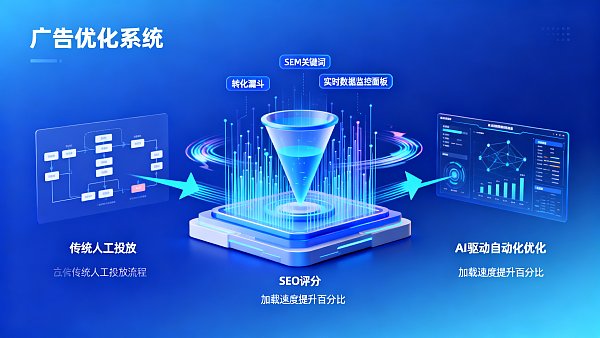
Summary and Action Guidance
In summary, for cross-border e-commerce companies aiming for scalable, reproducible growth and reduced long-term customer acquisition costs, combining manual advertising with an AI-driven, highly efficient cross-border e-commerce advertising optimization system is a realistic and measurable approach. A systematic solution delivers quantifiable benefits in keyword expansion, automatic TDK generation, scalable creative materials, and website performance optimization, while retaining the core value of human intervention in strategy development, handling sensitive events, and complex customer relationship management. YiYingBao, with its technology platform, global data access, and partner ecosystem, provides companies with a closed-loop service from website building and SEO to social media and advertising, enabling them to achieve more efficient localized traffic conversion and continuously optimize costs in the cross-border market. If you would like to understand how to introduce AI capabilities into your existing advertising system or assess the impact of an AI platform on your company's business metrics, please contact us immediately for a free diagnostic or to schedule a product demonstration, learn more about our solutions, and obtain a customized advertising evaluation report.
- Website detection
- Multilingual Independent Website
- Google Ads
- Cross-border Marketing
- Yiyingbao
- SEO
- Independent Website
- SEO Optimization
- AI Marketing Engine
- Social Media Automation
- Global CDN Acceleration
- IDC SaaS Platform User Satisfaction
- Yiyingbao Trustpilot reviews
- Yiyingbao
- cross-border e-commerce
- AI+SEM Advertising System
- AI+SNS Cross-Border Marketing
- Efficient cross-border e-commerce advertising optimization system
Related Articles
 How to build a framework for overseas integrated marketing? Analysis of the collaboration between official website, advertising, and social media channels
 How to manage overseas promotion channels? Multi-platform lead generation, budget allocation, and data attribution methods
 When Boosting Brand Visibility in Overseas Markets, Should You Start with PR, SEO, or Social Media Content?


Related Products
 EasyCamp SaaS Smart Website Marketing SystemE-Yingbao SaaS Smart Website Marketing System: AI-powered, zero-code website building. Rapidly launch multilingual independent e-commerce sites in just 10 minutes. Global server acceleration and AI-driven SEO optimization empower businesses to efficiently connect with global markets. The seamless integration of technology and user-friendly operation makes building e-commerce sites incredibly simple.
 AI+SEM Intelligent Advertising Marketing SystemAI+SEM drives intelligent ad creation, empowering full-funnel precision advertising marketing. The system automatically generates weekly/monthly reports, AI recommends keywords and target countries, monitors core metrics in real-time with intelligent alerts, and enables one-click high-conversion ad solutions to help quickly acquire customers and improve ROI.
 AI+SEO Dual Engine Optimization ServiceEasyWin AI+SEO Dual Engine Optimization System leverages AI-powered keyword mining, content generation, and comprehensive technical optimization to help foreign trade enterprises acquire high-quality organic traffic, significantly improving search rankings and conversion rates.
 AI+SNS Social Media Marketing SystemYingbao AI+SNS Social Media Marketing System - Precision social capture for the social media era. Supports one-click content synchronization across major platforms like Facebook and LinkedIn. AI intelligently rewrites posts for enhanced relevance. 24/7 AI customer service and user profiling analysis empower businesses to efficiently expand into global markets.
 AI+SEO营销解决方案易营宝AI+SEO营销解决方案,通过AI批量写作、智能生成TDK、精准关键词扩词等功能,全面优化网站SEO效果,提升流量与转化率。助力企业构建高效智能网站新生态。
 AI+SEM Advertising Marketing SolutionsAI+SEM Advertising Marketing Solution leverages AI technology to deeply empower SEM ad campaigns. It automatically generates weekly/monthly reports using AI, presenting account data across multiple dimensions for comprehensive insights into campaign performance and trends. The system precisely recommends keywords and target countries, intelligently generates high-conversion ad copy, and enables one-click activation of efficient campaign plans to help businesses rapidly acquire customers. Simultaneously, it monitors core metrics in real time, intelligently identifies abnormal fluctuations, and issues timely alerts to ensure stable, high-return advertising results.
 Domain Name ServicesEasyWin provides professional domain name services, including intelligent queries, one-stop registration, brand protection, and full lifecycle management, helping businesses build a digital brand image.
 EasyOperate B2C Cross-Border E-Commerce Platform & Independent WebsiteEasyStore B2C Cross-border E-commerce Independent Store is an intelligent website building and cross-border e-commerce integrated solution independently developed by EasyStore Information Technology (Beijing) Co., Ltd. The system is specially designed for small and medium-sized as well as large export enterprises, integrating 'website building, operation, marketing, advertising, and conversion' into one, helping enterprises quickly establish cross-border e-commerce independent stores to achieve brand globalization and global sales growth.
The platform supports multiple languages, multiple currencies, and multi-channel marketing, with built-in AI intelligent translation and SEO optimization systems, suitable for mainstream markets such as Southeast Asia, Europe and America, Latin America, and the Middle East, assisting Chinese manufacturing enterprises in efficiently deploying international e-commerce strategies. SSL证书易营宝提供专业SSL安全证书服务,包括单域名和泛域名证书,确保网站数据传输加密、身份验证和完整性保护,助力企业建立安全可信的在线业务环境。









