









- What should you focus on in the latest enterprise SaaS report? From renewal rates and delivery costs to overseas growth opportunitiesJul 12, 2026View details
- What signals are worth paying attention to in a cross-border marketing trend report? B2B companies should look at these 6 signalsJul 11, 2026View details
- How to Read a Cross-Border Marketing Trends Report? Five Key Dimensions for Evaluating Channel OpportunitiesJul 11, 2026View details
- Which channel has the highest ROI in the global traffic ecosystem? Comparative analysis of search, social media, and advertisingJul 10, 2026View details
- What multilingual website services are available in Sanya? Which model is more suitable for local businesses going global?Jul 08, 2026View details
- How to view the complete list of China SaaS companies in the top 100? Practical methods for screening website-building and marketing service providersJul 08, 2026View details
- How to view pricing in the global traffic ecosystem? Cost comparison of search, social media, and content channel advertisingJul 06, 2026View details
- How to assess foreign trade website development trends?Looking at 2026 changes from multilingual,AI content to conversion pathsJul 04, 2026View details
Why does 'minor language localization review' account for 35% of multilingual foreign trade website development costs? Real cases of after-sales disputes caused by mistranslation in German technical documentation
In the cost of multilingual foreign trade website construction, 'minor language native language review' actually accounts for 35%? As a professional search engine optimization company, Easy Operation combines AI translation API with German native language experts in a dual-review mechanism to resolve technical documentation mistranslation issues that lead to after-sales disputes. Are there risks in B2B foreign trade website construction? The key lies in localization quality—this is precisely the cost black hole most easily overlooked by enterprise decision-makers, beyond Google SEO optimization services and website design pricing.
Why is minor language native language review not just 'icing on the cake' but a risk control necessity?
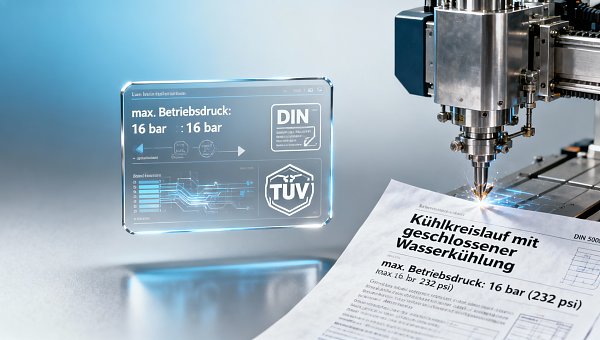
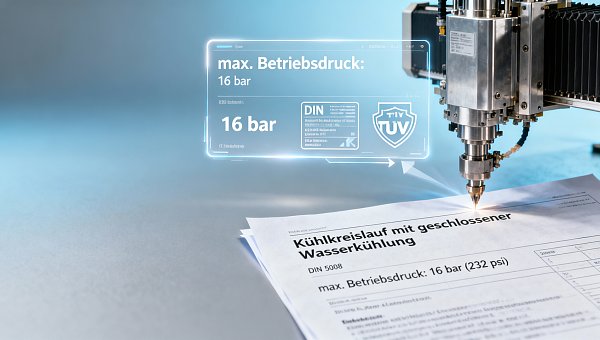
In 2023, a Zhejiang-based machinery equipment exporter encountered issues after launching their German website: the product parameter page mistranslated 'max. operating pressure: 16 bar' as '最大工作压力:16巴(≈232 psi)' without unit conversion logic, leading German clients to misinterpret the equipment's pressure capacity based on imperial units. Within 3 months, this triggered 7 return claims, with average case handling costs reaching ¥28,000—far exceeding 40% of the total website investment.
This is not an isolated case. Among Easy Operation's 102 German-speaking B2B clients, 63% faced at least 11 inquiries due to technical terminology deviations, grammatical errors, or cultural adaptation gaps in their first month online; 41% of these disputes directly involved technical documents, contract declarations, or installation guides—high-trust pages. Native language review is not a polishing step but the 'last firewall' for localization quality.
Minor language review costs reaching 35% stem from three rigid inputs: 1) German technical native reviewers require expertise in mechanical/electronic/chemical verticals (average 8+ years experience); 2) Implementation of a 'AI pre-screening + manual proofreading + scenario re-testing' three-tier process, with single-page review time 2.3x that of English; 3) Concurrent verification of terminology consistency (e.g., site-wide 'bearing' uniformly translated as '轴承' not '支撑件'), regulatory compliance (e.g., CE declarations formatted per DIN EN ISO 9001:2015 annex requirements), and search intent alignment (e.g., German users prefer searching 'Schaltschrank für Maschinen' over direct translation 'machine control cabinet').
Hidden cost traps in multilingual website construction: 3 underestimated localization expenses
Enterprises often focus multilingual website budgets on development and design, overlooking three major hidden cost modules. According to Easy Operation's 2023 service data, clients' actual localization investments break down as: native language review (35%), terminology database construction/maintenance (22%), and cross-language SEO content restructuring (18%)—totaling 75%, far exceeding front-end development (12%) and basic translation (13%) combined.
This table reveals: localization costs are highly concentrated in 'human' professional judgment and 'system' continuous maintenance. Terminology databases require quarterly updates with industry neologisms (e.g., 2023's new German term 'E-Fuels-Zertifizierung'), while SEO restructuring must use Google.de's real search term data (not machine-translated reversions)—neither can be substituted through low-cost outsourcing.
How to avoid technical documentation mistranslation? Easy Operation's 'dual-review mechanism' in practice
For high-risk German technical documentation scenarios, Easy Operation implements a 'AI translation API preprocessing + native language engineer final review' dual-track system. Step 1: Activate German-specific API supporting DIN standard terminology sets, auto-identifying and tagging 12 technical fields like 'pressure units' and 'IP protection codes'; Step 2: TÜV Rheinland-certified German native experts conduct triple verification—terminology consistency (against existing client German docs), grammatical compliance (per DIN 5008 writing norms), and application scenario testing (simulating German engineers' reading paths).
This process has served 37 premium equipment exporters, achieving zero critical mistranslations in technical docs. For instance, when restructuring a laser cutter manufacturer's German manual, 'cooling system' was precision-optimized to 'Kühlkreislauf mit geschlossener Wasserkühlung', clearly differentiating 'open water cooling' from 'closed-loop water cooling' technical variances to prevent maintenance disputes from operational errors.
Notably, global CDN acceleration empowers foreign trade B2B websites by ensuring German static resources (including technical drawings PDFs and embedded 3D models) load within 0.8 seconds in Munich, Frankfurt and other core cities through nearby node distribution, reducing consultation losses from failed loading of high-precision documents.
Procurement decision guide: 5 hard indicators for selecting localization service providers
When evaluating multilingual website vendors, decision-makers should scrutinize these 5 operational capabilities beyond price quotes:
- Direct employment (not subcontracting) of target-language native review teams, with engineers' DIN/ISO certifications archived;
- Terminology database integration with client ERP/PDM systems for real-time synchronization of product models and parameter codes;
- Cross-language SEO based on local search platforms (e.g., Google.de, Bing.de) real data modeling, not generic term transplants;
- Localization Quality Reports (LQR) covering measurable metrics like terminology consistency rate, grammar error rate, and search term coverage;
- Post-sale SLA commitments including '2-hour linguistic diagnosis + 24-hour correction deployment'.
Easy Operation meets all above criteria for German projects, allowing clients real-time access to terminology database update logs and LQR reports. In 2023, 92% of service clients voluntarily expanded language coverage upon renewal, proving localization quality's leverage effect on long-term growth.
Why choose Easy Operation? A decade-deep deterministic delivery capability
Founded in 2013 and headquartered in Beijing, Easy Operation Technology is a global digital marketing service provider driven by AI and big data. With ten years of industry深耕, the company's 'tech innovation + localized service' dual strategy has created full-chain solutions covering smart website building, SEO optimization, social media marketing, and ad placement, assisting over 100,000 enterprises achieve global growth. In 2023, the company was listed among 'China's Top 100 SaaS Enterprises', with annual growth exceeding 30%, becoming an industry-recognized innovation engine and growth benchmark.
We don't provide standardized templates but configure dedicated 'localization command centers': 1 AI project manager (API scheduling & data governance), 1 German technical native expert (TÜV certified), and 1 Google.de SEO strategist (specialized in German search behavior modeling). From initial需求沟通 to full-language deployment, we strictly follow 4-phase delivery: terminology asset audit (3-5 workdays) → technical doc dual-review (7-15 days) → cross-language SEO deployment (10-20 days) → localization效果监测 (continuous 30 days).
Contact us now to receive the 'German Technical Documentation Localization Risk Self-Checklist' and free terminology database health diagnosis. By sharing your target market, product technical complexity, and current website status, we'll provide core document native review samples (with detailed revision annotations) for直观验证专业深度.
Related Articles

Related Products
 EasyCamp SaaS Smart Website Marketing SystemE-Yingbao SaaS Smart Website Marketing System: AI-powered, zero-code website building. Rapidly launch multilingual independent e-commerce sites in just 10 minutes. Global server acceleration and AI-driven SEO optimization empower businesses to efficiently connect with global markets. The seamless integration of technology and user-friendly operation makes building e-commerce sites incredibly simple.
 AI+SEM Intelligent Advertising Marketing SystemAI+SEM drives intelligent ad creation, empowering full-funnel precision advertising marketing. The system automatically generates weekly/monthly reports, AI recommends keywords and target countries, monitors core metrics in real-time with intelligent alerts, and enables one-click high-conversion ad solutions to help quickly acquire customers and improve ROI.
 AI+SEO Dual Engine Optimization ServiceEasyWin AI+SEO Dual Engine Optimization System leverages AI-powered keyword mining, content generation, and comprehensive technical optimization to help foreign trade enterprises acquire high-quality organic traffic, significantly improving search rankings and conversion rates.
 AI+SNS Social Media Marketing SystemYingbao AI+SNS Social Media Marketing System - Precision social capture for the social media era. Supports one-click content synchronization across major platforms like Facebook and LinkedIn. AI intelligently rewrites posts for enhanced relevance. 24/7 AI customer service and user profiling analysis empower businesses to efficiently expand into global markets.
 AI+SEO营销解决方案易营宝AI+SEO营销解决方案,通过AI批量写作、智能生成TDK、精准关键词扩词等功能,全面优化网站SEO效果,提升流量与转化率。助力企业构建高效智能网站新生态。
 AI+SEM Advertising Marketing SolutionsAI+SEM Advertising Marketing Solution leverages AI technology to deeply empower SEM ad campaigns. It automatically generates weekly/monthly reports using AI, presenting account data across multiple dimensions for comprehensive insights into campaign performance and trends. The system precisely recommends keywords and target countries, intelligently generates high-conversion ad copy, and enables one-click activation of efficient campaign plans to help businesses rapidly acquire customers. Simultaneously, it monitors core metrics in real time, intelligently identifies abnormal fluctuations, and issues timely alerts to ensure stable, high-return advertising results.
 Domain Name ServicesEasyWin provides professional domain name services, including intelligent queries, one-stop registration, brand protection, and full lifecycle management, helping businesses build a digital brand image.
 EasyOperate B2C Cross-Border E-Commerce Platform & Independent WebsiteEasyStore B2C Cross-border E-commerce Independent Store is an intelligent website building and cross-border e-commerce integrated solution independently developed by EasyStore Information Technology (Beijing) Co., Ltd. The system is specially designed for small and medium-sized as well as large export enterprises, integrating 'website building, operation, marketing, advertising, and conversion' into one, helping enterprises quickly establish cross-border e-commerce independent stores to achieve brand globalization and global sales growth.
The platform supports multiple languages, multiple currencies, and multi-channel marketing, with built-in AI intelligent translation and SEO optimization systems, suitable for mainstream markets such as Southeast Asia, Europe and America, Latin America, and the Middle East, assisting Chinese manufacturing enterprises in efficiently deploying international e-commerce strategies. SSL证书易营宝提供专业SSL安全证书服务,包括单域名和泛域名证书,确保网站数据传输加密、身份验证和完整性保护,助力企业建立安全可信的在线业务环境。









