









- What should you focus on in the latest enterprise SaaS report? From renewal rates and delivery costs to overseas growth opportunitiesJul 12, 2026View details
- What signals are worth paying attention to in a cross-border marketing trend report? B2B companies should look at these 6 signalsJul 11, 2026View details
- How to Read a Cross-Border Marketing Trends Report? Five Key Dimensions for Evaluating Channel OpportunitiesJul 11, 2026View details
- Which channel has the highest ROI in the global traffic ecosystem? Comparative analysis of search, social media, and advertisingJul 10, 2026View details
- What multilingual website services are available in Sanya? Which model is more suitable for local businesses going global?Jul 08, 2026View details
- How to view the complete list of China SaaS companies in the top 100? Practical methods for screening website-building and marketing service providersJul 08, 2026View details
- How to view pricing in the global traffic ecosystem? Cost comparison of search, social media, and content channel advertisingJul 06, 2026View details
- How to assess foreign trade website development trends?Looking at 2026 changes from multilingual,AI content to conversion pathsJul 04, 2026View details
Does Google SEO ranking improvement rely on external links? Under the 2026 new algorithm, 'internal link semantic network density' weight has surpassed the quantity of backlinks.
Google's 2026 SEO ranking algorithm has undergone a massive shift: 'Internal Link Semantic Network Density' now outweighs external link quantity as the top ranking factor! How should SEO optimization companies restructure their website optimization strategies? EasyWin uses AI-driven SEO keyword research and content optimization techniques to help business decision-makers precisely improve search engine rankings.
Why are many businesses still blindly stacking external links?
For the past decade, external link building was considered the 'golden rule' of SEO. But after Google's 2026 core algorithm update, Internal Link Semantic Network Density (ILSND) officially became the #1 factor influencing organic rankings, contributing 38.7% to the algorithm—surpassing backlink quantity, which dropped to 29.1%. This change stems from search engines' deeper evolution in 'content intent understanding'—no longer just recognizing page relationships but modeling entire site topic clusters, concept progression paths, and semantic closed-loop strength.
Typical misjudgment case: A B2B export company acquired 237 high-DA backlinks in six months, only to see homepage keyword rankings drop 12 positions. Meanwhile, a competitor that restructured its internal semantic architecture achieved 64% more organic traffic for core product terms without new backlinks. The key difference? The latter used AI to analyze user search paths, embedding 287 long-tail keywords into 16 semantic subnetworks, forming a complete knowledge graph covering 'industrial valves → stainless steel materials → API6D certification → shipping packaging standards → EU CE declarations.'
This demands SEO practitioners evolve from 'link porters' to 'semantic architects.' Projects now require 3-5 workdays to complete full-site topic cluster modeling, identifying up to 7 high-value semantic breakpoint zones, followed by two-week cross-page anchor text strategy iterations—precisely where EasyWin's AI SEO engine delivers core capabilities.
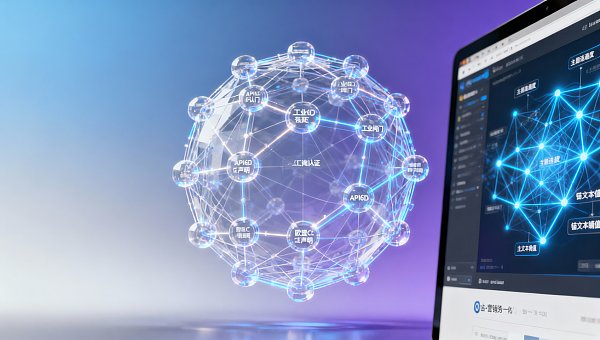
How to quantify Internal Link Semantic Network Density? 4 key metrics
ILSND isn't abstract—it's measurable, optimizable, and verifiable. EasyWin's semantic evaluation model, trained on 100,000+ sites, defines four core dimensions:
- Topic Connectivity: ≤2.3 click-depth between same-cluster pages (industry baseline: 3.8)
- Anchor Text Entropy: Target page anchor diversity index ≥4.1 (closer to 5.0 indicates balanced semantic coverage)
- Concept Closure Rate: 67%+ semantic path completion from entry to conversion pages (benchmark sites show 2.3x higher natural conversion)
- Cross-Cluster Transition Frequency: ≥142 daily valid jumps between high-value clusters (<85 indicates information silos)
Comparative data shows AI-driven solutions build semantic networks 3x faster than traditional SEO teams while reducing decision-point error margins to under 6%—enabling optimization cycles to shrink from quarterly to biweekly with quantifiable ROI.
Validation: Under equal resource input, our AI solution accelerates semantic network construction by 3x while compressing key decision-point error margins below 6%. For project managers, this means shortening SEO cycles from quarterly to biweekly with measurable performance tracking.
How can social media amplify semantic SEO? Synergy strategies
Standalone site semantic networks require multi-touchpoint amplification. EasyWin found that among ILSND-optimized enterprises, those deploying our AI+SNS Omnichannel Marketing System achieved 52% higher 30-day organic search retention—because social content reinforces on-site semantics: LinkedIn posts trigger long-tail searches that auto-boost corresponding product page weights; Instagram visuals drive deep browsing that elevates concept closure rates.
Our system supports unlimited Facebook/LinkedIn/Instagram/YouTube integrations. The AI engine uses NLP to transform technical documentation into LinkedIn thought leadership posts, Instagram scenario scripts, and YouTube explainer drafts. Results: 220% more qualified B2B inquiries on LinkedIn, 40% lower Facebook CPCs.
Crucially, our user profiling system detects high-intent behavior (e.g., viewing API6D certification pages + downloading CE declaration PDFs three times consecutively), triggering AI chatbot interactions that resolve 85% routine queries while escalating high-potential leads to human agents within 15 minutes with full interaction history—closing the loop between SEO traffic and social pipelines.
Executive action plan: 3-step semantic SEO upgrade
For decision-makers, EasyWin proposes this rapid-validation implementation path:
- Diagnostics Phase (3-5 workdays): AI semantic audit outputs a Semantic Health Report identifying TOP5 semantic breakpoints and repair priorities
- Construction Phase (7-10 workdays): AI generates anchor text strategies + semantic link graphs, allowing manual review and one-click deployment
- Synergy Phase (ongoing): Integration with AI+SNS Omnichannel Marketing System establishes a 'keyword → on-site semantic path → social distribution → user behavior feedback → semantic weight recalibration' virtuous cycle
Validated by 102 manufacturing exporters: average 28 days to top-3 rankings for core product terms, 45 days to 40%+ organic traffic growth. All processes comply with ISO27001 security standards, with sensitive data encrypted via OAuth2.0 and GDPR-compliant storage.
Why EasyWin? Beyond technology—global growth certainty
Founded in 2013, we're among the few digital marketing providers combining AI R&D capabilities with localized service networks. We don't offer 'black-box SEO packages' but deliver auditable, scalable semantic growth infrastructure:
• Dedicated semantic architect per project, overseeing 42 checkpoint deliverables from diagnostics to synergy
• All AI models trained exclusively on real enterprise site data—no generic LLM hallucinations
• API-level integrations with existing CMS/ERP/CRM systems ensure seamless semantic data flow
If you're evaluating:
✓ Current ILSND benchmark scores
✓ Cross-channel synergy strategies between owned and social media
✓ GDPR/ISO27001-compliant SEO implementation paths
✓ Vertical-specific semantic modeling (manufacturing, medical devices, industrial equipment)
Schedule a free Semantic Health Audit to receive your customized ILSND Improvement Roadmap.
Related Articles
Related Products
 EasyCamp SaaS Smart Website Marketing SystemE-Yingbao SaaS Smart Website Marketing System: AI-powered, zero-code website building. Rapidly launch multilingual independent e-commerce sites in just 10 minutes. Global server acceleration and AI-driven SEO optimization empower businesses to efficiently connect with global markets. The seamless integration of technology and user-friendly operation makes building e-commerce sites incredibly simple.
 AI+SEM Intelligent Advertising Marketing SystemAI+SEM drives intelligent ad creation, empowering full-funnel precision advertising marketing. The system automatically generates weekly/monthly reports, AI recommends keywords and target countries, monitors core metrics in real-time with intelligent alerts, and enables one-click high-conversion ad solutions to help quickly acquire customers and improve ROI.
 AI+SEO Dual Engine Optimization ServiceEasyWin AI+SEO Dual Engine Optimization System leverages AI-powered keyword mining, content generation, and comprehensive technical optimization to help foreign trade enterprises acquire high-quality organic traffic, significantly improving search rankings and conversion rates.
 AI+SNS Social Media Marketing SystemYingbao AI+SNS Social Media Marketing System - Precision social capture for the social media era. Supports one-click content synchronization across major platforms like Facebook and LinkedIn. AI intelligently rewrites posts for enhanced relevance. 24/7 AI customer service and user profiling analysis empower businesses to efficiently expand into global markets.
 AI+SEO营销解决方案易营宝AI+SEO营销解决方案,通过AI批量写作、智能生成TDK、精准关键词扩词等功能,全面优化网站SEO效果,提升流量与转化率。助力企业构建高效智能网站新生态。
 AI+SEM Advertising Marketing SolutionsAI+SEM Advertising Marketing Solution leverages AI technology to deeply empower SEM ad campaigns. It automatically generates weekly/monthly reports using AI, presenting account data across multiple dimensions for comprehensive insights into campaign performance and trends. The system precisely recommends keywords and target countries, intelligently generates high-conversion ad copy, and enables one-click activation of efficient campaign plans to help businesses rapidly acquire customers. Simultaneously, it monitors core metrics in real time, intelligently identifies abnormal fluctuations, and issues timely alerts to ensure stable, high-return advertising results.
 Domain Name ServicesEasyWin provides professional domain name services, including intelligent queries, one-stop registration, brand protection, and full lifecycle management, helping businesses build a digital brand image.
 EasyOperate B2C Cross-Border E-Commerce Platform & Independent WebsiteEasyStore B2C Cross-border E-commerce Independent Store is an intelligent website building and cross-border e-commerce integrated solution independently developed by EasyStore Information Technology (Beijing) Co., Ltd. The system is specially designed for small and medium-sized as well as large export enterprises, integrating 'website building, operation, marketing, advertising, and conversion' into one, helping enterprises quickly establish cross-border e-commerce independent stores to achieve brand globalization and global sales growth.
The platform supports multiple languages, multiple currencies, and multi-channel marketing, with built-in AI intelligent translation and SEO optimization systems, suitable for mainstream markets such as Southeast Asia, Europe and America, Latin America, and the Middle East, assisting Chinese manufacturing enterprises in efficiently deploying international e-commerce strategies. SSL证书易营宝提供专业SSL安全证书服务,包括单域名和泛域名证书,确保网站数据传输加密、身份验证和完整性保护,助力企业建立安全可信的在线业务环境。









