









- Is Brand Globalization Marketing Consulting Worth Buying? At What Stage Should Companies Bring It InJul 01, 2026View details
- Cross-Border Marketing Trend Research: Why More and More Companies Are Starting to Deploy AI Search and GEO OptimizationJun 30, 2026View details
- Cross-Border Marketing Trend Research: How Independent Sites, AI Content, and Short-Video Customer Acquisition Are ChangingJun 30, 2026View details
- How Can a Brand Updates Page Be Made More SEO-Friendly? Analysis of Update Frequency, Content Structure, and Internal Linking StrategyJun 28, 2026View details
- What stages does the cross-border services ecosystem include? How do website building, promotion, payment, and compliance work togetherJun 22, 2026View details
- How will email marketing costs change in 2026Jun 22, 2026View details
- The China-US tariff arrangement has reached a preliminary consensus, and the trade association will be establishedJun 15, 2026View details
- Should overseas brand marketing start with ads or contentJun 21, 2026View details
Why are there no inquiries after launching a Yiyingbao multilingual standalone website
After many companies complete the construction of a Yiyingbao multilingual independent website, the site goes live successfully but still fails to generate inquiries for a long time. The problem often is not whether there is a website, but whether the chain of traffic, content, trust, and conversion has truly been connected.
For business decision-makers, the real question is not "why is the website not delivering results," but whether this website system has the ability to continuously acquire customers, whether it can capture the search intent of overseas users, and turn visits into business opportunities.
When a site goes live but gets no inquiries, it is usually not a website-building problem, but a broken growth chain
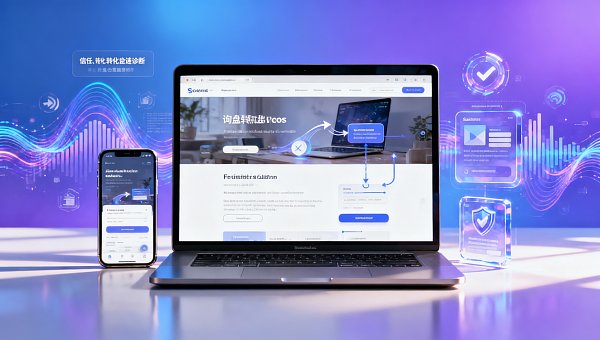
Many companies regard launching an independent website as the completion of their overseas marketing efforts, but from a customer acquisition perspective, going live is only the beginning. No inquiries often mean that something has gone wrong in one of the stages of exposure, clicks, trust, or conversion.
When there are no inquiries after building a Yiyingbao multilingual independent website, the most common misconception is that only the page presentation has been completed, while user acquisition and deal conversion support have not. A beautifully designed website does not mean customers will find you, nor does it mean they will proactively contact you.
Decision-makers in particular need to recognize that an independent website is not a brochure, but a digital sales system. It needs to balance search visibility, visitor experience, content persuasiveness, and conversion mechanisms. A weakness in any one of these will directly drag down the number of inquiries.
First, look at traffic: without targeted visits, even the best website will not bring inquiries
For many corporate websites, the fundamental reason for no inquiries is not a low conversion rate, but simply a lack of sufficient targeted traffic. If your target customers cannot find you through search, there will naturally be no subsequent inquiries to speak of.
Multilingual websites are especially prone to one misconception: companies create pages in multiple languages and assume they now have the ability to acquire customers globally. In reality, if the pages are not structured around keywords for the local market, search engines will have difficulty determining their relevance and value.
For example, some companies simply translate Chinese content directly into English, Spanish, or Arabic, but do not reconstruct titles, categories, and content topics based on the search habits of local buyers. Even if such pages are indexed, it is still difficult for them to rank well.
When business managers assess whether a website has a traffic problem, they can focus on three indicators: organic search impressions, the number of indexed core pages, and the share of visits from target countries. If these figures are low, the problem lies first in front-end customer acquisition, not in sales follow-up.
Then look at content: when there are visits but no inquiries, it is often because the content cannot answer customer questions
Even if a website has a certain amount of traffic, it does not necessarily mean it will generate inquiries. When B2B customers first enter a website, what they care about most is whether you are professional, trustworthy, and suitable for cooperation, not whether the page looks flashy.
The content structure of many corporate websites still remains at the stage of company profile + product list + contact information, lacking the information buyers actually need, such as application scenarios, technical parameters, delivery capability, certifications, case studies, and after-sales response mechanisms.
For business decision-makers, the core task of website content is not to write more, but to reduce the customer's cost of judgment. Whether customers can understand within 3 minutes what you sell, what problems you solve, and whether you are worth contacting determines their willingness to inquire.
Therefore, after building a Yiyingbao multilingual independent website, content development cannot focus only on language coverage, but must also cover user needs. Every important page should be built around customer questions, rather than simply around what the company wants to express.
Insufficient trust is a key reason why many independent websites fail to generate business opportunities for a long time
When overseas customers first come into contact with an unfamiliar supplier, they are naturally more cautious. Especially for high-ticket, customized, and cross-border service-oriented businesses, customers will not send an inquiry immediately just because they see a website.
If the site lacks real case studies, customer reviews, project results, qualification certificates, team presentation, delivery process details, and transparency in contact methods, customers will usually choose to continue observing, or directly turn to competitors with more complete information.
Many companies believe that if the product is good, someone will naturally buy it, but in an online environment, customers cannot verify your capabilities face to face. The website itself is the first place where trust is established. Without a chain of evidence, the value proposition is difficult to sustain.
So when companies optimize their websites, they should upgrade from who we are to why customers can confidently choose us. The higher the business value, the more necessary it is to use details, data, and case studies to reduce customer uncertainty.
Finally, look at conversion: when customers want to contact you, is the process smooth enough
Some websites do not lack interested customers, but customers are discouraged by complicated processes when they are ready to get in touch. For example, forms that are too long, buttons that are not prominent, slow mobile loading, or hidden WhatsApp or email entry points all directly affect inquiry conversion.
Especially on mobile devices, the visitor experience determines whether a large number of potential customers will continue to stay. Pages that load too slowly, images that are too large, and chaotic layouts will cause originally interested users to leave quickly, keeping bounce rates persistently high.
This is also why more and more companies are starting to pay attention to mobile performance. Solutions such as Yiyingbao AMP/MIP mobile intelligent website building are valuable not just because they build a mobile site, but because they improve the connection efficiency between search and conversion through faster loading and a more stable experience.
Only when pages open faster, visitors stay longer, and mobile payment or inquiry paths are simpler can inquiry growth have a realistic foundation. For decision-makers, mobile experience optimization is not a technical detail, but a business issue that directly affects customer acquisition costs.
How should companies judge whether to continue optimizing or rebuild the growth strategy
If a website has been online for some time but still has no inquiries, it is not recommended to tear it down and rebuild immediately. A more rational approach is to investigate one by one across the four dimensions of traffic, content, trust, and conversion to identify the shortest board.
First, look at whether there is stable exposure and traffic from the target market; second, check whether the core pages truly respond to customer questions; third, see whether trust proof has been formed within the site; fourth, check whether the inquiry entry points are clear and smooth on mobile devices.
If the first two are insufficient, the problem tends to lie in marketing and content strategy; if the latter two are weak, the problem tends to lie in deal conversion support and user experience. Different problems require completely different budget allocations and optimization actions.
For companies that need to take into account both domestic and international mobile traffic entry points, they can also evaluate technical solutions that are better suited to the mobile search ecosystem. For example, using a lighter and faster page structure to improve access efficiency, thereby reducing traffic waste.
What decision-makers should focus on is not whether website construction is completed, but whether the inquiry system is fully functioning
From an operational results perspective, whether an independent website is successful does not depend on whether it went live on schedule, but on whether it has the ability to continuously acquire customers. A website without inquiries is essentially still just a cost item, not a growth asset.
A truly effective multilingual independent website should be a complete growth system: it can be found through search, it helps customers understand, it builds trust quickly, and it makes it easy for customers to initiate contact. If any one part is missing, inquiries will be affected.
If a company is currently facing the problem of having a website but no inquiries, the most worthwhile thing to do is not to keep adding scattered pages, but to re-examine the entire user journey, identify the key bottlenecks affecting conversion, and then optimize resource investment in a targeted way.
For business decision-makers, the value of building a Yiyingbao multilingual independent website should not remain at having a website, but should focus on whether it can steadily bring business opportunities. Only by connecting traffic, content, trust, and conversion can a website truly be worth the investment.
Related Articles
Related Products
 EasyCamp SaaS Smart Website Marketing SystemE-Yingbao SaaS Smart Website Marketing System: AI-powered, zero-code website building. Rapidly launch multilingual independent e-commerce sites in just 10 minutes. Global server acceleration and AI-driven SEO optimization empower businesses to efficiently connect with global markets. The seamless integration of technology and user-friendly operation makes building e-commerce sites incredibly simple.
 AI+SEM Intelligent Advertising Marketing SystemAI+SEM drives intelligent ad creation, empowering full-funnel precision advertising marketing. The system automatically generates weekly/monthly reports, AI recommends keywords and target countries, monitors core metrics in real-time with intelligent alerts, and enables one-click high-conversion ad solutions to help quickly acquire customers and improve ROI.
 AI+SEO Dual Engine Optimization ServiceEasyWin AI+SEO Dual Engine Optimization System leverages AI-powered keyword mining, content generation, and comprehensive technical optimization to help foreign trade enterprises acquire high-quality organic traffic, significantly improving search rankings and conversion rates.
 AI+SNS Social Media Marketing SystemYingbao AI+SNS Social Media Marketing System - Precision social capture for the social media era. Supports one-click content synchronization across major platforms like Facebook and LinkedIn. AI intelligently rewrites posts for enhanced relevance. 24/7 AI customer service and user profiling analysis empower businesses to efficiently expand into global markets.
 AI+SEO营销解决方案易营宝AI+SEO营销解决方案,通过AI批量写作、智能生成TDK、精准关键词扩词等功能,全面优化网站SEO效果,提升流量与转化率。助力企业构建高效智能网站新生态。
 AI+SEM Advertising Marketing SolutionsAI+SEM Advertising Marketing Solution leverages AI technology to deeply empower SEM ad campaigns. It automatically generates weekly/monthly reports using AI, presenting account data across multiple dimensions for comprehensive insights into campaign performance and trends. The system precisely recommends keywords and target countries, intelligently generates high-conversion ad copy, and enables one-click activation of efficient campaign plans to help businesses rapidly acquire customers. Simultaneously, it monitors core metrics in real time, intelligently identifies abnormal fluctuations, and issues timely alerts to ensure stable, high-return advertising results.
 Domain Name ServicesEasyWin provides professional domain name services, including intelligent queries, one-stop registration, brand protection, and full lifecycle management, helping businesses build a digital brand image.
 EasyOperate B2C Cross-Border E-Commerce Platform & Independent WebsiteEasyStore B2C Cross-border E-commerce Independent Store is an intelligent website building and cross-border e-commerce integrated solution independently developed by EasyStore Information Technology (Beijing) Co., Ltd. The system is specially designed for small and medium-sized as well as large export enterprises, integrating 'website building, operation, marketing, advertising, and conversion' into one, helping enterprises quickly establish cross-border e-commerce independent stores to achieve brand globalization and global sales growth.
The platform supports multiple languages, multiple currencies, and multi-channel marketing, with built-in AI intelligent translation and SEO optimization systems, suitable for mainstream markets such as Southeast Asia, Europe and America, Latin America, and the Middle East, assisting Chinese manufacturing enterprises in efficiently deploying international e-commerce strategies. SSL证书易营宝提供专业SSL安全证书服务,包括单域名和泛域名证书,确保网站数据传输加密、身份验证和完整性保护,助力企业建立安全可信的在线业务环境。









